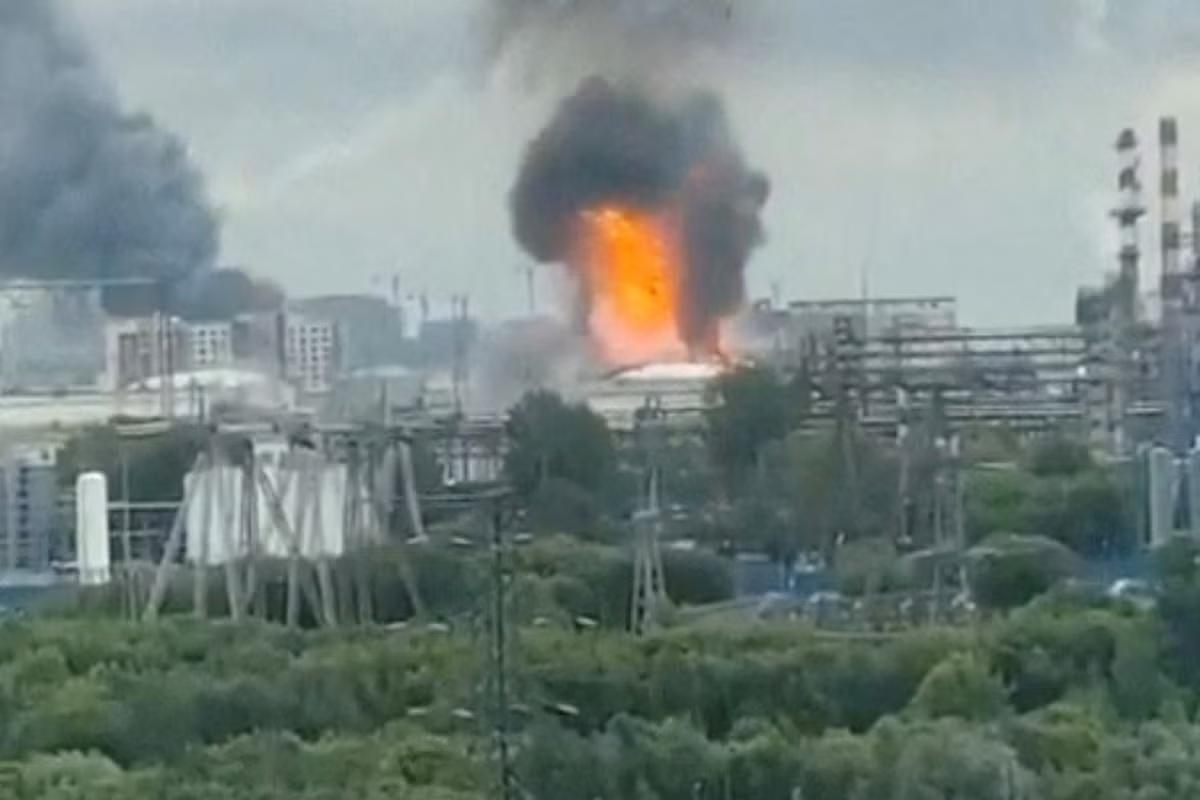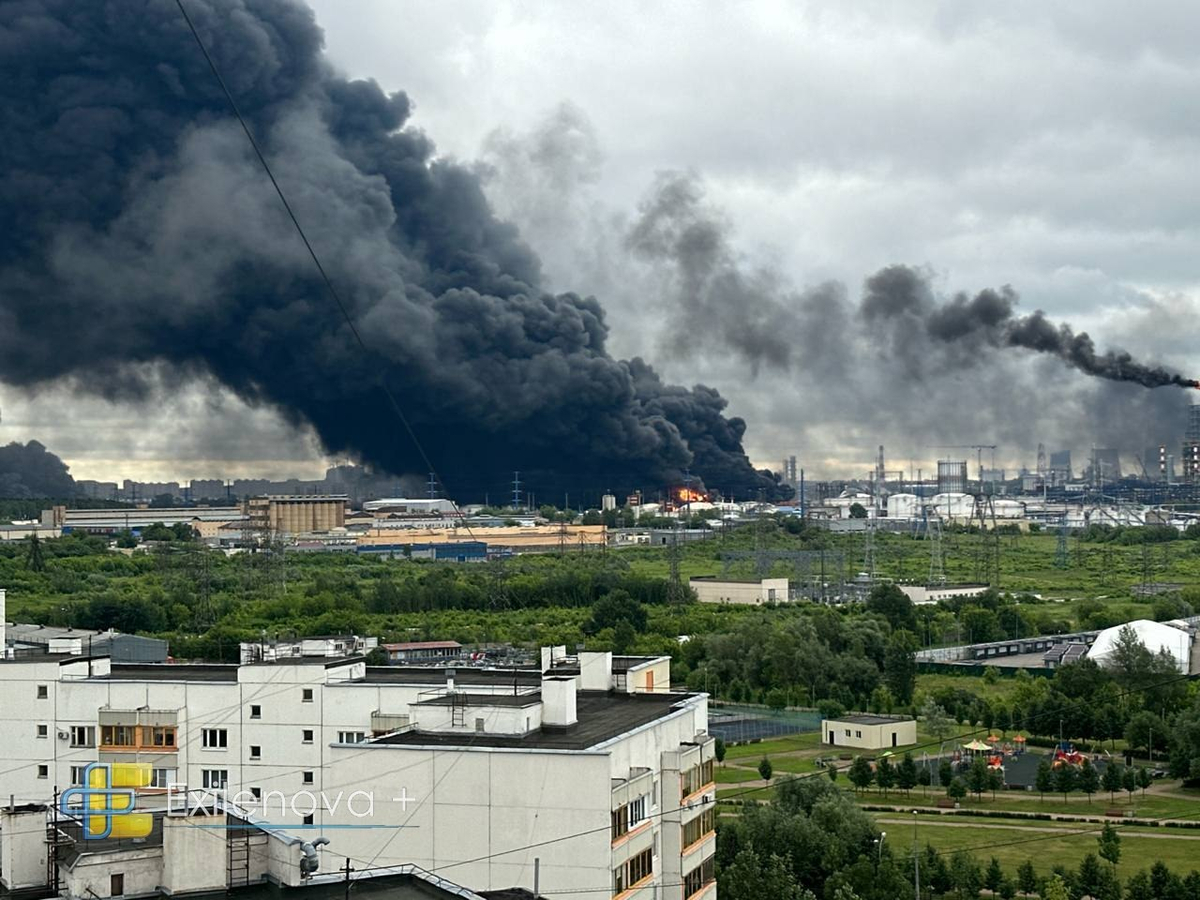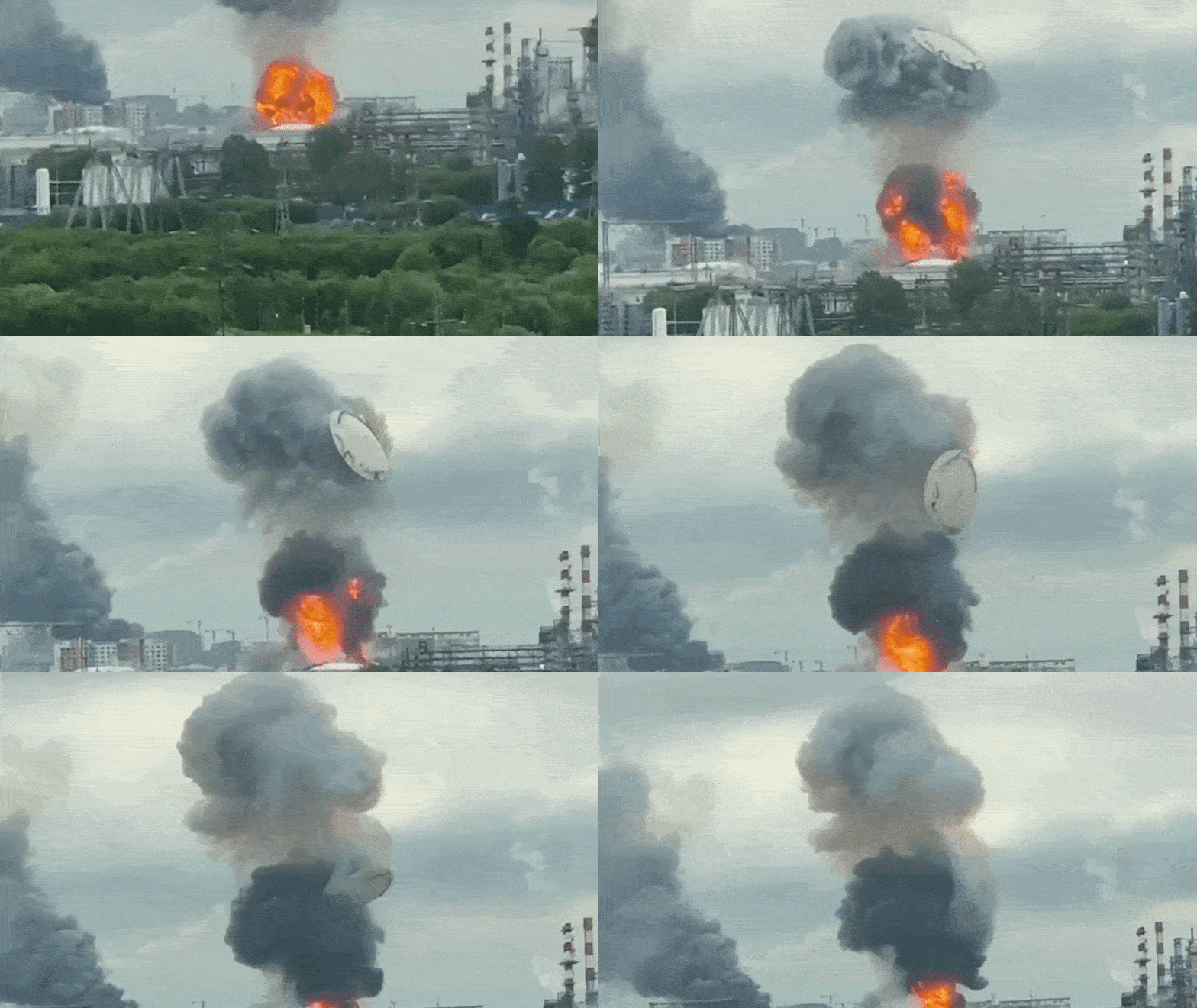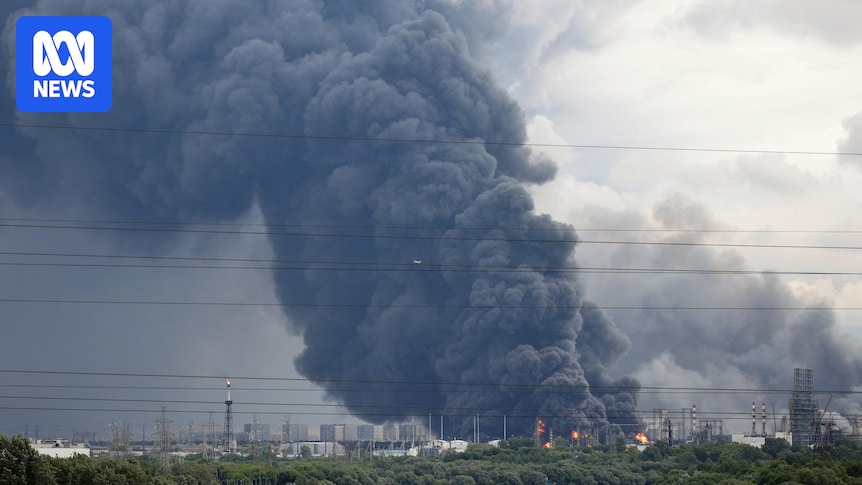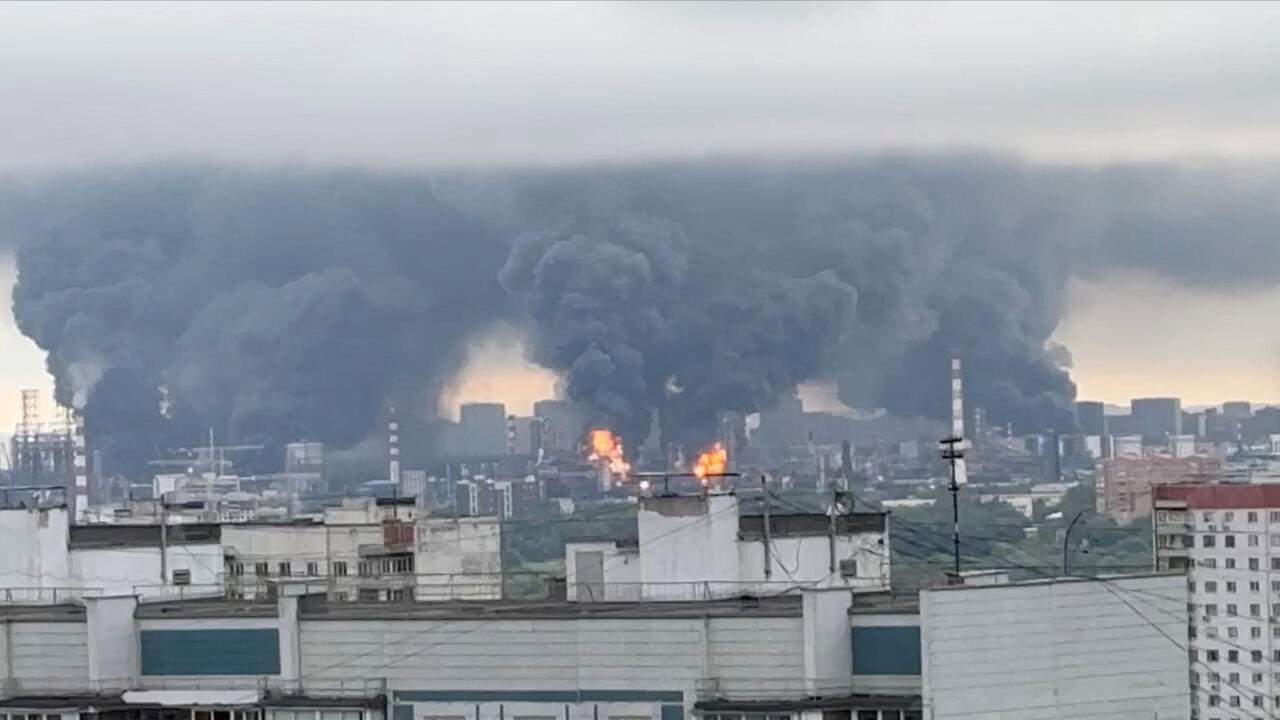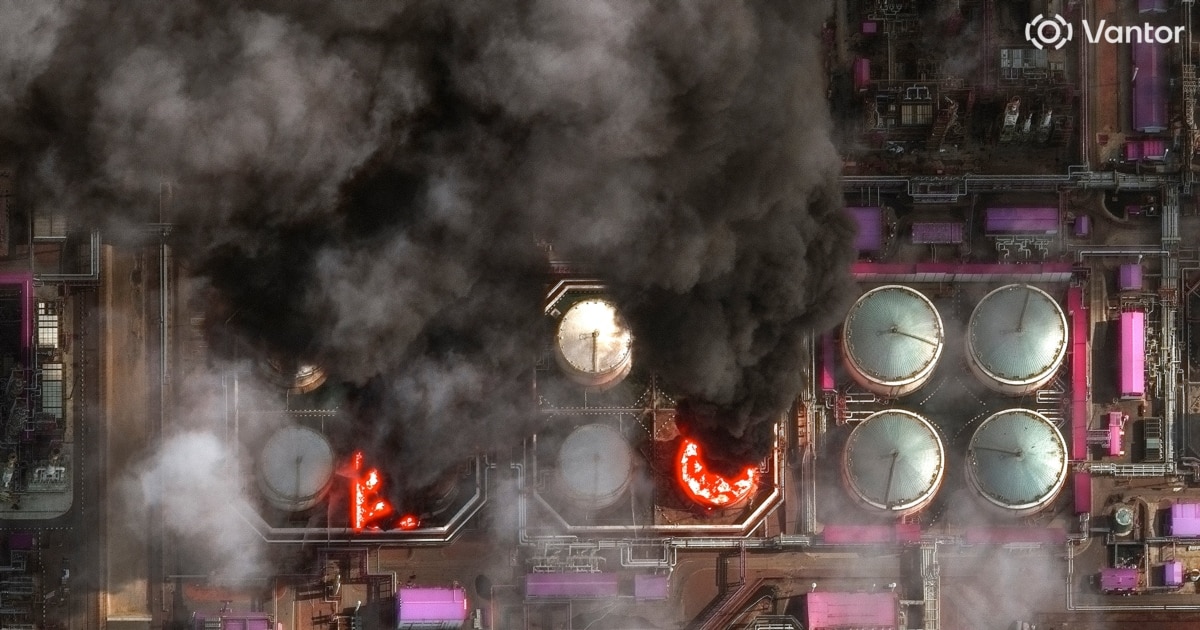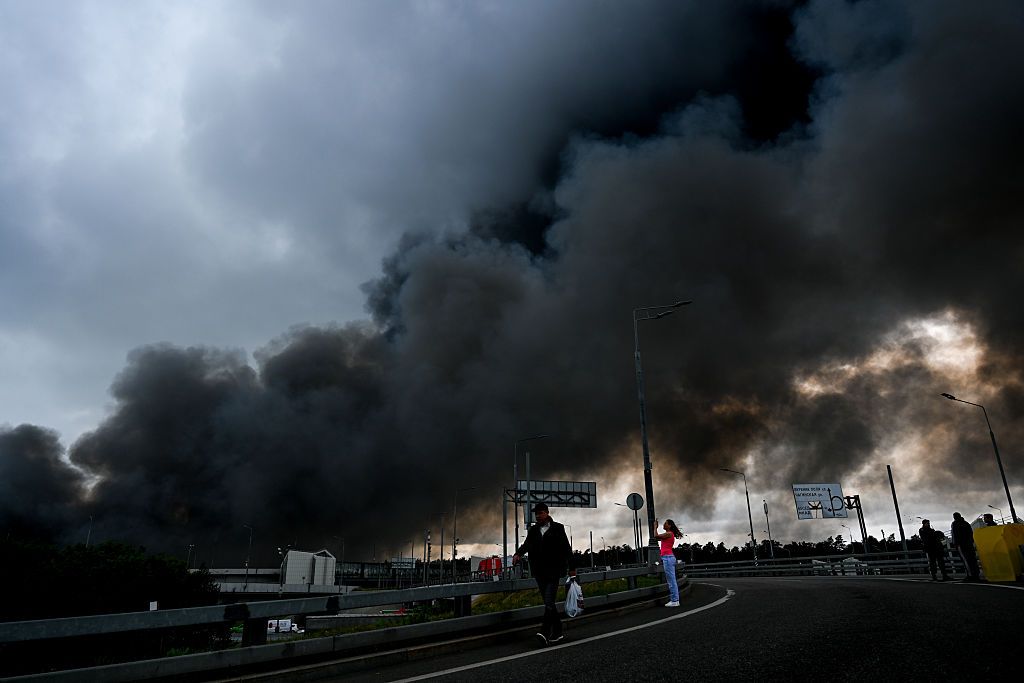
Black smoke rises from the refinery where a fire broke out following a strike as firefighting efforts continue in Moscow, Russia, on June 18, 2026. (Sefa Karacan/Anadolu via Getty Images)At the end of May, a Volgograd Telegram channel published an unusual announcement: local "mobile fire groups" tasked with shooting down Ukrainian drones were asking residents to chip in for radios, laser pointers, and camouflage nets.They needed 151,400 rubles, a little over 2,000 dollars. Over several days, they collected 13,300 rubles. The state, which had promised its citizens that the war would never touch them, was asking them to fund their own air defense themselves, and the Russians "chip in" reluctantly.This episode is a miniature of what was unfolding across the Russian heartland throughout May 2026, when Ukrainian long-range drones waged the most intense campaign against Russian oil refining of the entire war.In May alone, Ukraine carried out 16 strikes on Russian oil refineries — a monthly record since the start of the full-scale war, Bloomberg calculated.Five episodes we want to examine in more detail. On May 8, drones reached Lukoil-Permnefteorgsintez for the third time in two weeks — one of Russia's largest oil refineries, more than 1,500 kilometers from the Ukrainian border. After a series of hits, the plant shut down.On May 17, drones struck Moscow and its outskirts: according to Mayor Sergei Sobyanin, the attack involved more than 120 drones — a record single-day figure for the capital in open reports; the Moscow oil refinery in Kapotnya, after the attack, suspended refining.On May 18 and 20, twice in one week, the oil refinery in Kstovo near Nizhny Novgorod was hit — the fourth-largest in Russia and the second-largest by gasoline output; the unit that provides more than half of its capacity shut down.
Top 5 Ukrainian deep strikes inside Russia in May — And how they're making Russians doubt Putin
At the end of May, a Volgograd Telegram channel published an unusual announcement: local "mobile fire groups" tasked with shooting down Ukrainian drones were asking residents to chip in for radios, laser pointers, and camouflage nets. They needed 151,400 rubles, a little over 2,000 dollars. Over several days, they collected 13,300 rubles. The state, which had promised its citizens that the war would never touch them, was asking them to fund their own air defense themselves, and the Russians "ch
1,253 words~6 min read