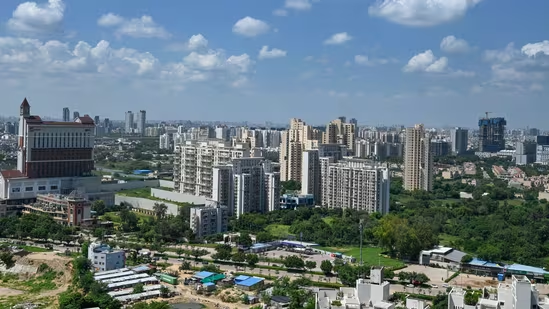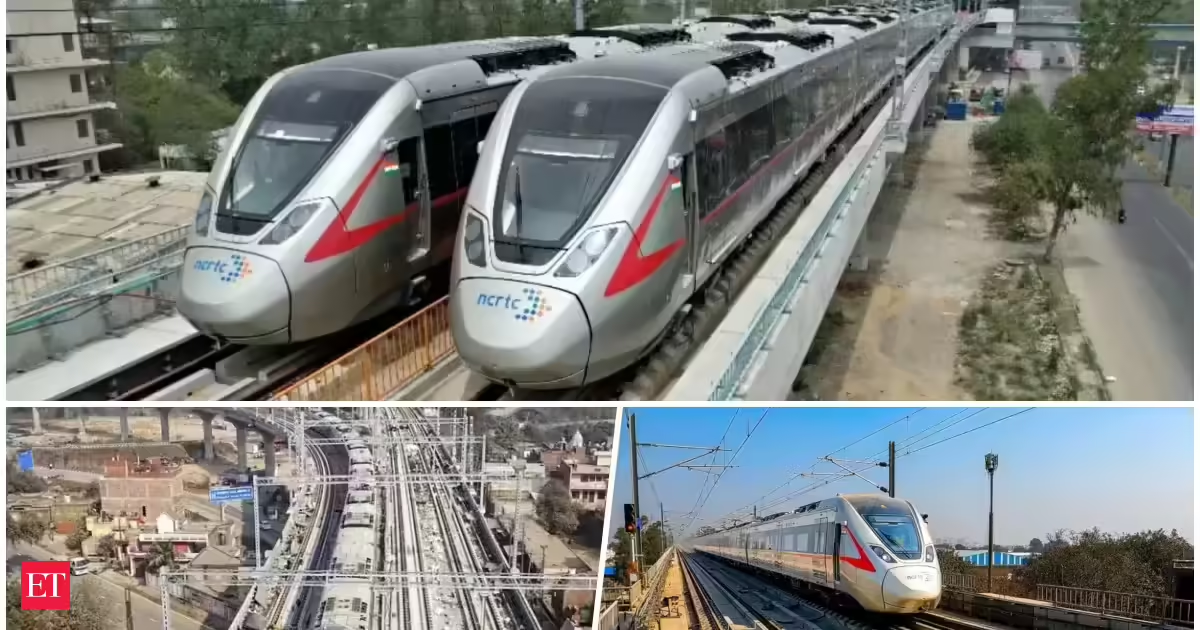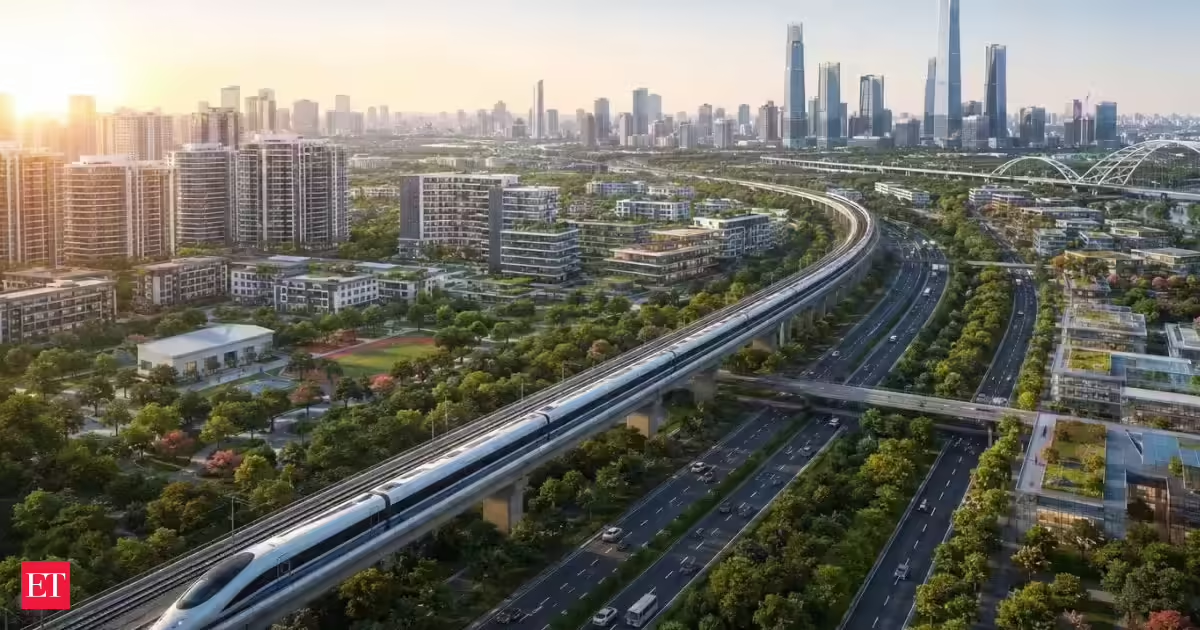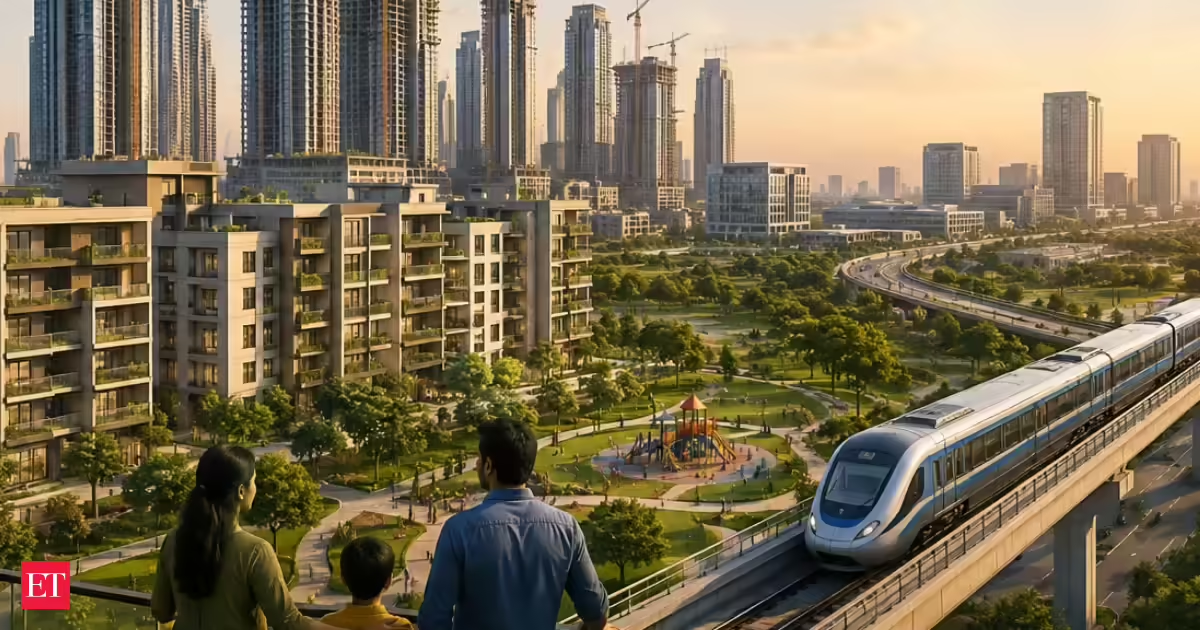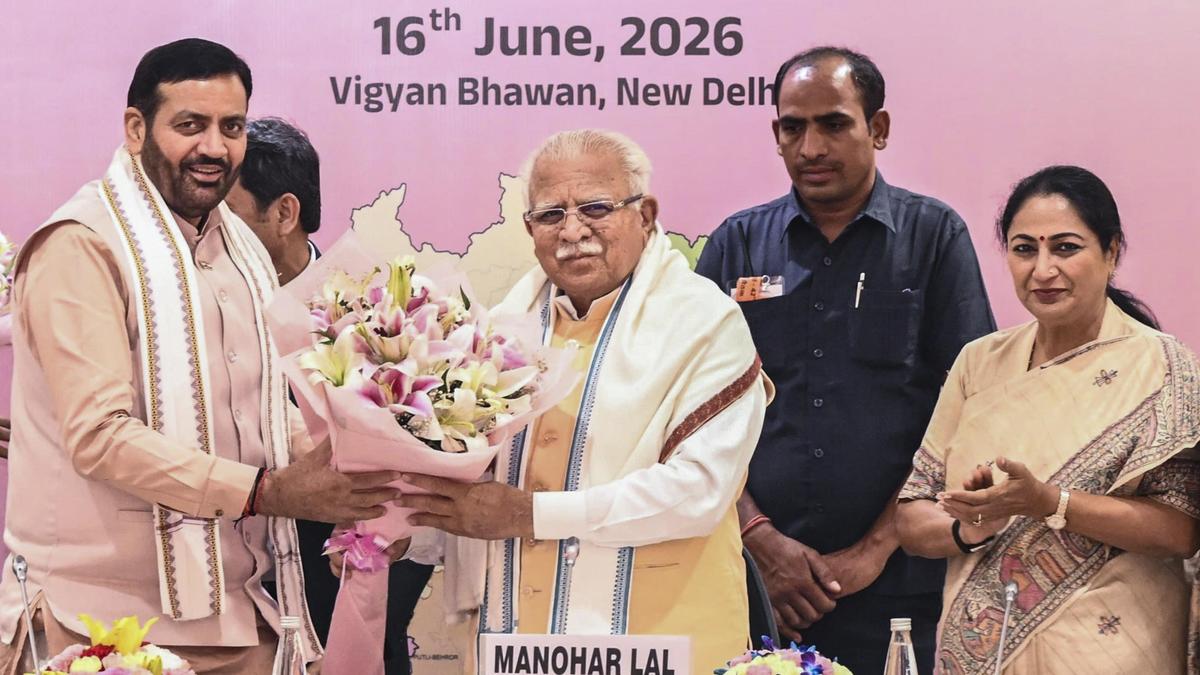
The proposal to develop four new greenfield cities along the Rapid Rail Transit System (RRTS) corridors by the National Capital Region Planning Board (NCRPB), will bring the much needed affordability in the NCR’s real estate sector, experts said. The plan designates the KMP–Eastern Peripheral Expressway belt as Central NCR's Ring of Opportunity, mandating formal notification of all non-notified land pockets within the CRE-I boundary.This ends decades of regulatory limbo for peripheral land sitting between Delhi, Haryana, and UP jurisdictions giving it a defined FAR and use-permission pathway for the first time. “NCR is projected to absorb an additional population larger than Spain's between now and 2041- a scale of demographic pressure that demands a fundamentally different planning response. What sets this plan apart is the quantum of physical infrastructure already committed, the operational Delhi–Meerut RRTS, the KMP corridor running from Kundli to Palwal, and the Noida International Airport (Jewar) under development - which gives this plan more real-world anchors than its predecessors had,” said Ankita Sood- National Director- Research, Knight Frank India. For the first time, Sonipat, Bhiwadi, Meerut, and Alwar are being planned as deliberate growth destinations and not peripheral towns connected to Delhi through transit rather than dependent on it.Haryana Chief Minister Nayab Singh Saini had recently said that to finalize the Regional Plan-2041, a sub-committee comprising senior officials from the Central Government and the concerned State Governments of Haryana, Uttar Pradesh, Rajasthan, and Delhi has been constituted. The sub-committee will submit its final report to the Board by August 15, 2026. Each member state of the board will submit a development proposal for one new greenfield city. These cities, to be developed under the name “Namo City,” will be planned as modern, environmentally sustainable, and self-reliant urban centres.“The NCR Regional Plan 2041 is a significant step towards creating a more balanced and future-ready urban region. Its emphasis on decentralised development, integrated mobility, and efficient land utilisation is particularly encouraging. With an allocated fund of Rs 5,000 crore these cities are envisioned as self-sustaining urban centres designed to accommodate future population growth while reducing pressure on existing urban hubs,” said Santosh Agarwal, Executive Director & CFO, Alpha Corp Development Limited. The planned cities, along with infrastructure assets such as the Noida International Airport, Yamuna Expressway, Dwarka Expressway, and expanding metro and RRTS networks, are expected to reshape connectivity and economic activity across the region.In the next phase of NCR's development, these initiatives have the potential to unlock new growth corridors, create fresh residential and commercial opportunities, and support more balanced urban expansion across NCR.“The proposal signals that India is moving past reactive urban planning and moving toward a proactive approach: cities designed before the pressure arrives, not after. Policy measures strengthen manufacturing, infrastructure and investor confidence while supporting employment generation are exactly what the country's long-term economic growth needs. This plan reflects the same thinking,” said Shrivallabh Goyal, CEO and WTD at Reliance Model Economic Township.According to the draft plan, NCR's population is projected to increase from 581.57 lakh in 2011 to 1,130 lakh (11.3 crore) by 2041, making integrated planning critical for managing future growth. The current draft of the plan also notes that NCR contributes nearly 8% to India's GDP and remains one of the country's largest employment hubs.“While the vision extends to 2041, the real estate sector is likely to see its impact much sooner. Over the next five years, infrastructure-led micro-markets are expected to be the biggest beneficiaries as connectivity upgrades and planned urban development begin translating into on-ground value creation,” said Deepak Sangwan, Chairman, Origen Realty.Akshay Taneja, CEO, TDI Infrastructure said “The NCR Regional Plan 2041 marks a decisive shift from a Delhi-centric growth model to a multi-nodal urban economy, with Sonipat positioned as a critical growth engine and economic hotspot within NCR’s ‘Golden Ring of Opportunity’ aimed at reducing congestion in Delhi”.The region’s focus on Transit Oriented Development (TOD), industrial and logistics hubs, along with its inclusion among the proposed semi-greenfield ‘Namo Cities’, will significantly accelerate residential and commercial growth.Unlike mature markets such as Gurugram and Noida, Kundli offers affordability, scalable development and longterm appreciation potential, making it one of the strongest future-ready investment destinations in Delhi NCR.“The NCR real estate market has firmly entered a structural upcycle, reinforced by the Regional Plan 2041’s vision of a Rs20 lakh crore economy, 3+ crore population absorption, and a multi-nodal urban model built on four ‘Namo Cities’, three development zones, and decongestion of Delhi through planned peripheral growth. Infrastructure is now the primary pricing engine, with RRTS corridors enabling the ‘30-minute NCR’ vision, expanded metro networks, expressways like KMP, and airport-led development around Noida International Airport reshaping demand geography,” said Vishal Raheja, Founder & Managing Director, InvestoXpert Advisors. NCR has already shown strong price discovery, with select corridors delivering 30–35% CAGR and 150-500% appreciation, while land values in emerging zones have adjusted 3–6x ahead of completion and sustained 12–18% annual growth trends. Post key infrastructure announcements, enquiry spikes of 50-75% reflect rising investor participation and end-user demand across midincome and premium housing. Ashish Narain Agarwal, Founder & Managing Director, PropertyPistol said “The NCR Regional Plan 2041 formalises one of India’s largest urban expansions, targeting a Rs20 lakh crore economy and housing over 3 crore people through structured decentralisation, including four ‘Namo Cities’ and three development zones to decongest Delhi towards Sonipat, Bhiwadi and Jewar.
NCR plans four new cities along RRTS corridors to ease housing costs
The National Capital Region Planning Boards Regional Plan 2041 proposes four new greenfield cities along Rapid Rail Transit System (RRTS) corridors, a move experts say could improve affordability and reshape real estate growth across NCR.
890 words~4 min read