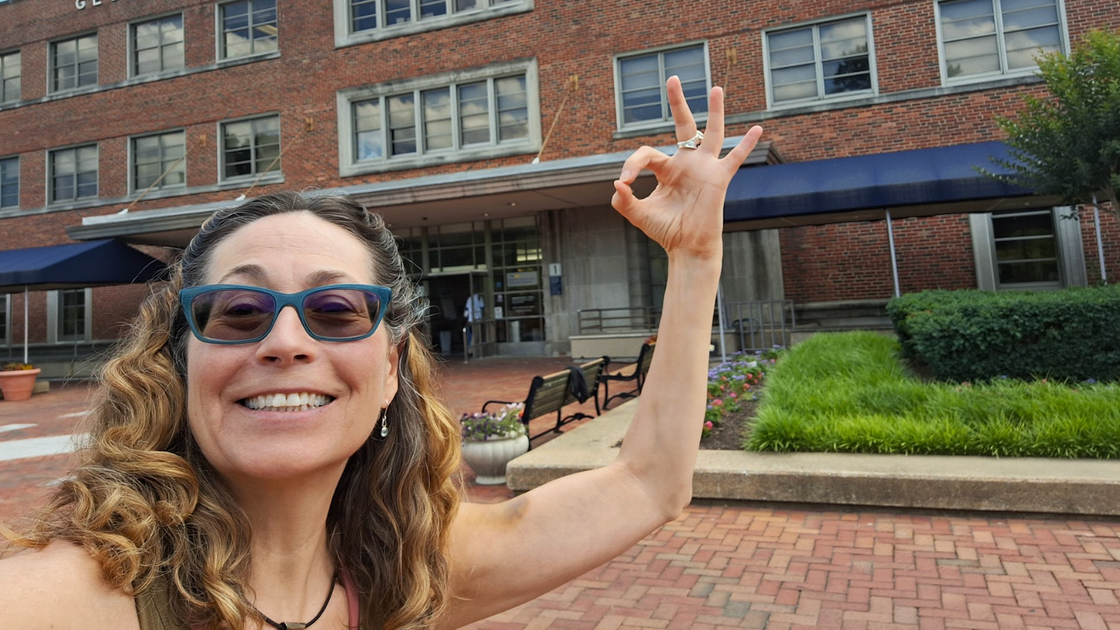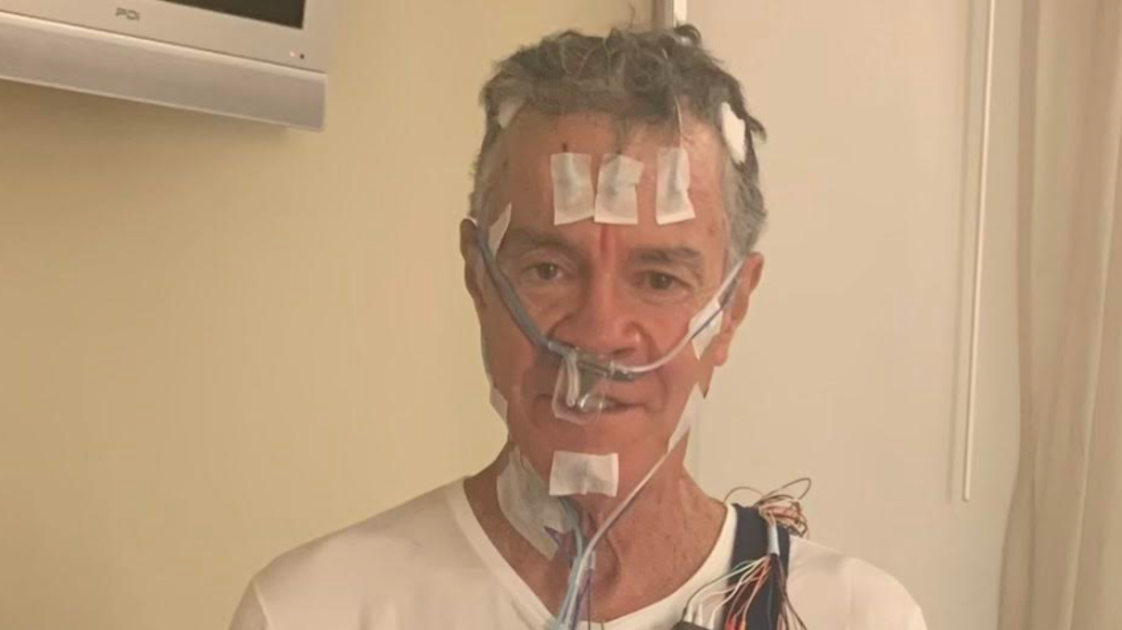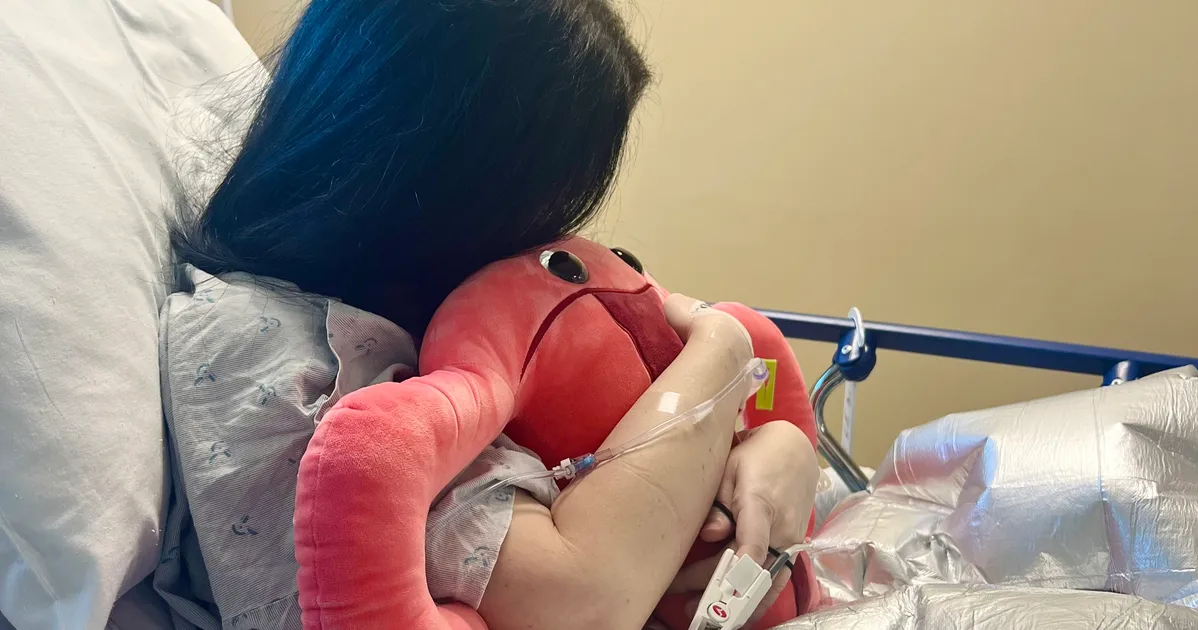
Have you ever been up at 1 a.m. studying thousands of black-and-white images of your own insides on a free DICOM viewer — the software application used to view medical images like MRIs — you downloaded earlier that day, teaching yourself radiology out of sheer desperation? No? Just me?Let me back up.It started in late 2022. Abdominal pain that didn’t stop, plus a grab bag of other symptoms I couldn’t explain. A scan had flagged something off with my gallbladder, so by early 2023, my surgeon decided it had to come out, and in April it did. And I felt ... worse. Way worse. When I went back in, the nurse practitioner couldn’t place what was wrong and pulled in my surgeon, who decided I was drug-seeking before begrudgingly agreeing to another scan. That one found the post-op problem and earned me a second surgery, a small bowel resection. Afterward, I had an internal bleed and spent a week in the hospital.Then, once I’d healed from all of that ... the original pain was still there. Right where it started.By November 2023, I was back in the ER, this time with abdominal pain so bad I couldn’t think straight. They were convinced I had a potentially life-threatening small bowel intussusception and wanted to operate. I’d already had two surgeries that year, so I pushed back and asked for an MRI before anyone cut me open again. The MRI came back clean with no intussusception. Great news! Except they discharged me with a shrug and zero answers.So I went to my gynecologist. She scheduled an exploratory surgery, during which she found that my uterus had fused itself to my abdominal wall. She fixed that and, months later, I was still in pain. So I asked her to look at my hospital scans, since surgery couldn’t show what was happening inside my uterus, but the imaging could. She told me, and I quote: “I’m not a radiologist.” Cool. Cool, cool, cool.I went to four different doctors, practically begging someone, anyone, to look at my imaging. Nobody would. So one night I gave up on being talked out of my own body, downloaded a DICOM viewer, pulled the images and started teaching myself how to read them. I swore I found the problem myself.I brought it to my primary care provider, mostly because I had nowhere else to go, and for the first time in over a year, someone actually listened. She even agreed with me. She sent me to a gynecological oncologist who sat down, went through every scan with me and confirmed almost everything I’d already figured out on my own. Over a year and three unnecessary surgeries later, and I finally had a name for it: adenomyosis. It’s a condition where the uterine lining grows into the wall of the uterus, often causing severe pain. I had a total hysterectomy and unilateral oophorectomy in April 2024, and the validation was almost comical. They found pelvic congestion syndrome, which nobody had ever mentioned to me. They found two rogue surgical staples left behind from a previous surgery, one of them sharp and constantly stabbing the back of my uterus. Pathology confirmed the adenomyosis, and also confirmed that one of my ovaries was 50% cysts. (Like cysts inside cysts, a cystception!)I’d spent over a year being made to feel dramatic, and here was a pathology report basically saying Yup, this was real the entire time. I had the receipts now. You’d think that’s where the story wraps up, but it isn’t.Late in 2024, my new neurologist ordered a brain MRI (looking for the cause of the epilepsy I’ve had since I was 13). His office called and told me the scan was clean. Fine, expected. Except a few months of headaches, dizziness, brain fog and bone-deep fatigue later, I got my hands on the actual radiology report and read, in plain English, that I had a 1.4-centimeter tumor sitting inside my pituitary gland.The doctor just ... hadn’t mentioned it. When I asked why, the answer was essentially that it wasn’t the thing he’d been looking for, so it wasn’t his to tell me. It was a tumor. In my head. That I found by reading my own report. (I named him Chad; you have to laugh to keep from crying.)Same playbook as last time. My PCP took me seriously, referred me to an endocrinologist, and ran the labs. And then came months of me flagging that my cortisol kept coming back low, and my endocrinologist waving it off again and again. I pushed. I researched. I pushed harder. I taught myself what secondary adrenal insufficiency was so I could say it out loud in an appointment and not get patted on the head.Eventually, Chad came out in September 2025, courtesy of an excellent surgeon who does these in his sleep. The surgery itself went perfectly; my cortisol bounced right back the next day. I was elated.And then a couple of days after they sent me home, I woke up at midnight with the worst headache of my life. Fever, teeth chattering, dry-heaving, couldn’t even touch my chin to my chest. The ER near my house found nothing “emergent” and sent me home. My surgeon saw me a couple of days later, examined me, watched me sob in his office and told me he was actually less worried now that he’d seen me in person. He put in orders for another blood test and sent me home. That night, my fever hit 103.4, and I literally felt like I was dying.The next morning, my surgeon’s PA messaged to check on me. I sent back a photo of the thermometer, and she told me to get to the ER, now. So I did.Meningitis. Sepsis. Two weeks in the hospital, five lumbar puncture attempts (the fifth one was finally successful under sedation), and a strain of bacteria the infectious disease team had never once seen cause either of those things. Then they discharged me with a PICC line in my arm and eight weeks of IV antibiotics I’d have to administer myself. I’d known something was catastrophically wrong for days, but everyone kept telling me I was fine. So I told myself I must be fine. I will never do that again. If I hadn’t gone back to the hospital when I did, I likely would have died.Thankfully, I didn’t go through any of this alone. My husband showed up for me in every single way I could have ever asked for, through every one of my surgeries. My family helped out with my kids. And when the pituitary saga hit, my company was genuinely, unusually good to me. I know how lucky that makes me.But support can only go so far. Nobody else would read my scans for me. Nobody else could be the one in the room refusing to be brushed off, or do the 1 a.m. research, or be the actual body this was happening to. The one job that mattered the most, making myself be believed, was the one job that nobody could do for me.So you carry it. You keep showing up for your kids, you keep going to work, you keep the rest of your life from coming apart, and you just add “fight the healthcare system” to the list ... while smiling and nodding and assuring everyone around you that you’re totally fine.Screenshot of the hospital's patient app showing the author's active diagnoses during her meningitis and sepsis hospitalization in September 2025.Photo Courtesy Of Aly WorshamFor a long time, I just filed this under bad luck. My weird body, my bad draw, my bad genes, my personal gantlet. But it isn’t bad luck. It’s a pattern. It has happened to women for generations. The numbers aren’t even subtle. Women wait about 30 minutes longer than men in the ER for pain relief, and even when we report the exact same level of pain, we’re less likely to be given anything for it. The day I went to the hospital with the fever that turned out to be sepsis and meningitis, I sat in a wheelchair in that ER waiting room for seven hours before being taken back. They offered me Tylenol.When we’re in pain, we’re more likely than men to be handed a sedative or told it’s just anxiety than to be treated for the pain itself. Women showing up with chest pain and clear heart symptoms have been found roughly twice as likely as men to walk out with a mental health diagnosis instead of a cardiac one.And the conditions that mostly affect women are some of the slowest to be named. Endometriosis and adenomyosis take seven to 10 years, on average, to diagnose. In one large survey of 4,300-plus women who finally got an endo diagnosis, 78% said a doctor had told them at some point that they were making a fuss about nothing. Adenomyosis was considered rare for decades, but newer estimates put it as high as 1 in 5 women. It took my sister 10-plus years to get her endo diagnosis. We were never rare. We were just unexamined.It goes all the way down to the foundation. Women were largely left out of clinical research for most of modern medicine; the National Institutes of Health didn’t even require sex to be considered as a biological variable in the studies it funds until 2016. 2016! Most of the medicine being practiced on us was built by studying men and assuming we were just smaller, moodier versions of the same machine.So when a woman walks into an appointment having already Googled her symptoms, already read her own chart, already arrived with a theory ... and gets labeled “difficult” or “anxious” or “a lot”? She is not any of those things. She is doing unpaid self-taught medical work because the system made it her job. And she’s doing it on top of everything else she’s never allowed to put down. The kids, the household, the pets, the work, the team, the people leaning on her who still need her full attention, in pain or not.I became my own radiologist because nobody else would read my scans. I found my own pituitary tumor because the person paid to find it didn’t even tell me it existed. I diagnosed my own adenomyosis because four doctors had already sent me home without an answer. None of that is a flex.And I got lucky. I’m really stubborn, I have a PCP who actually listens, I can read a lab panel, and I went back to the hospital on the one night it really counted. Plenty of women have every single one of those things stacked against them and never make it to the validating pathology report. That should make all of us furious.So if there’s just one takeaway from my very long, very stupid medical odyssey, take this: You know your body better than anyone else in that room. Get the second opinion. Get the third. Ask for your own records and actually read them. If you don’t know how, use the tools you have available to you to help you figure it out. Push back, and when they make you feel crazy for pushing ... push anyway.It’s not that women are dramatic, or anxious or imagining it. It’s that we are exhausted from how much it costs us to finally be believed.Do you have a compelling personal story you’d like to see published on HuffPost? Find out what we’re looking for here and send us a pitch at pitch@huffpost.com.RelatedWomen's Health
Doctors Wouldn't Listen To Me So I Taught Myself Radiology. What I Found Was Alarming.
"One night I gave up on being talked out of my own body, downloaded a DICOM viewer, pulled the images and started teaching myself how to read them."
1,930 words~9 min read