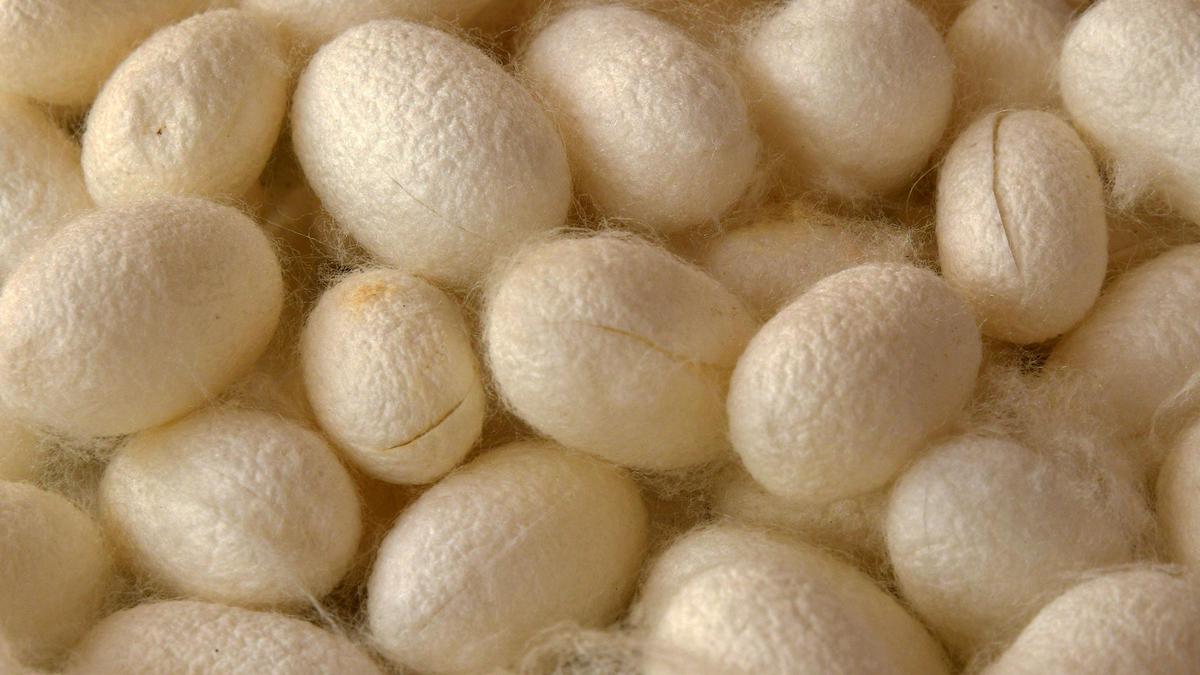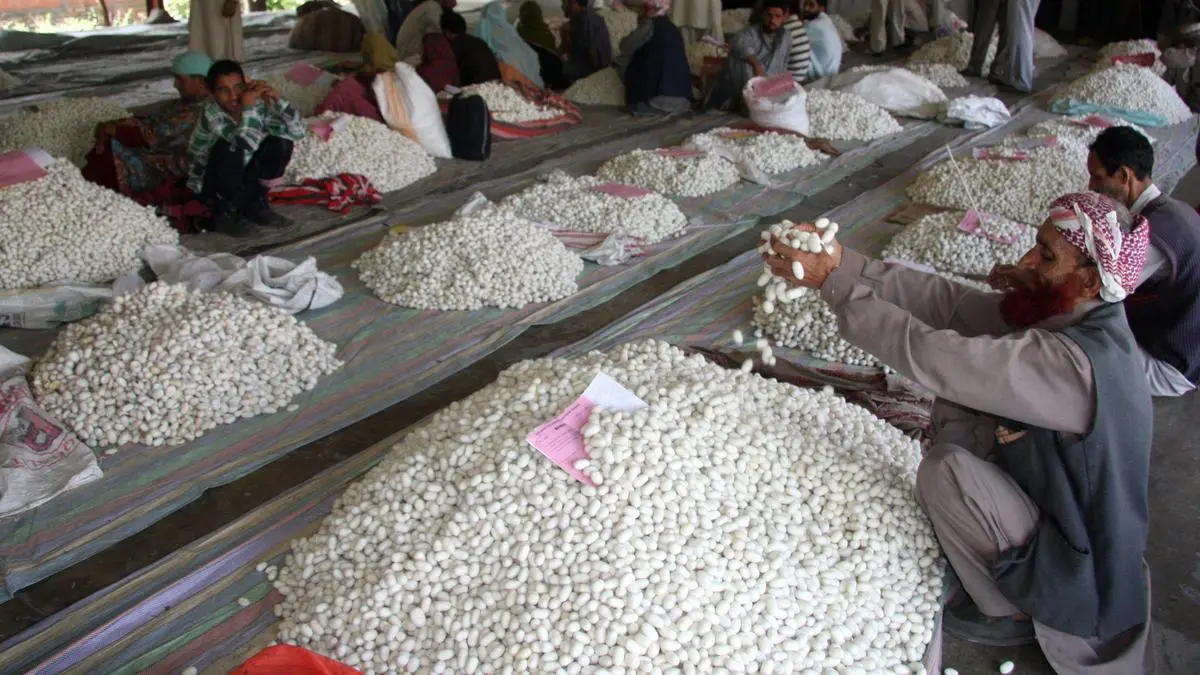
Official data show that the Union Territory produces around 800 to 900 tonnes of cocoons annually, with production largely driven by small and marginal farmers
| Photo Credit:
Jammu and Kashmir is set to establish private mulberry nurseries for the first time as part of its strategy to revive and expand its heritage sericulture sector and achieve a target of producing 225 tonnes of raw silk over the next five years.The proposal was deliberated during a recent review meeting of the Sericulture Development Department and the Central Silk Board (CSB), officials said.Director Sericulture Ajaz Ahmad Bhat said a team of officials from Jammu and Kashmir would visit Uttarakhand to study its successful private nursery model before implementing it in the Union Territory.The initiative is aimed at increasing the availability of quality mulberry saplings, a key requirement for expanding mulberry plantations, improving cocoon production and boosting silk output.The move comes at a time when sericulture, despite supporting the livelihoods of about 27,000 rural families in Jammu and Kashmir, continues to operate below its potential.Official data show that the Union Territory produces around 800 to 900 tonnes of cocoons annually, with production largely driven by small and marginal farmers. Women account for a significant share of the sericulture workforce, underscoring the sector’s importance as a source of rural employment.Officials said the proposed nursery model is inspired by Uttarakhand, which has emerged as India’s leading producer of high-quality bivoltine silk cocoons and is widely recognised as the country’s “bowl of bivoltine silk”. The State is also the only one in India that produces all four major varieties of silk cocoons—mulberry, oak tasar, muga and eri.Uttarakhand’s success is attributed to its favourable agro-climatic conditions, with temperatures ranging from 4.5°C to 40°C and relative humidity levels between 26 per cent and 95 per cent, creating an ideal environment for mulberry cultivation and silkworm rearing.Besides introducing private nurseries, the review meeting decided to strengthen extension services, promote scientific silkworm rearing practices and deploy disease-monitoring teams to minimise crop losses.Officials also discussed expanding sericulture activities in tribal and non-orchard areas to protect mulberry plantations from pesticide contamination while creating additional livelihood opportunities for silkworm rearers.Bhat said the department, in collaboration with the Central Silk Board, would organise mega Kisan Melas in Kashmir and Rajouri later this year to promote modern sericulture practices, facilitate the transfer of technology and encourage more farmers to take up silk cultivation.Published on June 24, 2026