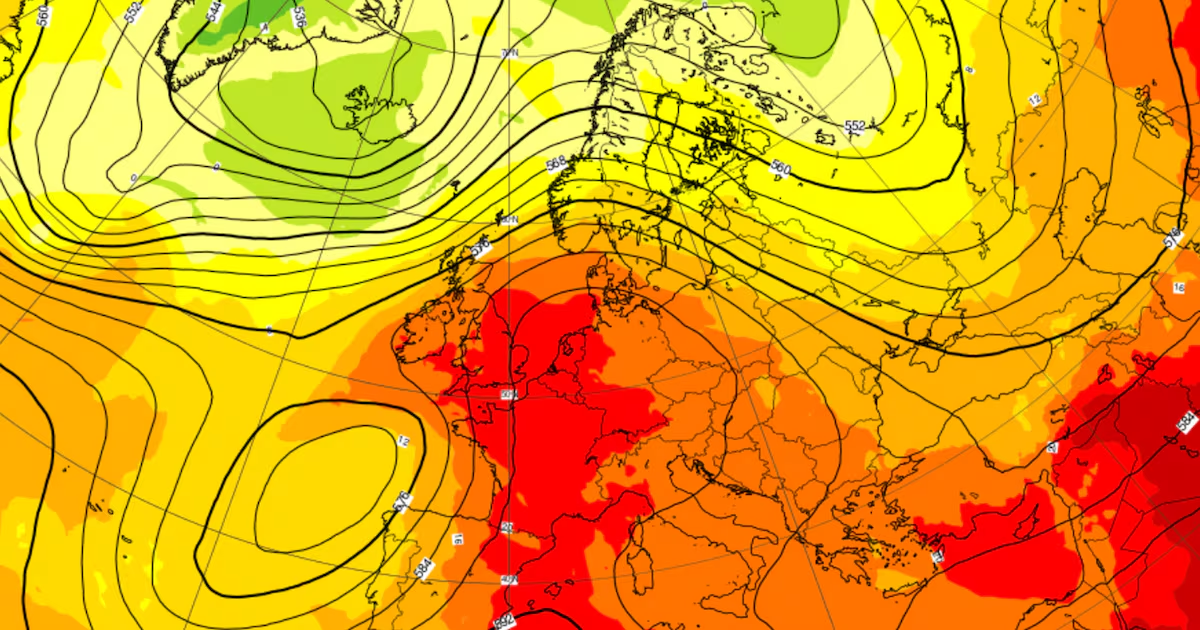
Geography, shifting weather patterns and a warming Arctic are fuelling extreme heatLast updated: June 24, 2026 | 14:524 MIN READA shopper rests with her puppy in the shade in the town centre in Huddersfield in Northern England on June 23, 2026, as temperatures increase to heatwave levels and are set to rise further in the week ahead. AFPDubai: The latest heatwave scorching Britain, France, Spain, Italy and other countries is not an isolated event. Scientists say Europe is the fastest-warming continent on Earth, warming much faster than the global average.According to the EU’s Copernicus Climate Change Service, the world is currently about 1.4°C warmer than pre-industrial levels (1850-1900). Europe, however, has already warmed by around 2.4°C — nearly twice as much.Here are the main reasons:1. Europe is mostly land, and land heats fasterLand surfaces warm more quickly than oceans because water absorbs and stores heat more efficiently and can cool itself through evaporation.Europe has a large landmass compared with many other regions, making it more vulnerable to rapid temperature increases.2. High-pressure systems are becoming more commonScientists have observed more frequent summer periods dominated by high-pressure systems, which trap heat and suppress cloud formation.Carlo Buontempo, director of Copernicus, said these “anticyclonic” conditions have become increasingly common over the last two to three decades, making heatwaves more likely.Europe heatwave by the numbersGlobal warming since pre-industrial era: 1.4°CEurope's warming since pre-industrial era: 2.4°CArctic warming since pre-industrial era: 3.2°CWarming rate in Svalbard: 1.5°C–2°C per decadeFrench homes hit by heat-related power outage: 68,000French schools affected by the heatwave: 8,000Schools closed in France: 1,800People drowned in France since June 18: 40UK forecast peak temperature: Up to 40°CFrench national temperature record: 29.8°C average day-night temperature on June 24, surpassing the previous record of 29.4°CItalian cities under red alert: 16Europe's warming compared with the global average: About 70% faster than the world as a wholeCurrent UK red heat warning: Only the second such warning ever issued by the Met Office.The bottom line: This heatwave will eventually break, but the forces driving Europe's warming are long-term. Scientists warn that unless greenhouse-gas emissions are reduced globally, extreme heat events that were once rare could become a regular feature of European summers.The current heatwave is linked to an “omega block” weather pattern, while the May heatwave was caused by a “heat dome.”A French forecaster explained that a cold front off Portugal is acting like a “heat pump,” pulling hot air northwards from North Africa.“At altitude, high-pressure systems exert pressure on this warm air mass, and when we compress a warm air mass, we actually make it even hotter,” Sebastien Leas, a forecaster at Meteo-France, told AFP.3. Europe is connected to a rapidly warming ArcticOne of the biggest factors is Europe’s proximity to the Arctic, which has warmed by about 3.2°C since pre-industrial times.The Arctic is heating much faster because of the albedo effect.Normally, snow and ice reflect sunlight back into space. As they melt, darker land and ocean surfaces are exposed, absorbing more heat and accelerating warming.This creates a feedback loop that drives temperatures even higher.4. Less air pollution has removed a cooling shieldEurope has successfully reduced aerosol pollution since the 1980s through stricter environmental regulations.While good for public health, fewer aerosols mean less sunlight is reflected back into space.These tiny particles previously provided a partial cooling effect by reflecting sunlight and helping clouds remain brighter and more reflective.5. Some parts of Europe are warming exceptionally fastWarming is not uniform across the continent.According to Copernicus:Eastern and southeastern Europe and the Alps have warmed by 0.5°C to 1°C per decade over the past 30 years. Western Europe has warmed by 0.2°C to 0.5°C per decade. The Arctic archipelago of Svalbard has seen temperatures rise by 1.5°C to 2°C per decade, making it one of the fastest-warming places on Earth. Why does this heatwave feel so dangerous?The problem is not just temperature — it is also humidity.Experts say high humidity makes sweating less effective.Dr Heather Massey of the University of Portsmouth said higher moisture levels in the air reduce the body’s ability to cool itself through evaporation.A professor explained that sweat only cools the body if it evaporates.Speaking at a Science Media Centre briefing, Professor Hugh Montgomery of University College London said, according to CNN: “If you are in a very humid atmosphere, sweat will just drip off you, and dripping sweat has no cooling benefit at all.” He warned that:36°C with 65% humidity can become dangerous. 42°C with 35% humidity can be potentially lethal. When will it end?The current heatwave is expected to ease in some areas once the omega-block weather pattern breaks down and cooler Atlantic air moves in.However, scientists warn that the broader trend is unlikely to reverse anytime soon.Heatwaves in Europe are becoming:More frequent Longer lasting More intense Because global temperatures continue to rise due to greenhouse gas emissions, extreme heat events that were once considered rare are increasingly becoming part of Europe’s summer climate.-- With AFP inputsA Senior Associate Editor with more than 30 years in the media, Stephen N.R. curates, edits and publishes impactful stories for Gulf News — both in print and online — focusing on Middle East politics, student issues and explainers on global topics.
Why Europe is heating up faster than the rest of the world — and when the heatwave will end
Europe is heating nearly twice as fast as the global average. Discover why the continent’s heatwaves are intensifying and when this extreme heat may ease.
928 words~4 min read