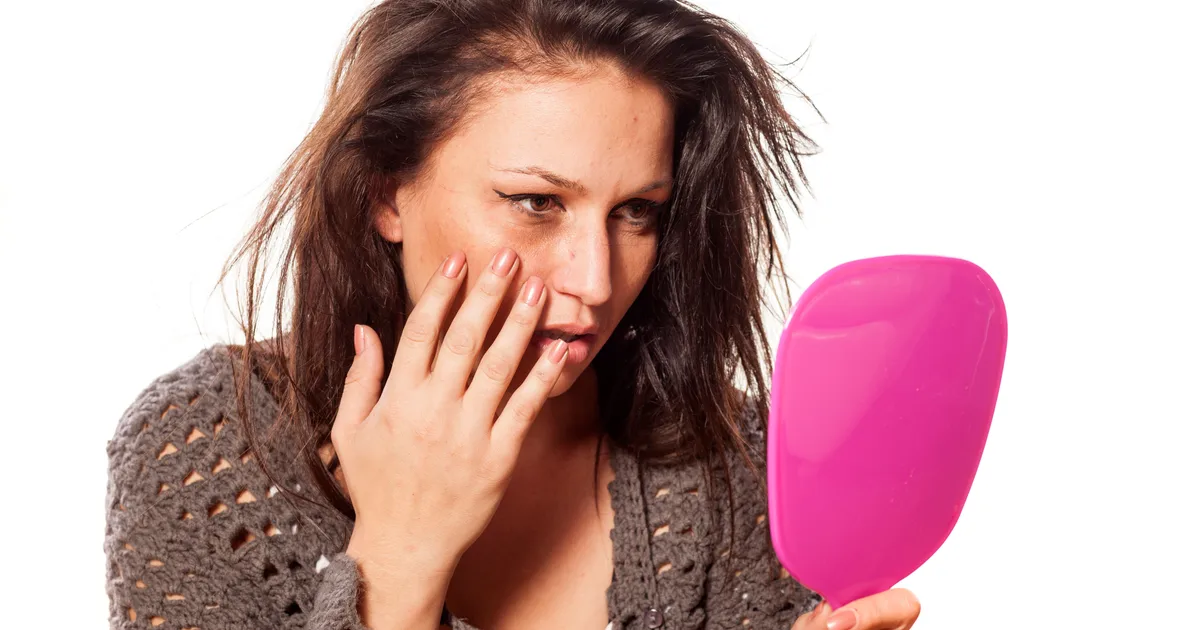
Picture this: You’ve spent 20 minutes blending your makeup, only for it to start balling up, separating or peeling off your skin before you even leave the house. Sound familiar? Makeup pilling is one of the most frustrating beauty problems because it can happen even when you’re using good products — and more often than not, the issue isn’t your foundation itself, but the order in which you’re applying your skin care and makeup.According to cosmetic chemist Milan Scott, pilling — the physical rolling of product onto the skin — is “caused when film formers [an ingredient in long-wear makeup that forms a film on top of the skin], polymers, powders and/or emulsifiers don’t properly stick to the skin or to each other, so instead of forming a smooth, continuous film, they ball up.” VladimirFLoyd via Getty ImagesIf your makeup is rolling off your face in little balls, it's pilling.The good news? There’s a surprisingly simple fix. By applying products in the right sequence — and understanding which textures work best together — you can create a smoother, longer-lasting base that won’t pill.What causes pilling?Generally speaking, pilling occurs due to an interaction between two products that aren’t compatible with each other. This is because “each formula is designed to perform well in isolation, not necessarily layered on top of many other systems with different solvents, textures and film-forming behaviors,” Scott said.Certain ingredients and textures don’t play well together, which is where pilling often starts. Silicones and water-heavy gels don’t always grip well between layers, while heavy film formers like polyvinylpyrrolidone (PVP) or acrylates can create too much friction when stacked repeatedly, Scott said. Powder-heavy formulas layered over rich, emollient bases can also clump instead of blending, which is why certain primer, sunscreen, foundation and setting-product combinations seem to roll up no matter how carefully you apply them.Layering too many products can also exacerbate pilling. “The more products that you layer, you are increasing the chances of an incompatibility,” said cosmetic chemist Ron Robinson. Every skin care and makeup formula contains different textures, solvents, silicones, oils, powders and film-forming ingredients, and the more layers you stack, the higher the chance that something won’t interact well together.Pilling can also be caused by excessive product use. A heavy moisturizer combined with a gripping primer and full-coverage foundation can create excess buildup that starts separating with friction from brushes, fingers or sponges. Here’s how to prevent pilling.First, know what product types are more prone to pilling than others. Robinson said that “heavier textures like rich creams and balms may pill more, as they may sit on top of the skin rather than fully absorb into the skin.” Products with thicker, occlusive textures often create more surface residue, which can increase friction once additional skin care or makeup is layered on top. This is especially common with ultra-rich moisturizers, dense SPF formulas, gripping primers and long-wear complexion products that contain strong film-forming ingredients designed to lock onto the skin.SPF is one of the biggest offenders when it comes to pilling. “Sunscreens need film formers to create an even UV-protective layer, they need powders to reduce greasiness and they can sometimes have high oil or silicone phases,” Scott said. “When the sunscreen film gets disrupted by rubbing, layering too fast or incompatible textures, [it] will cause it to pill.”Order matters: Apply skin care products from thinnest to thickest.Order matters, too. Robinson said products should be layered from thinnest to thickest texture — starting with lightweight hydrating formulas like toners or serums, followed by moisturizer and SPF. When it comes to makeup, cream blushes, bronzers and contour products should come before powders, since powder formulas can create drag and uneven texture if creams are layered on top afterward.Slow down and allow your skin care to fully absorb.One of the biggest causes of pilling is applying too many layers too quickly, especially when the skin still feels damp or tacky underneath. Giving each step at least a minute to settle can help prevent formulas from rolling up once makeup is applied on top. This is especially important with hydrating or gel-based products, which can remain slightly wet on the skin longer than people realize. If foundation is applied too soon afterward, the pigments and film formers in makeup can mix unevenly with the skin care underneath, causing separation, clumping or peeling as you blend.
If You're Sick Of Makeup Pilling On Your Face, There's A Surprisingly Simple Fix
By applying products in the right sequence — and understanding which textures work best together — you can create a base that won't pill.
726 words~3 min read