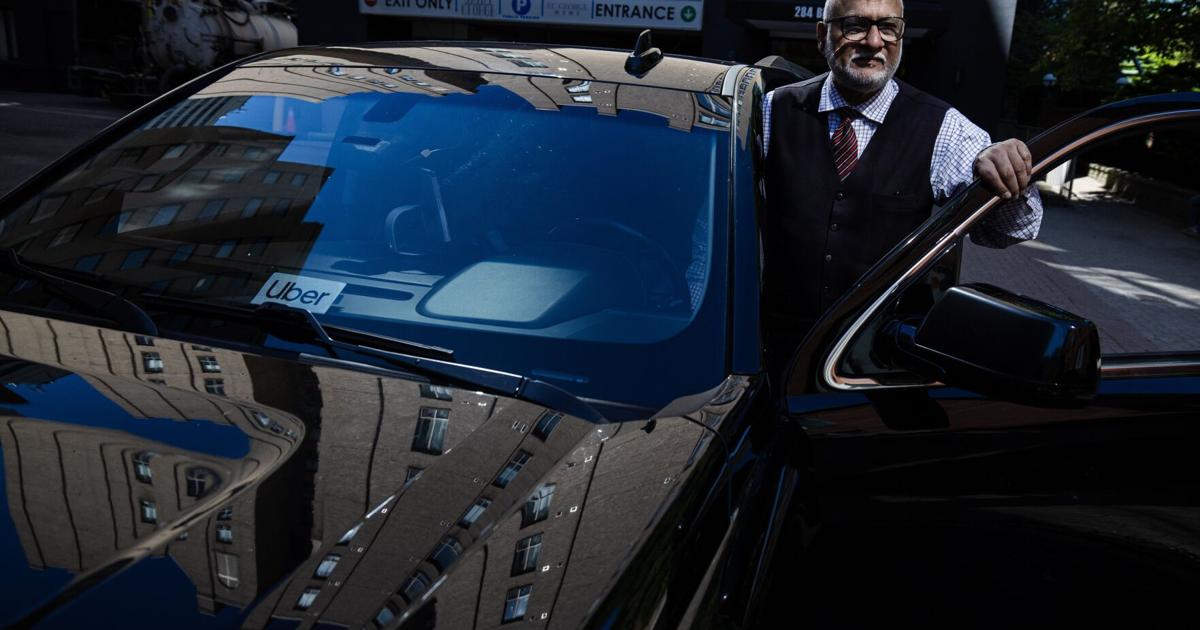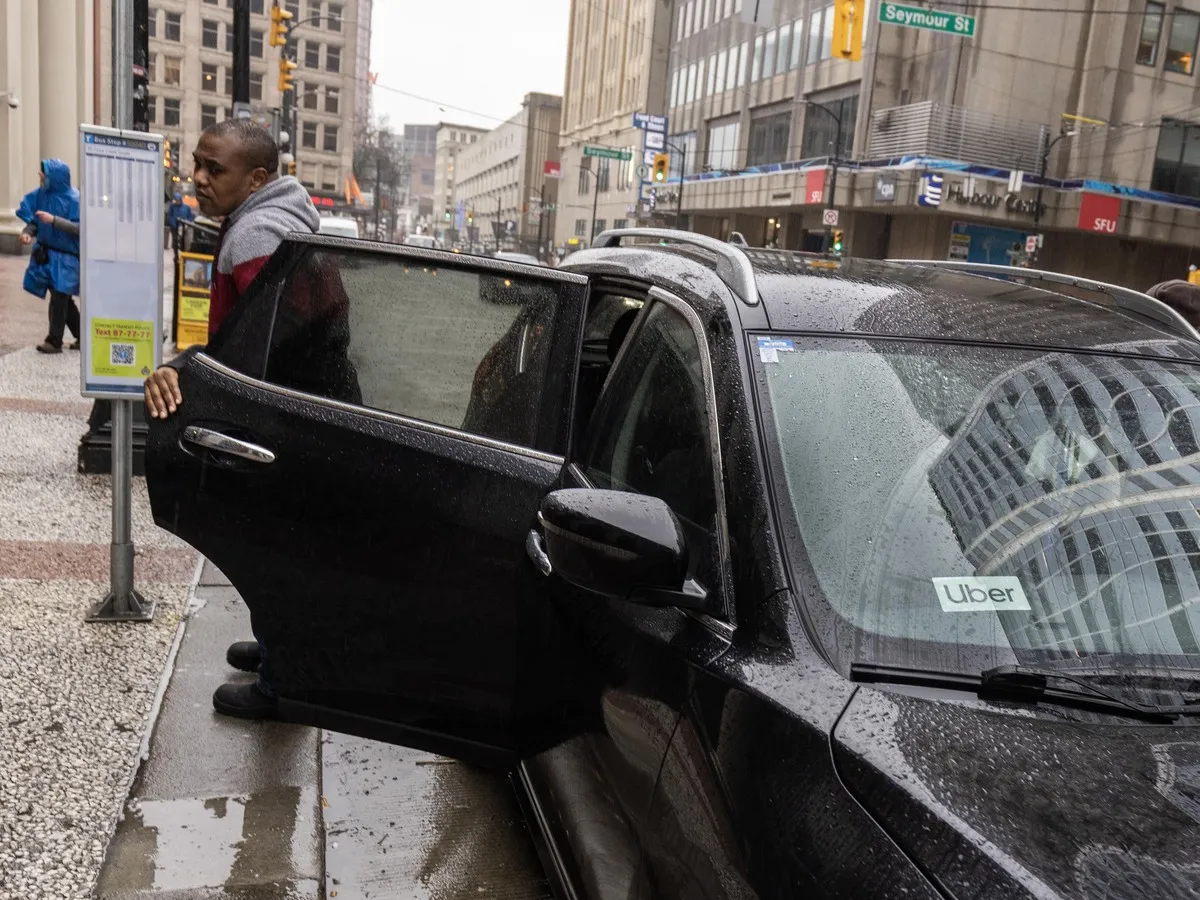
Skip to Content News Archives Economy Energy Oil & Gas Renewables Electric Vehicles Mining Commodities Agriculture Real Estate Mortgages Mortgage Rates Finance Banking Insurance Fintech Cryptocurrency Work Wealth Smart Money Wealth Management Investor Personal Finance Family Finance Retirement Taxes High Net Worth FP Comment Executive Women Puzzmo Newsletters Financial Times Business Essentials More Innovation Information Technology FP500 Podcasts Small Business Lives Told Tails Told Shopping Financial Post Store Obituaries Place a Notice Advertising Advertising With Us Advertising Solutions Postmedia Ad Manager Sponsorship Requests Classifieds Place a Classifieds ad Working Profile Settings My Subscriptions Saved Articles My Offers Newsletters Customer Service FAQ News Economy Energy Mining Real Estate Finance Work Wealth Investor FP Comment Executive Women Puzzmo Newsletters Financial Times Business Essentials HomeLegal PostWorkWhy Uber drivers in Victoria will come to regret joining a unionThe push to unionize gig workers can only mean one thing: higher costs for companies, and higher costs for customersLast updated 56 minutes ago You can save this article by registering for free here. Or sign-in if you have an account.Uber drivers will soon realize the mistake they made, giving up a portion of every pay cheque to dues and, most importantly, handing over their legal rights to the union. Photo by Arlen Redekop/PostmediaBy Howard Levitt and Jensen McCauleySubscribe now to read the latest news in your city and across Canada.Exclusive articles from Barbara Shecter, Joe O'Connor, Gabriel Friedman, and others.Daily content from Financial Times, the world's leading global business publication.Unlimited online access to read articles from Financial Post, National Post and 15 news sites across Canada with one account.National Post ePaper, an electronic replica of the print edition to view on any device, share and comment on.Daily puzzles, including the New York Times Crossword.Subscribe now to read the latest news in your city and across Canada.Exclusive articles from Barbara Shecter, Joe O'Connor, Gabriel Friedman and others.Daily content from Financial Times, the world's leading global business publication.Unlimited online access to read articles from Financial Post, National Post and 15 news sites across Canada with one account.National Post ePaper, an electronic replica of the print edition to view on any device, share and comment on.Daily puzzles, including the New York Times Crossword.Create an account or sign in to continue with your reading experience.Access articles from across Canada with one account.Share your thoughts and join the conversation in the comments.Enjoy additional articles per month.Get email updates from your favourite authors.Create an account or sign in to continue with your reading experience.Access articles from across Canada with one accountShare your thoughts and join the conversation in the commentsEnjoy additional articles per monthGet email updates from your favourite authorsSign In or Create an AccountorUber drivers in Victoria, British Columbia recently unionized, and in the process created an apparent pathway for organized labour to reach the massive gig workforce.Out of touch labour activists across the country undoubtably celebrated this announcement, but such celebrations will be short lived as drivers learn what unions will actually bring — mandatory dues, seniority rules, grievance wars and no guarantee of a pay increase (beyond the pay reduction from dues soon to be deducted from their pay), since both the drivers and Uber bargain in their own interest.And then there is the impact on customers, including higher fares, potential service shutdowns due to strikes and problematic drivers becoming more difficult to fire, as never-ending union grievances will replace terminations and drivers being banned from the platform.FP Work touches on HR strategy, labour economics, office culture, technology and more.By signing up you consent to receive the above newsletter from Postmedia Network Inc.A welcome email is on its way. If you don't see it, please check your junk folder.The next issue of Work will soon be in your inbox.We encountered an issue signing you up. Please try againHistorically, gig workers (which includes Uber drivers) have been independent contractors. The worker is in business for themselves, can set their own schedules and is not disciplined or controlled by the company they perform work for. Companies like Uber act as facilitators, connecting workers to clients.This means they did not receive the benefits of provincial employment standards legislation. They did not receive vacation days, vacation pay, overtime or severance pay — but they did receive other benefits, such as greater control and management over their own lives, performance and business.This is now changing. Both Ontario and B.C. have passed legislation to create protections for gig workers, including the right to a minimum wage and prohibitions on withholding earned tips. But even with these changes, many gig workers are still classified as independent contractors, not employees.A high-performing, entrepreneurial Uber driver could further their business, getting more trips, higher ratings and greater earnings. A less entrepreneurial driver won’t — and may feel as though they are being short-changed by their classification as an independent contractor. This perceived lack of rights is likely what led Victoria’s Uber drivers to unionize.Most union drives start with symbolic injustices and unresolved complaints, and the perceived lack of rights (reinforced by the legislation “extending” rights to them) would be fertile grounds for unions to take root within a business.By unionizing, Uber drivers (and any other gig workers) will have their hands tied by the union’s rules. They will lose the flexibility that comes with being an independent contractor and will be bound by tighter controls that will ultimately benefit the union.Seniority rules will mean that if there’s an abundance of drivers at any given time, the newest one would be cut. There could be restrictions on working for other services, such as Lyft, or working outside of the industry as the employer will no longer have reason to retain their independent contractor status and will instead require them to work for it exclusively.Gone would be any semblance of the competition and innovation that historically helped services like Uber thrive compared to traditional taxi services. The only guarantee would be the strict uniformity and rising costs of unionizing — costs that Uber would make the consumers bear.Lastly, and perhaps most crucially, unionized drivers would lose any semblance of control over their employment. They would lose the ability to negotiate individual contracts with Uber, and they cannot hire their own lawyer and sue for wrongful dismissal.If a gig worker does get some benefit from unionizing — such as a higher pay rate — they are likely to be bound by that rate until the next collective agreement is negotiated. Gone is any opportunity for a raise based on hard work and merit, and any raise or new benefits will be paid solely by the customers, not the companies.Unionized gig workers have no control over their own grievances — unlike a non-unionized gig worker who can sue or file a human rights complaint. Unions have the legal right, with very limited restrictions, to negotiate one grievance away in favour of another, or decide that a grievance is not worth the union’s money to take to arbitration. For that reason, very few grievances make it that far.Uber drivers in Victoria will soon realize the mistake they made by unionizing. They’re giving up a portion of every pay cheque to dues and, most importantly, they’re handing over their legal rights to the union, which is prone to acting in its own best interest over that of its members.The push to unionize gig workers can only mean one thing: higher costs for companies, which will invariably pass those costs onto customers. For customers, that means paying higher fees for drivers who are even more difficult to fire if they commit misconduct or are bad employees, and likely an overall lower quality of service.One potentially positive side effect: we may yet see a revival of the taxi industry, and for its drivers, an increased price for medallions.Howard Levitt is senior partner of Levitt LLP, employment and labour lawyers with offices in Ontario, Alberta and British Columbia. He practises employment law in all provinces and is the author of six books, including the Law of Dismissal in Canada. Join the Conversation This website uses cookies to personalize your content (including ads), and allows us to analyze our traffic. Read more about cookies here. By continuing to use our site, you agree to our Terms of Use and Privacy Policy.
Why Uber drivers in Victoria will come to regret joining a union
Howard Levitt: Why Uber drivers in Victoria will come to regret joining a union
1,372 words~6 min read