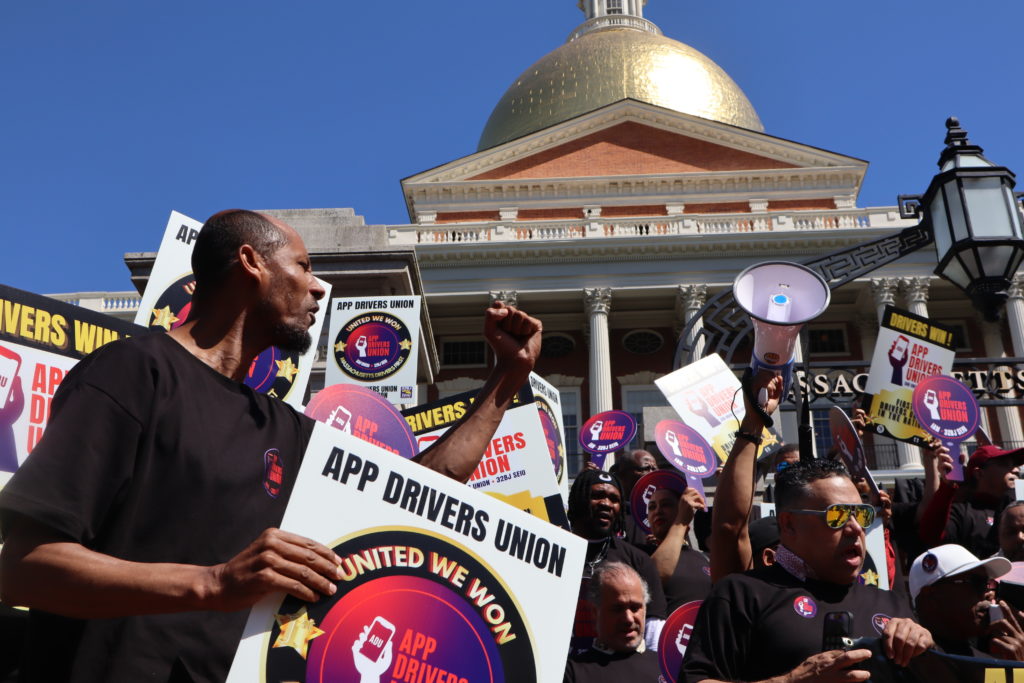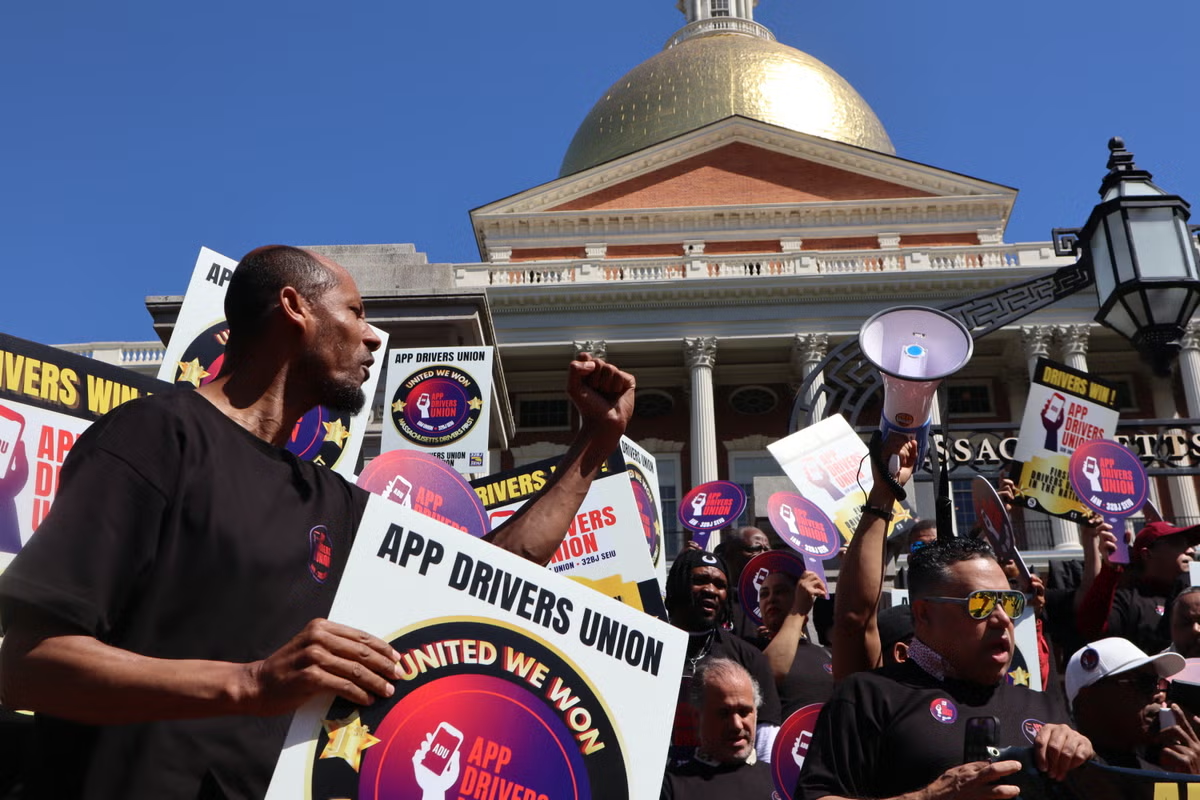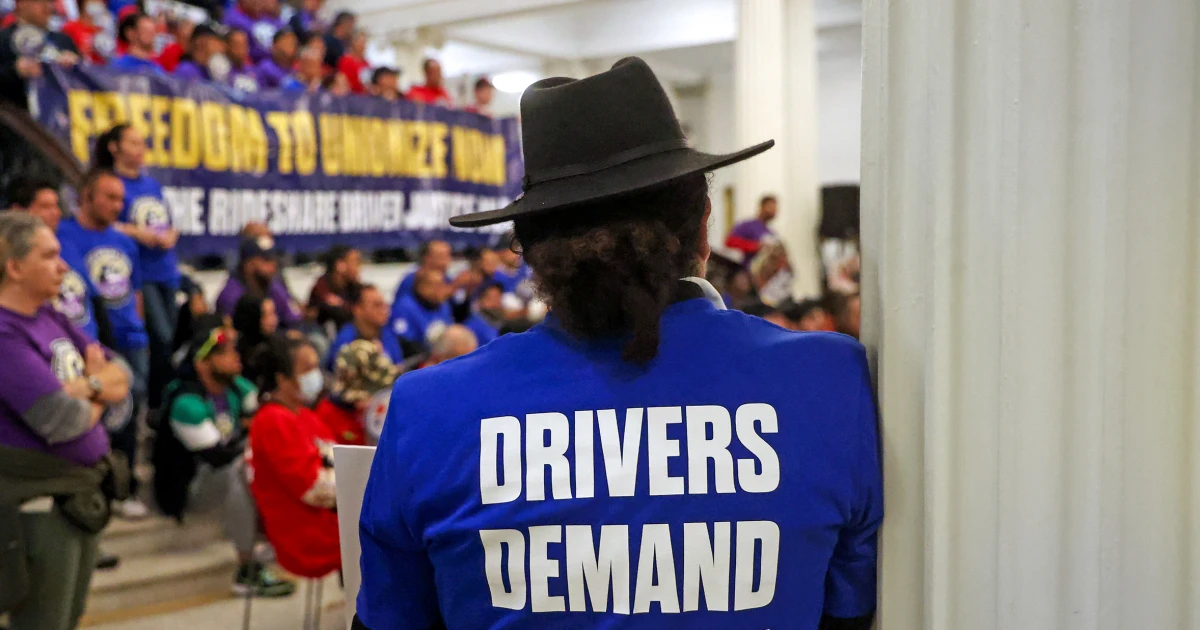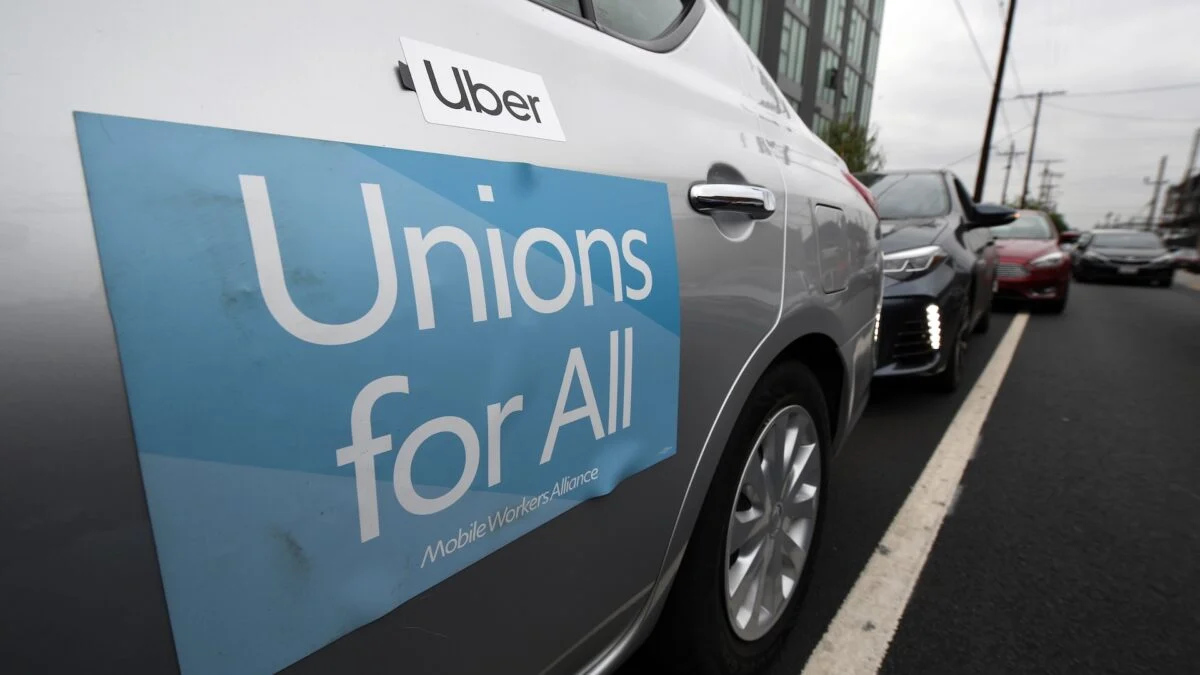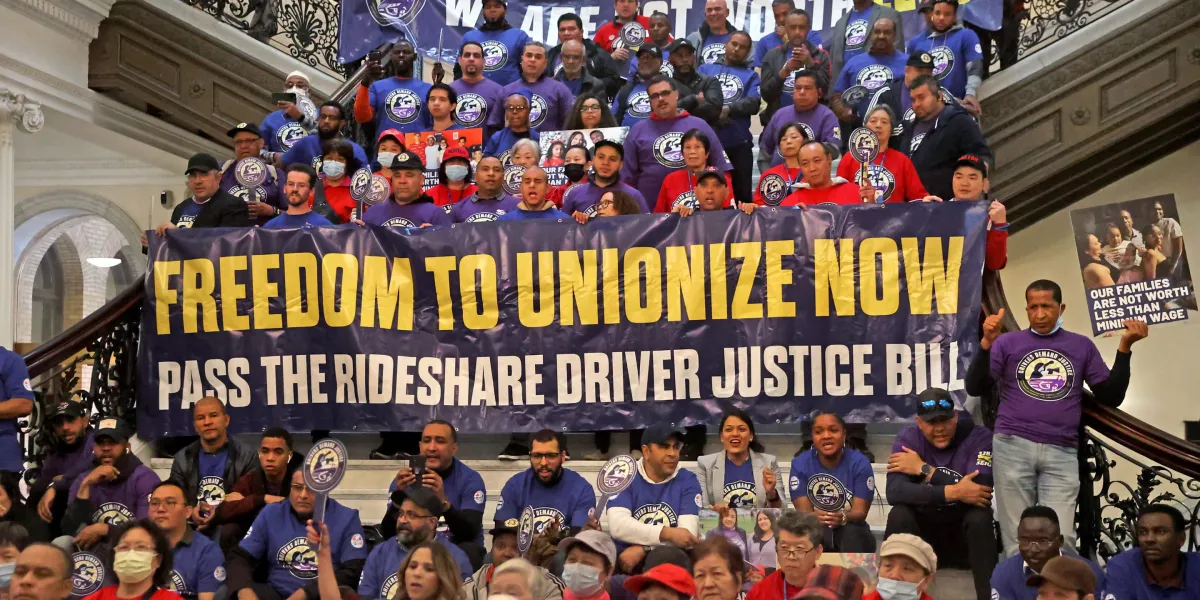
On Tuesday, members of the newly formed App Drivers Union rallied victoriously outside the Massachusetts State House, celebrating the certification of the first statewide rideshare union, representing nearly 70,000 workers.
The organized group of Uber and Lyft drivers is a rare—though increasingly less so—example of new unions forming in the U.S. In 2025, just 16.5 million U.S. workers, or one-tenth of the workforce, belonged to a labor union. That’s the highest number of unionized workers in 16 years, an increase of 463,000 since 2024. Still, unionization is far from its peak in 1954, when one in three Americans belonged to a union.
U.S. employers spent an estimated $1.7 billion last year on union opposition, according to a study from union-busting watchdog LaborLab and the Economic Policy Institute (EPI), a progressive, pro-union think tank. This estimate encompasses total spending on attorneys’ services, including for representation and consulting, and non-attorney consultants.
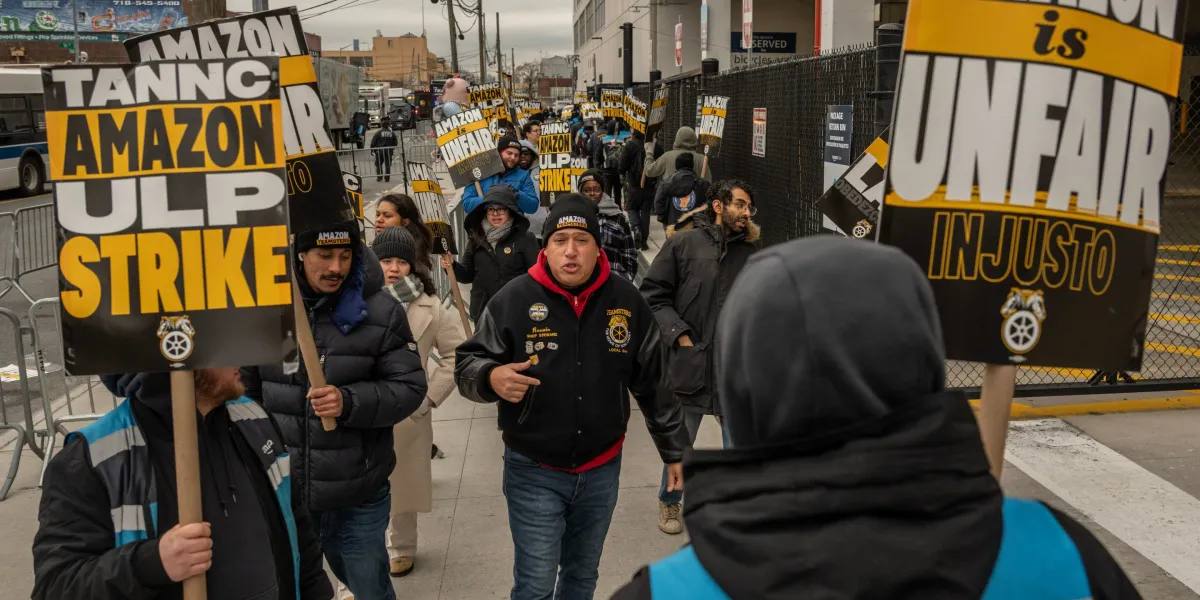
Unionized jobs typically provide higher wages and better benefits, which can lead to opposition from employers, who bear the costs of providing those benefits. Last year, President Donald Trump signed an executive order ending collective bargaining with federal labor unions. Federal workers are far from the only ones facing strong opposition to unionization.