There is no shortage of graduates being produced by South Africa's universities, but are they equipped for a rapidly changing job market? Amid rising youth unemployment, the writer calls for curriculum reform for universities to remain relevant.
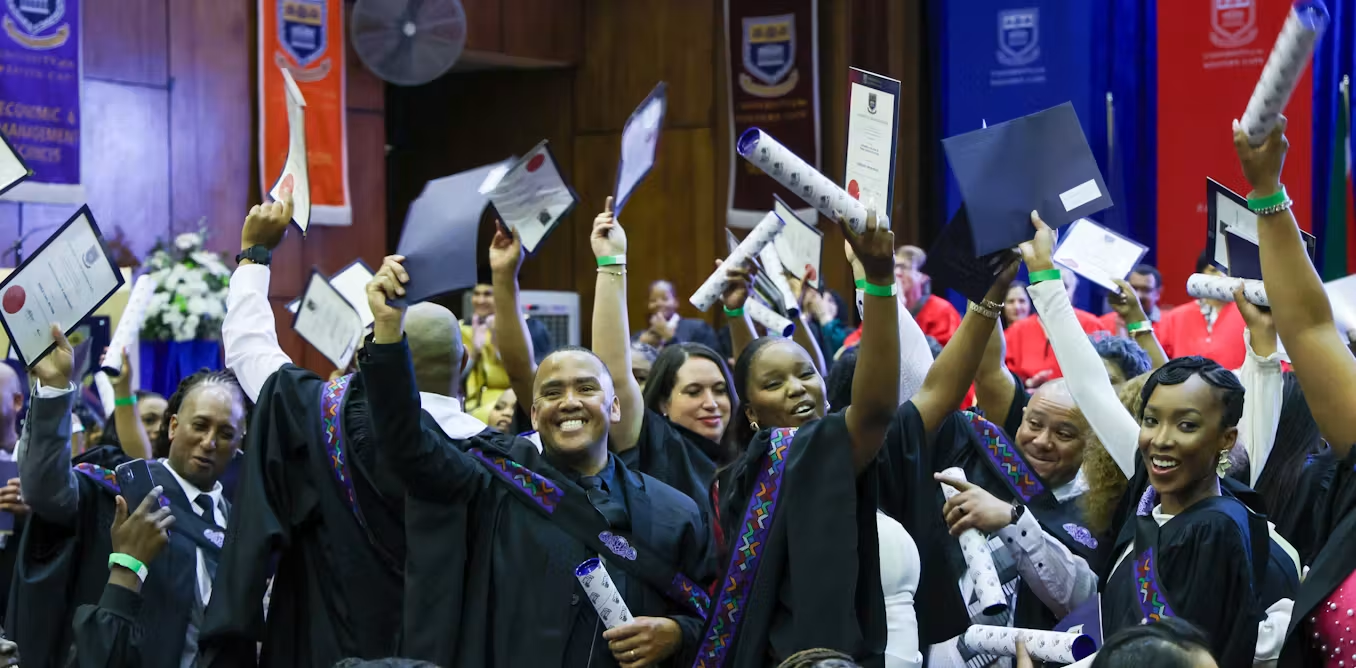
Every graduation season in South Africa arrives wrapped in hope: the cap, the gown, the family photos, the promise that sacrifice has finally turned into mobility. But the latest labour-market data shatters that script.
The Quarterly Labour Force Survey (2026) released by Statistics South Africa paints a sobering picture of an economy struggling to absorb young talent. While a university degree still improves employment prospects relative to lower qualifications, thousands of graduates continue to join the ranks of the unemployed every year. This should force us to confront a difficult question: are universities preparing students for the world that exists, or for a world that has already disappeared?
South Africa's graduate unemployment crisis is no longer simply a labour market problem. It is increasingly a higher education problem. The answer is becoming increasingly uncomfortable.
We are living through a convergence of unprecedented transformations. Artificial Intelligence is reshaping industries at breathtaking speed. The Fourth Industrial Revolution continues to redefine the nature of work. The digital economy is creating new forms of value, employment and entrepreneurship. The knowledge economy increasingly rewards creativity, innovation and adaptability rather than routine expertise. Most significantly, employers are moving towards a skills-first approach in recruitment, often prioritising demonstrable competencies over traditional qualifications.