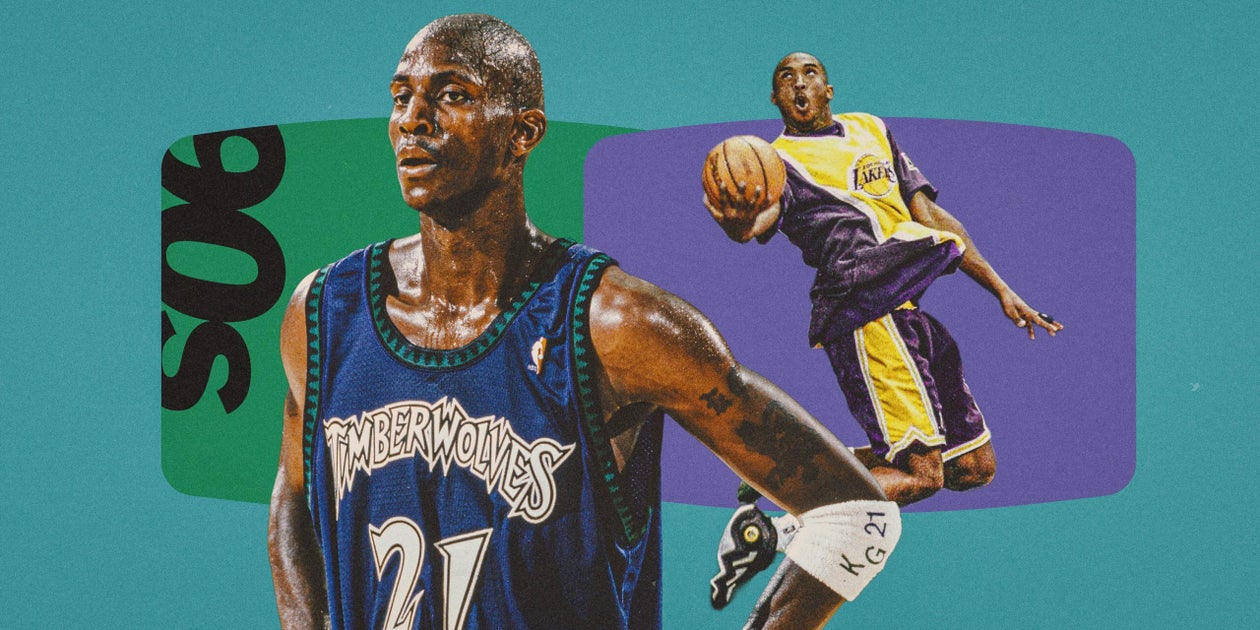
Editor’s note: As the World Cup continues in the United States for the first time since 1994, The Athletic is looking back at college sports in the 1990s and how much has changed since then. Join us for a couple of weeks of offseason football and basketball nostalgia.Roughly 72 hours before Kobe Bryant had to make the biggest decision of his life, one of the most influential stakeholders in the basketball world made a phone call in hopes of appealing to the then-17-year-old.The life-altering debate Bryant found himself at the center of: Would he play college basketball or follow Kevin Garnett and jump directly to the NBA?It was spring of 1996, and Duke coach Mike Krzyzewski knew Bryant, a standout at Lower Merion High in the Philadelphia suburbs, could be a game-changer for the Blue Devils. He’d spent months recruiting Bryant and, with the clock ticking, he called Bryant’s high school coach, Gregg Downer, who remembers the conversation vividly.“I knew the decision was lurking,” Downer recalled. “I was on the phone with Coach K and I said, you know we’re getting down to the wire here. If you’re gonna launch a pitch, you’d better do it now.”And then Krzyzewski was off, reciting a passionate monologue about why college basketball was the right choice for Bryant. He highlighted Duke’s back-to-back national championships and how he’d helped build multiple players into NBA stars, most notably Grant Hill, who’d just won 1995 co-rookie of the year honors and would make his Olympic debut at the 1996 Summer Games.“It was a very motivational speech — I mean, I was ready to go to Duke,” Downer said, laughing. “But he didn’t have to convince me; he had to convince Kobe.”It didn’t work. On April 29, 1996, Bryant announced he was “taking my talents to the NBA.” Two months later, he was drafted No. 13 by the Charlotte Hornets before being traded to the Lakers.Bryant wasn’t the first high schooler to head straight to the NBA, and he wouldn’t be the last. The 1990s reshaped college basketball with baggy shorts, the launch of Duke as a powerhouse and the establishment of Rick Pitino as one of the game’s elite coaches. But the decade is also known for jump-starting a trend that hurt college hoops: From 1995 to 2005, 39 of the nation’s top prospects decided to bypass college altogether, drafted directly from high school to the NBA, previously an almost unheard of leap. That stopped in 2006 with the introduction of the NBA’s one-and-done rule, but the ripple effect still lingers.Some of the prep-to-pro generational talent, such as Garnett, Bryant, Tracy McGrady and most famously LeBron James, put together Hall of Fame careers, quickly establishing themselves as NBA heavyweights. Bryant is considered one of the greatest players of all time, winning five NBA championships, two Olympic gold medals and earning 18 All-Star nods before his death in a helicopter accident in January 2020 at age 41.Kobe Bryant became arguably the greatest high school-to-NBA player ever. (Eileen Blass / Imagn Images)Many more — Korleone Young, Robert Swift, Kwame Brown, among others — defined the idea of draft busts. Young, for example, played in only three NBA games in 1999, got cut and never made another NBA roster. Brown, the first high school player drafted No. 1, played for seven teams over a 12-year career, averaging just 6.3 points per game.
Did the ’90s prep-to-pro era cost college basketball a generation of All-Americans?
College basketball missed out on a generation of stars from 1995-2005, when 39 top prospects made the jump from high school to the NBA.
1,643 words~7 min read