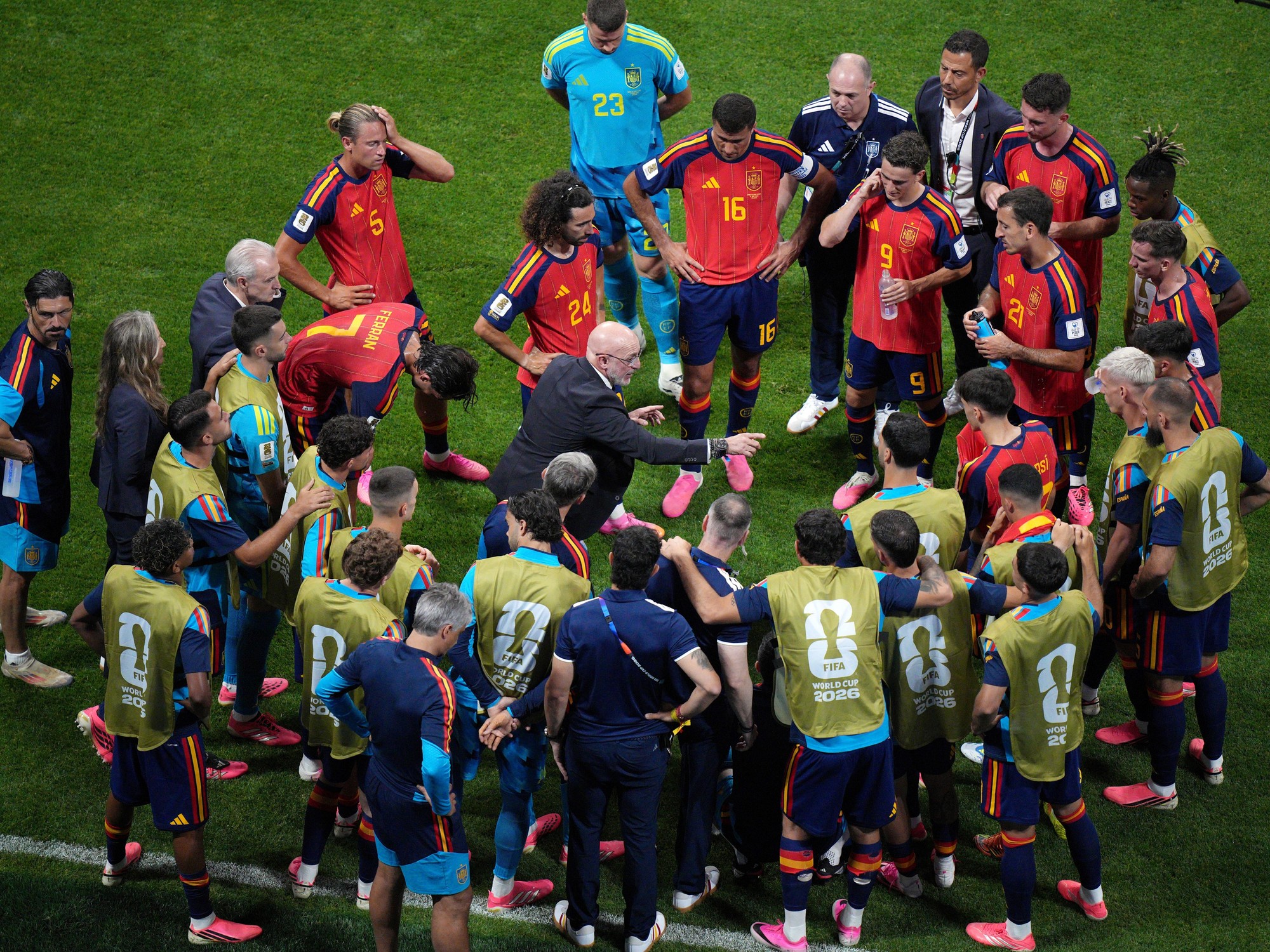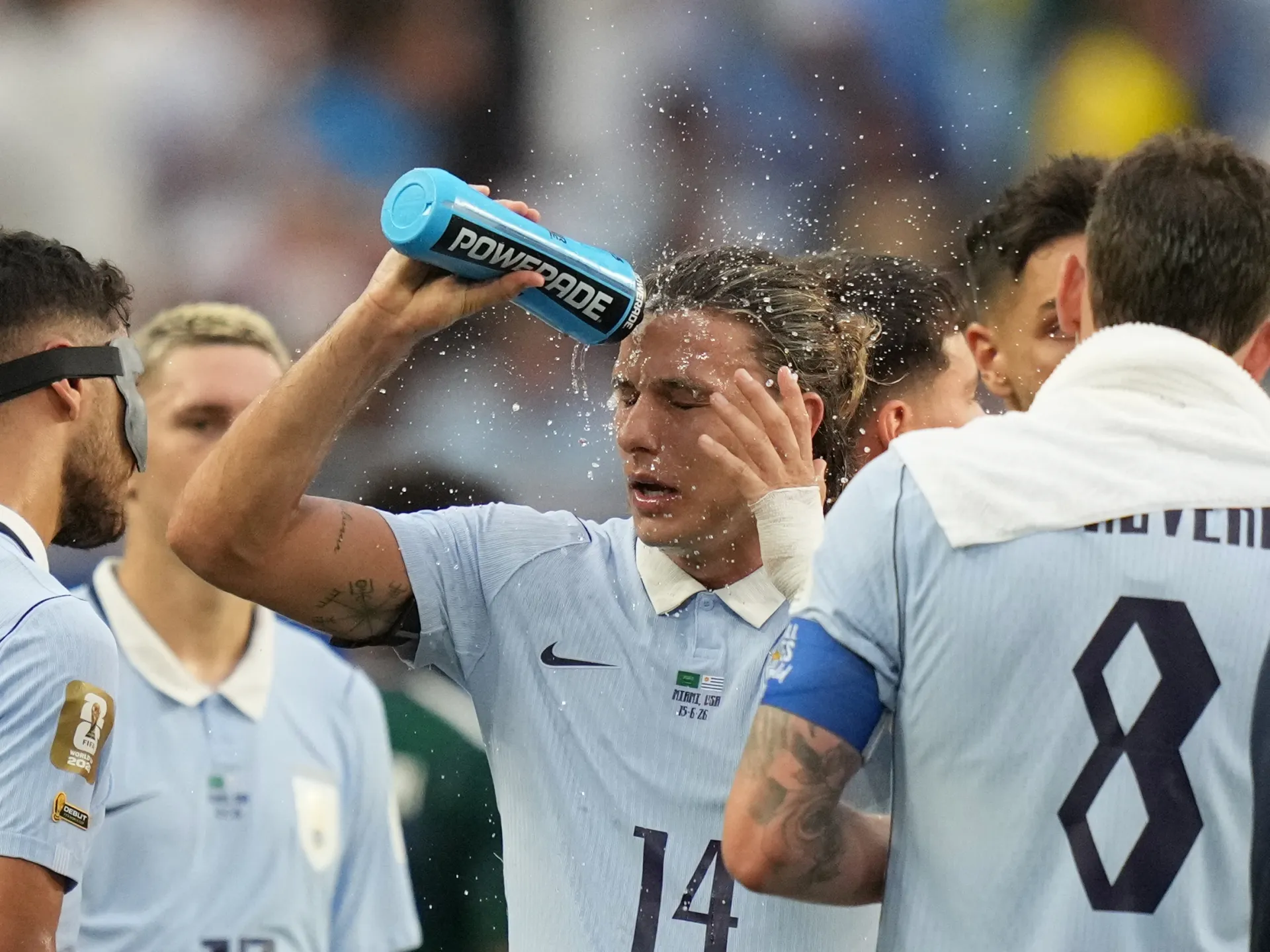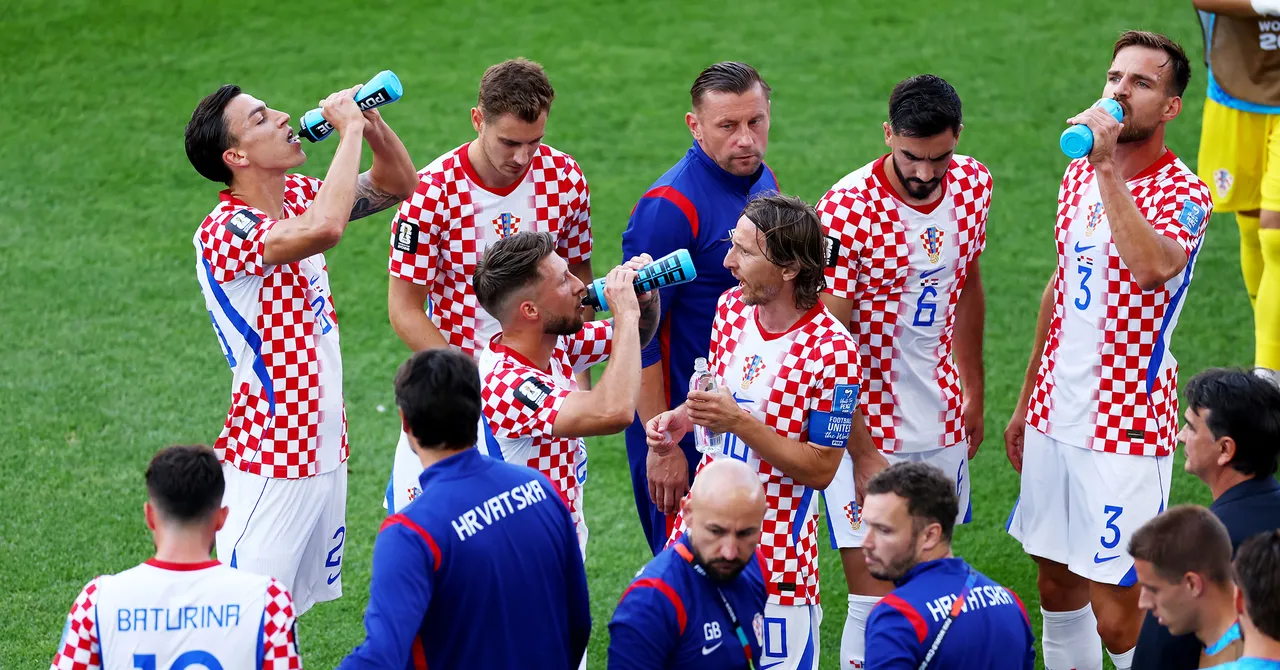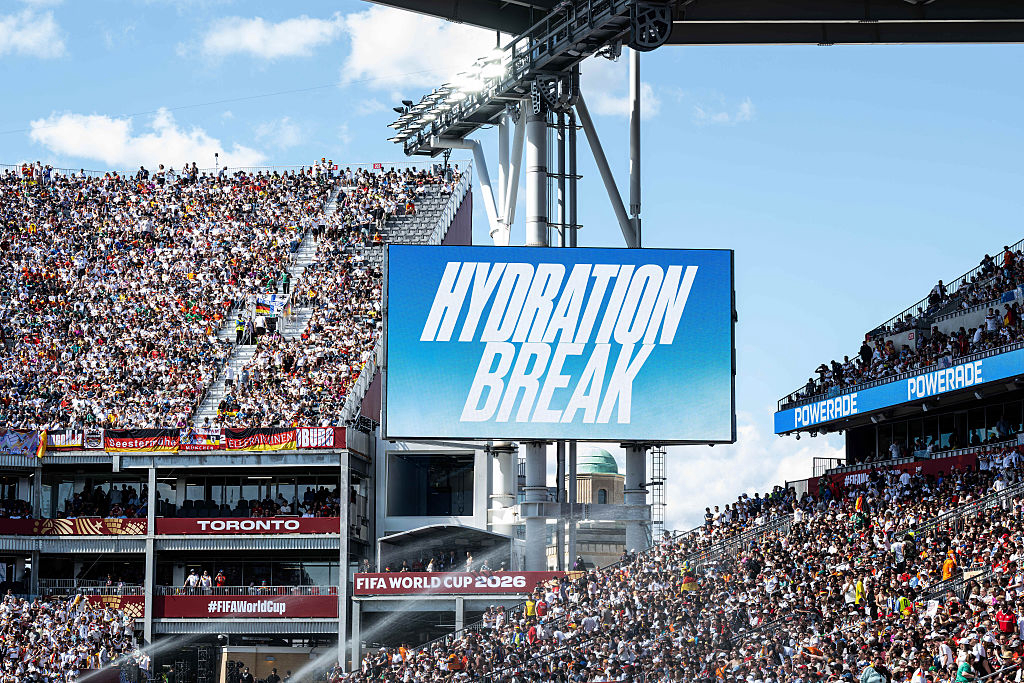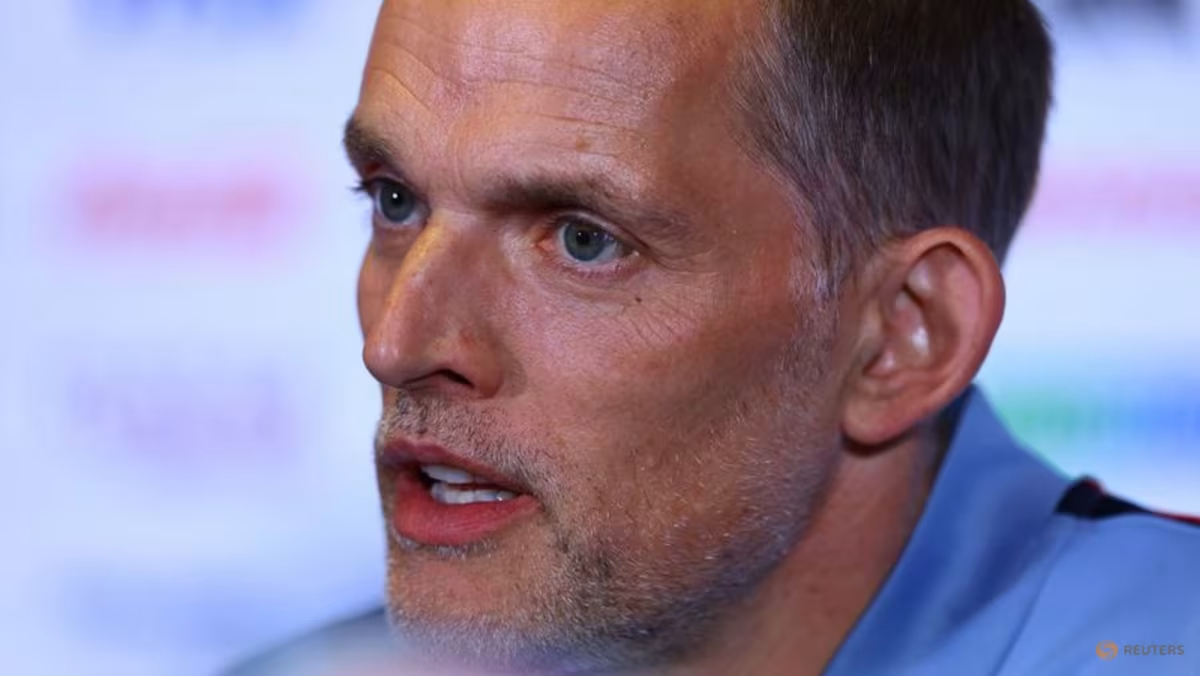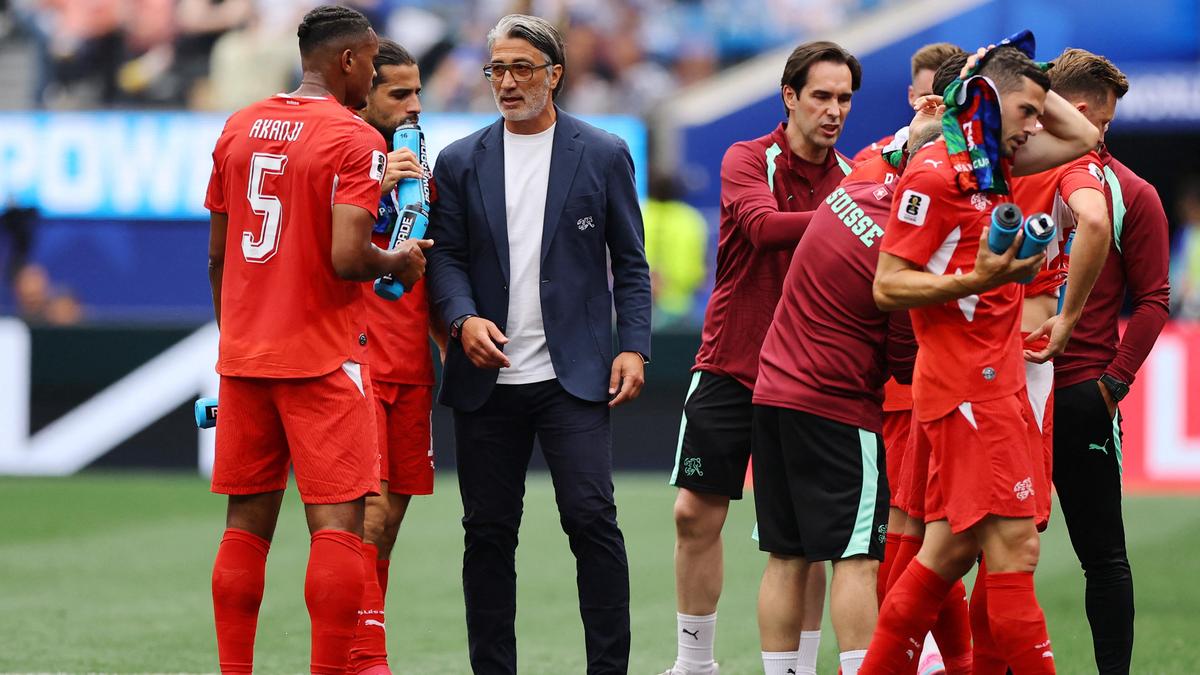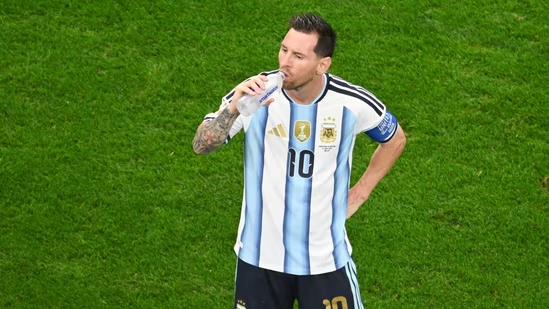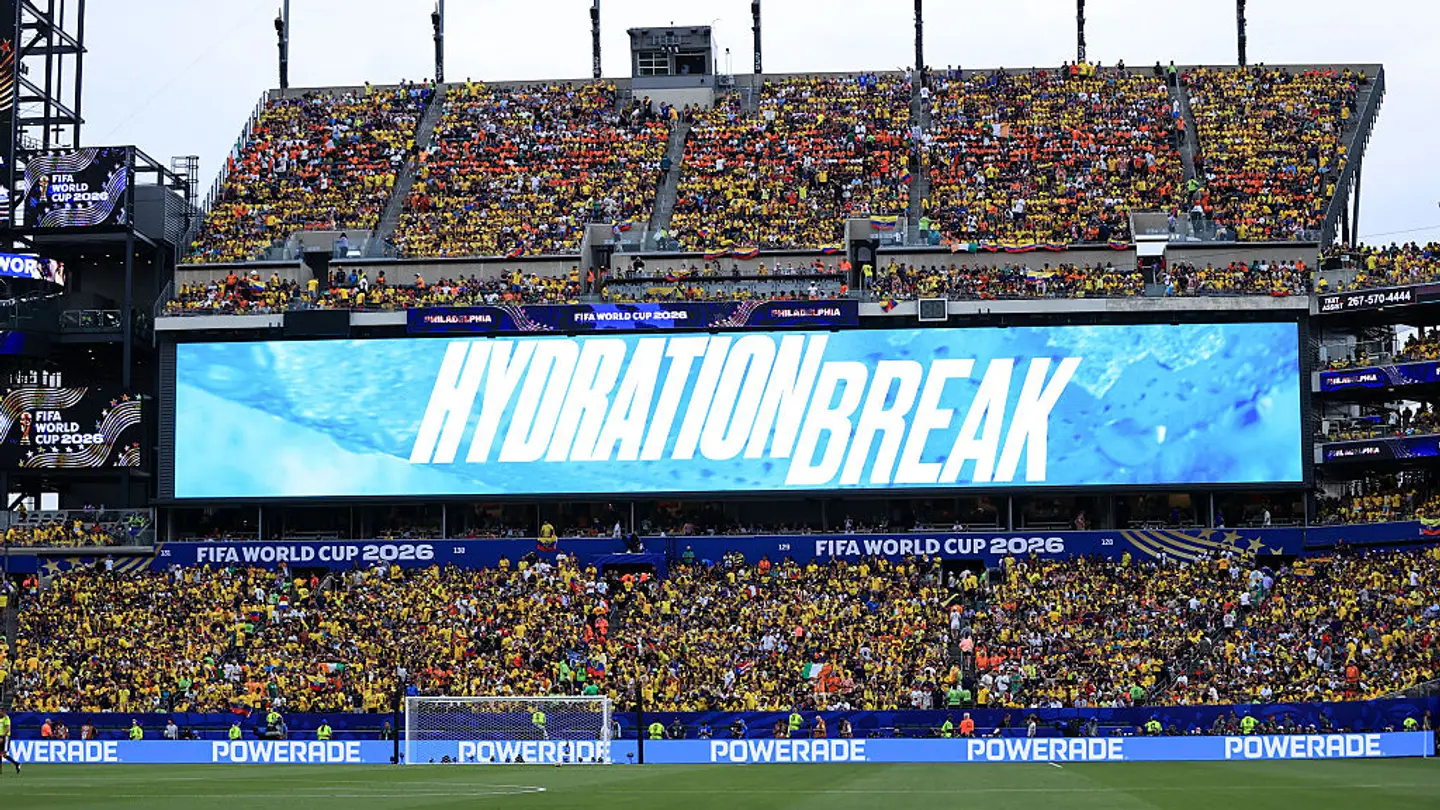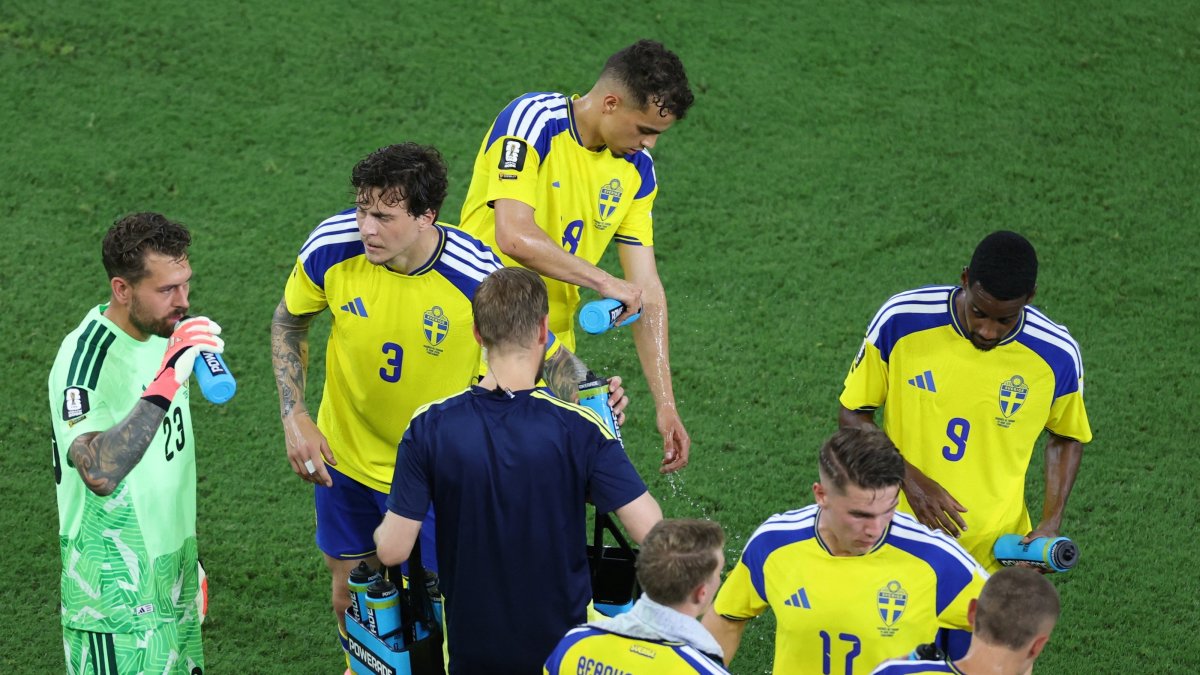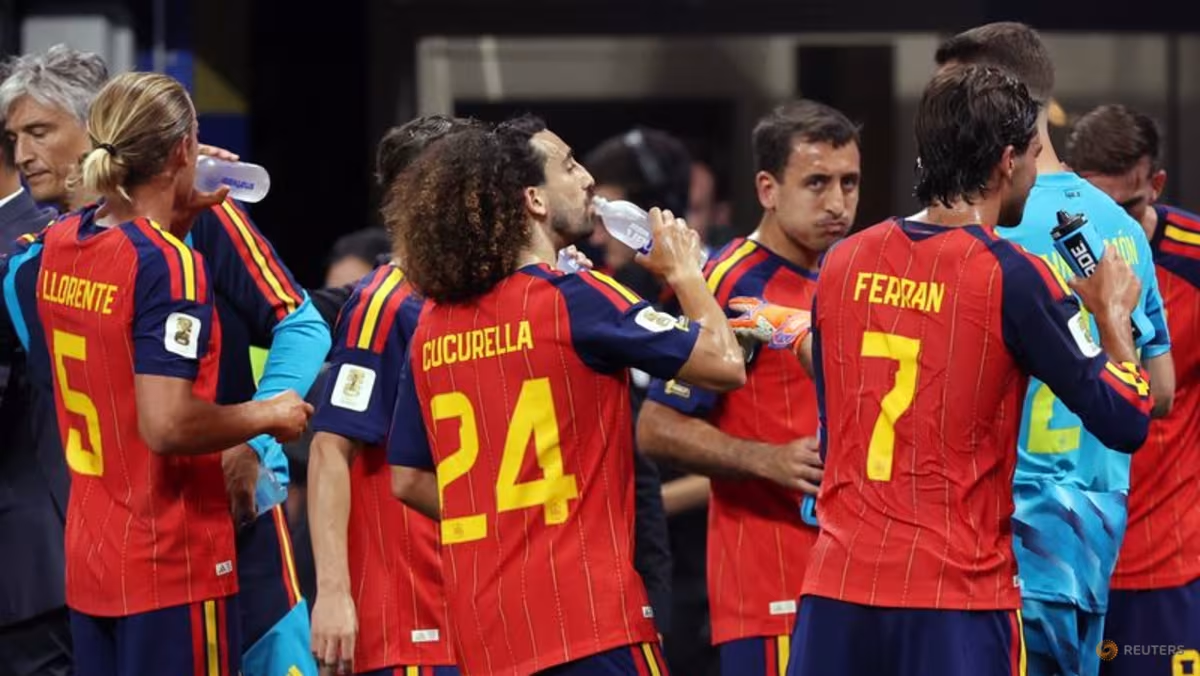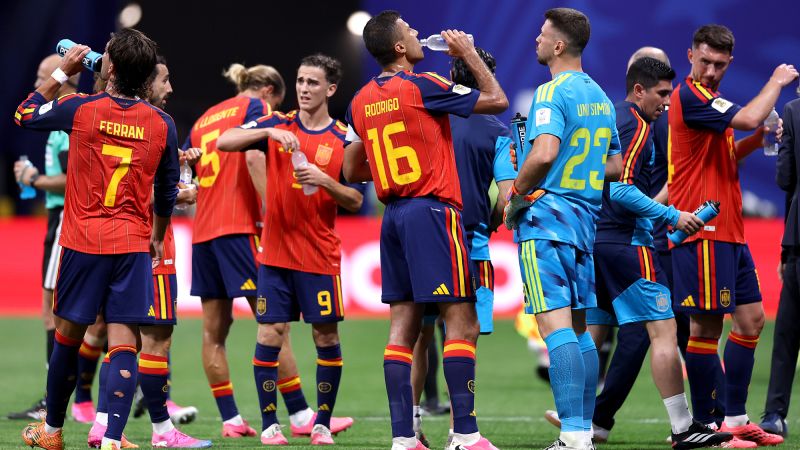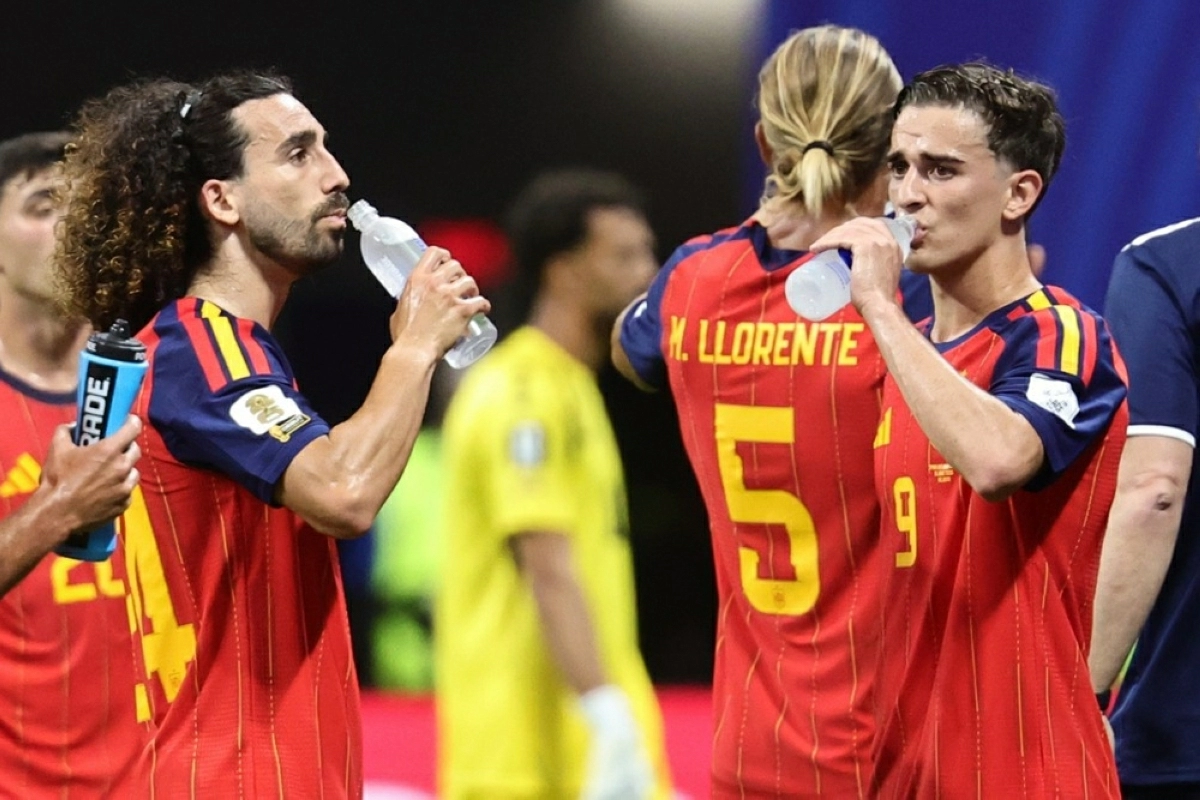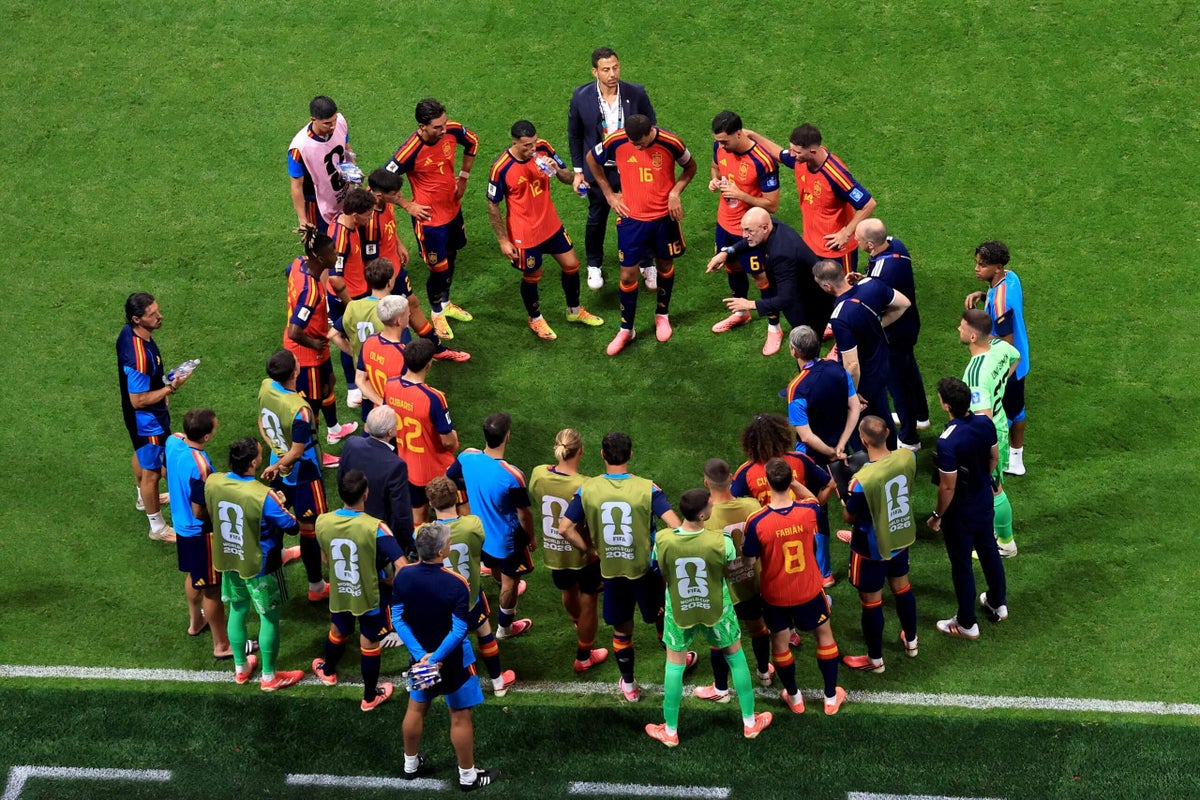
TORONTO — Like many at this year’s World Cup, U.S. men’s national team defender Antonee Robinson hasn’t fully gotten used to having hydration breaks called in every match.When a break was called during the first half of the Americans’ World Cup opening game against Paraguay, all 11 players huddled around a laptop used by the team’s coaching staff to discuss strategy and review film. That’s not usually an option for players and staff in the middle of a game. Even stranger was when Robinson was getting back on the field to resume play, but being told to wait.“The referees are saying: ‘No, you’ve got more time, it’s alright, because the ads are still running’,” Robinson said.Gone are the days of two uninterrupted halves of football. Hydration breaks are the new norm, and they’ve been on center stage at this year’s World Cup. Soccer is experiencing its own version of TV timeouts, more commonly seen in sports like ice hockey and basketball. The breaks serve as unofficial quarter marks across 90 minutes of play.Antonee Robinson has taken time to get used to the breaks (Keith Birmingham/MediaNews Group/Pasadena Star-News via Getty Images)And pitchside, teams are still finding ways to adjust.“Playing four halves instead of two alters the conception that had been culturally constructed to interpret football. It adds nothing and takes away a lot,” Uruguay manager Marcelo Bielsa said. “When it was divided into four, no thought was given to the effect it might have on what made football a sport that captivates people, but rather to another type of repercussion that I neither discuss nor analyze.”In the weather-delayed match between France and Iraq on Monday, the second-half hydration break was cancelled after the game had to be paused for more than two hours because of thunderstorms.Get free access to the most comprehensive World Cup coverage in The Athletic app“Sometimes they are good, sometimes they aren’t,” said Croatia manager Zlatko Dalic. “It breaks the momentum of the game. When you are in a crisis and you need a break to take a breath, the hydration break is good.”Hydration breaks are called during high-temperature games to keep players and officials cool and refreshed. At this year’s tournament, three-minute-long breaks are called at the 22nd minute of each half while the game clock runs concurrently. On an in-stadium screen, an elapsing clock counts down time until it reaches 0:00, when play can resume.“I’ve never seen this in my life in football,” Ghana defender Gideon Mensah said last week.The breaks are called regardless of the game’s conditions and stadium venue, and are usually welcomed by a chorus of boos from attending fans. When FIFA officially announced last December that they’d be part of the upcoming World Cup, they said they’d be called in every game “to ensure equal conditions for all teams, in all matches”.A case in point was a hydration break called last week during a rainy group-stage game between Ghana and Panama in Toronto.“The hydration is good,” Mensah said. “But at some point, you need to also decide on which game (to have breaks). Because today, obviously, was not really hot. I mean, it was raining everywhere.”Dalic thinks the breaks can help stop momentum (Paul Ellis / AFP via Getty Images)And another was called in Atlanta’s domed Mercedes-Benz Stadium, much to the chagrin of South African manager Hugo Broos.“In this stadium, players don’t need a drink after 20 minutes,” Broos said.And while players hydrate and discuss tactics, TV viewers in the United States and Canada are subjected to advertisements until play returns.“As a fan experience, watching the game, when there’s commercials and stuff, it does kind of take you out of it,” Robinson said.“I think for the neutral watchers on TV, it’s also not great,” Netherlands defender Virgil van Dijk said. “So, if it’s really hot, obviously it would be good to put them in, but I think you have to look at it in every game separately, in my opinion.”Fans aren’t just booing because their games are being interrupted. But there are some concerns, even shared by players and managers, too, about whether or not they can change momentum or maintain focus.“Sometimes, especially in the second half, I thought the break made our team go down a little bit, especially in that period we were controlling the game,” Jordan midfielder Amer Jamous said after his team lost 3-1 to Austria.“But these are the rules and we should go with it. But today, the weather was so good so, sometimes we should not just break if the game is going well and there is no heat. We could just continue the game.”Virgil van Dijk thinks the breaks need to be used only when really required (Molly Darlington/Getty Images)Sebastian Migne’s Haiti squad conceded a goal from Scotland’s John McGinn in their first game of the tournament minutes after a hydration break.“The challenge, from what I have observed, is with the players, because it takes time for them to reconnect to the game,” Migne said.“Scotland’s goal against us happened three or four minutes after a break. I don’t want to make an excuse, but the players took some time to get back into the flow of the game.”Mensah explained that his teammates had difficulty being settled during a throw-in following a break against Panama last week.“I think, at some point, if you’re not too concentrated, you lose whatever is going on in the game,” Mensah said.Should The World Cup Hydration Breaks Exist?Joe DevineAnd while some teams hope to maintain their momentum, other teams actively hope the break can quash it. Though there’s no guarantee it works in their favor, either.Curacao, the tiniest nation at this year’s World Cup, had a unique approach to the hydration break. Midfielder Leandro Bacuna said his team anticipated being under pressure from the heavily favored Germans and counted on the break to slow their momentum down. However, it was Curacao who scored a minute before the break to tie the game at one goal apiece. The Germans then scored six unanswered in a 7-1 demolition.“We thought it might have been a positive thing for us,” Bacuna said. “Because we could have been under pressure, and then we’d get a break, and we could stop their momentum, but this time we scored the goal. You never know which way it’s going to go.”Leandro Bacuna thought the breaks might help Curacao reset against Germany (Francois Nel/Getty Images)But not everyone sees the downside in having two hydration breaks, particularly managers who want to take advantage of having more time to provide instruction to players. Portugal manager Roberto Martinez says teams having four breaks to make adjustments is “very important, revolutionary even”.“It’s not my place to say if it’s good or bad, but we just need to use it how we can,” Martinez said. “It’s different for the players, for the technical staff, so we’re talking about three minutes where we can make adjustments.”Austria coach Ralf Rangnick positively welcomed their introduction and wonders if they will be adopted in domestic soccer. “[Breaks] gives a chance for coaches to make changes and I am excited to see whether they will become part of the European season,” he said.“I think it changes the character of each half quite significantly because it gives you the chance to regroup. It gives you the chance to change and to reset,” said England manager Thomas Tuchel.“We will use them as an opportunity to cool the players down. Mentally and physically.”Players like Mensah do see the benefit in connecting with their fellow players during the pause and will take any opportunity to recover whenever they can, but some would rather play if the game’s conditions don’t necessitate it.“I see pros and cons to both of it. As a player, I think it’s great, in terms of performance perspective,” Robinson adds. “But I can see why some people wouldn’t like it… But I don’t think it’s taken away from how enjoyable the tournament’s been so far.”“It’s just part and parcel of this tournament,” England midfielder Jordan Henderson said after the game. “It’s the same for everyone. We’ll just take it as it comes.”It was quite strange for England in their second game of the tournament though, the 0-0 draw with Ghana on Tuesday. There was a bizarre situation in which the match effectively had four hydration breaks, due to two lengthy stoppages to treat injuries right before the scheduled intervals.During those additional breaks the players went over to talk to the managers and took on fluids, only for play to be stopped for the official hydration break seconds after it had restarted.(REUTERS/Pilar Olivares)We’ve heard from players and coaches, some like it, some don’t. How do FIFA feel at this point in the tournament?Shortly after that England match, the governing body released a statement from FIFA president Gianni Infantino which said “the main reason is the heat” but also that “having a moment to rest is extremely important”. He said they had to be implemented in every match to ensure fairness across the competition, regardless of temperature.Infantino also insisted that FIFA gains “absolutely nothing” from the breaks. “There is no additional revenue for FIFA, as all commercial agreements were signed well in advance. So, this is not a financial issue for us. For us, it is purely a sporting matter.”A sporting matter for FIFA, with mixed results for players, coaches and fans.Additional reporting: Lukas Weese and Sergio Gonzalez
What do World Cup players and coaches think of hydration breaks?
The introduction of hydration breaks have become a hot topic. Here are the pros and cons according to those involved in matches.
1,565 words~7 min read