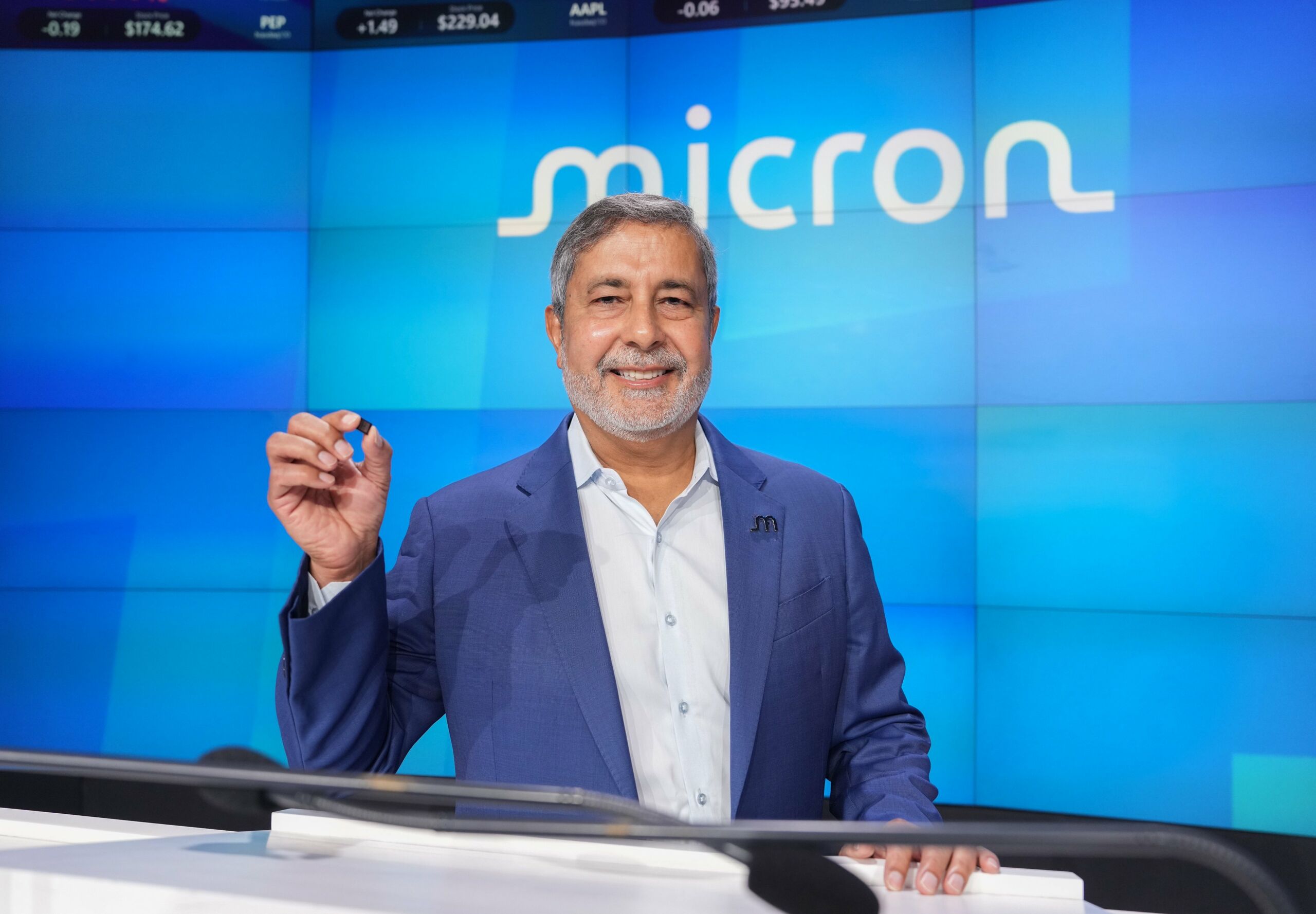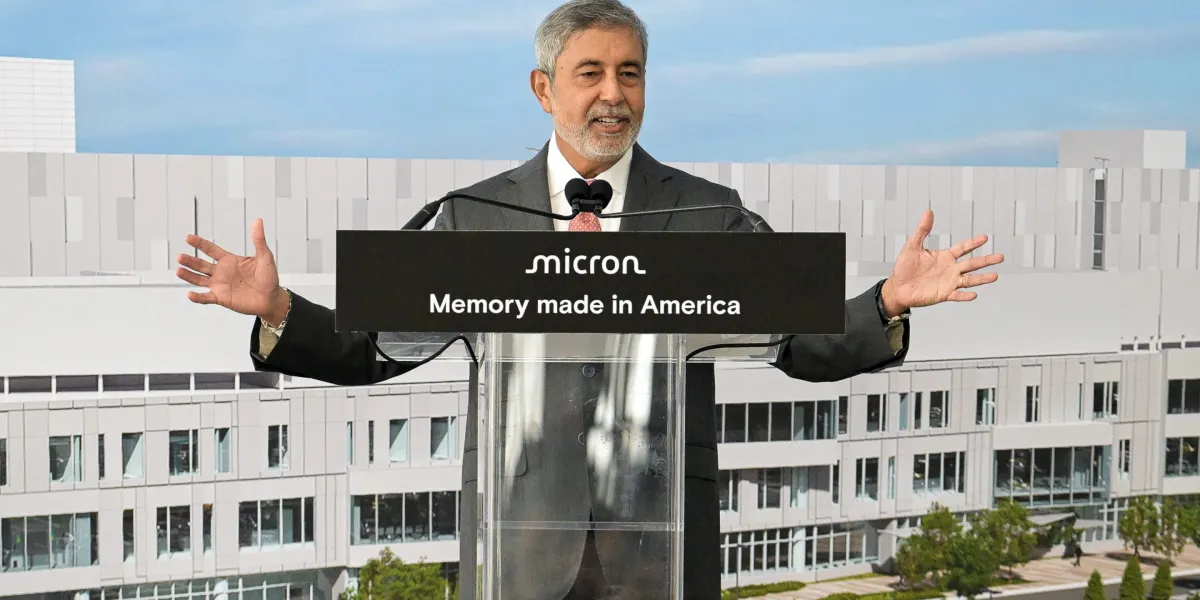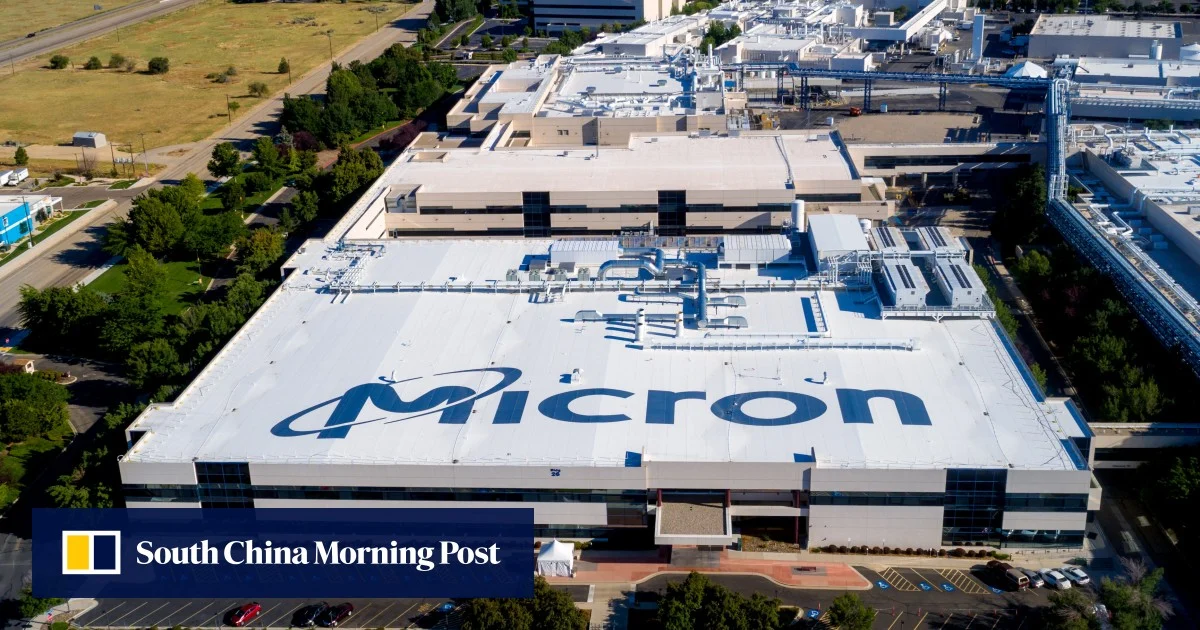
Micron's billionaire CEO Sanjay MehrotraMandel Ngan/AFP/Getty ImagesThe artificial intelligence boom has kicked off a trillion dollar land grab to build data centers across the country (and beyond) to provide computational power for AI systems. Memory—a core part of data centers— decides how fast servers can process information. That’s good news for memory chip businesses that are experiencing exponential growth selling to the world’s largest tech companies like Nvidia, Apple and Amazon. Among the biggest beneficiaries of the AI frenzy is memory behemoth Micron, which builds high-speed chips that sit right next to the GPU and feed data to AI models. Micron’s revenue has exploded, growing 196% year over year to about $24 billion in the second quarter of 2026. It made about $37 billion in revenue in 2025, a roughly 50% increase from 2024. The company’s stock has been on a tear, climbing 270% this year and a staggering 860% over the past 12 months. That growth has helped it move up 140 spots on the Forbes’ Global 2000 list, which ranks the world’s largest public companies. In May, Micron’s market cap surpassed $1 trillion, making CEO Sanjay Mehrotra a billionaire worth an estimated $1.2 billion, Forbes reported. Its market cap was about $100 billion a little over a year ago. Today, the Boise, Idaho-based company’s top customer is Nvidia (No. 27), accounting for 16% of its revenue, followed by tech giants like Apple (No.11), where its chips are used in iPhones, Macs and iPads, Dell (No. 129) & HP (No. 522) as well as hyperscalers like Amazon (No.2), Microsoft (No.7) and Google (No. 4). Historically, memory companies are prone to volatile boom and bust cycles. Demand for memory jumps, prices rise during a supply crunch, multiple players start manufacturing to meet demand all at once and by the time the chips hit the market, demand cools and prices fall. AI appears to have broken this cycle altogether, creating a prolonged boom for specialized memory chips that allow data to move into the models faster and more efficiently.Mehrotra, who previously cofounded flash drive maker SanDisk (No. 614), spent years transitioning Micron from a commodity chip maker into the go-to infrastructure supplier for AI. In early 2026, he killed the company’s 29-year-old consumer business, which sold storage drives and SSDs to everyday users, to feed supply to data centers, doubling down on AI demand. He also spearheaded the company’s shift from selling chips on the spot to signing long-term multi-year contracts to ensure prices remain high. AI companies continue to face a chip shortage, partly because of unprecedented demand that has far outpaced supply. Micron wants to keep it that way. In March, Mehrotra said that Micron is able to meet only 50% to 75% of its customer’s requirements. Micron has been deliberately pacing the construction of its new Idaho and New York chip factories to ensure supply does not exceed the intense market demand driven by artificial intelligence. As the only U.S. based memory maker Micron has an edge but it isn’t the only one seeing tailwinds thanks to AI. South Korean memory giant SK Hynix reported record breaking revenue of $35.5 billion in the first quarter of 2026, a 198% increase year-over-year. It booked $68.1 billion in revenue in 2025 and doubled its profit to about $33 billion. Those impressive numbers have helped it jump 107 spots on the Global 2000 to the 48th. SK Hynix Inc CEO Kwak Noh-jungSeongJoon Cho/BloombergAnother South Korean conglomerate Samsung booked an unprecedented $50.4 billion in revenue from its memory business in the first quarter of the year thanks to the AI infrastructure boom. But it also narrowly avoided a potential global supply chain crisis after its workers threatened to go on strike. In a contentious deal, the company agreed to pay some of its employees on its chip division bonuses of about $400,000 per person on average. It’s the only tech giant based overseas in the top 20, moving up to the 15th this year from the 19th in 2025. Micron, SK Hynix and Samsung, the three big memory mammoths, have all reached $1 trillion in market cap. Other semiconductor companies have benefited too. AI chip behemoth, Nvidia moved up 20 spots while its rival AMD moved up 116 spots and is now ranked at 194. Broadcom, which designs custom AI chips for companies like OpenAI, Google and Meta, moved 15 spots to No. 53. Chipmaker Cerebras went public in May, making its debut on the list at 1611th this year. While the company isn’t profitable, it reported annual revenue of $510 million for fiscal year 2025, a 76% increase from the $290.3 million generated in 2024.
The World’s Largest Tech Companies: Memory Chips Skyrocket Amid AI Data Center Buildout
The AI boom has turned memory chip manufacturers like Micron and SK Hynix from cyclical businesses into a sizzling hot growth sector.
774 words~4 min read