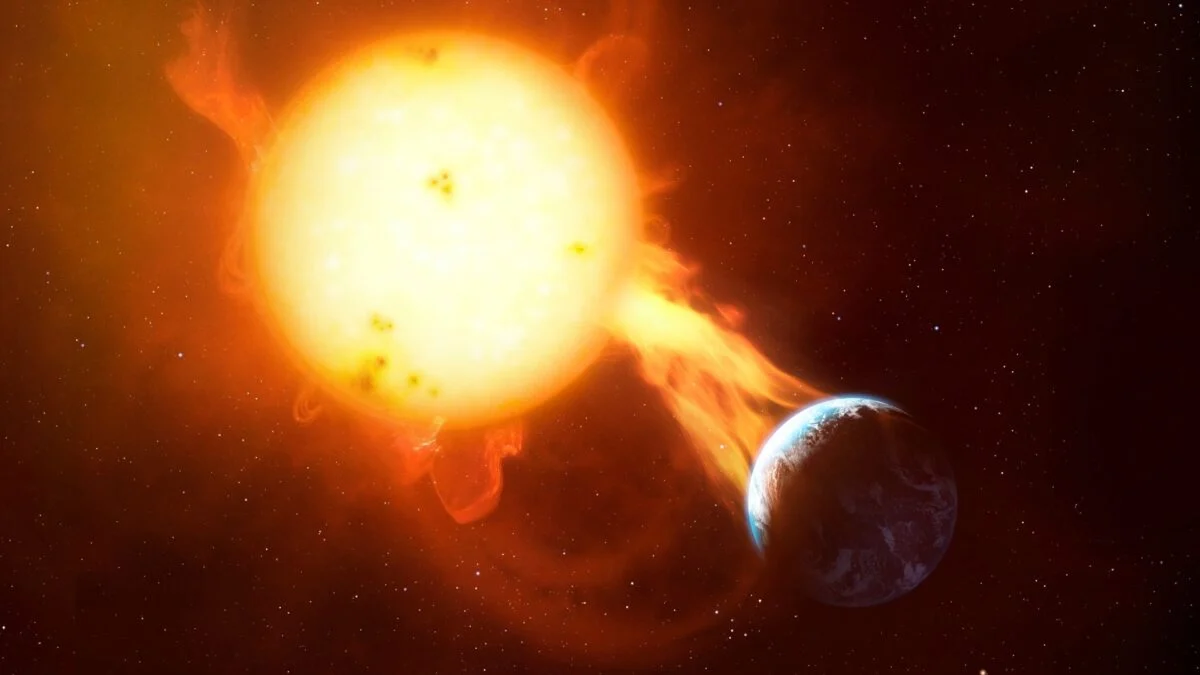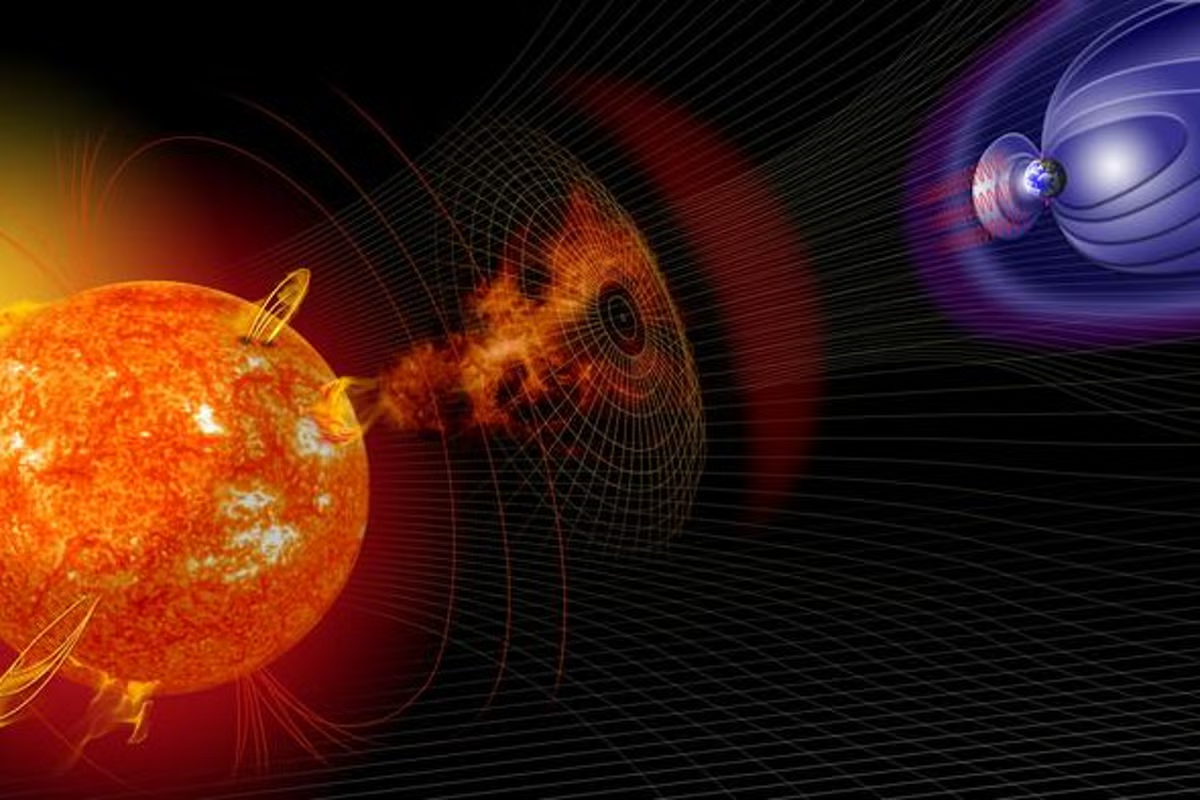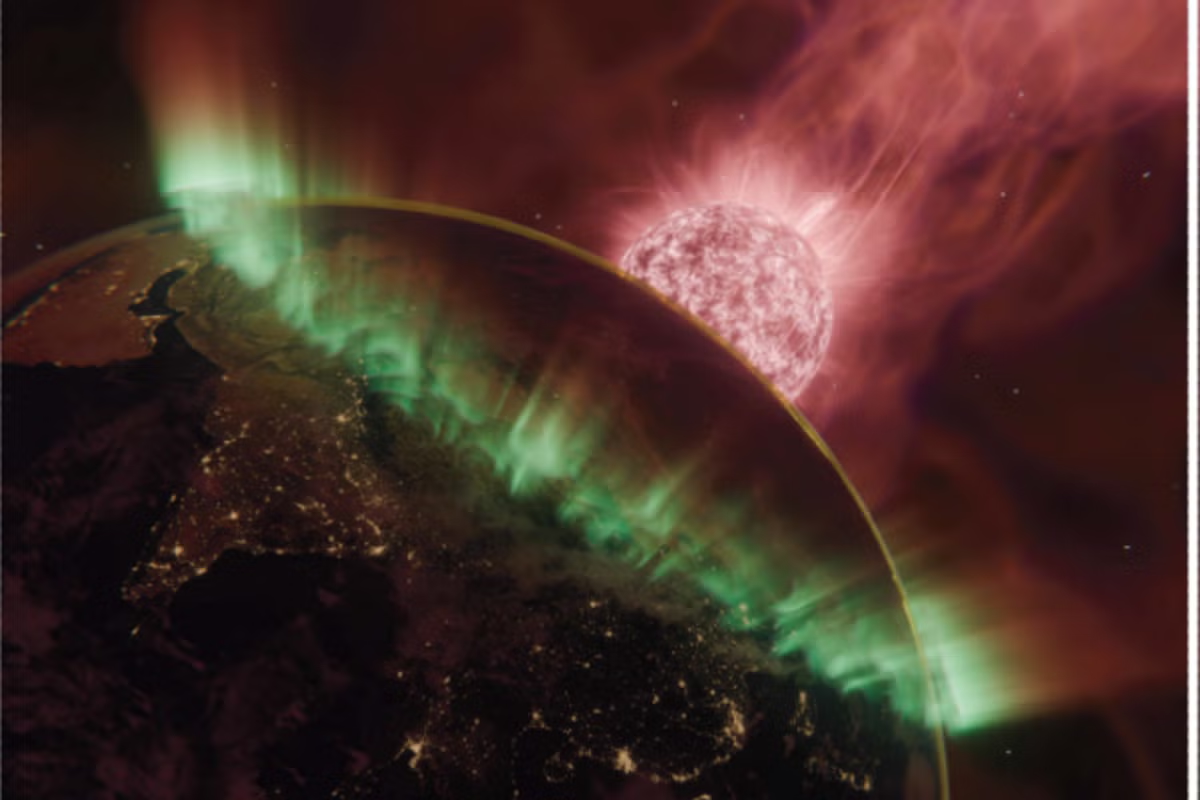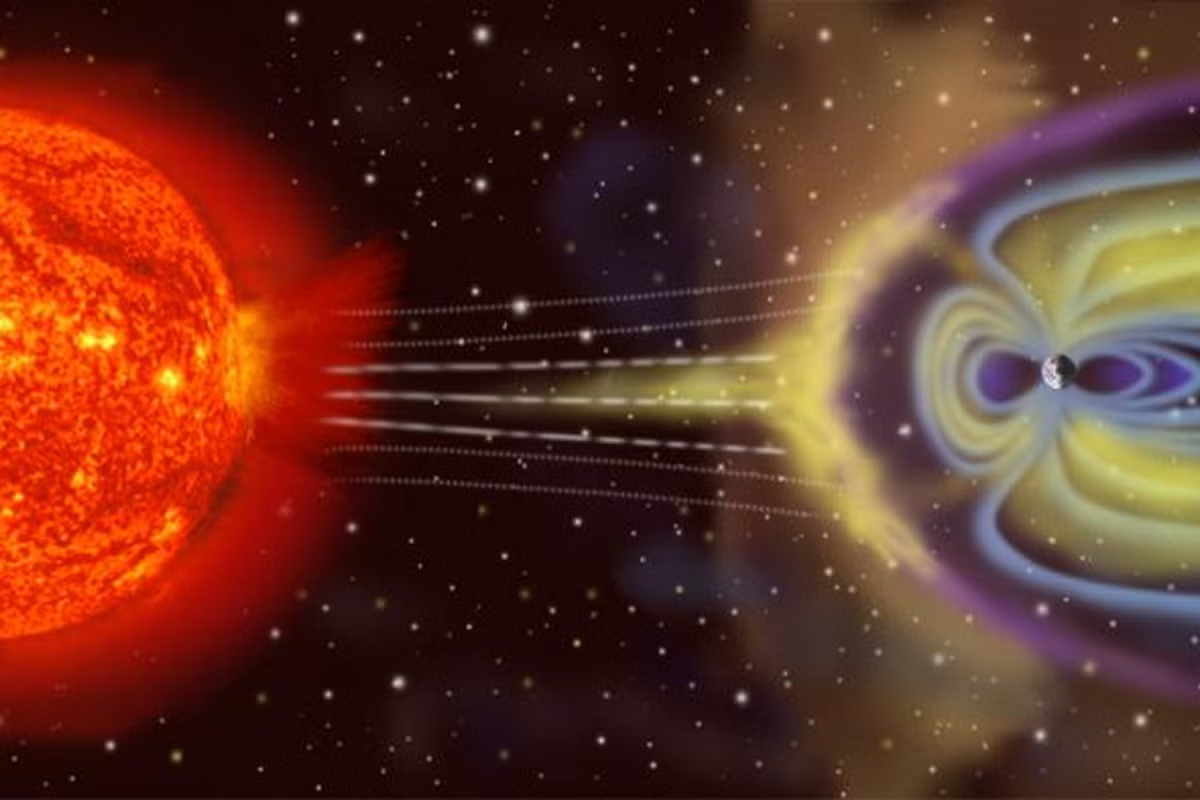
Solar storms can change the Earth’s weather even on short timescales of hours to days, according to a new study.The Sun is known to hurl vast quantities of charged particles and electromagnetic radiation across space, sometimes strong enough to spark auroras and disrupt satellite operations, power grids and communication networks on our planet.The direct and immediate impact of solar storms on the Earth’s weather patterns is largely unclear, however.The new study suggests that even discrete solar storms can cause intense and rapid changes to the Earth’s atmosphere. Such disruption can appear as quickly as within a day of a flare leaving the Sun. “The severity of these effects is closely linked to the intensity of the storms themselves and can vary depending on regional factors,” University of New Hampshire physicist Joachim Raeder, who did the study published in the journal Geophysical Research Letters, explained.The Sun is currently at the peak of its 11-year activity cycle and it could widely influence both climate and weather patterns on the Earth, Dr Raeder said.His findings pose a challenge for existing weather and climate models which lack the ability to predict the effects of solar storms on atmospheric conditions.Artist's depiction of solar wind particles interacting with our planet (NASA)Dr Raeder analysed almost 67 years of space weather data and atmospheric records and discovered subtle but consistent deviations in weather patterns that tightly correlated with the occurrence and intensity of solar storms.In specific areas, such as the Rocky Mountains region in the western US and the expansive Hudson Bay in Canada, he found that rainfall and snowfall diminished notably after significant solar storms.Dr Raeder speculates that radiation from solar flares penetrates the Earth’s atmosphere via what is known as the polar vortex, which is a vast cold, low pressure system encircling the polar regions and may be acting as a conduit for energetic charged particles to influence weather processes.While there’s no evidence yet that solar storms create completely new weather patterns, the new study indicates they may measurably alter familiar atmosphere features, such as the polar vortex, air pressure systems, rain and snowfall patterns, as well as local temperatures.“These findings offer new insights into the underlying physical mechanisms that may drive weather changes in response to solar activity,” he noted in the study.He calls for future investigation into solar storm impacts on atmospheric circulation patterns using enhanced satellite and ground-based monitoring and more advanced computer models.
Breakthrough study confirms solar storms can alter weather on Earth within hours
Even discrete solar storms can cause intense and rapid changes to our planet’s atmosphere
401 words~2 min read