When your stock market is bleeding and your currency is under pressure, you don’t exactly want domestic money fleeing for greener pastures. China International Capital Corp, one of the country’s most prominent state-owned brokerages, has stopped clients from adding new positions in cross-border total return swaps, effectively slamming a door on one of the more popular routes for moving capital offshore.
At least three other major state-owned brokerages followed suit with similar restrictions. The timing is not subtle: the CSI 300 Index had just slid to its lowest level since early 2019, and regulators were clearly in no mood to watch billions more flow out of the country through derivative instruments.
What are total return swaps and why do they matter here
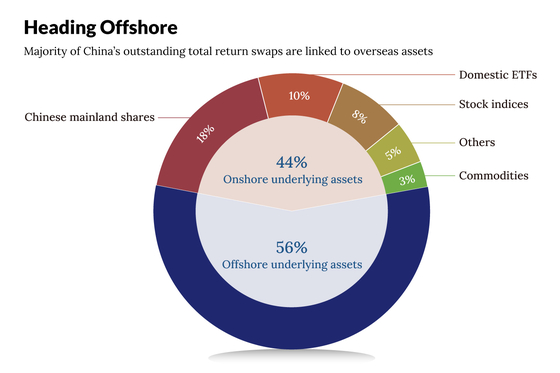
Think of a total return swap as a financial workaround. Instead of directly buying shares listed on, say, the Nasdaq, a Chinese investor enters a contract with a brokerage. The brokerage takes the actual position in the foreign asset and passes along the returns (or losses) to the client. In English: you get exposure to overseas stocks without technically sending money abroad.
As of late November 2023, the total cross-border OTC derivatives book at Chinese brokerages, which includes TRS products, stood at 825.4 billion yuan. That’s roughly $114.7 billion worth of positions.