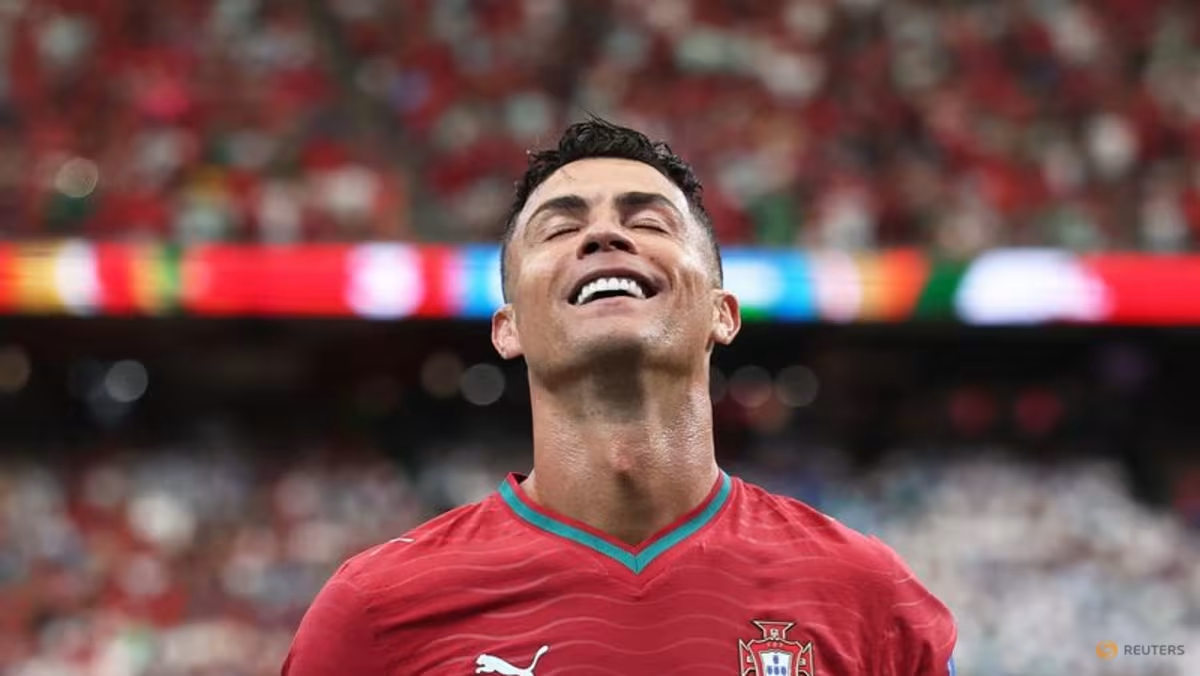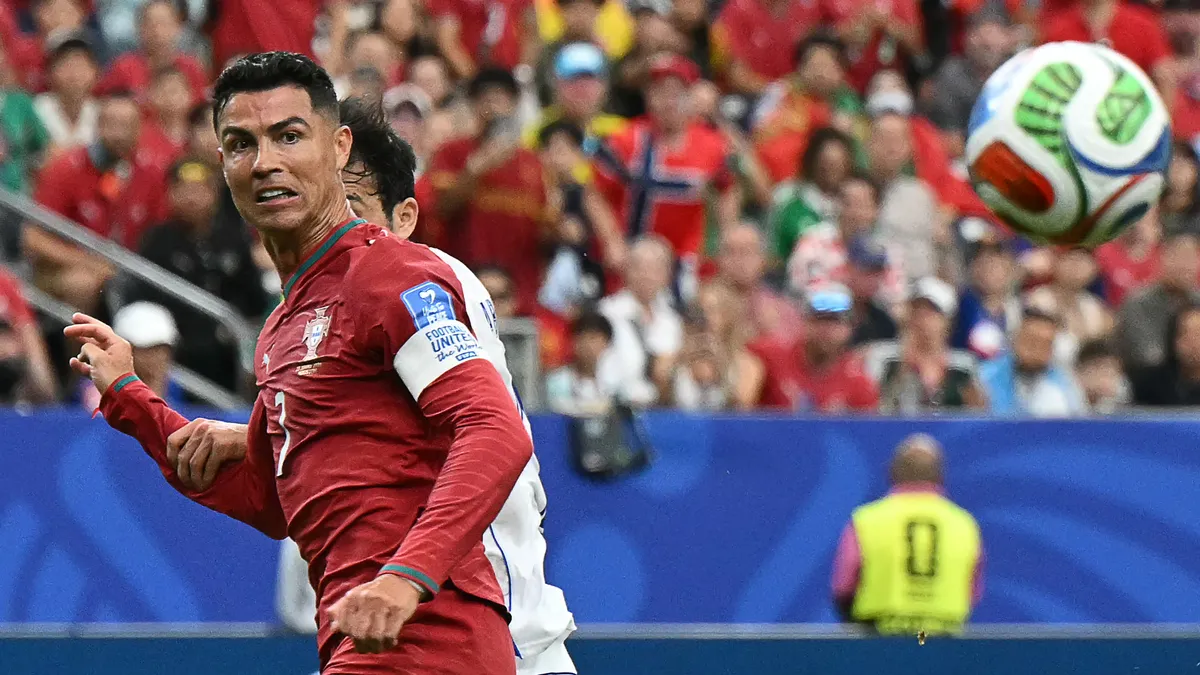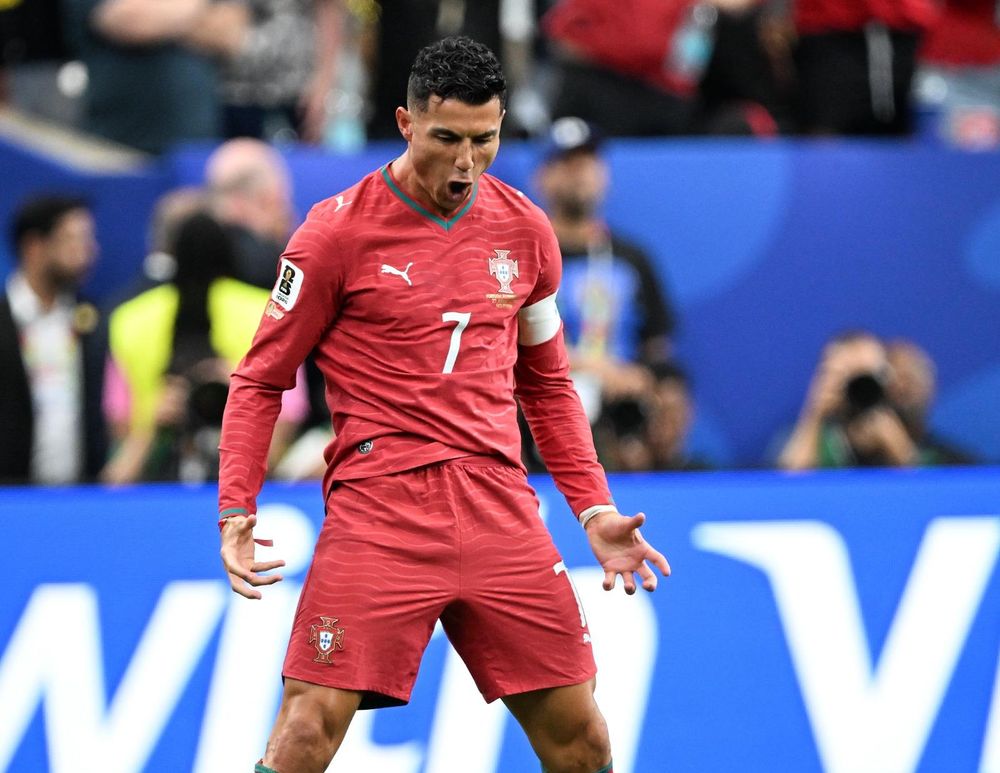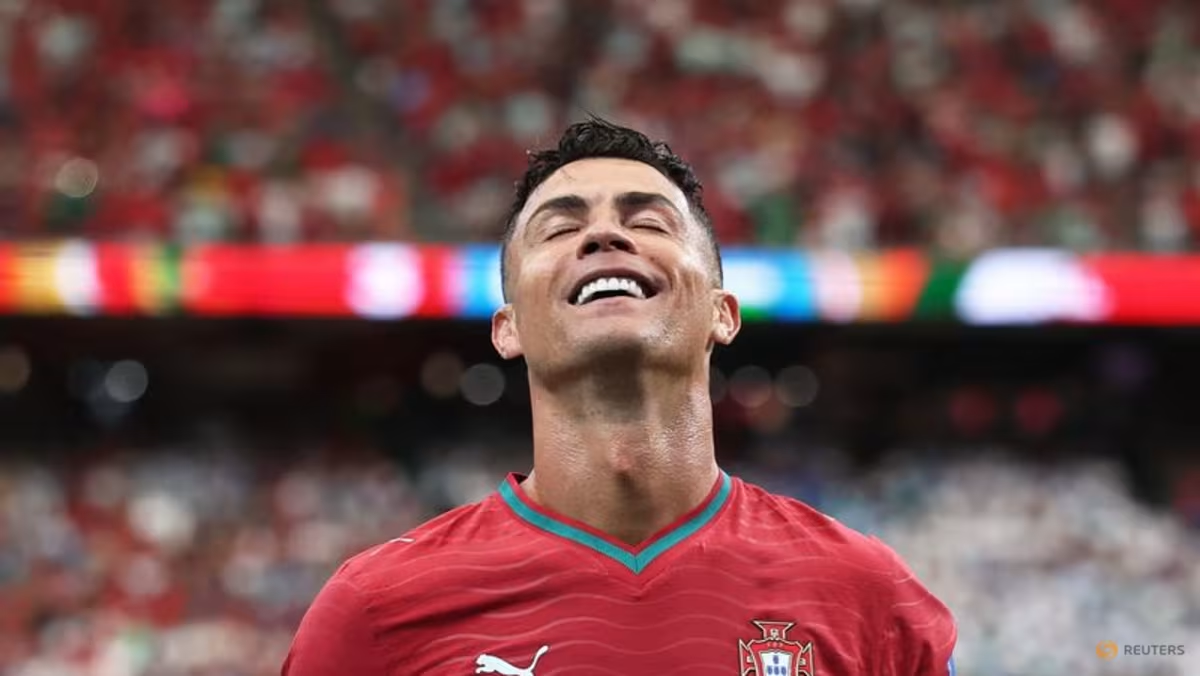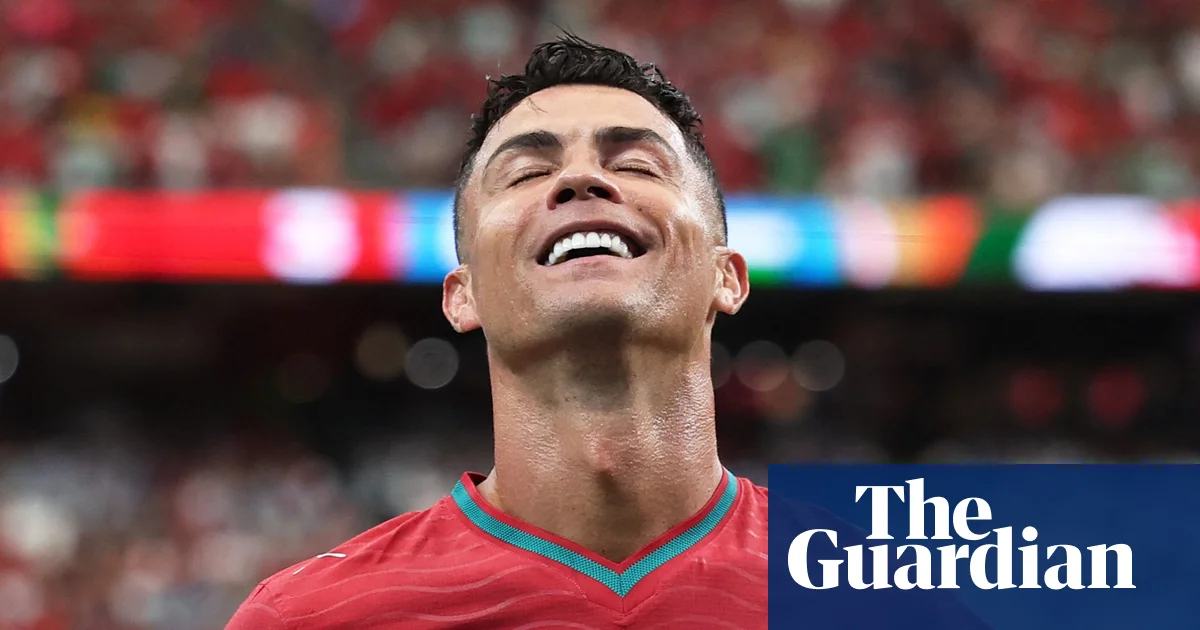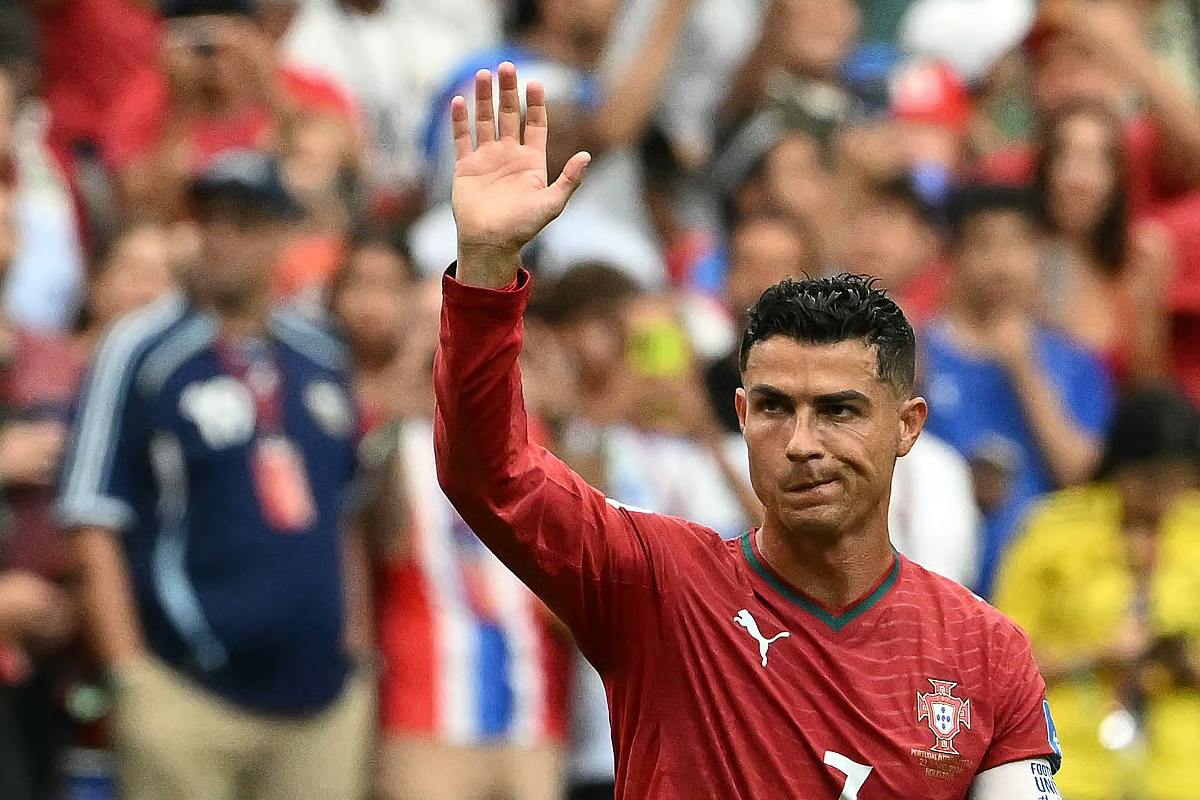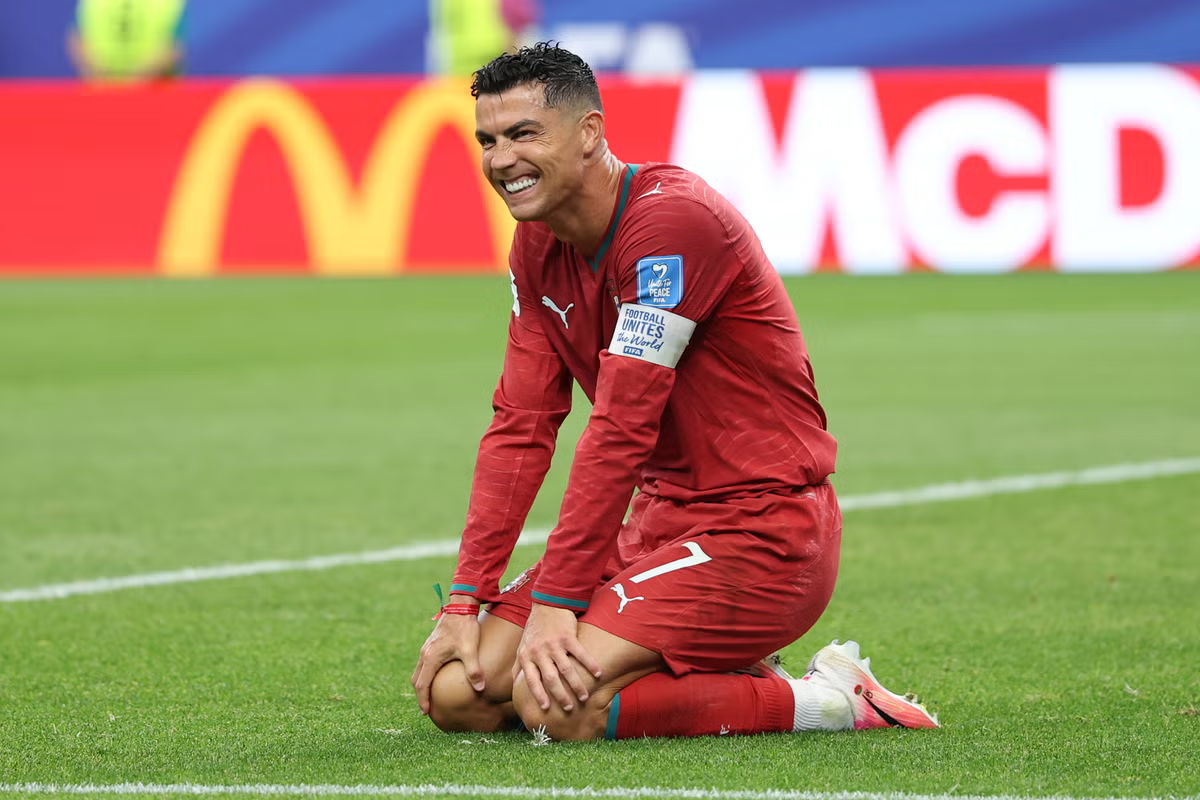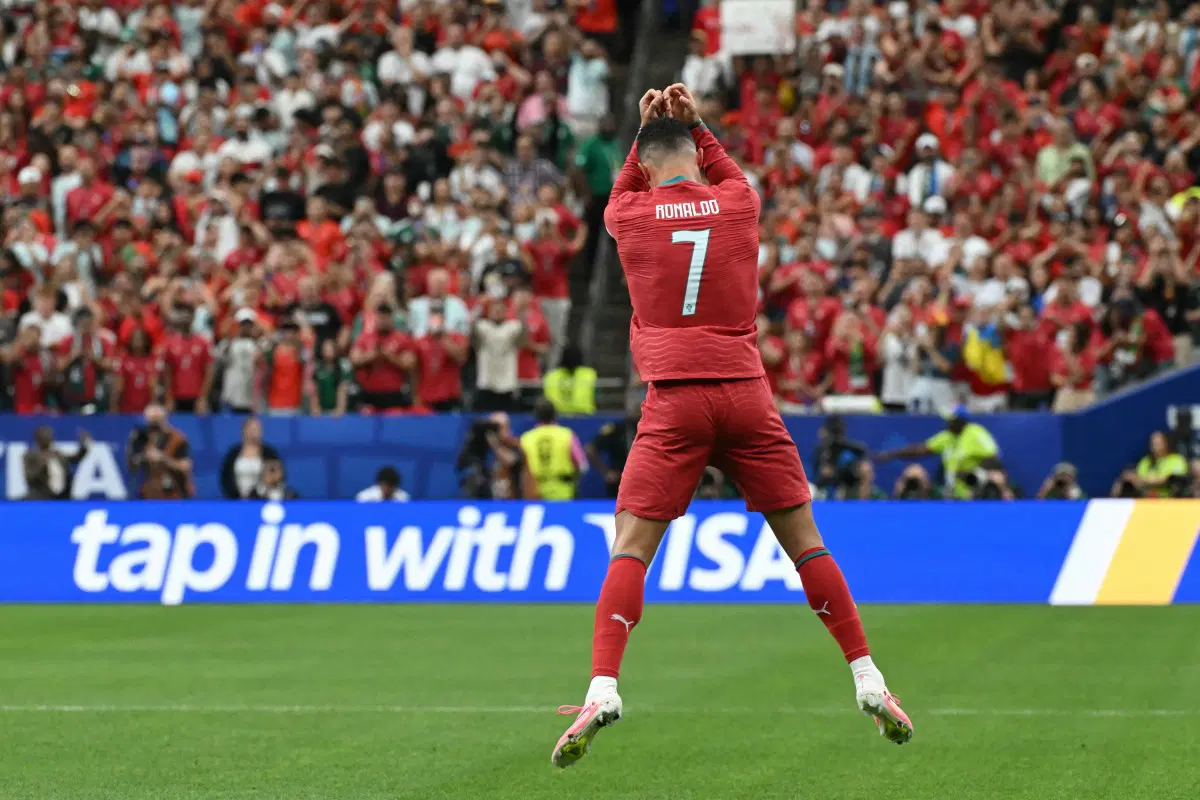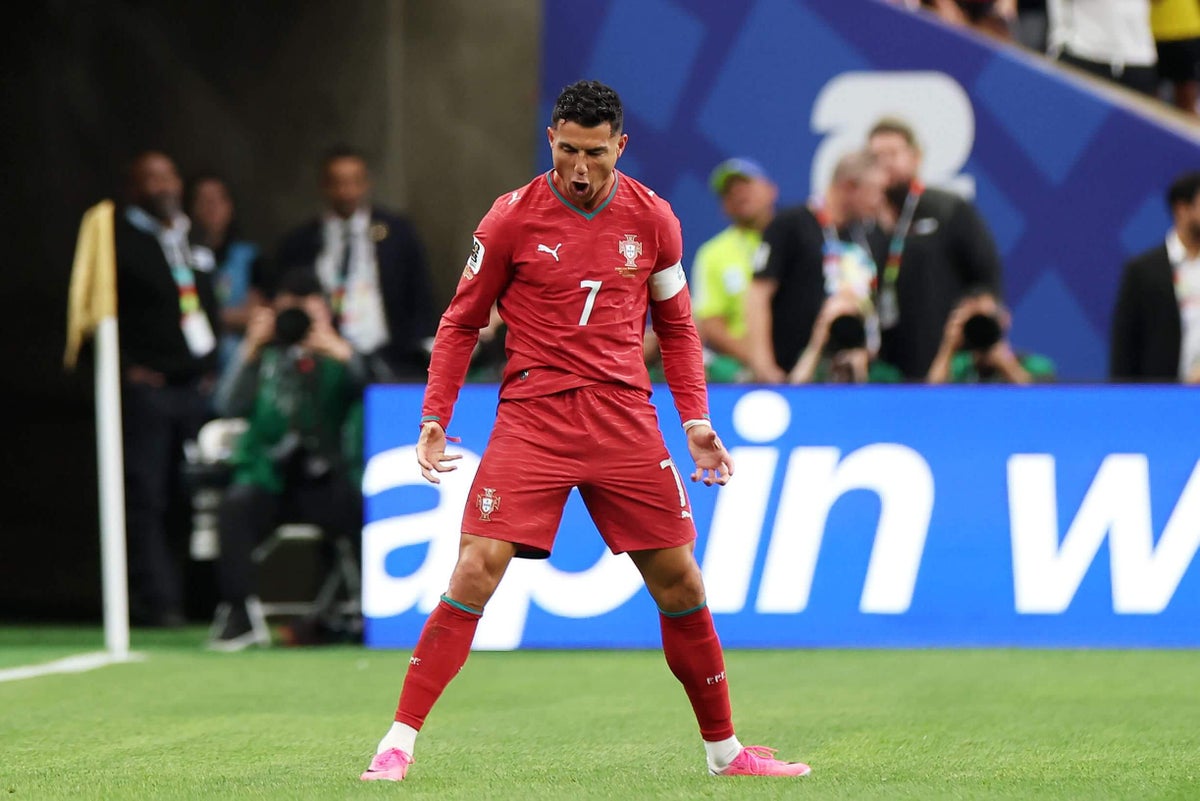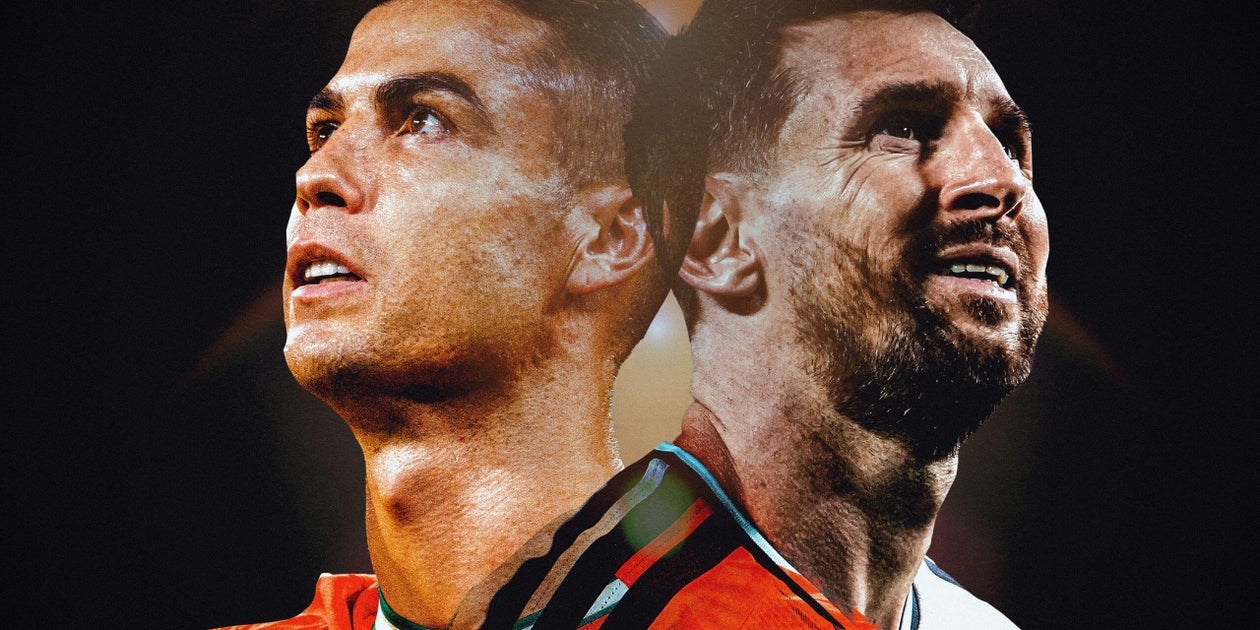
“I’m back! I’M BACK!” The joy and, more than that, the relief was pouring out of Cristiano Ronaldo, his World Cup campaign up and running. Houston, we have lift-off.The cheers and the roars reverberated around NRG Stadium. The crowd had got exactly what most of them came for: two goals and a man-of-the-match performance from Portugal’s superstar and captain in a 5-0 win against Uzbekistan.Why did he yell, “I’m back”, he was asked by Portugal’s Sport TV. “Just so they don’t forget. Just so they don’t forget,” he said, adding that he had endured a “difficult, dark week” since labouring and misfiring in a 0-0 opening draw with DR Congo at the same venue.This was more like it. This was the kind of experience Ronaldo had in mind when he set his sights on playing in a sixth World Cup at the age of 41. He might claim, as so many elite performers do, that he thrives on criticism, but he seemed happy to feel the love in Houston yesterday, grinning from ear to ear as his media commitments continued in the post-match mixed zone.And then a Mexican reporter dared to mention Lionel Messi. He mentioned Kylian Mbappe and Erling Haaland too, with the intention of asking Ronaldo about the importance of getting off the mark at this World Cup, given that so many other big-name players had done so. But it was upon hearing Messi’s name that Ronaldo shut the reporter down and turned away. Next question.The spectre of Messi, who is 39 today, is never far from Ronaldo. In Texas this week, it had loomed from 265 miles away at the other end of Interstate 45.Get free access to the most comprehensive World Cup coverage in The Athletic app.Monday brought the Messi show in Arlington, where Argentina took on Austria. Tuesday brought Ronaldo and Portugal back to Houston. As a double-header, watching the two greatest footballers of the modern era playing in the World Cup stage in the twilight of their careers, it was irresistible.Monday morning, Arlington. Outside the Dallas Cowboys’ AT&T Stadium is a sea of albiceleste, almost everyone wearing the white-and-sky-blue jersey of Argentina and a No 10 on their back — many bearing Messi’s name, others in honour of the late, great Diego Maradona. Hymns of praise and adulation are sung in honour of both men. Following Argentina, particularly at a World Cup, can feel like a religious experience.There are fans from all over the world: American fans getting behind Messi’s team and many more from Asia. Fans of Messi flocked to Arlington from all over the world (Robbie Jay Barratt – AMA/Getty Images)The tone inside the stadium is of adoration. Messi-mania has gone up another notch since he launched his sixth World Cup campaign with three goals against Algeria in Kansas City, equalling Miroslav Klose’s record as the tournament’s all-time top goalscorer. The noise when he leads his team-mates out for the warm-up is surpassed only when his image appears on the big screen. It’s a strange kind of noise. It’s reverence. There is an air of enormous anticipation when, after a VAR check and a five-minute delay, Messi steps up to take a penalty. This is the record. History beckons. Messi steps up… and scuffs the penalty wide. There’s a collective gasp. Messi gets on with his work. There is a remarkable piece of close control in the penalty area on 19 minutes, only for Austria captain David Alaba to get back to tackle him just as he is pulling back the trigger; a cushioned lay-off that almost plays in Enzo Fernandez; then a goal-bound shot blocked by Alaba. He is at the heart of everything.In the 38th minute, not far short of the halfway line, Messi turns away from Alaba and spreads the ball infield to Thiago Almada, who sweeps it on to Facundo Medina on the left. Argentina players sprint towards the penalty area. But Messi jogs, holding back, making sure he gets the timing right. Medina cuts the ball back, Almada dummies it intelligently and, when the ball reaches him, Messi has enough space to stroke a first-time shot into the net. This time he has broken the record and it is hard to work out who looks happiest: the captain, his team-mates or the supporters.It isn’t the greatest performance of his career. There are moments when, dropping deep in search of possession, he is knocked off the ball or he gives it away in dangerous areas. Austria’s defenders are physical and have no intention of standing on ceremony.Watching Messi over the past decade, it has often been remarked upon that he spends so little of his time running. Increasingly the observation is that he stands still for long periods. Sure enough, FIFA’s tracking data says his average speed over Argentina’s first two games is 4.72 km/hour, which, amusingly, is around average walking pace. (Ronaldo’s, at 4.99 km/hour, is slightly more.)But even when Messi is not moving, his mind is racing. Even then, there are flurries of intense activity. The beauty of Messi is that he gives the impression of being as quick when running with the ball as without it. Has any player in the game’s history ever combined such creativity with such efficiency? He isn’t one for flamboyant flicks, tricks and stepovers. It is all about imagination, vision, a subconscious understanding of space and time and the technical ability to perform almost every action — a pass, a dribble, a shot — with unerring precision.Beyond that, there is an underrated intensity when the mood takes him. Deep in stoppage time he sets off again and picks out substitute Julian Alvarez with another perfectly weighted pass. Alvarez is denied, but Leandro Paredes nudges it towards Messi, who reacts instantly to a deflection, deftly brings the ball under his spell, dribbles past goalkeeper Alexander Schlager, sees another shot blocked, races to the loose ball, lashes it into the net and wheels away in joyous celebration.Lionel Messi after scoring his second goal against Austria (Maja Hitij – FIFA/FIFA via Getty Images)A few minutes after the final whistle an Argentinian television reporter asks which of his 18 World Cup goals — now two clear of Klose’s record — is his favourite. He looks bemused. “I can’t recall now,” he says. “I’m tired, low on energy and finding it hard to think.”He laughs at himself. He is happy to talk about the record. “It feels special,” he says. “But like I’ve said before, I enjoy playing, having a good time on the pitch.”Messi hasn’t always enjoyed himself at the World Cup. If anyone can relate to what Ronaldo was going through against DR Congo, it is the Argentina captain.There were times in the past when the weight of expectation seemed to overwhelm Messi at major tournaments. Yes he now has the scoring record, but no fewer than 12 of those 18 goals have come in his last nine World Cup matches. Before that, it was six goals in 19 World Cup appearances.Winning the Copa America in 2021, his first major honour at international level, allowed that burden to lift. In the 2022 World Cup in Qatar, Messi looked liberated, finding the joy and freedom that had characterised his club career.Cristiano Ronaldo breaks another goalscoring record | World Cup Daily BriefingMegan Feringa and Amitai WinehouseRonaldo has never truly captured that feeling in the World Cup. There was a spectacular hat-trick in a 3-3 draw with Spain in 2018 and a winning goal against Morocco five days later, but that game against DR Congo was the continuation of a theme. The greatest goalscorer in football history, closing in 1,000 career goals for club and country, scored just eight goals across his first five World Cup tournaments (23 appearances) and, remarkably, has never scored in the knock-out stage.Pressure? Surely, yes. But, more recently, it has looked like a question of age. His struggle at the 2022 World Cup came at the age of 37, shortly after he had lost his place at Manchester United and had his contract terminated by mutual consent. Across five games in Qatar he had 11 shots, scored once (a penalty), produced one assist and was dropped from the starting line-up after the group stage. Euro 2024 was even tougher: five games, 23 shots, no goals, one assist.For years, since he reinvented himself at Real Madrid as a penalty-box predator rather than the devastating winger of his early career, Ronaldo has been defined almost exclusively by the number of goals he scores. He is never going to trouble Messi when it comes to link-up play and assists. And if he isn’t scoring, then what is he doing?“Ronaldo opens up spaces in defences,” Portugal coach Roberto Martinez said when asked about Ronaldo’s role in the team at Monday’s pre-match news conference. “The numbers support this. If you look at the last 32 games, he opens up more spaces than any other player.”Ronaldo struggled in Portugal’s opening match (Molly Darlington/Getty Images)The build-up to Tuesday’s game against Uzbekistan was dominated by debate about his place in the team. Portuguese journalist Miguel Dantas wrote in The Guardian that the player’s legacy risked being “seriously tarnished”, asking whether Ronaldo will still be remembered as the boy from humble beginnings in Madeira who conquered world football, “or as the ageing superstar who tried to defy time and ended up a shadow of his former self”.Seriously? We are talking about one of the greatest footballers of all time. He has scored more goals at both club level (830) and international level (145 as of Tuesday) than any player in the game’s history. He is Real Madrid’s all-time record goalscorer (450 in just 438 appearances), the highest scorer in the history of the European Cup (140 in 183 appearances). He has made more international appearances (230) than any male player. Why, beyond short-term analysis, would his legacy be shaped by how he performs in a World Cup at the age of 41?The only meaningful question about Ronaldo, going into Tuesday’s game, was about whether he still merited his place in Portugal’s starting line-up. And whether, for those fans paying hundreds and in some cases thousands of dollars to watch him, this game was going to be another tough watch.Outside NRG Stadium in Houston there are so many Ronaldo No 7 shirts. Most of them are the deep red of Portugal, but others wear jerseys from his time at Sporting, Manchester United, Real Madrid, Juventus and now the Saudi Arabian club Al Nassr. Again the fanbase stretches far beyond the national team in question. Ronaldo-worship, like Messi-worship, is a global story.In that sea of No 7s, an Argentinian No 10 sticks out like a sore thumb. Gokul Sharavanan, from Salem, India, is a Messi fan but is here with Dharshanth Devendran, a Ronaldo fan from Kuala Lumpur, Malaysia. They too are doing the double-header: Messi in Arlington on Monday, Ronaldo in Houston on Tuesday. They bought tickets for each game for around $600 via FIFA’s resale platform.Sharavanan says watching Messi break the record was worth every penny. “Messi is an enigma, an idol, a messiah. Messi is an emotion,” he says. “This was my second time watching him. The first was the game against Australia at the 2022 World Cup in Qatar, his 1,000th career game. To see him break the record yesterday was beautiful.”But adoration of Messi does not lessen his appreciation of Ronaldo. “Also a great player,” he says. “Look, not everyone can be a god. Ronaldo is relatable to the masses. I respect him a lot.”Dharshanth Devendran, left, with Gokul Sharavanan in Houston before Portugal’s match (Oliver Kay/The Athletic)His friend Devendran smiles. “They are both amazing in their own regard,” he says. “Watching Messi is brilliant, the way he dribbles, the skill he has. He’s nonchalant with his body language, but the moment he makes magic, it’s beautiful to watch.“With Cristiano it’s a whole different thing. You can see in him the struggle, the desire he has, the passion. The guy is 41 and he’s still breaking records. He’s not far off 1,000 career goals. He’s won it all. And he’s still desperate to win more.”How did he feel watching the DR Congo game? “It was painful to watch,” he says. “As a lifelong Ronaldo fan, it was hard to watch him not getting the service he wanted and then being so upset after the game.”That word “lifelong” triggers a question. Devendran is 31 and Sharavanan is 29, as is their friend Vighnaa Kunendran, also from Kuala Lumpur, who firmly in the Messi camp. For all three of them, Ronaldo and Messi have been constants almost from the moment they started watching football.“When I was a kid, Messi was scoring goals,” Sharavanan says. “Now I have a kid of my own … and Messi is still scoring goals.”In a way, it resembles the experience of going to watch your favourite band on what you suspect will be their farewell tour. You just want to see them one more time. You want them to play the hits and to make you feel what you have always felt watching them. And if you truly feel emotionally invested in them as people, rather than just as entertainers, you want it for them too.That is why watching Ronaldo against DR Congo last week felt jarring. It was like watching a brilliant, charismatic frontman who can no longer get around the stage and just can’t hit the high notes anymore. It is also why Tuesday’s game felt so joyous. Yes it was against first-time qualifiers Uzbekistan, but this was Ronaldo scoring in the World Cup — twice — at the age of 41. He gave the crowd exactly what they came to see.The noise when Ronaldo led his team-mates out for the pre-match warm-up equalled that for Messi in Arlington 24 hours earlier. It got louder every time his image appeared on the big screens. Even as he warmed up, there was a huge roar every time he found the net.Perhaps some of them feared the warm-up might be the only chance they got. Perhaps those fears increased inside four minutes when Nuno Mendes picked out their hero unmarked, only for him to get his footwork wrong and fail to connect. It was an inauspicious start. Portugal’s supporters tried their best to raise his spirits by singing his name ever louder.He soon repaid their faith. In the sixth minute Joao Cancelo produced a smart cut-back and Ronaldo, running intelligently towards the near post, wrapped his right foot around the ball and beat Uzbekistan goalkeeper Abduvohid Nematov emphatically. It was a classic Ronaldo goal, which he celebrated by running towards Portugal’s substitutes on the touchline, an apparent show of solidarity after so many murmurs about the dynamics within the squad. Then he gave the fans the celebration they wanted to see: “SIIIUUU!”A relieved Ronaldo celebrates in customary fashion (Charlotte Wilson/Getty Images)From that moment on, it felt like the Ronaldo show. As he stood over a free kick just outside the penalty area in the 17 minute, all eyes were on him. He knew it too, but he allowed full back Nuno Mendes to step forward and surprise Nematov to double Portugal’s lead. Ronaldo as a willing decoy? Who could have imagined that?Six minutes before half-time Ronaldo made it 3-0. Again it was like a classic from his Madrid era: a counter-attack, a well-timed run, a pointing gesture to show where he wanted the ball, a cleverly weighted pass (from his former Manchester United team-mate Bruno Fernandes) and a precise, measured shot inside the far post. This time it was straight to the trademark celebration. That’s it, Cristiano. Play the hits.In terms of build-up play, he doesn’t come close to Messi. But then who does? Against Austria on Monday, Opta’s data credited Messi with 42 passes, 19 carries, six progressive actions, eight defensive actions, seven involvements in attacking sequences, 16 involvements in build-up and his two goals. Ronaldo against Uzbekistan? Eighteen passes, four carries, one progressive action, six defensive actions, seven involvements in attacking sequences, 15 involvements in build-up and two goals.The only surprise was that Ronaldo didn’t score again. But it was still his happiest day at a World Cup since Portugal’s opening game of the 2018 tournament. Portugal ran out 5-0 winners and Ronaldo looked delighted at the final whistle: “I’m back! I’M BACK!”He is now Portugal’s all-time leading World Cup goalscorer, his 10th goal in the competition taking him one beyond the great Eusebio. That Eusebio only played in one tournament, as opposed to six, adds to the unmistakable sense that Ronaldo has underachieved on this stage, but he is now the only player (male or female) to score at six World Cup tournaments. Even Messi, having hit a blank in South Africa in 2010, will not match that. Unless he comes back for more in 2030, when he is about to turn 43.Messi and Ronaldo dominated a generation. Between 2008 and 2017, not only did one of them win the Ballon d’Or every year (five apiece) but in nine of those 10 years the other claimed the runner-up spot. They were separated only when Andres Iniesta was runner-up to Messi in 2010.Some observers dismissed the Messi-Ronaldo duopoly as an indictment of a growing obsession with celebrity, proposing that, for example, Wesley Sneijder should have won the Ballon d’Or instead of Messi in 2010 and Franck Ribery ahead of Ronaldo in 2013. That argument was undermined by the heights that Messi and Ronaldo, the two greatest players of their era, were scaling on an almost weekly basis for Barcelona and Real Madrid.But the peak of the Messi-Ronaldo rivalry — in terms of their performance level, rather than the ferocity of the social media discourse — feels a long time ago now. Ronaldo has kept scoring goals wherever he has gone (Juventus, Manchester United, Al Nassr and, still, Portugal’s national team) but even his most ardent fan might privately concede his best years were behind him by the time he left Madrid in 2018. No matter how awe-struck any of us might have been by Messi’s performances for Argentina at this World Cup and the last, even he can no longer claim to match the astonishing output of the 2010s on a consistent basis.When Messi signed for Inter Miami in 2023, he had the air of a player who, having found fulfilment by winning the World Cup, would be happy to wind down his career in Major League Soccer, away from the intensity of the European game. Get some of his Barcelona mates around him (Jordi Alba, Sergio Busquets, Luis Suarez), get the families together for an asado at weekends and enjoy the Florida sunshine. World Cup 2026? Really?But here Messi and Ronaldo are in 2026, not just the sport’s two biggest stars in terms of profile, but still playing and scoring in the World Cup. Questions about Ronaldo’s claim to a starting place will not be dismissed by scoring against Uzbekistan, 58th in FIFA’s rankings, but the timing, speed and precision he showed for both goals brought a reminder that he has not lost his finisher’s instinct.An artist adds the final touches to a painting featuring Lionel Messi and and Cristiano Ronaldo in Amritsar, India (Narinder NANU / AFP via Getty Images)And he retains a competitive instinct that, even now, will not tolerate the idea that any player, even the incomparable Messi, belongs on a higher pedestal.That is the essence of Ronaldo.Remember that line from Messi on Monday about how “I enjoy playing, having a good time on the pitch”? Ronaldo struck a very different tone the next day when he said he had kept persevering through a difficult week because “I believe more in hard work than in football”. As personalities, as players, they are so very different.The football world is still in thrall to them. They are no longer playing in the biggest leagues, no longer playing in European competition, but Messi was the dominant figure at the last World Cup in 2022 and has shown no sign of slowing down in 2026. It all seems to have come so easily for him at this tournament. But the pressure, along with the schedule, will intensify.As for Ronaldo, that “dark, difficult week” is behind him and it is a question of whether those two goals against Uzbekistan prove to be a springboard in his sixth World Cup or just something for his fans to treasure.“I couldn’t care less about others,” he said on his way out of the stadium after a second reporter tried to ask him about Messi. “Mbappe also scored,” the Portugal forward called back over his shoulder, flicking up his arm dismissively.Two goals, two big celebrations and bristling at the mention of Messi? Maybe Ronaldo really is back, playing the hits, giving the crowd what they want to see and hear before he, the greatest goalscorer of all time, and Messi, arguably the greatest footballer of all time, leave the stage once and for all.
Watching Lionel Messi and Cristiano Ronaldo in 24 hours. The World Cup is still in thrall to them
Watching the two greatest footballers of the modern era playing on the biggest stage in the twilight of their careers was irresistible
3,507 words~16 min read