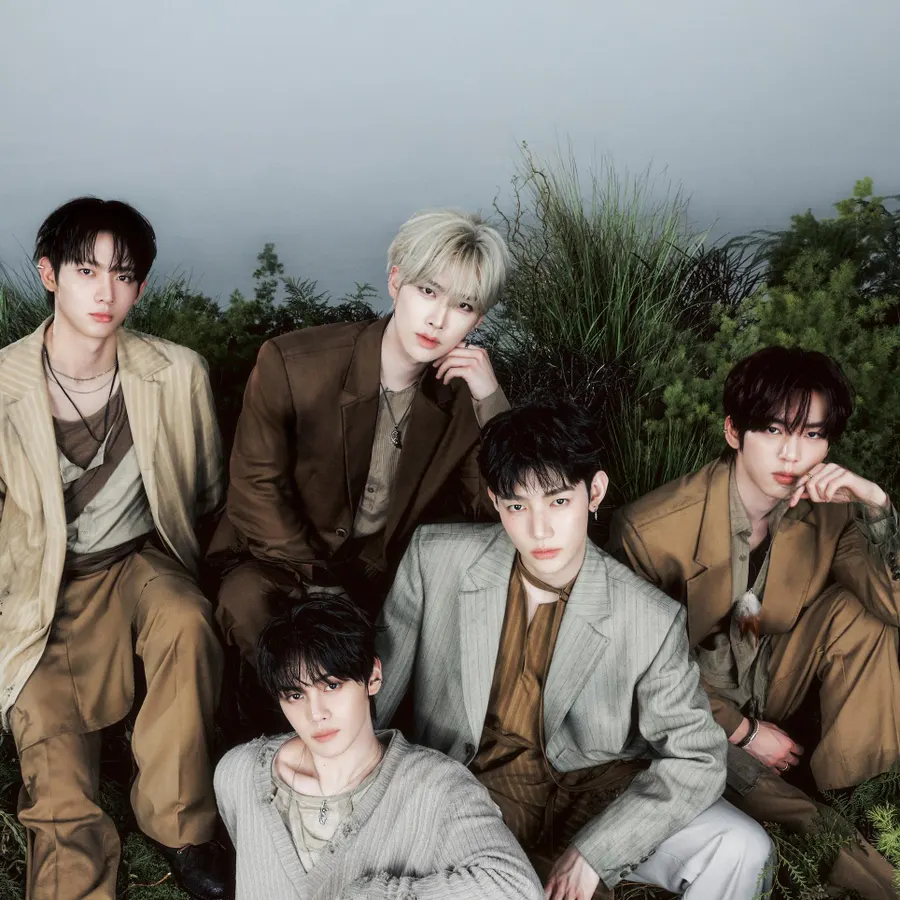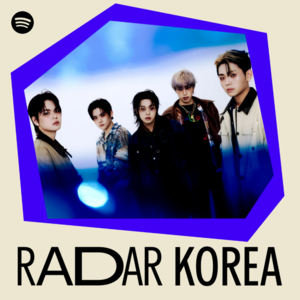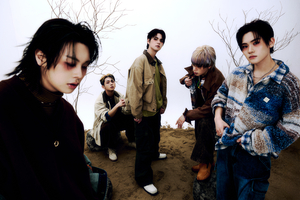
Spotify Radar Korea act sees itself as pop band, not indie, as it eyes global reach via streaming, K-pop collaborations Can't Be Blue (Unblue Labels) Asked to name the hottest rookie band in South Korea's indie scene today, many music fans point to Can't Be Blue.But the five-member group does not necessarily see itself as an indie band."We don't really think of ourselves as indie," lead singer Lee Do-hun told The Korea Herald in an interview Monday. "Whether it's our sound or the way we work, we've always had the mindset of a pop band."That philosophy has helped fuel the band's rapid rise. Just over two years after debuting in June 2024, Can't Be Blue has surpassed 900,000 monthly listeners on Spotify and was recently selected for the streaming service's Radar Korea 2026 program, which spotlights emerging artists. Previous Radar alumni include global stars such as The Kid Laroi and Tyla, as well as Korean acts including Le Sserafim and Hanroro.The band's breakthrough came with its debut song, "Within the Words Once Called Love," which has accumulated more than 4 million streams on Spotify. The track was actually written before the band officially existed."At first, Do-hun and I met while we were still in school and decided to write a song together," guitarist Kim Chae-hyun said. "After we played it for the other members, Do-hun suggested we should start a band. We all took leave from school and formed the group."Lee said he had unusual confidence in the song from the beginning."I thought, 'This is going to do well,'" he said. "I felt people would love singing it together at concerts. Even when we were struggling to book club shows, that song gave me excitement rather than fear because I couldn't wait for people to hear it."Part of the band's success, Lee believes, comes from balancing global accessibility with distinctly Korean musical sensibilities.The group is looking beyond Korea, considering more English lyrics and ways to make its music resonate with international listeners. Yet Lee argues that Korean artists possess a unique emotional quality that should not be abandoned."I think Korean singers and bands have a certain 'ppong' to them," he said, using a Korean expression often associated with emotionally charged melodies. "I don't mean that negatively. There's something very catchy about it, but there's also a melody that feels uniquely Korean." Can't Be Blue (Unblue Labels) He compared it to the emotional storytelling often found in Korean TV series."That emotional line exists in music too," Lee said. "I think that's one of the strengths of Korean music."The band's growing profile received another boost in May when it released "Can't Love," a collaboration with Stray Kids' Han. The song has already surpassed 3.6 million streams on Spotify, making it the group's second-most-streamed track.According to Lee, the collaboration began after Han repeatedly mentioned the band’s music and covered their songs."We happened to get a chance to meet him, and I asked if he'd ever be interested in singing on one of our songs," Lee said. "He said yes and was willing to accommodate everything."Han's work ethic left a strong impression on the band."He told us he'd send a melody, and we were excited but also nervous," Lee recalled. "Then he sent us about three different versions. The problem was that all of them were so good that we ended up combining parts of each one."The collaboration reinforced Lee's belief that the boundaries between K-pop and other genres are becoming increasingly fluid."K-pop artists today have incredibly high musical standards," he said. "They are seeing more collaborations not only with indie bands, but also with R&B artists and rappers. Collaborating with K-pop creates us opportunities for a lot of different sounds." Can't Be Blue (Unblue Labels) Asked which artist he would most like to collaborate with next, Lee did not hesitate."Our members really like Illit," he said. "We're curious ourselves about what kind of music we'd make together."The band's latest statement of intent arrived June 20 with its self-titled first full-length album.According to Lee, the 11-track album represents the clearest expression yet of the sound the group wants to pursue — blending elements of K-pop, J-pop and hip-hop as a band."We wanted to capture a lot of the K-pop and J-pop influences we've been aiming for," he said. "We tried to include sounds that are difficult to find in traditional bands."Rather than emphasizing conventional live-band production, the group experimented with sharper and more pop-oriented textures."We worked hard to make it feel more like pop music than a typical band record," Lee said. "We mixed J-pop and pop elements together, and tried to make the melodies feel both pop-oriented and hip-hop-influenced."
Can't Be Blue rejects indie label
Asked to name the hottest rookie band in South Korea's indie scene today, many music fans point to Can't Be Blue. But the five-member group does not necessarily
777 words~4 min read