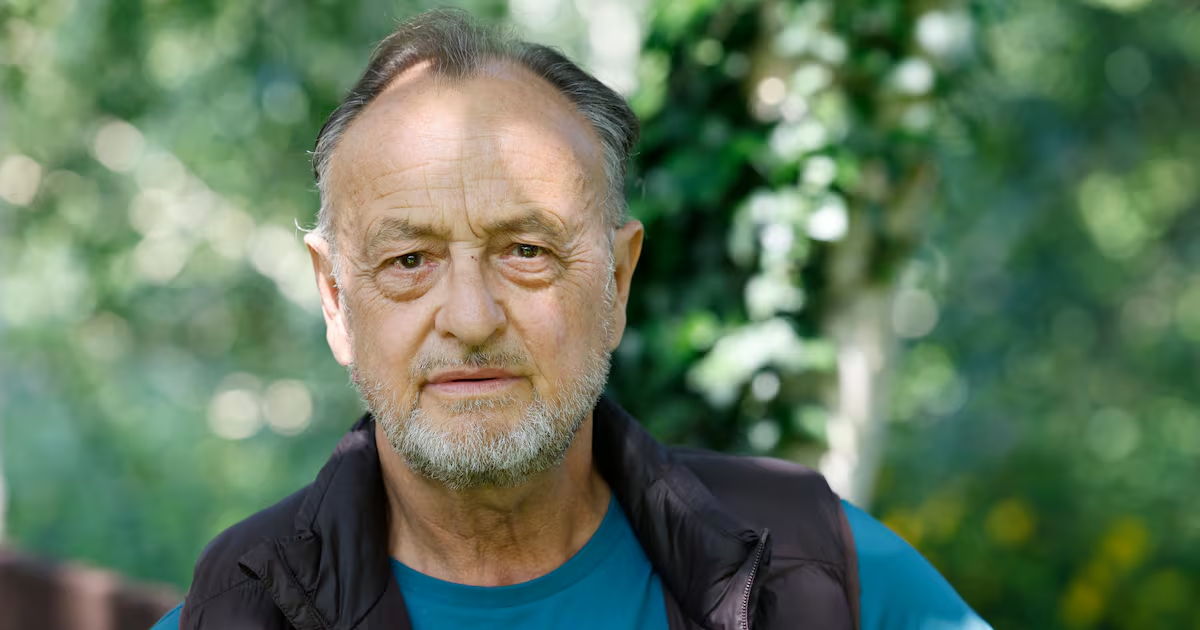
John Pett (70) has been in and out of homelessness over the last eight years. “If I sit back and think about all I have been though, it is scary. As an older person, it is very scary.”Determined not to sound “needy”, his approach to life is “to get on with it. If you’ve been dealt a bad card, just keep going. But yes, if you’re older and homeless, I would say you are more vulnerable. You’re more likely to be on lots of [medication], you get sick more easily.”Originally from Birmingham, Pett, a photographer, had Irish grandparents. He came to Ireland in 1996 after the break-up of his marriage. He met a new partner and lived with her for about a decade before ending up in the private rented sector in the late 2000s.“There was less and less [security of] tenure as I went through. I have been on the receiving end of some bad landlords.” He has lost or left homes because landlords were selling; where owners of a home where he rented a room were constantly rowing, and because a landlord wanted to cram five more tenants into the one room he was renting. He has been in large homelessness hostels, “where your things get robbed”, and where younger men were using drugs. Now in supported accommodation for older homeless people provided by Dublin Simon, he hopes for a “life beyond this”. John Pett: 'I feel like I have done a tour of homeless services.' Photograph Nick Bradshaw Since last year, he has had a small apartment in Riversdale House, a large house in west Dublin converted to accommodate 20 men and women over the age of 55 with health and mobility challenges. Life here is “fabulous”, says Pett. “It ain’t my forever home, but it has made a huge difference for me. I have somewhere safe, and I have head space, which is the space that everyone needs to think about the future.”Pett is speaking as Dublin Simon publishes its 2025 annual report on Wednesday, showing the charity supported more than 4,000 people in 3,078 households last year. Its outreach team recorded 10,835 interactions with people sleeping rough – a 29 per cent increase on 2024.The publication coincides with the opening of 19 new homes by the charity in Crumlin, Dublin, bringing its total housing stock to 781. Latest homelessness data from the Department of Housing show there were 265 people aged 65 or older, of whom 146 were in Dublin, in emergency accommodation in April. These are up from 244 and 137, respectively, in April 2025. In April 2016, there were 80 people aged 65 or older in emergency accommodation, of whom 39 were in Dublin. “I feel like I have done a tour of homeless services,” says Pett. “I never had to sleep rough, thank goodness. That would be tough; that would be feeling like my life has ended. Homelessness is tough at any age – for children, young people, families. I wouldn’t begrudge anyone any help there can be.” Having no home is emotionally difficult as well as physically, he says. “I could introduce you to some [people] who feel very bad, who feel, ‘how did my life end up like this?’ If you can’t afford to buy, renting on a pension is not easy. I think there will be more older people in this situation because I don’t see [the Government] turning around enough new houses.”
‘As an older person, it is very scary’: Rise in homeless people aged 65 or older
Figures show 265 people aged 65 or older, of whom 146 in Dublin, in emergency accommodation during April
574 words~3 min read