Story audio is generated using AI
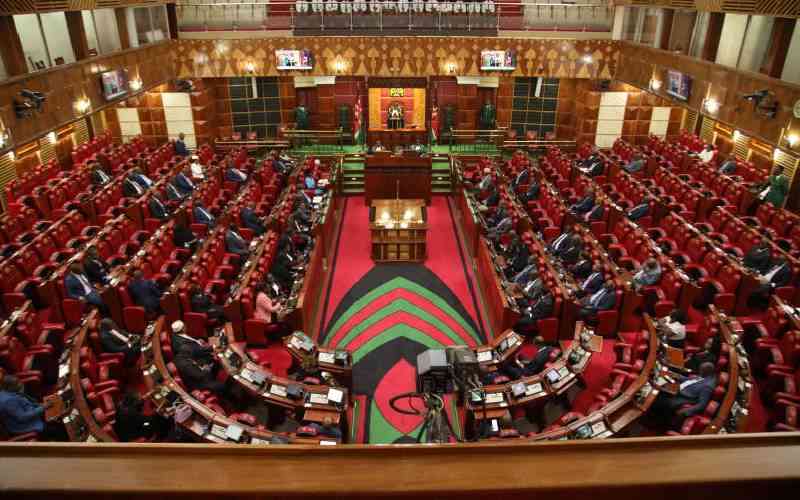
All 42 departmental budget votes for the 2026/27 financial year were approved by the National Assembly on Tuesday, with MPs also passing the Appropriation Bill after political parties clashed over government spending, economic growth, accountability and service delivery.Tabling the standing committee on appropriations’ report, committee chair and Build One South Africa (Bosa) leader Mmusi Maimane said parliament needed a more active role in shaping the national budget rather than simply approving proposals from the Treasury.Maimane said that while the Treasury had succeeded in maintaining fiscal discipline, parliament lacked the capacity and time required to meaningfully amend budgets under the Money Bills and Related Matters Act. He called for greater resources for parliamentary committees and the parliamentary budget office, as well as amendments to legislation governing the budget process.Job creationHe also urged parliament to focus on ensuring that spending created jobs, improved service delivery and strengthened institutions such as the National Prosecuting Authority (NPA).The ANC supported the report, with MP Michael Segede arguing that improving macroeconomic conditions had created a more favourable environment for growth. He cited South Africa’s removal from the Financial Action Task Force greylist, lower inflation, improved credit ratings and economic growth of more than 1% in 2025.Segede said the budget supported investment in infrastructure, including roads, commuter rail, ports and freight rail, while also funding programmes aimed at job creation, industrial development and social protection. He called for increased funding for economic sectors, including mining exploration, industrial parks, automotive investment schemes and Stats SA.The MK party opposed the report, with MP Thulani Gamede describing the budget as “technically proficient but morally bankrupt”. He argued that the budget prioritised fiscal stability and international credit ratings over the needs of poor South Africans.Gamede criticised what he described as underinvestment in housing, public transport and employment creation, saying the budget maintained the status quo instead of addressing structural inequality and unemployment.Accountability deficitThe DA supported the report but used the debate to focus on government inefficiency and wasteful expenditure. DA MP Kingsley Wakelin argued that South Africa’s challenge was not a shortage of revenue but poor spending and weak accountability. He said government departments continued to receive funding despite failing to meet performance targets and allowing irregular expenditure to grow.Wakelin announced the launch of the DA’s “Every Rand Counts” initiative, which will compare prices paid by government departments and municipalities for goods and services to identify inflated procurement costs and inefficiencies.The EFF rejected the report, arguing that the budget entrenched inequality and failed to tackle unemployment, poverty and poor service delivery.EFF MP Khosi Mkhonto accused parliament of treating Treasury’s proposals as untouchable despite having constitutional powers to amend budgets. He called for increased funding for healthcare, education, infrastructure and the South African Revenue Service, saying parliament had failed to use its powers to reshape spending priorities.The IFP supported the report, with MP Nhlanhla Hadebe saying public spending must be accompanied by stronger accountability and improved implementation.Hadebe argued that South Africa’s challenges stemmed less from a lack of resources than from poor management, corruption and inefficiency. He said economic growth, job creation and local government reform should remain key priorities.The Patriotic Alliance (PA) also backed the report. MP Ashley Sauls highlighted the R302bn allocated to social development, including social grants, while raising concerns about corruption and illegal immigration.Sauls pointed to a reported R4.4bn funding shortfall at the Border Management Authority and called for stronger border security and immigration enforcement.ActionSA’s Alan Beesley opposed aspects of the government’s spending priorities, citing South Africa’s expanded unemployment rate of 43.7%.Beesley argued that excessive spending on welfare programmes reflected an economy that was failing to create jobs. He criticised what he described as a bloated executive and questioned continued spending on ministers and deputy ministers while unemployment remained at record levels.Songezo Zibi, Rise Mzansi’s leader and chair of the standing committee on public accounts, supported the report but argued that the government needed to focus more aggressively on improving spending efficiency and prioritisation.Zibi said South Africa could not afford wasteful expenditure, poor project management and corruption. He also called for greater private sector participation in infrastructure development and highlighted public transport as a key area requiring urgent investment.Responding to the debate, finance minister Enoch Godongwana defended the budget and criticised what he described as confusion between national appropriations and provincial and local government spending.Godongwana said many issues raised during the debate, including the employment of doctors, fell under allocations made through the Division of Revenue Act rather than the Appropriation Bill.He noted that R302.4bn had been allocated to social grants benefiting 26.5-million people, while R118bn had been allocated to policing. He also highlighted infrastructure spending of R1.1-trillion over the medium term, including R449bn earmarked for the current financial year.The minister agreed that South Africa’s problem was not necessarily a lack of money but the effective use of available resources. He said the government was pursuing a policy of “targeted responsible spending” aimed at redirecting funds from inefficient programmes towards key priorities.Godongwana urged parliament to strengthen oversight of departmental spending and focus on whether allocated funds were being used effectively to improve healthcare, education, housing and social protection.The National Assembly subsequently adopted the report and passed the 2026 Appropriation Bill.