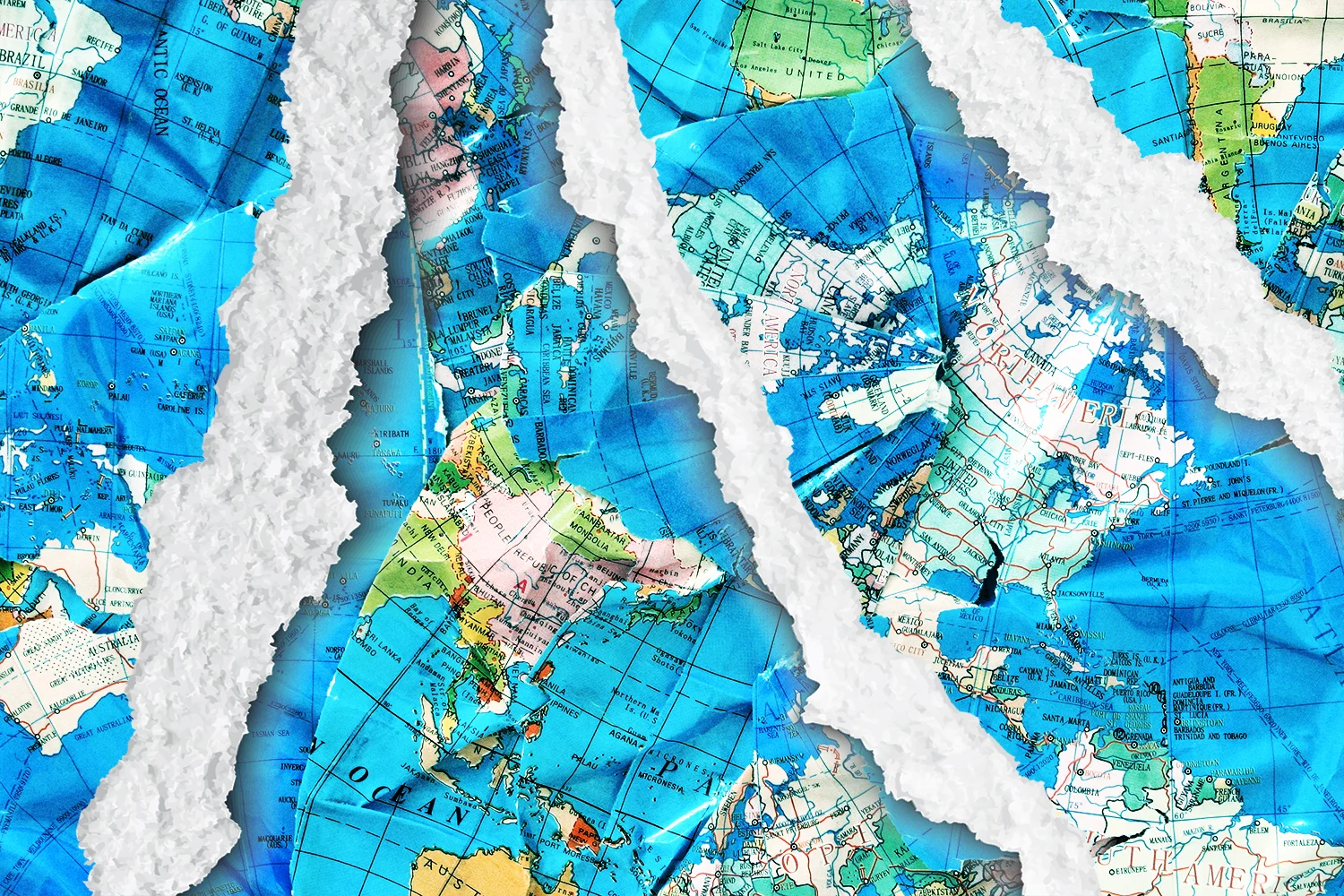
It has become popular to describe our current era as post-Western or perhaps post-American. The problem isn’t necessarily that these terms are wrong. Rather, it’s that they focus on what is being replaced rather than what is doing the replacing. I’ve been as guilty as anyone. Some years ago, I had an editor who titled one of my books The Future Is Asian. I was ecstatic at his bold framing. There’s just one problem, I chided him: “The present is already Asian for most of humanity.”
One of the hardest parts about finding the right term for the world we’re living in is the fixation on order. Western international relations theory, combined with the conventions of foreign-policy punditry, has left everyone trying to identify the rules and institutions that define the emerging global or international order.
It has become popular to describe our current era as post-Western or perhaps post-American. The problem isn’t necessarily that these terms are wrong. Rather, it’s that they focus on what is being replaced rather than what is doing the replacing. I’ve been as guilty as anyone. Some years ago, I had an editor who titled one of my books The Future Is Asian. I was ecstatic at his bold framing. There’s just one problem, I chided him: “The present is already Asian for most of humanity.”