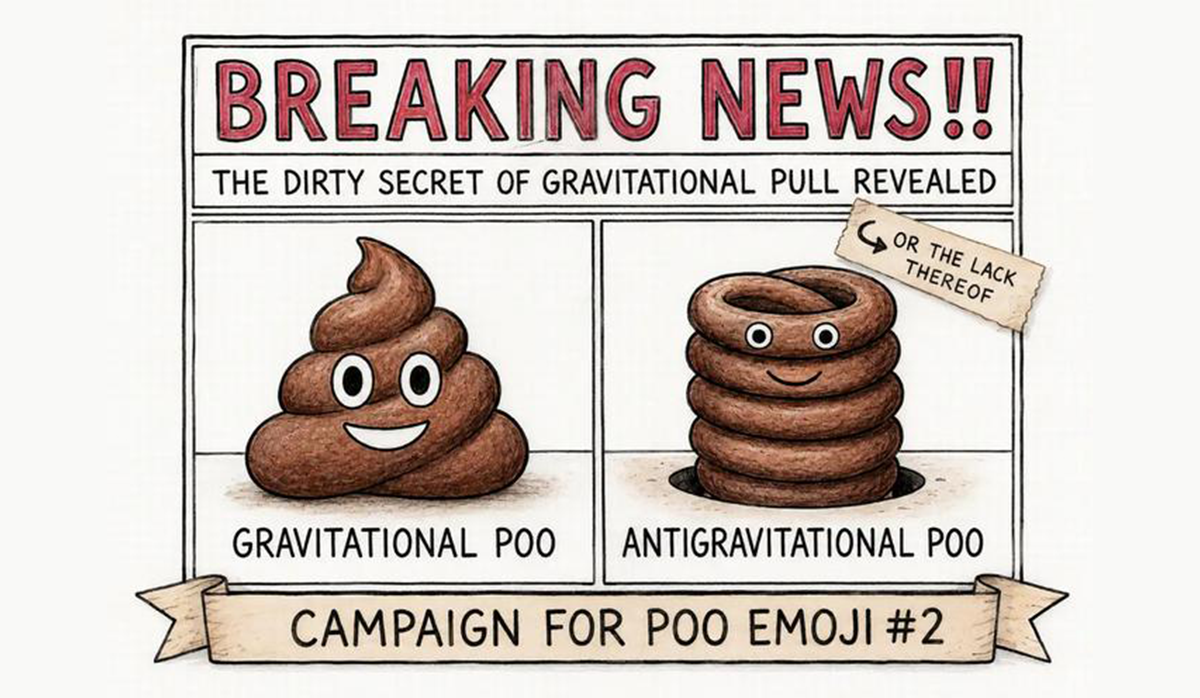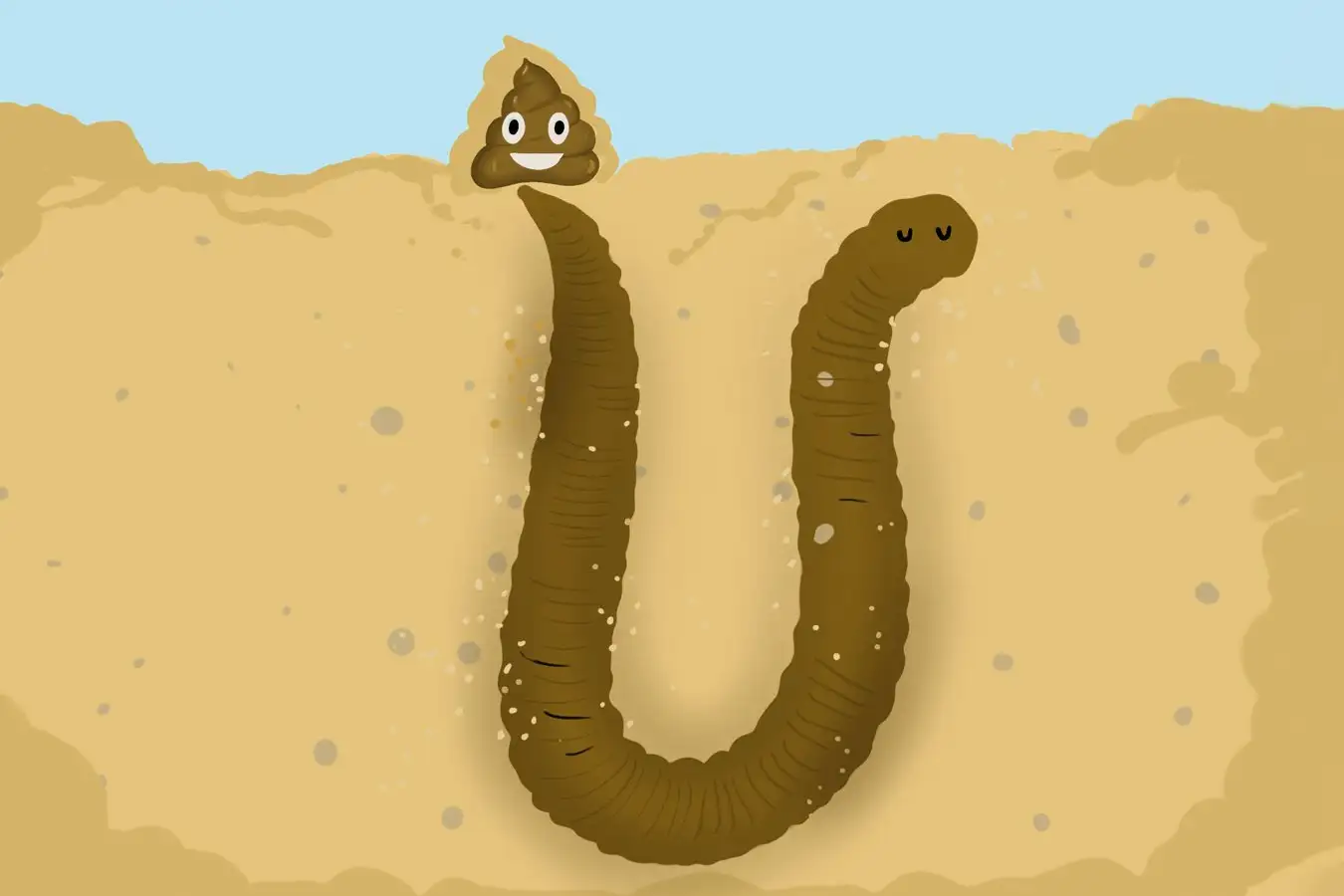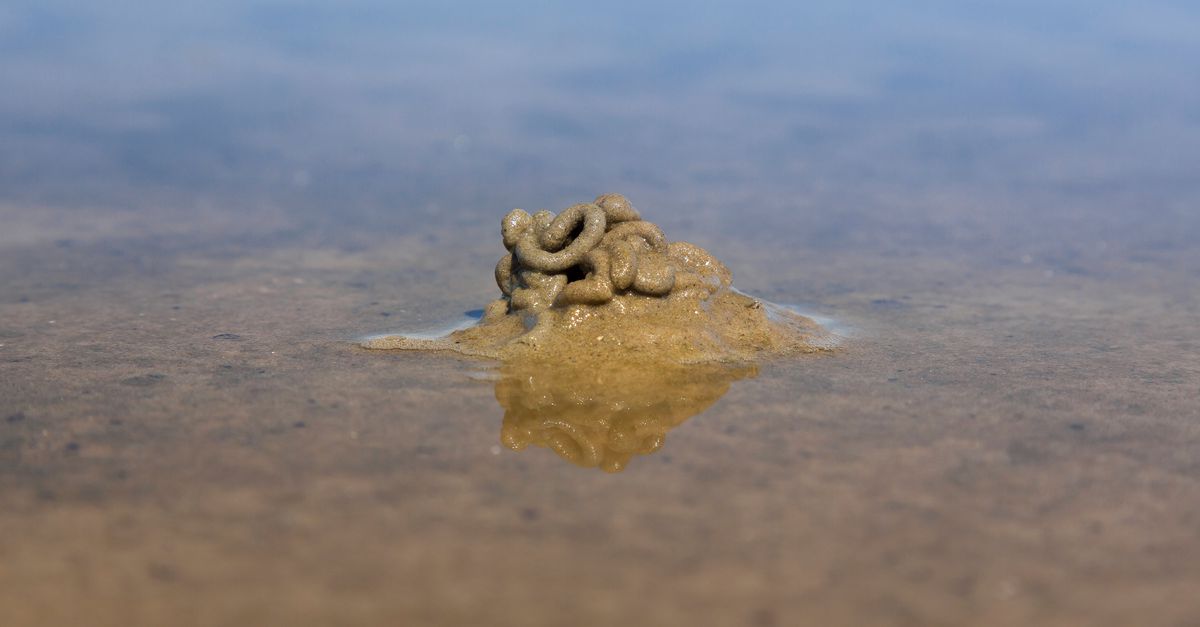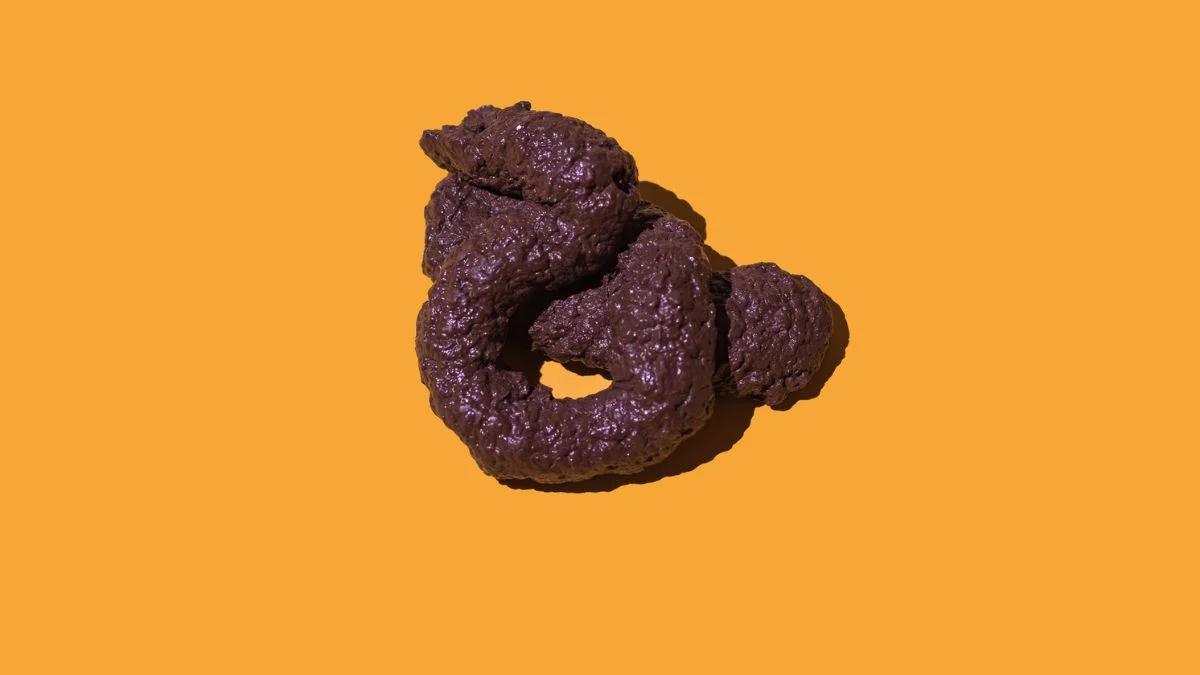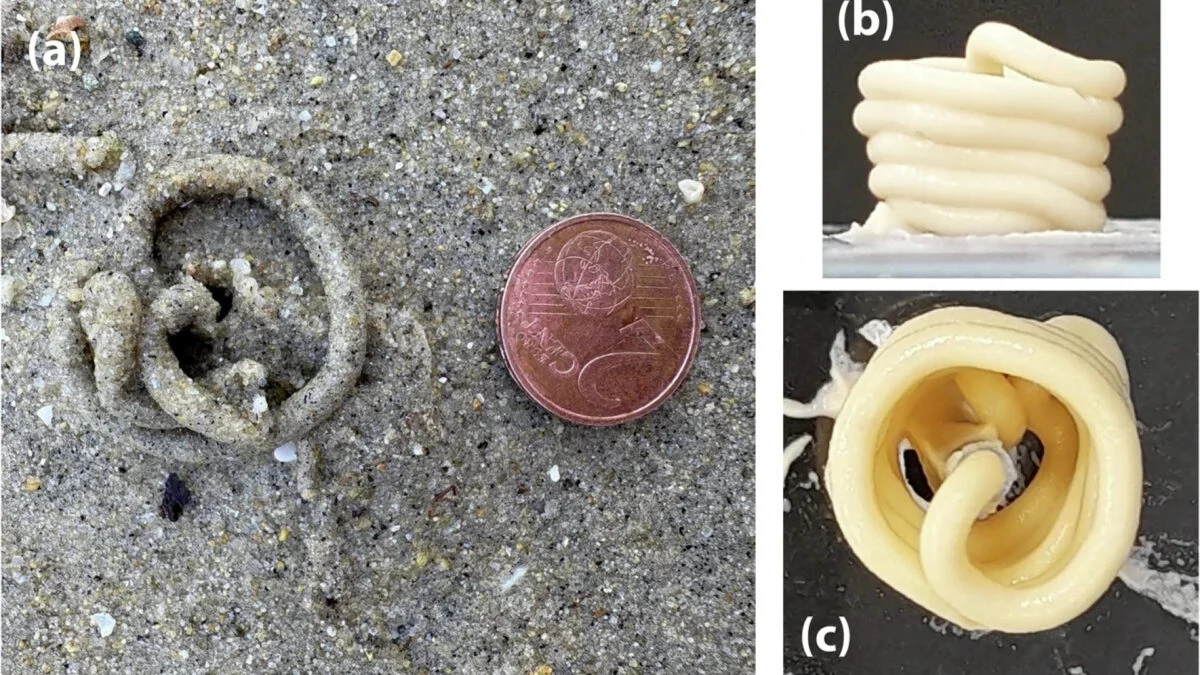
The poop emoji accurately captures the typical poop shape in nature formed by the downward pull of gravity. According to a new study, exceptions to this rule—antigravitational poop—suggest that physics may play a greater role in waste disposal than we realized. While strolling along a beach in France, physicist Daniel Bonn noticed “beautifully coiled heaps of sand” on the ground. These turned out to be piles of lugworm poop. But their exquisite form stuck out to Bonn, an expert in soft matter physics at the University of Amsterdam in the Netherlands. Naturally, he decided to sample and investigate their mechanical properties, as they appeared to demonstrate a “new type of anti-gravitational coiling,” he told Gizmodo. The findings, published recently in Nature Communications, establish universal mechanics for the shape of poop, while at the same time highlighting the underappreciated role of physics in biology. A graphic illustrating the shape difference between poop. According to a university statement, the authors plan to “design a second poo emoji and officially propose it to the Unicode Consortium.” Credit: Lukas Kernell/University of Amsterdam “Most animals defecate downward,” explained Bonn. “As their feces coil, the pile grows higher and the fall height decreases, making each successive coil smaller. This creates the characteristic pointy mound—precisely the shape of the poo emoji. Lugworms, however, defy gravity by extruding their feces upward.”
The Poop Emoji Got Gravity Right, Physicists Find
The poop-gravity relationship goes way deep. OR The unassuming lugworm releases gravity-defying poop—something that represents a broader theme in the shape of all poop.
592 words~3 min read