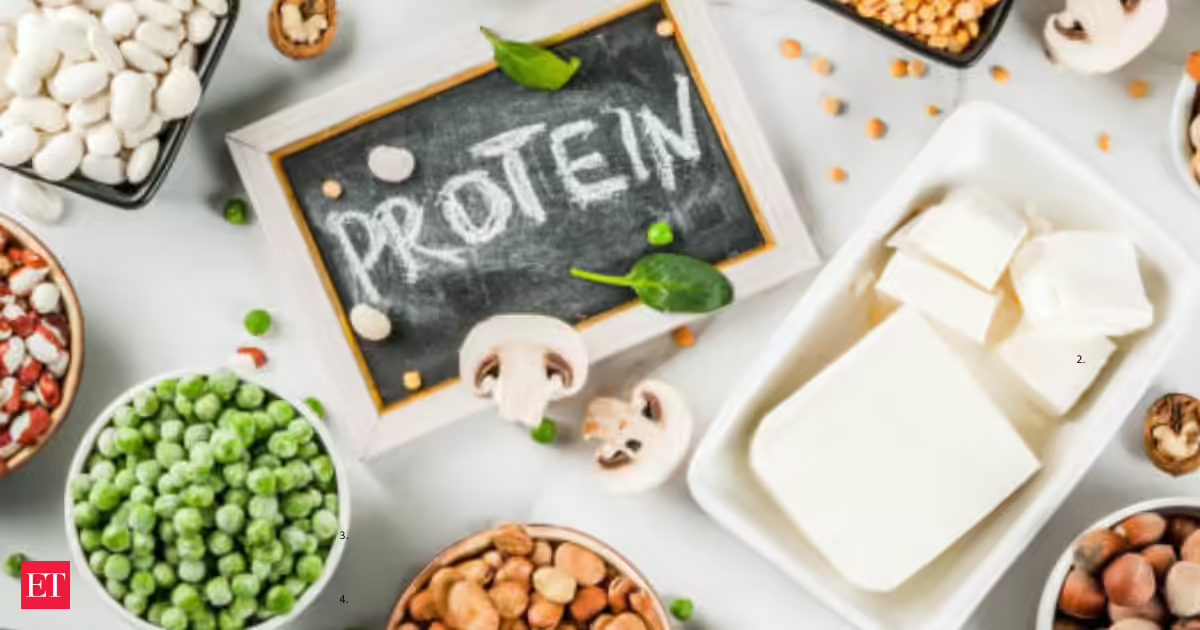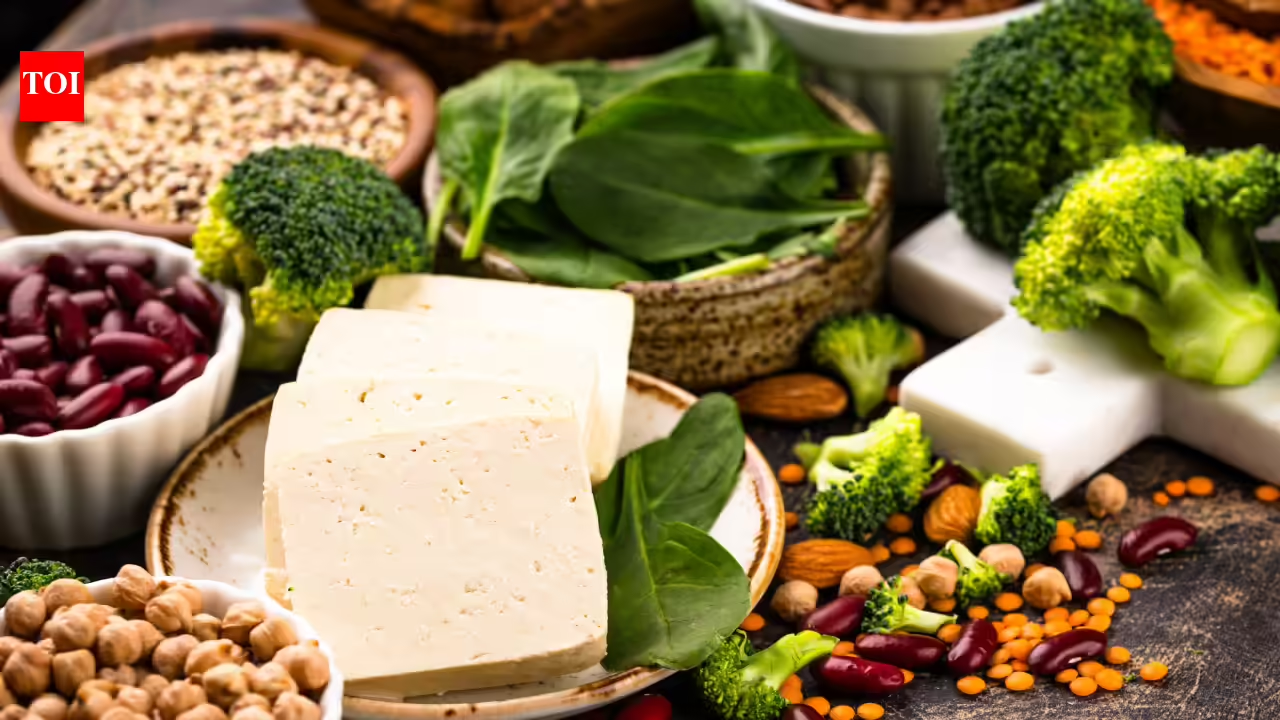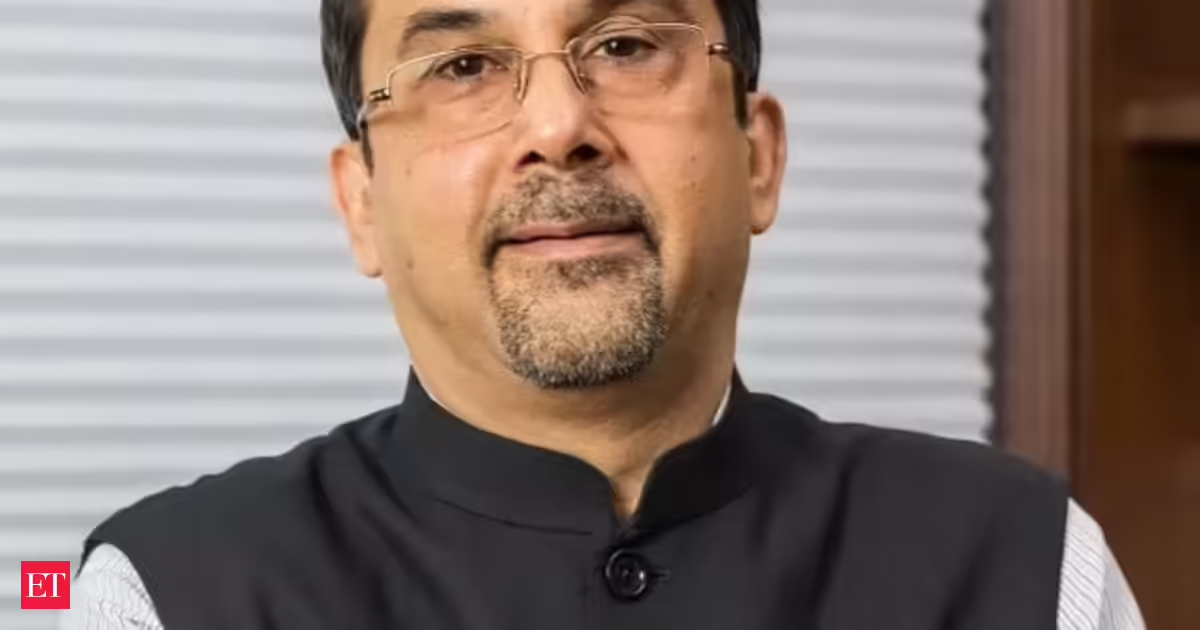
KOLKATA: ITC Limited is serving up a fresh spread of protein- and fibre-packed options to cater to millions of new nutrition-conscious consumers entering India’s packaged food market, said its chairman and managing director Sanjiv Puri. Both first-time packaged food buyers and users of weightloss drugs can help drive growth in the country, he told ET in an exclusive interview.“India remains a heavily under-penetrated market with low per capita consumption. On the one hand, there are consumers who are seeking offerings like GLP, while on the other hand, there are people who do not have enough. Therefore, I think the opportunity is both ways in India,” Puri said.GLP-1 (glucagon-like peptide-1) drugs such as Ozempic require users to increase protein intake to preserve muscle mass while losing weight. Even as many affluent urban consumers are already seeking protein-rich diets and functional foods, millions of households are entering the branded packaged foods market for the first time.The company behind Aashirvaad atta, Sunfeast biscuits and Yoga Bar is eyeing this segment for growth.Karnataka supports 10,500 food processing units, creates up to 1 lakh jobs: KAPPEC“India is also a protein-deficient market. We already have offerings such as high-protein atta, soya chunks and protein shakes, and we will continue to expand this portfolio,” said Puri, who added that he shed around six kilograms recently and now sticks largely to home-cooked meals, even carrying them on long-haul flights.The push is part of the Kolkata-based diversified conglomerate’s broader consumer goods strategy.Tobacco DilemmaThe company is increasingly focusing on protein, fibre, health and wellness products while also targeting distinct consumer cohorts ranging from Gen Z and Gen Alpha to older consumers seeking specialised offerings.Amuch larger transformation is underway at ITC. Once viewed primarily as a cigarette maker, it has spent more than two decades building businesses spanning packaged foods, personal care, agriculture, paperboards, hotels and information technology services.While brands such as Aashirvaad, Sunfeast, Bingo and Savlon have helped make it one of India’s largest consumer goods companies, cigarettes remain central to the group’s economics.In 2025-26, cigarettes contributed 41% of ITC’s net turnover, a sharp decline from historical levels, as non-tobacco businesses expanded. However, the segment still accounted for 82% of the company’s overall earnings before interest, taxes, depreciation and amortisation (ebitda), highlighting both its profitability and the challenge of reducing dependence on tobacco earnings.Speaking during a two-hour interaction in his wood-panelled chamber at Virginia House, ITC’s headquarters on Kolkata’s Chowringhee Road, the 64-year-old executive said the long-term objective is clear.“Eventually, our aspiration is to become the number one FMCG (fastmoving consumer goods) player, even without cigarettes. This requires sustained investments in innovation, supply chain, brand building and distribution,” he said.Yet, even as ITC pushes deeper into foods and consumer products, cigarettes continue to bankroll much of that expansion. The segment faces renewed pressure in the wake of steep tax increases announced earlier this year.FSSAI issues notices to Bikanervala, Marico, Param Dairy on consumer complaints, law violationPuri said the company is responding with calibrated price increases rather than passing on the entire tax burden at once. “Like in FMCG, we increase price in stages,” he said. “This remains an area to monitor closely, as there is likely to be an impact on volume, given the increase in illicit trade. At the same time, we are re-architecting our portfolio to mitigate the impact.”NO SIGNS OF A SLOWDOWNPuri also said there is no evidence yet of a significant slowdown in consumer spending in India, pointing to improving demand trends despite inflationary pressures and global uncertainties.“The good news is that despite the turbulence and uncertainties that global economies are going through, India is traversing through this phase quite well. The country is progressing well and is on a strong path, with some bumps along the way,” he said, crediting tax relief measures, goods and services tax rationalisation, public capital expenditure, increasing rural investments, entrepreneurship and the rapid expansion of global capability centres for supporting economic activity.However, he remains watchful of weather-related risks.“Another area of concern is El Niño. The government is proactive and will work to mitigate risks. As of now, there is no data or evidence to suggest a slowdown yet. However, it is definitely something to be cautious about,” Puri said.ITC is backing its demand outlook with fresh investments. The group plans capital expenditure of about Rs 20,000 crore over the medium term across businesses, including hotels, manufacturing and consumer products.Puri said the company is betting on free trade agreements, including partnerships with overseas companies to distribute their products in India while leveraging their distribution networks to sell ITC products abroad.A BIGGER BITE OF FMCGThe company is also investing aggressively in new growth engines. Fresh foods, one of its newest bets, is growing at nearly 100% annually since inception. ITC currently operates 70 kitchens across five cities and is preparing to expand into northern India through a new central kitchen.Exports are another focus area. Overall group exports have more than doubled over the past six years, while FMCG exports have increased at a three-year compound annual growth rate of 32%, driven by brands such as 24 Mantra and expanding international distribution.Within FMCG, profitability is improving alongside scale. Puri said margins increased about 740 basis points between 2016-17 and 2025-26, aided by premiumisation, supplychain efficiencies, sourcing advantages and acquisitions. The company now aims to improve margins by another 80-100 basis points annually on average. A basis point is a hundredth of a percentage point.
ITC bulking up with products rich in protein and fibre: Sanjiv Puri
“India is also a protein-deficient market. We already have offerings such as high-protein atta, soya chunks and protein shakes, and we will continue to expand this portfolio,” said Puri, who added that he shed around six kilograms recently and now sticks largely to home-cooked meals, even carrying them on long-haul flights.
901 words~4 min read