Story audio is generated using AI
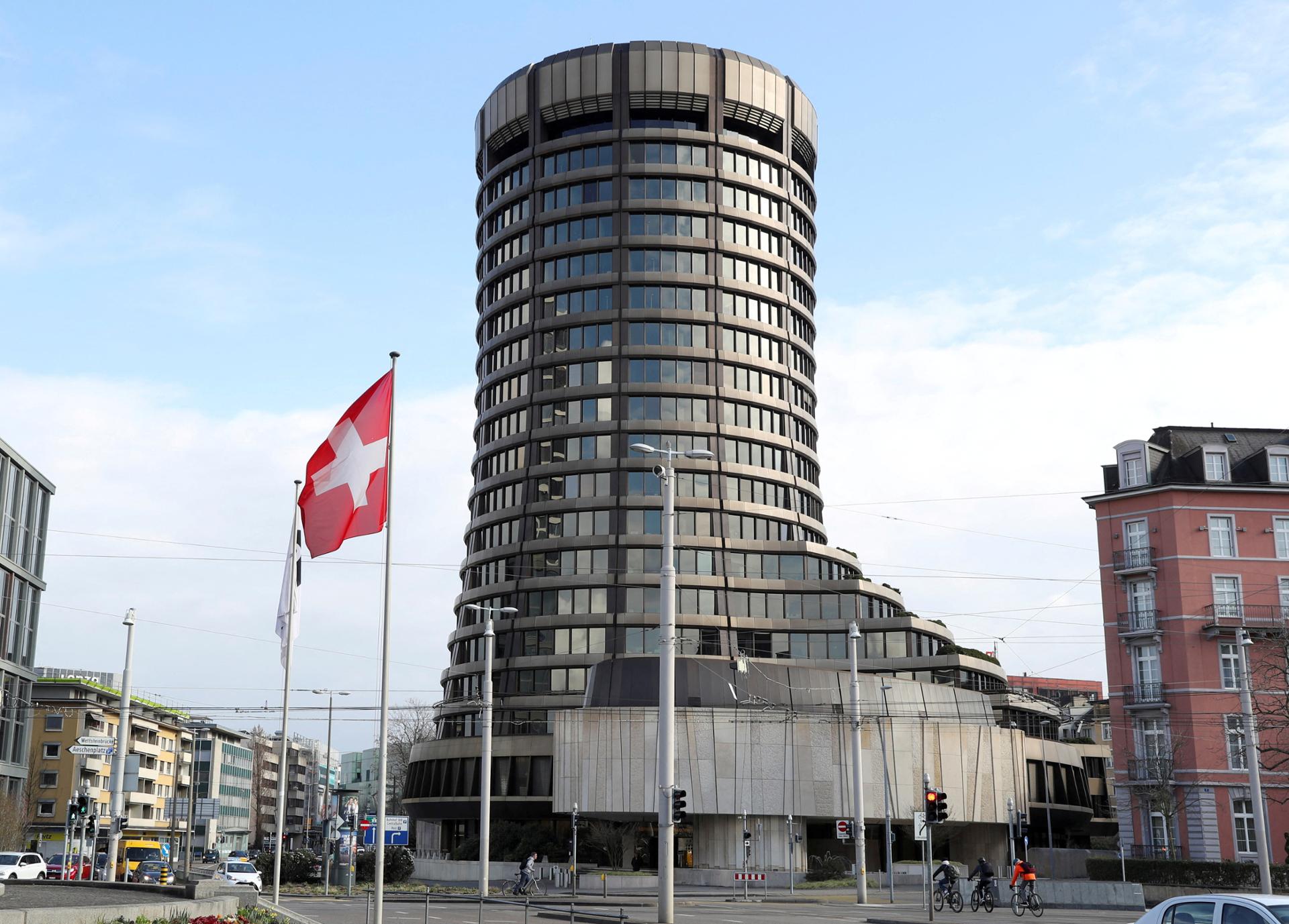
Digital innovation is transforming finance, potentially enabling greater competition and efficiency in payment systems and financial intermediation, but also brings challenges, including how to preserve trust in money in the digital age, according to the Bank for International Settlements (BIS).In an instalment of its 2026 annual economic report published on Tuesday, the BIS said stablecoins — cryptocurrencies that are pegged to the value of a currency, commodity or a basket of assets to provide greater stability — can support faster and programmable payments, but current designs fall short of the foundational properties of money and threaten financial integrity. “Advancing the future monetary system requires co-ordinated efforts by policymakers along with tackling weaknesses in current stablecoin arrangements to mitigate risks and bringing the technological advances of tokenisation into the two-tier system to establish trusted forms of programmable money,” it said.Despite phases of rapid growth, the use of stablecoins remains modest, with global market capitalisation at about $320bn at end-May.Financial integrity concerns are a central consideration for any role stablecoins might play in the monetary system, said the BIS, whose primary goal is to foster international monetary and financial co-operation as well as to serve as a bank for central banks. “Experience to date suggests that stablecoins account for a significant share of illicit on-chain activity,” it said.The BIS noted that in traditional finance, banks and other supervised intermediaries perform know-your-customer checks — the mandatory verification process businesses use to confirm the identities of their clients — monitor transactions, file suspicious activity reports and can stop or reverse payments when warranted.“By contrast, stablecoins circulate on public permissionless blockchains, where pseudonymity and the use of unhosted wallets can undermine … compliance and create avenues for evasion,” it said.Non-legal tenderThe South African Reserve Bank does not recognise crypto assets as legal tender. In its financial stability review last November, it flagged “crypto assets and stablecoins” as a new risk to South Africa’s financial stability, saying their rapid growth and limited regulation could allow risks to build up undetected.The Bank said it had undertaken an inventory of the crypto landscape at the time, which showed that the number of South Africans with crypto-trading accounts had nearly doubled to 8-million since early 2022.It said almost R63bn had been externalised through local crypto platforms since 2019 — flows that fell outside exchange-control reporting.Regardless of the central bank’s reservations, crypto assets are no longer a niche interest confined to tech enthusiasts; instead, they are rapidly becoming a mainstream financial asset in South Africa.Technological advances and regulatory measures play a crucial role in addressing the risks associated with current stablecoin arrangements, the BIS said.Mitigating risksA number of risks can be mitigated with policy interventions, including capital requirements for stablecoin issuers and liquidity requirements for stablecoin reserve holdings, as foreseen in many regulatory frameworks. Other measures include instituting protections for coin holders, exploring conditional access to central bank liquidity under stringent safeguards and establishing well-defined disclosure and resolution mechanisms for issuers.“When complemented by strong risk management practices that avoid moral hazard, such measures could reduce the risk of runs and strengthen the resilience of stablecoin arrangements,” the BIS said.“At the system-wide level, enhancing regulatory capabilities, monitoring and infrastructure will be key to assessing financial stability risks.”It said there is value in international co-operation to tackle risks, noting that regulatory co-operation on financial integrity is already well developed and multiple standard-setting bodies are working together on the implications of stablecoins.In April, the National Treasury proposed a sweeping overhaul of its decades-old rules governing money flows, including tightening its control on crypto assets, seeking to bolster its position as a financial hub for the continent and attract more investor capital.The finance ministry’s proposals include raising discretionary offshore allowances for individuals, regulating crypto assets and easing capital flow restrictions.