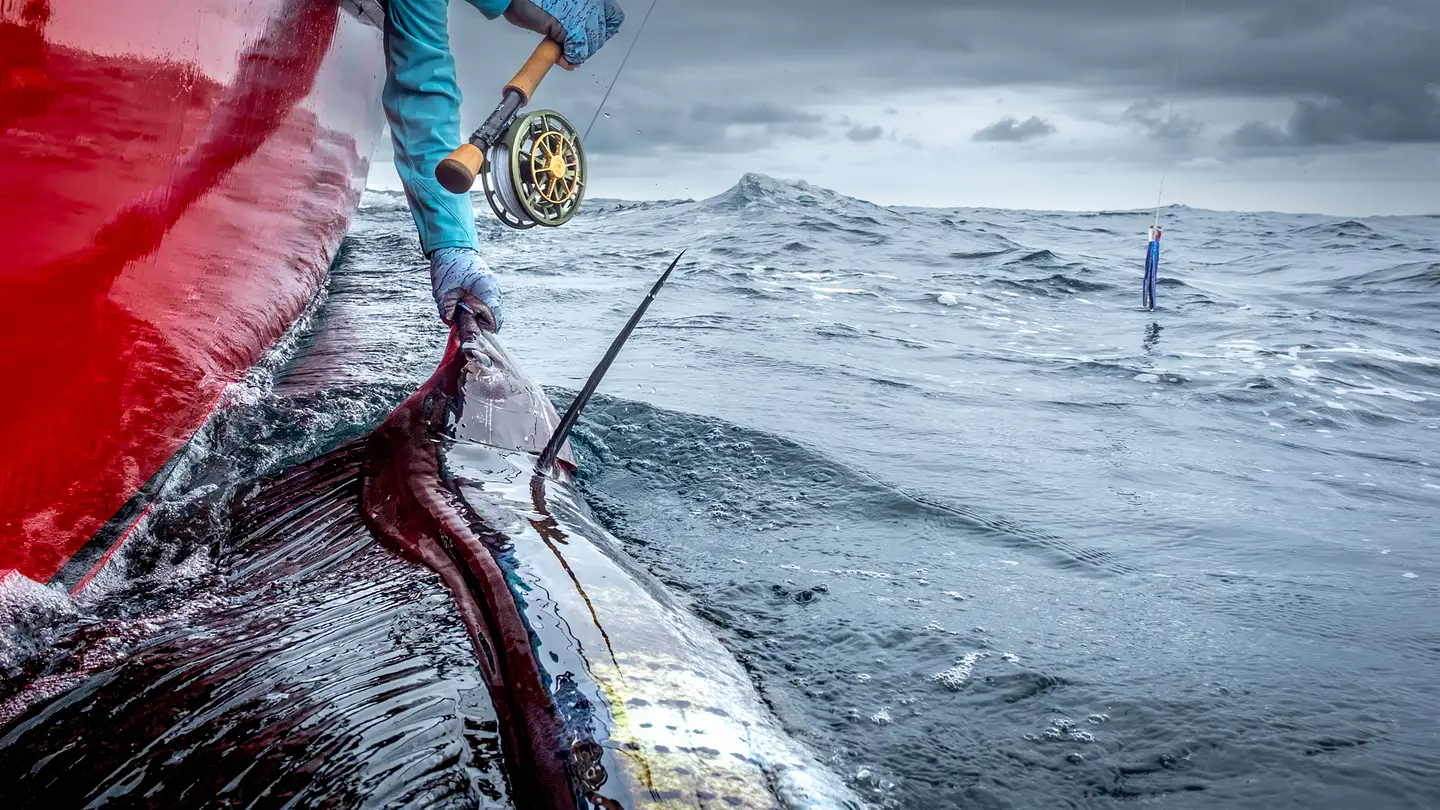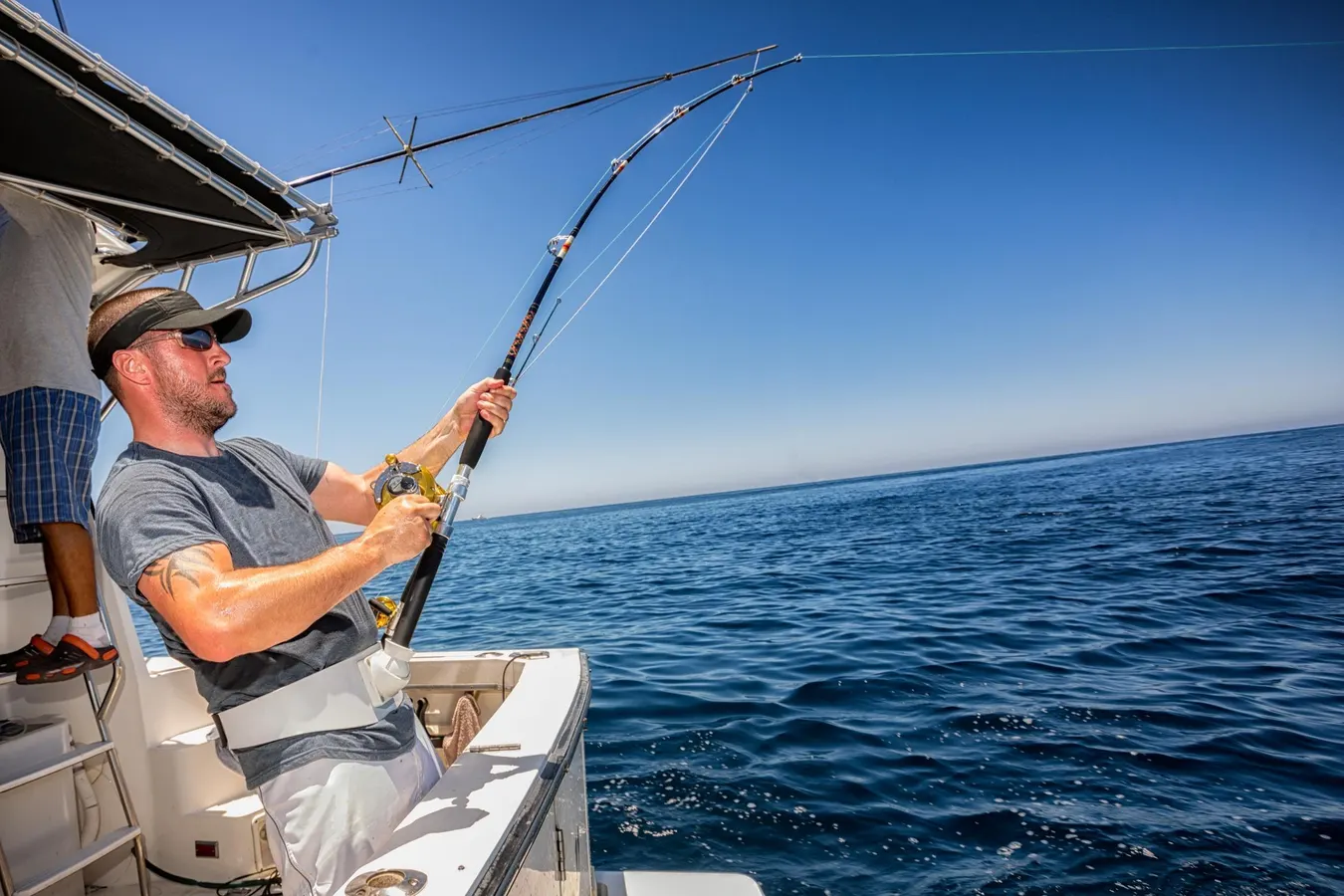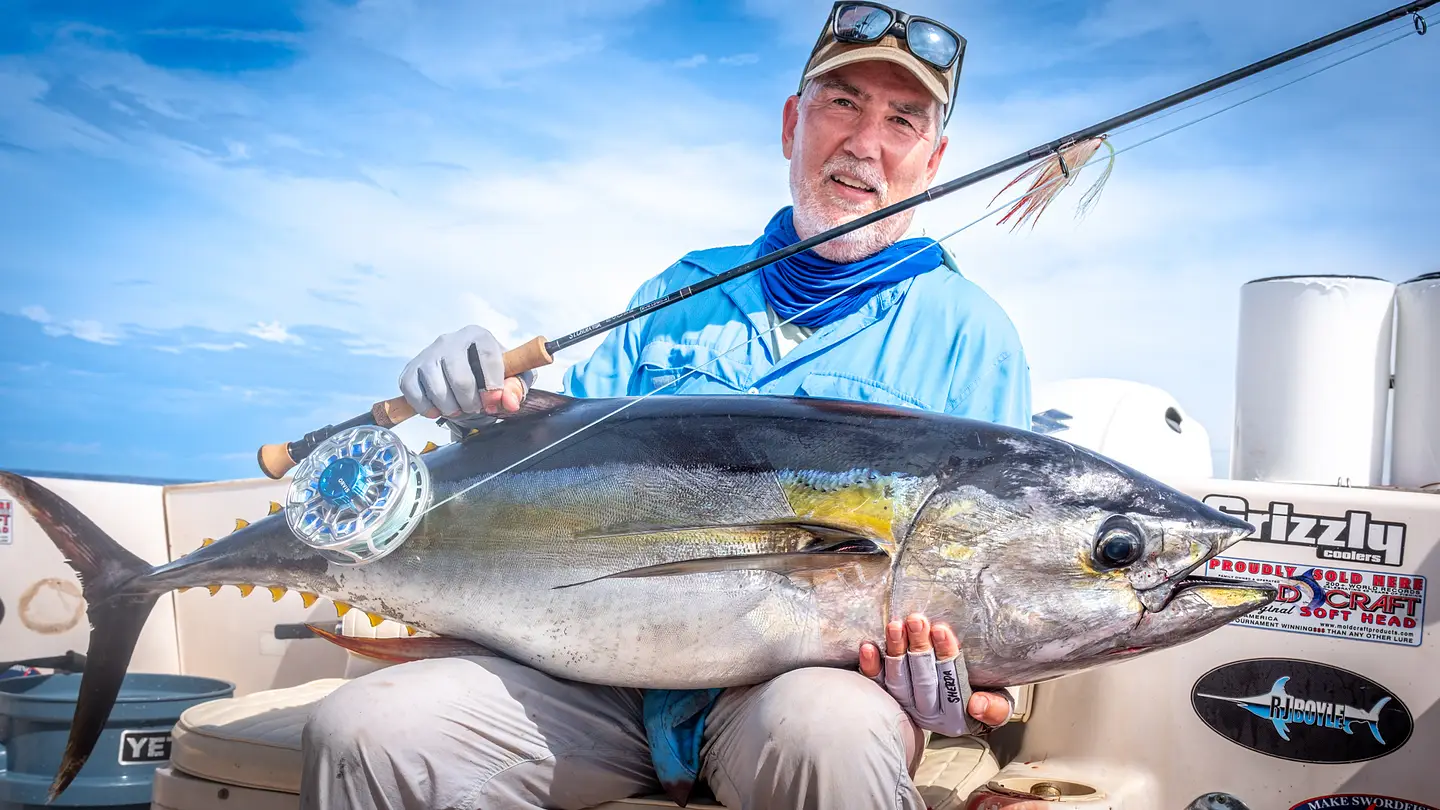
There's a saying that goes “Let’s get down to brass tacks." So, let's get down to brass tacks. In a 24-hour window, I caught two fish of a lifetime on a fly rod: a 65-pound yellowfin tuna and a 90-pound sailfish. I don't consider myself an exceptional angler, but it is more doable for the average angler than you would think. You just have to be in the right place.Fly Fishing PanamaFor me, the right place was Panama. I took the trip a month ago, and it became one of the best adventures I've ever been on.The water that surrounds Panama is full of fish, and most of them are big. Many can be caught with a fly rod, and finding a guide who is familiar with the fly game is becoming increasingly common. Marina Chorcha Fish Club sits along a protected waterway that provides quick access to the Gulf of Chiriquí. | Photo by Ken Baldwin / Fishing On SIThe Gulf of Chiriquí I started on the North end of Panama, near the Costa Rica border on the Pacific side. Specifically, I fished out of the Chorcha marina situated on a narrow mangrove channel that opens into the Gulf of Chiriquí. I was going out with Capt. Tomas Siano, Alberto Socarraz, Mathew Rodriguez, and Julio Rojas. Tomas and Alberto are two expats who have lived in Panama for more than 15 years. After some quick hellos, we jumped on a boat and went looking for busting tuna. Capt. Siano was tuned in to where the tuna were feeding; we just needed to get on top of them. Searching For A Tuna BiteForty minutes into the boat ride, we came upon birds and a few commercial fishing boats. A more accurate description of the commercial boats would be a handful of guys at the back of a beat-up vessel trying to catch tuna with hand lines. I know that's a rough way to make a living, but it also looked pretty fun. We pulled up near the commercial guys, making sure not to get in their way, and waited. There was a lot of activity. Dolphins all over the place, birds flying and diving into bait, and smaller fish jumping out of the water, but we weren't seeing any yellowfin tuna busting the surface.The commercial hand-liners and mass dolphin activity told us this is where the tuna were. | Photo by Ken BaldwinStanding Down Until the Captain Says Go The Capt. told me to wait while he and Alberto fished with conventional tackle and live bait to see what's down there. I assumed tuna were down there. They knew the fishery, and I didn't, so I shut up and waited. In three hours, I saw two big tuna come out of the water to chase bait. I was lucky to catch one on my camera. No one got bit on our boat, and we didn’t see any of the commercial guys hook up either. I Was Tired of WaitingJust because we weren't seeing tuna or hooking up didn't mean they weren't down there. Why the Captain didn't want me to wet a line confused me, and I was tired of waiting. I tied on a 6-inch baitfish streamer in white and light green to my sinking line and cast out into a seam that I interpreted as a rip going past the boat. One of 3 big tuna I saw jumping out of the water. Capt. ZZZ told me that most days, you will see this in large numbers happening all around the boat. | Photo by Ken Baldwin The seam was about a 40-foot cast. I got it there and let the current take the fly further down the rip. I didn't let the line out all at once. I would give the streamer some pulsing movement and then feed out the line. I wanted it to look like an injured baitfish struggling and being swept in the current. When I got down to the backing, I worked the streamer back to the boat, again like a struggling baitfish. Nobody Was Expecting ThisIt was when I took a pause, let the streamer flutter in the current, and then started bringing the fly back to me that I got absolutely hammered. The strike was so violent that it nearly ripped the rod out of my hands.Trial By TunaFishing for tuna was new to me. The biggest fish I had caught on a fly rod to date was a 35-pound striped bass. Before coming to Panama, I did some research and couldn't find much on "Catching tuna on a fly rod." I had one friend who had fished for them in Colombia, and his advice was, "You don't want to catch anything over 30 pounds. Even a 30-pound fish will wear you out in that heat."The guys on the boat had caught plenty of tuna, but not on a fly rod, so they didn’t have much to say about it either. I was hooked into a big tuna with a steep learning curve ahead of me. When the tuna is running at full speed, there is not much you can do except hold on. If you are going to hold your rod further up the butt section, DO NOT APPLY pressure. I only do it to give my wrist a rest, to feel how much energy the fish has, or to see if it is losing energy. Rod companies will say, "Don't do this"; most anglers will say, "Don't do this." I do it, but I'm on top of what I'm doing and know when it's getting close to too much. | Photo by Alberto SocarrazWatch Those FingersThis fish was a rocket heading straight out. I knew enough to keep my hand away from the spinning reel handle so that I wouldn't bust up my fingers. I watched the backing peel from my fly reel and turned the drag knob to apply some tension. Palming the reel would do nothing. It was running with a full head of steam, and using the drag was my only realistic option. I estimated that the fish had taken 200 yards of backing, leaving me 100 yards left. It is a surreal experience to watch a fish strip off that much backing and keep going at top speed.Doing my best to slow the tuna down and turn his head around. | Photo by Julio RojasA Proper Butt KickingThe crew poured cold water on me, and I downed several bottles to avoid dehydration. At some point in the fight, I heard my rod crack, not big and loud but enough to cause concern. Now I had to ease up on how much pressure I applied. That was discouraging. I needed to apply more pressure, not less. Julio Rojas helped me from overheating in the Panama sun by pouring ice water on my neck and back. | Photo by Alberto SocarrazA Needed Morale BoosterAt about an hour and forty-five, I finally got all the backing onto the reel. That was a big morale booster, and it helped my energy and focus. I wasn't cussing the tuna anymore but instead talking to it kindly and trying to coax it closer to the boat. I'm not saying I was delirious from the heat and all, but, yeah, maybe.Just a Little Bit MoreThe fight went on for another twenty minutes, making big gains and then losing a little. The fish went down again, and this time when I pumped it back up to the surface, it was right next to the boat. Alberto took a swing with the gaff, and it struck home, solid. That was it, I was done. I sat on the gunwale, exhausted. I got the fish, but the fish had kicked my ass. A Quality Drag is Your Best FriendLet me say something about the drag system on the fly reel I was using. The reel was an Orvis Ratio VI. When you're fly fishing for large, powerful fish, a quality drag system is a necessity. Plus, you want a drag knob that is easy to control and adjust when all hell breaks loose.More than an hour into the fight, and the fish I'm connected to continues to put heavy pressure on my 12-weight fly rod in Panama's Gulf of Chiriquí. | Photo provided by Ken BaldwinAnd the drag must be able to slow down a powerful fish without locking up or becoming inconsistent. A tuna can take line at a blistering pace, and if the drag hesitates, surges, or fails, it can cost you the fish. If I lose a fish, I want it to be because I screwed up, not because my gear failed me.Panama DeliversThe fish weighed 65 pounds on the scale. The crew couldn't believe it. They had been throwing live bait for most of the day and didn't even get a tap. My first cast with a streamer and it gets smoked. Even the commercial boats around us applauded and cheered. I was done for the day. We headed back to land. I had plans for a good Panamanian restaurant and a couple of cold cervezas. Important GearFly RodA St. Croix Evos Salt, 12-weight. If I were to do it again, I'd fish a 13-weight. An odd note, most fly rod companies don't offer 13-weights, but they do offer 14-weights. The flies are Deciever-type streamers. The reel is the Orvis Ratio VI, and fishing gloves. I can't stress the importance of fishing gloves enough. They cover the back of your hands. The backs of the hands are among the most common locations for skin cancer because they receive years of cumulative sun exposure. The padded fingers will prevent the fly line from burning or cutting into your skin when a tuna or sailfish takes off, and they will take off. | Photo by Ken BaldwinFly ReelThe Orvis Ratio VI (11-13-weight). A solid, quality reel with an exceptional drag. Fly LineScientific Anglers SONAR SALTWATER INTERMEDIATE full sink line. 12-weight. Leader Seaguar Gold Label Fluorocarbon Leader, 40 lbs. 65 pounds and a two-hour fight on a 12-weight fly rod. Panama delivers. Tuna steaks and cold cervezas for me and the crew. | Photo by Alberto SocarrazFliesI caught the fish on a Deciever type streamer. 5", in Chartreuse Green and White. Polarized Sun GlassesBajio Palehorse with side shields. Polarized sunglasses should be a mandatory part of your fishing system. They protect your eyes from stray hooks, harmful UV rays, and glare while helping you spot fish and structure below the surface. Side shields are important because on bright days, light sneaks in through the sides of your glasses and can undermine the benefits of polarized lenses. Fishing GlovesGet them, wear them. When a fly line is ripped through your hands, it can do some serious cutting. On top of that, the gloves will protect the back of your hands from sunburn. After catching that tuna, I was good. I didn't think Panama could do better than that. I was wrong. In my next article, I'll share the story of the second fish-of-a-lifetime from this trip.~ KB Follow me on Instagram @KenBaldwin7. I share the stories behind my articles, photography from my fly-fishing adventures, gear I’m testing, wildlife encounters, and the outdoor places that inspire them.Add us as a preferred source on GoogleFollow
Two Fish of a Lifetime in 24 Hours: Panama Fly Fishing at Its Best
Panama's Pacific coast has some of the most exciting fly fishing in the world. For me, it delivered two fish of a lifetime in less than a day.
1,888 words~9 min read