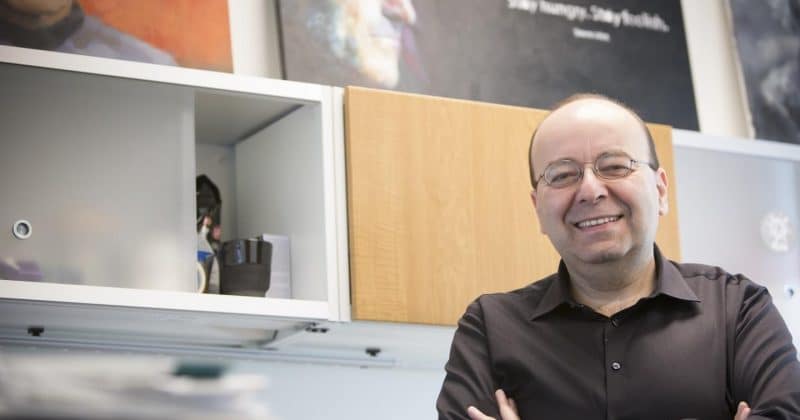
Derya Unutmaz, an immunologist at The Jackson Laboratory for Genomic Medicine, handed a three-year-old dataset to GPT-5 Pro and got back answers his team had been chasing since 2022. The AI model identified patterns in T cell gene expression across different age groups that had eluded traditional analysis, generating novel hypotheses that align with decades of prior research in the field.
What Unutmaz actually did
Unutmaz has spent over 30 years studying T cell biology and cancer immunotherapy. In 2025, he began using OpenAI’s GPT-5 Pro as what he describes as a research collaborator, feeding it legacy datasets on human immune cells that his lab had accumulated over years of work.
The model surfaced connections between cellular processes and T cell developmental trajectories that the team hadn’t previously identified. Analysis that would typically consume months of a researcher’s time was completed in minutes of computation.
Unutmaz received the OpenAI Pro AI Award for his pioneering contributions in this area. His work has been featured in Scientific American and on OpenAI’s own blog.