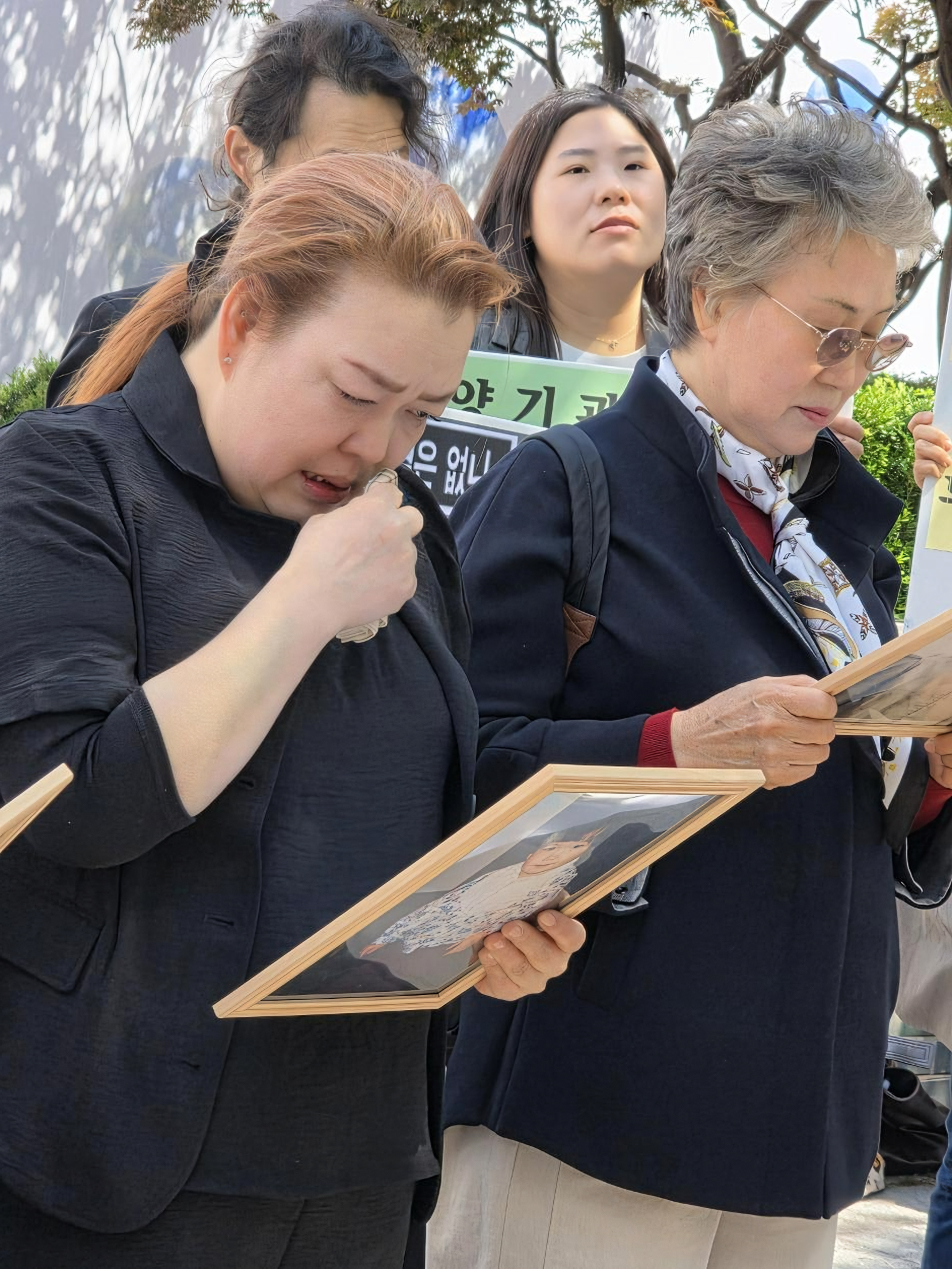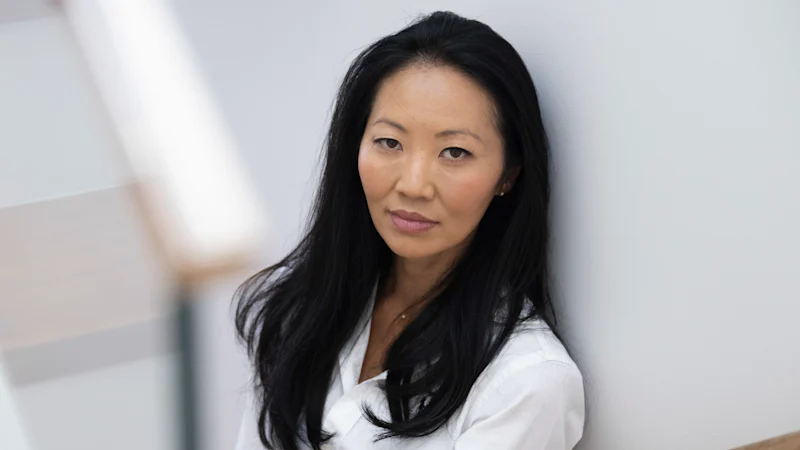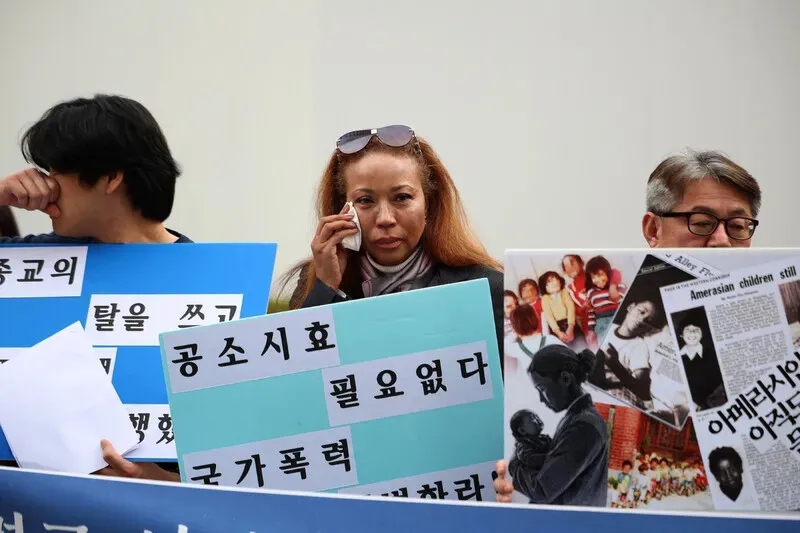
Meeky Woo Flippen, the head of Korean operations for KAMRA, wipes away tears while attending a press conference outside the Truth and Reconciliation Commission’s building in Seoul’s Jung District on March 30, 2026, before filing a request for a fact-finding investigation regarding forced overseas adoption. (Choi Hyeon-su/Hankyoreh)
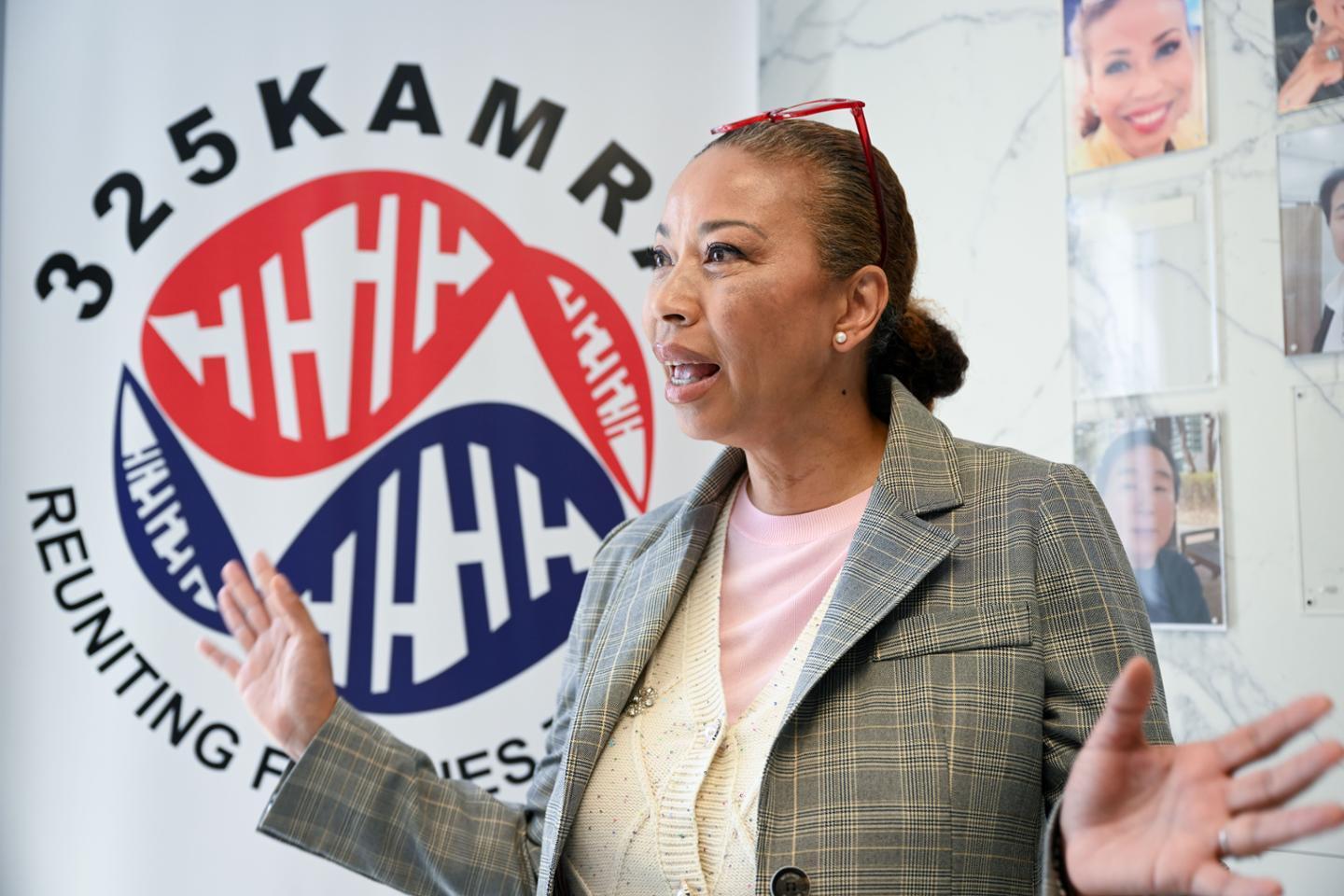
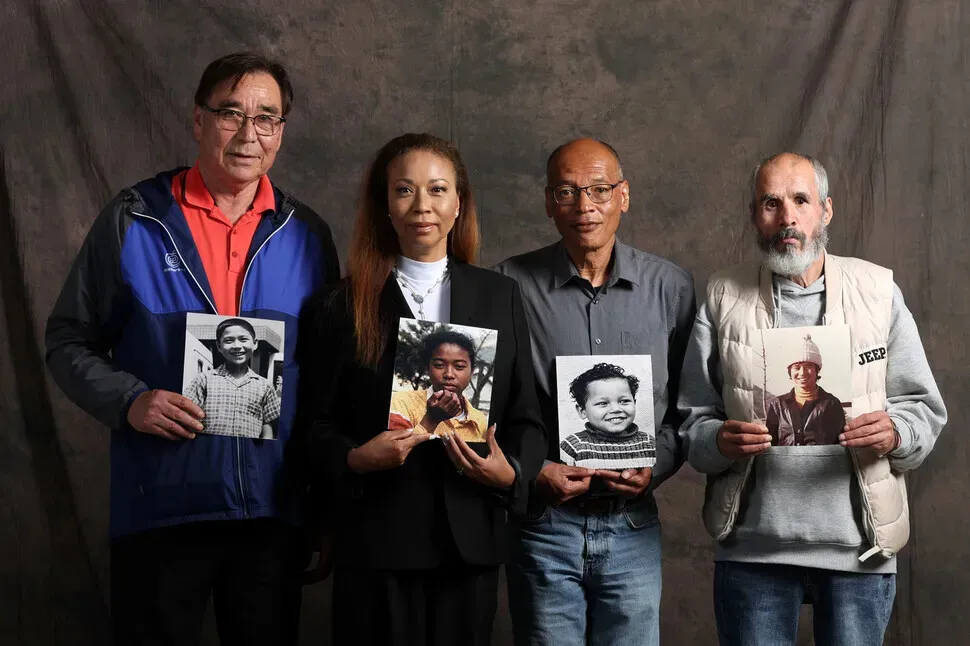
“I’ve decided to speak out about how I lost my sister and my mother due to adoption. I myself have been torn apart. I want to make it clear that international adoption was not the answer for us.”Meeky Woo Flippen, the head of Korean operations for 325KAMRA, who never lost her smile while sharing her story in Korean, wiped away her tears as she spoke. Born to an American serviceman and a Korean mother, she was a mixed-race child who was adopted to the United States at the age of 13 amid a government policy that promoted “pure blood.”On Monday, five mixed-race overseas adoptees, including Flippen, held a press conference to apply for an investigation and recognition of victim status to South Korea’s Truth and Reconciliation Commission. Their aim is to uncover the harrowing truth behind the process that forced them to leave their country of birth and biological families, and to hold those responsible to account. While the commission has received numerous applications for investigation from overseas adoptees, this is the first time that mixed-race adoptees — born primarily near US military bases — have approached the commission.Flippen stated that the South Korean government and social welfare agencies persistently pressured mixed-race children to be sent overseas for adoption. “One day, a woman claiming to be a social worker from Holt came to our house,” Flippen recounted. “When she told my mother to send us kids to the US, my mother was furious, but the woman came every week and berated her, asking, ‘Why are you making the children suffer?’” “She even started following my older sister around, wheedling her by saying, ‘There’s so much to eat in America.’ Eventually, my sister began to pester our mother,” she said. Flippen’s older sister was adopted to the United States but suffered abuse at the hands of her adoptive parents; upon hearing the news, their mother collapsed from the shock and later died. After her mother’s death, Flippen was also sent to the US for adoption.Claims that the South Korean government systematically intervened in this process have also emerged. “In 1954, the US Department of State announced a policy to relocate all ‘mixed-race’ children in South Korea to the United States, and in the same year, the Syngman Rhee administration established the Korean Children’s Welfare Association to carry this out,” said Kwon Hee-jung, the director of Unwed Mothers Initiative for Archiving and Advocacy.“Just six years after international adoptions began, more than 4,000 mixed-race children were forced to leave the land of their birth,” Kwon added. “Yet a significant number of them were children already being raised by their mothers.” This suggests that the international adoptions that took place at the time were not a matter of individual choice, but rather amounted to “forced displacement” created by state policy and social structures.