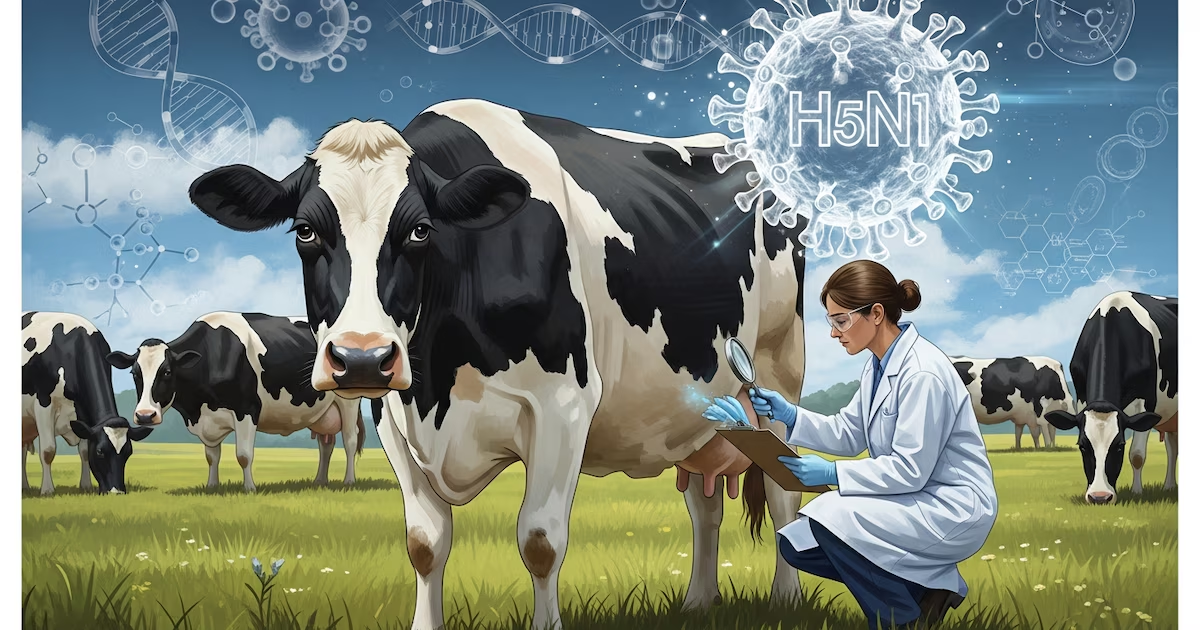
When H5N1 bird flu began infecting U.S. dairy cattle in early 2024, veterinarians struggled to identify the cause. The virus was difficult to recognize because it behaved very differently in cows than it does in other mammals. Rather than primarily infecting the lungs, H5N1 caused severe infections in the udders while leaving the respiratory system largely unaffected.
Now, researchers at the University of Pittsburgh School of Public Health have uncovered the biological reason behind this unusual pattern. Their findings, published in Science Advances, provide the first detailed explanation for why bird flu took such an unexpected form in cattle. The work could also help scientists better anticipate how H5N1 might behave if it spreads to new animal species in the future.
Bird Flu's Unusual Appearance in Dairy Herds
The outbreak first emerged in dairy cattle in the Texas Panhandle, where animals developed severe cases of necrotizing mastitis, a painful inflammatory disease that damages tissue in the mammary glands.
"Mastitis is a classic disease in milk-production animals, and veterinarians were dutifully looking to all the usual suspects for the source, like bacterial pathogens," said senior author Suresh Kuchipudi, Ph.D., chair of Infectious Diseases and Microbiology at Pitt Public Health. "When the real culprit turned out to be bird flu, everyone in the field was caught completely by surprise. We hadn't even remotely considered that cattle could be a host for H5N1."