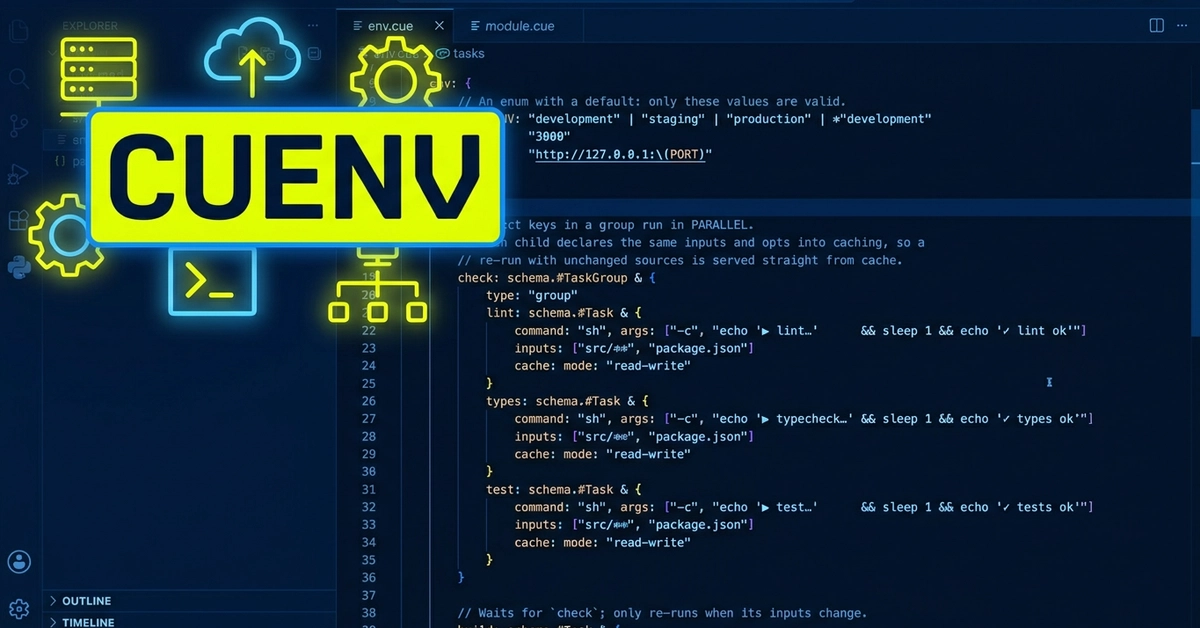
Most projects don't really have a configuration system. They have a pile.
There's a .env file holding your variables. A Makefile or a justfile holding your tasks. A hand-written CI workflow that tries to reproduce both in YAML. And your secrets live in a fourth place — a password manager, a cloud secret store, or, in the worst case, accidentally committed to the repo. Nothing validates any of it, and the pieces drift apart the moment someone changes one without touching the others.
cuenv replaces that pile with a single typed file. You describe your project once in CUE, a typed configuration language. Then cuenv validates it, resolves secrets at runtime, runs your tasks, and generates your CI from the same definitions.
In this post I'll give you a quick overview of cuenv and explain the problem it solves, the core model, and three short demos. If you prefer a video, check the YouTube link below.
Configuration sprawl problem