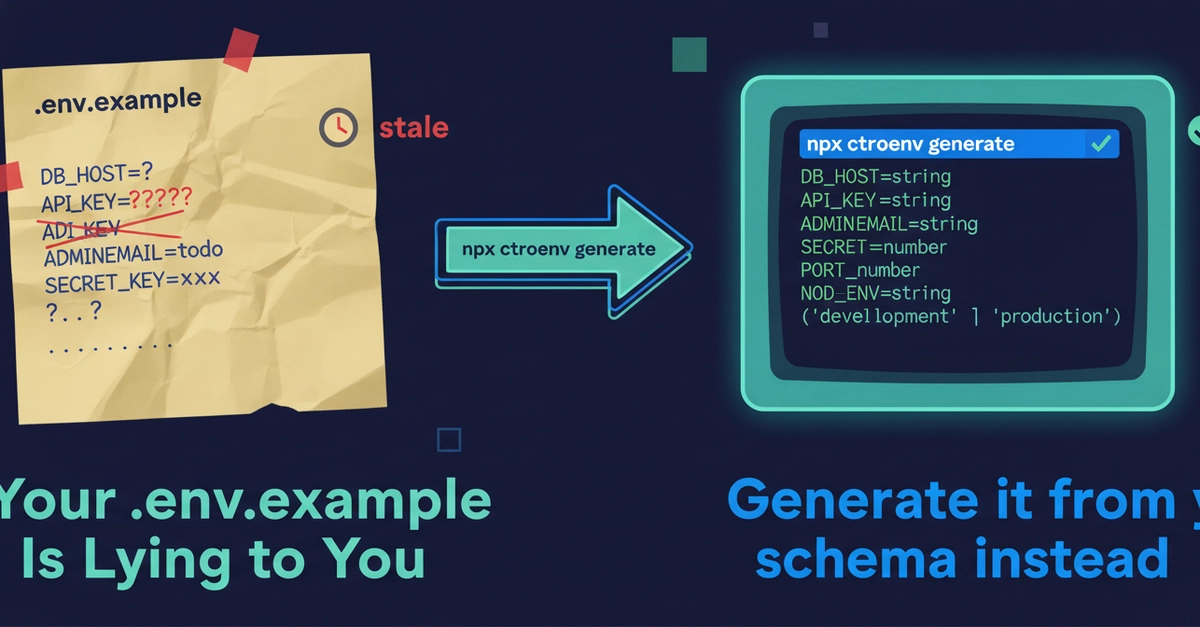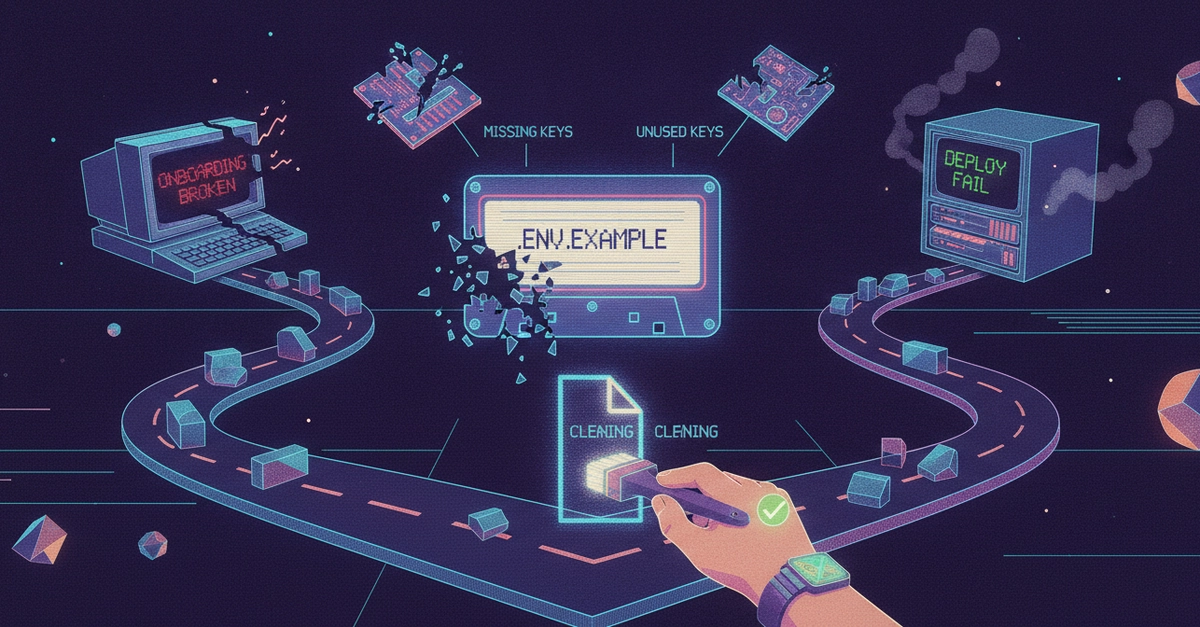
A .env.example is the one file in your repo that nobody runs, nobody tests, and everybody trusts. It’s the contract a new teammate reads on day one to answer the only question that matters: which environment variables do I need to set before this thing boots? When that file is right, onboarding is a five-minute copy-and-fill. When it’s wrong, you get the most demoralising kind of bug — the app crashes on startup with undefined is not a function, or worse, runs happily with a feature silently disabled because a flag defaulted to off.
The problem is that .env.example is documentation, and documentation drifts. Code that reads process.env.STRIPE_WEBHOOK_SECRET ships in a feature branch. The example file doesn’t get the new key because adding it isn’t part of “make the feature work” — it’s part of “be kind to the next person,” and that step is invisible until someone hits it. Multiply that across a year of merges and the example file becomes a museum of variables you used to need, missing half the ones you actually do.
How drift actually happens
Drift is never a single dramatic event. It’s the accumulation of small, reasonable omissions:
A new integration adds SENTRY_DSN and SENTRY_ENVIRONMENT. The PR author has them in their local .env, so the app works for them — and the example file never learns about them.