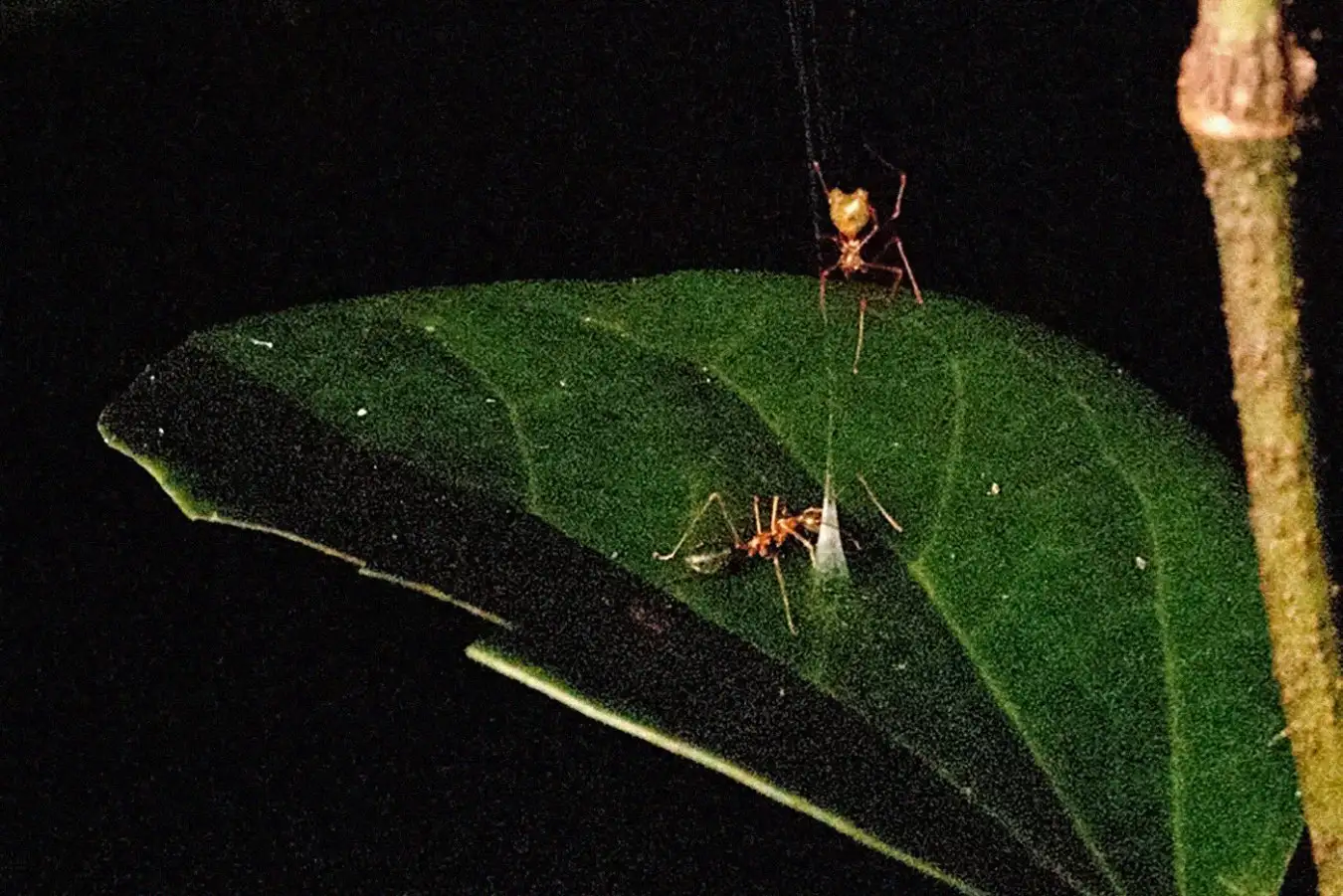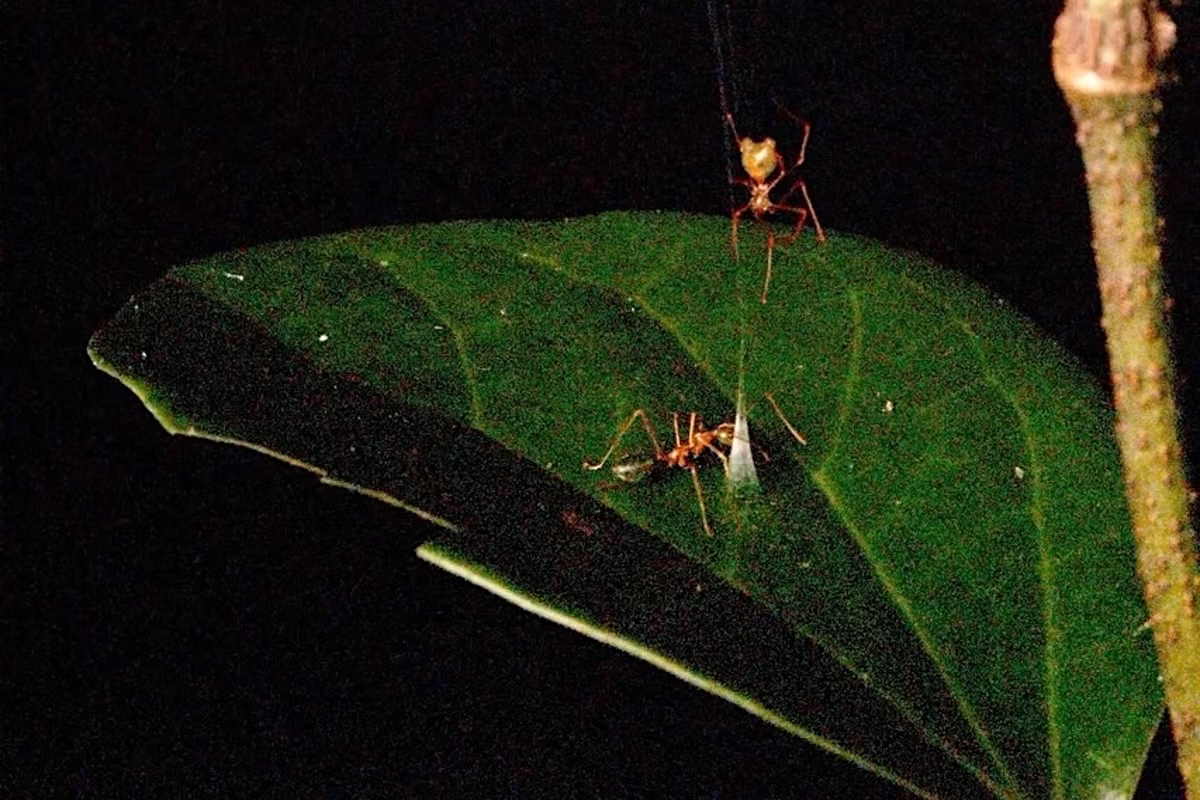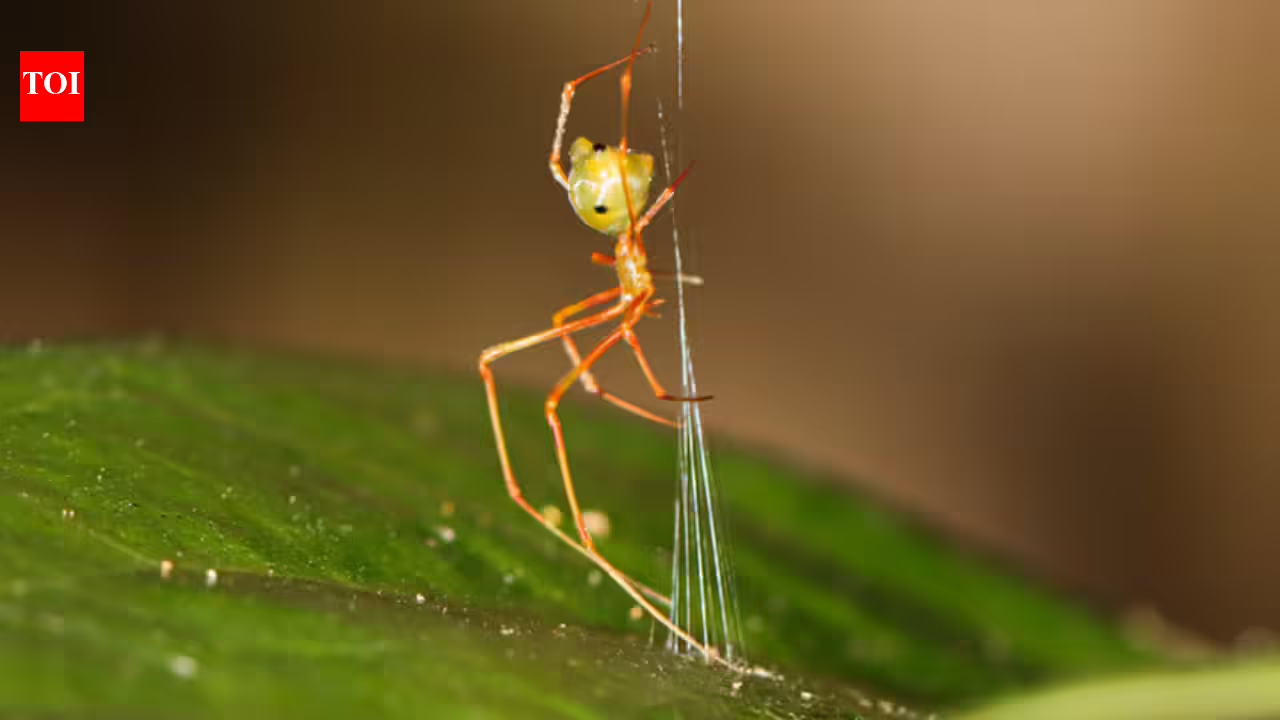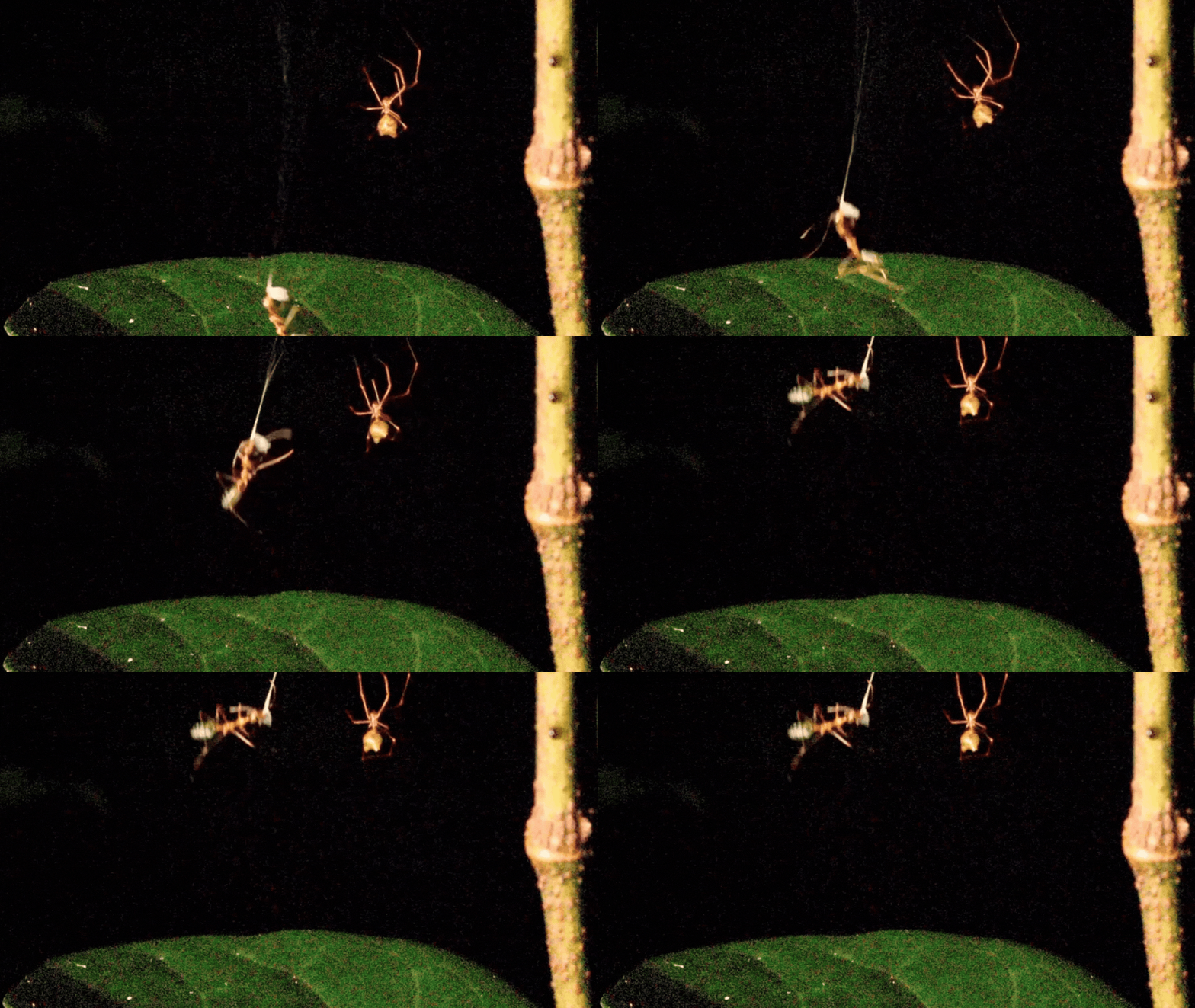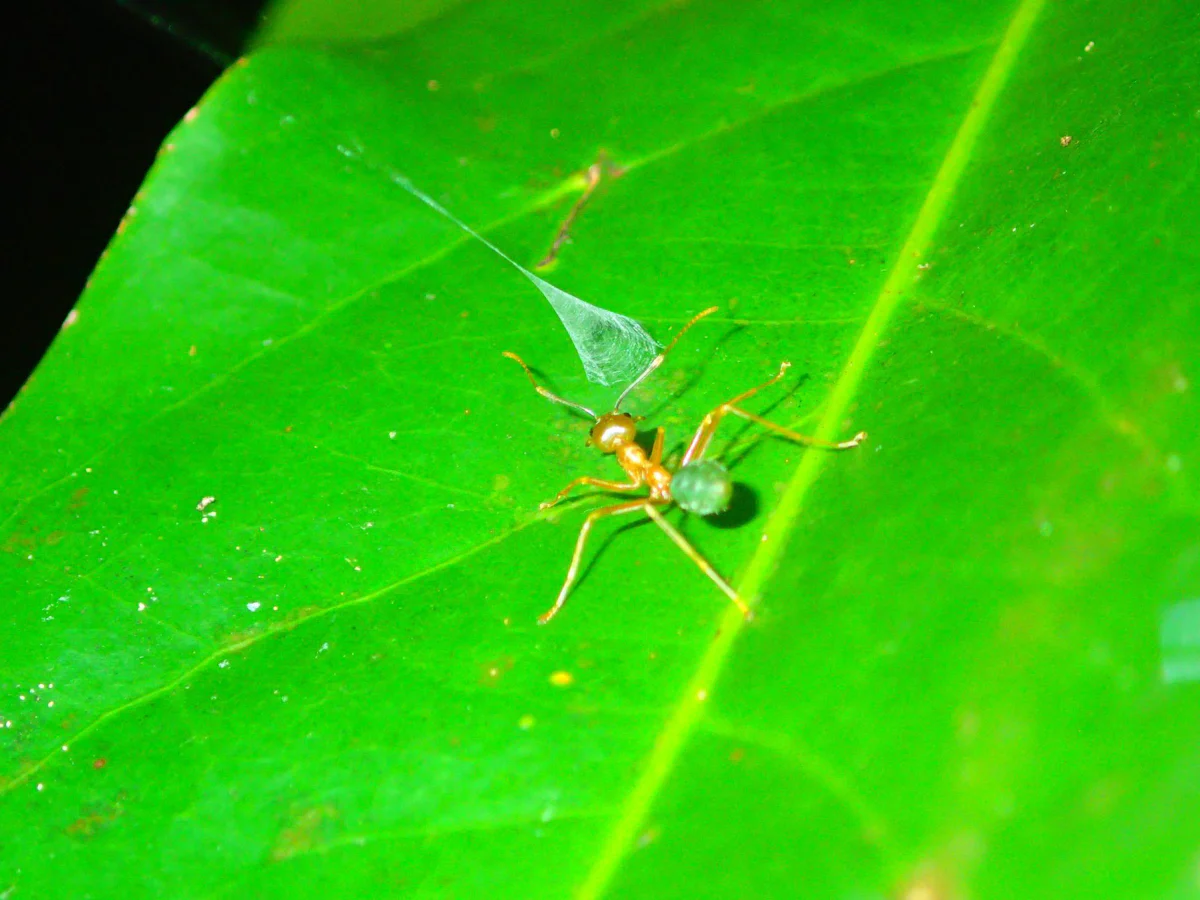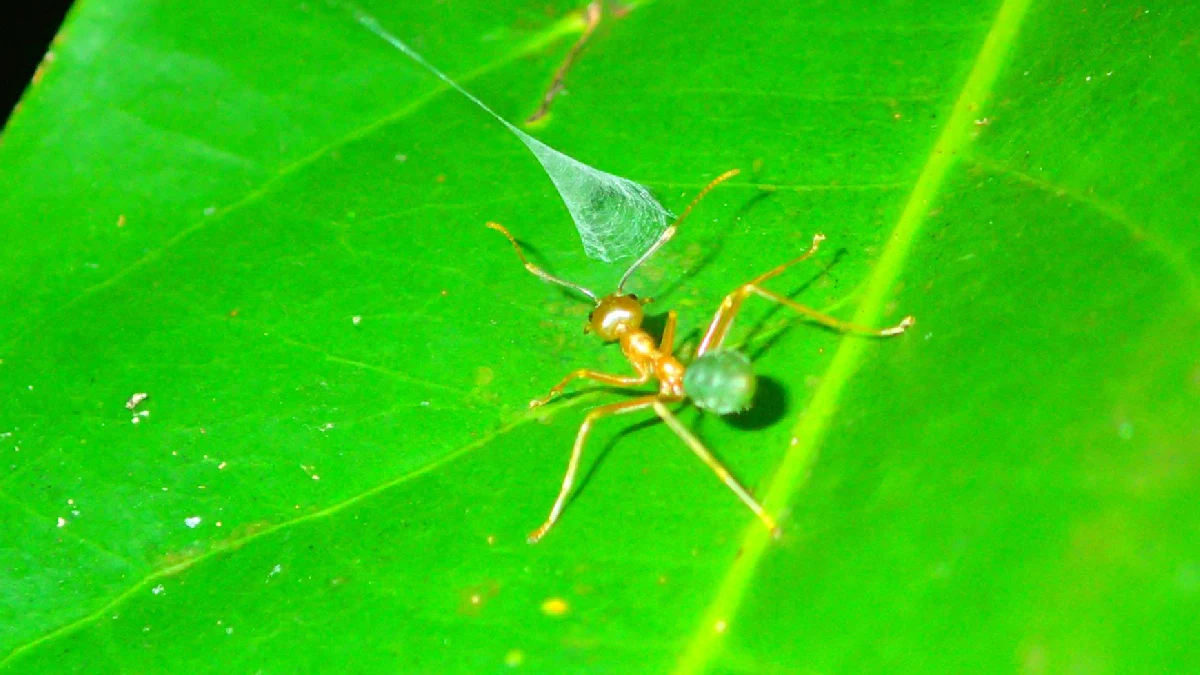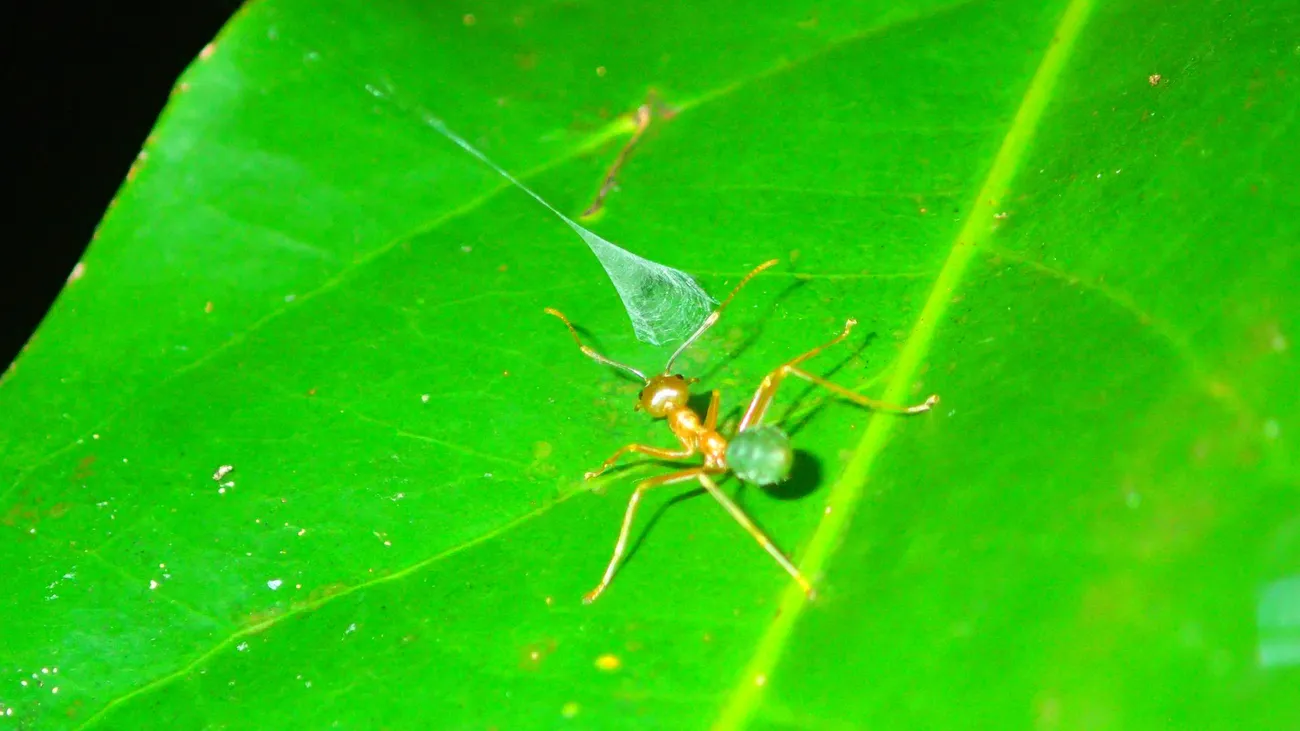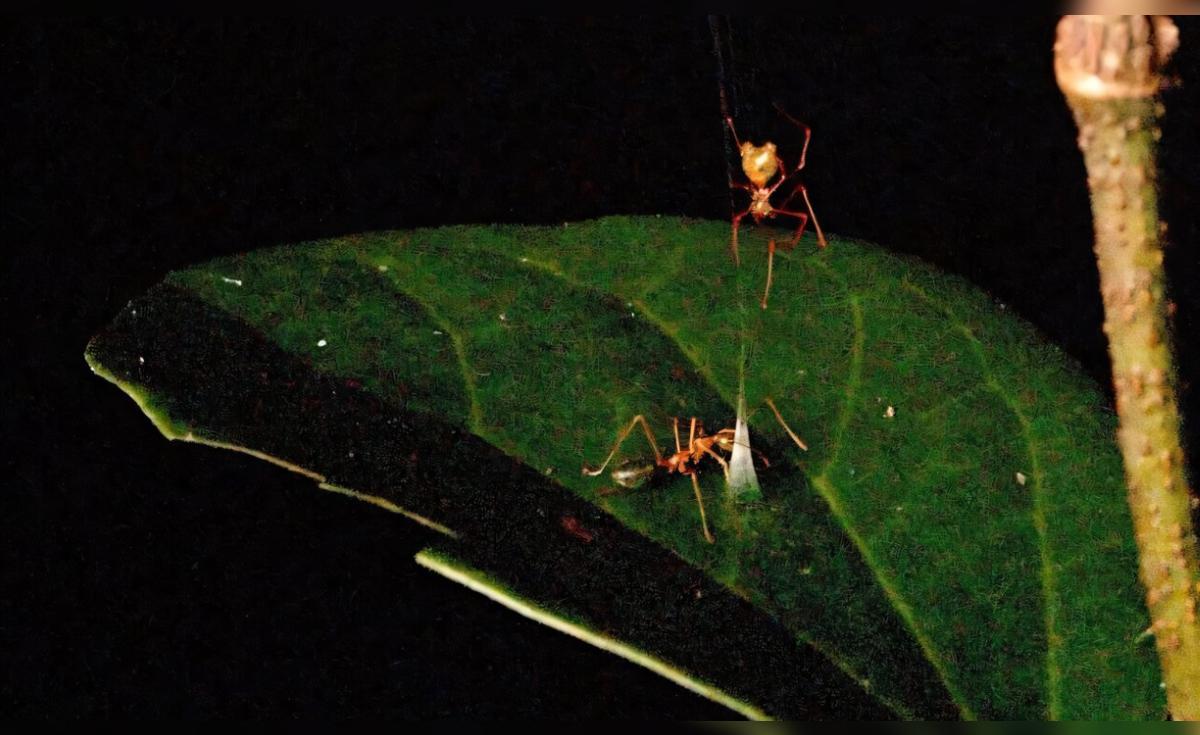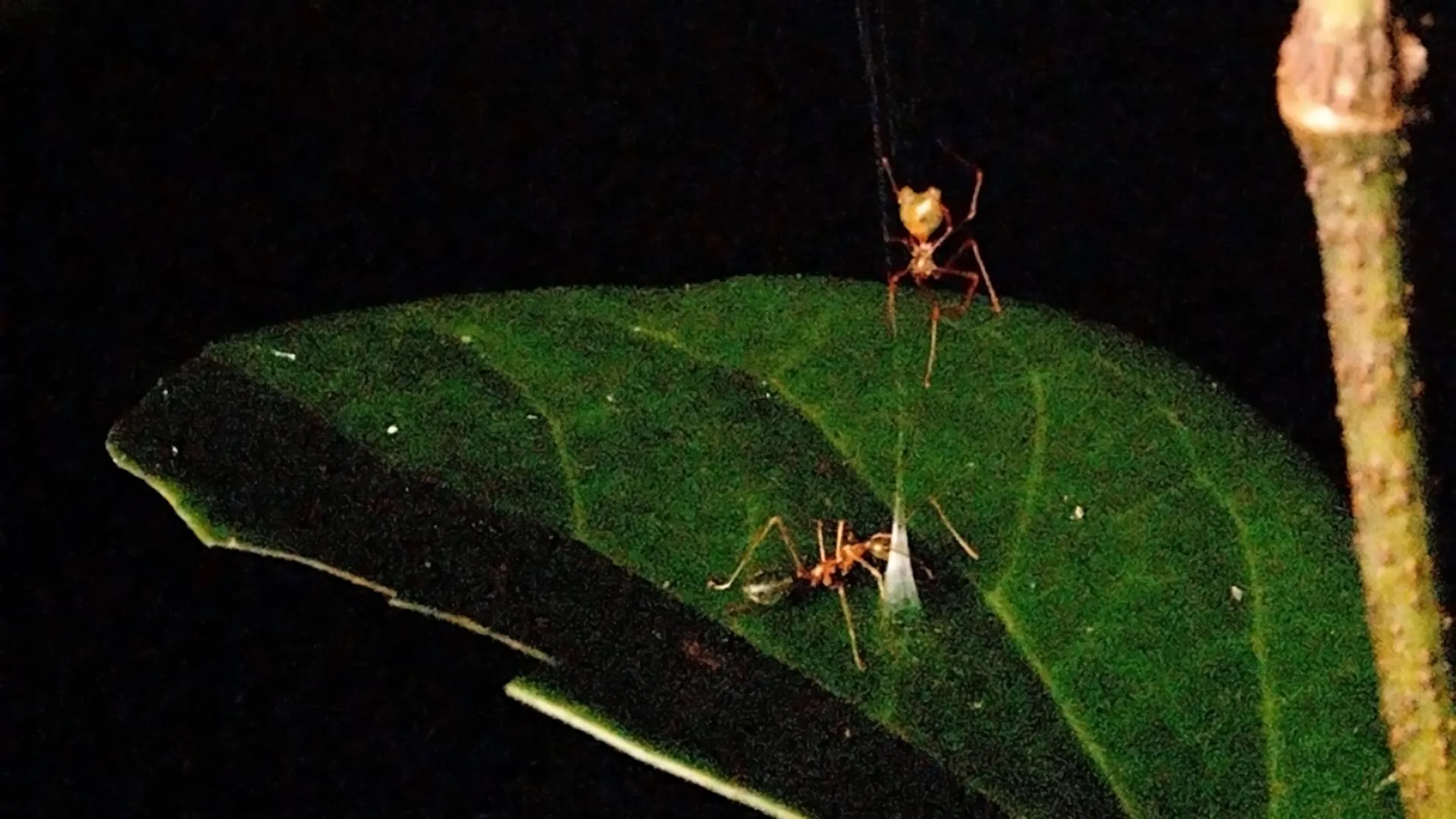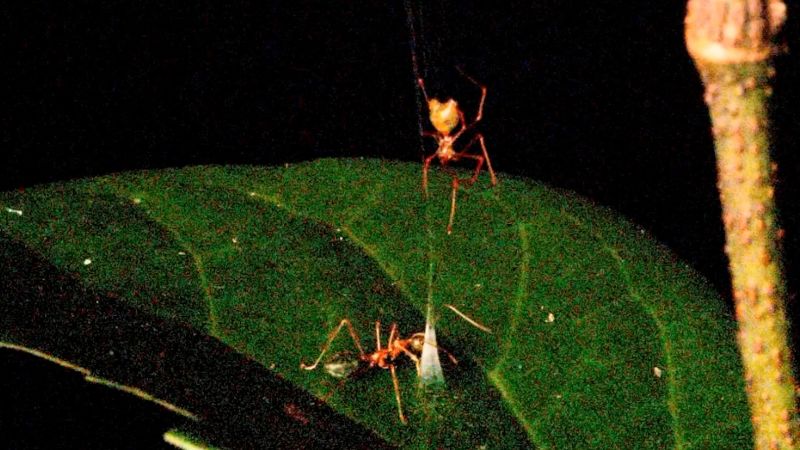
When most silk-spinning spiders hunt, they build a web and wait for prey to blunder into it. But a newly discovered species from Australia instead uses its silk to craft a spring-loaded, cone-shaped death trap, which catapults its prey into the spider’s main web. A foraging tree ant bites the base of the trap, then silk tethers release and the structure hurls the ant upward. This feat of arachnid engineering has never previously been observed.
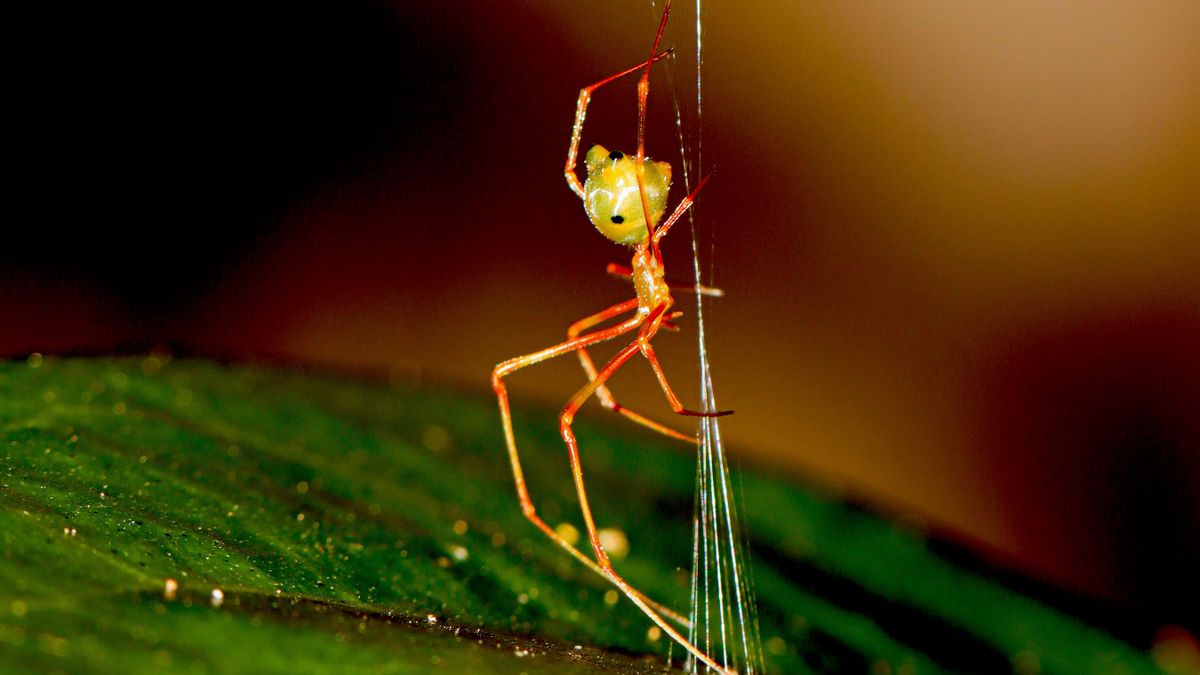
Scientists recently discovered that this trap was the work of a spider from the rainforest of North Queensland. The spider — nicknamed “ballista spider,” after a projectile weapon that originated in ancient Greece — has gangly, orange limbs and a greenish-yellow body measuring about 0.2 inches (5 millimeters) long. It belongs to the genus Propostira but has yet to receive a species name, researchers reported Monday in the journal Current Biology.
“The snare is perhaps most effective because it releases energy so rapidly that, relative to its size, it produces thousands of times more power than muscle can generate,” said lead study author Ajay Narendra, a sensory biologist and professor in the School of Natural Sciences at Macquarie University in Sydney.