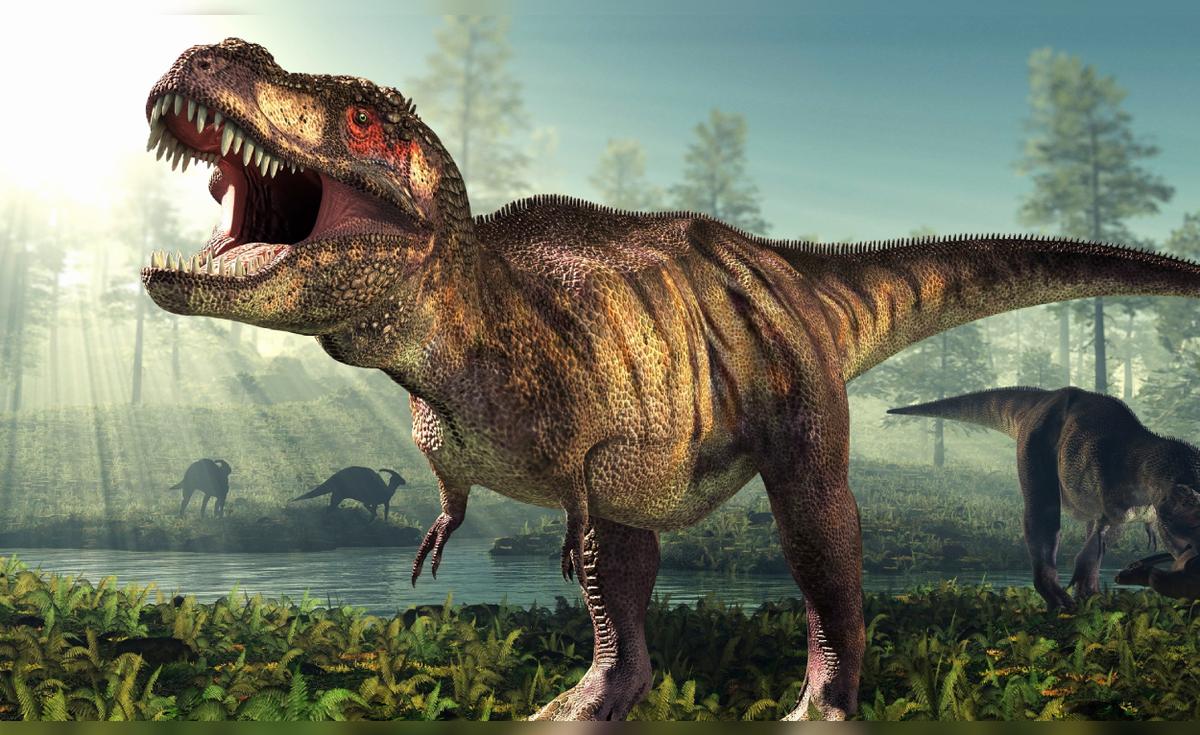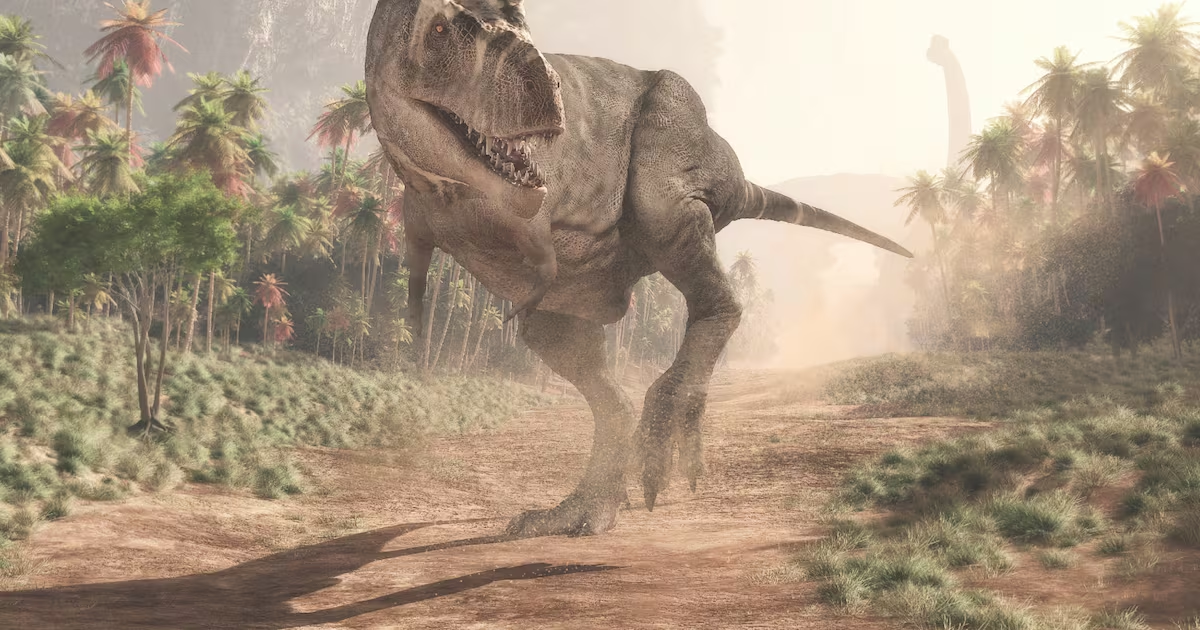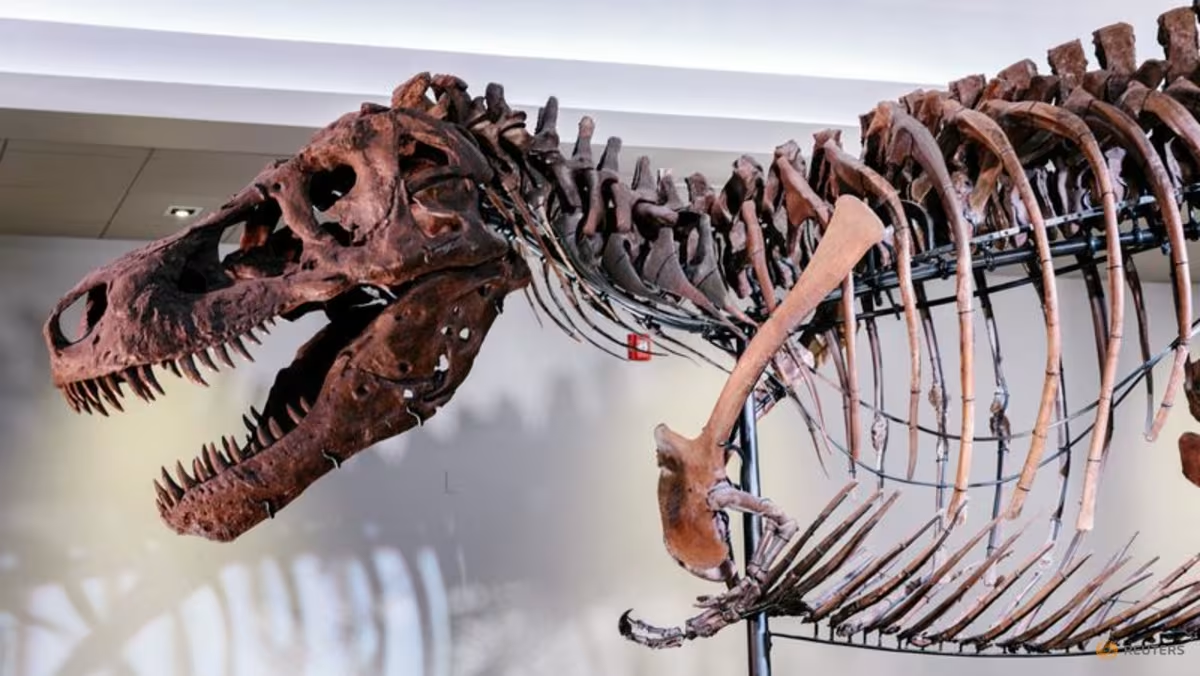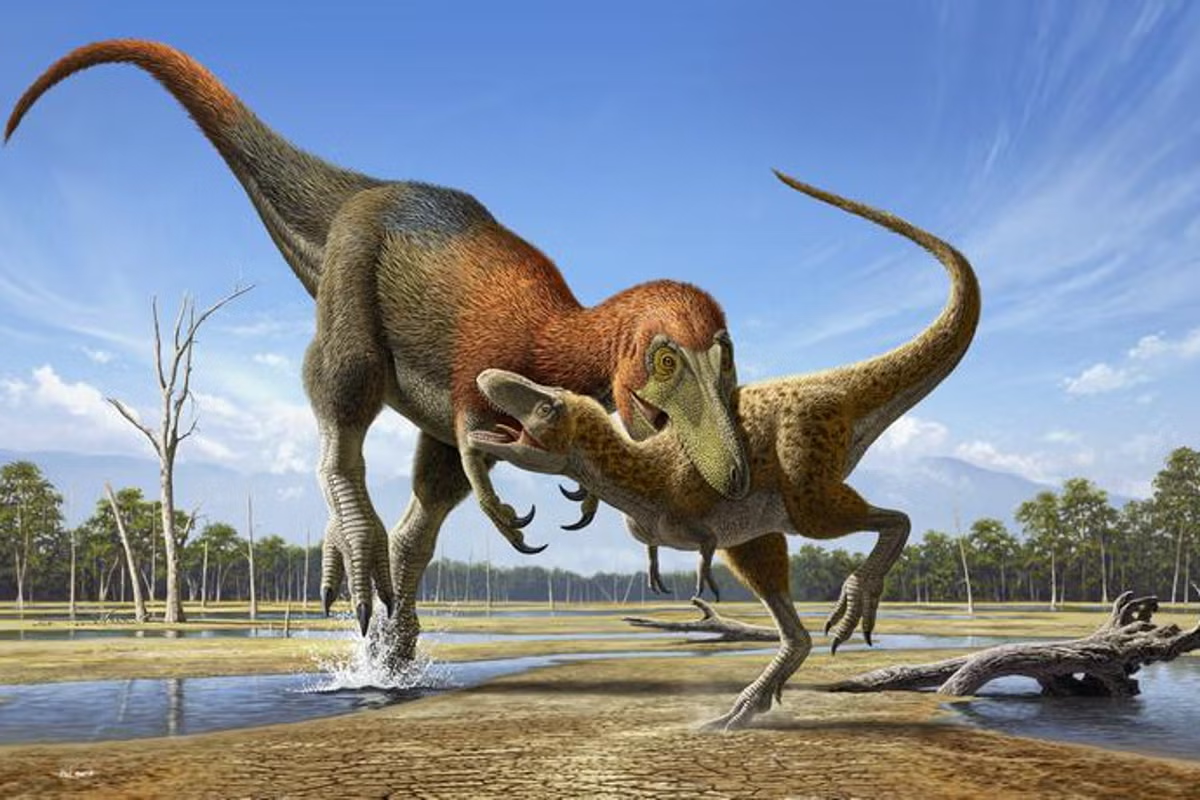
For most Americans, Tyrannosaurus rex is the ultimate symbol of prehistoric dominance: massive, fearsome, unstoppable. But science just threw us a curveball: the king of the dinosaurs was in no hurry at all to become one.According to a new study titled ‘Prolonged growth and extended subadult development in the Tyrannosaurus rex species complex revealed by expanded histological sampling and statistical modeling’ published in PeerJ by paleontologist Holly Woodward of Oklahoma State University and colleagues, T. rex likely grew to its adult size of about eight tons in about 40 years. That's some 15 years longer than scientists had previously believed, and it's among the most detailed reconstructions of T. rex growth ever attempted.What scientists thought beforeThe scientific baseline for understanding T. rex growth was largely shaped by a landmark 2004 study in Nature by Erickson et al. , ‘Gigantism and comparative life-history parameters of tyrannosaurid dinosaurs’, which found that T. rex reached skeletal maturity in roughly two decades and lived for up to 28 years. According to the 2026 PeerJ study, the best estimates from those earlier studies were that T. rex typically stopped growing around age 25, a figure the new research now extends by about 15 years.How scientists read a dinosaur's ageThe way paleontologists age dinosaurs is, appropriately, like reading tree rings. Researchers take thin slices from fossilized leg bones and examine them under a special light to count annual growth rings, according to the PeerJ study. Each ring represents a year of life and provides clues about how fast the animal was growing at that time.Museum displays of T. rex show the animal's full adult form, one it may have taken 40 years to reach. Image Credits: Wikimedia CommonsA big limitation is that a cross section of a T. rex leg bone typically only preserves the last 10 to 20 years of the animal’s life, not its entire history. According to the study, the team solved this by comparing 17 tyrannosaur fossils from young juveniles to large adults, one of the largest datasets ever assembled for the species, and employing a new statistical technique to combine those individual records into a single, comprehensive growth curve.The study’s technical innovation was the use of circularly and cross-polarized light to expose hidden growth rings that conventional methods often missed. These overlooked indicators may have led earlier research to underestimate T. rex's growth time, according to the study.A slow, steady climb to the topThe picture that emerged is quite different to the rapid-maturation model. The PeerJ study found that T. rex did not sprint to adulthood but grew at a more measured pace over several decades, spending most of its life at a mid-range body size before finally reaching its maximum weight around age 40.Younger, smaller members of the species may have fed on different prey than fully grown adults, which could have allowed the species to occupy several ecological niches at once as its members aged. According to the researchers, this flexibility may have helped T. rex thrive as an apex carnivore in the waning days of the Cretaceous Period, which ended about 66 million years ago."Jane," long believed to be a young T. rex, may actually belong to an entirely different species. Image Credits: Wikimedia CommonsTwo famous fossils that didn't fit the moldThe new dataset also threw up an unexpected puzzle. According to the PeerJ study, two well-known tyrannosaur fossils, “Jane” and “Petey,” showed growth patterns that were not statistically compatible with those of the other specimens in the dataset. The researchers are careful to note that growth data alone can't confirm species identity, but the outlier patterns suggest that these animals may not be T. rex at all.That reading is consistent with a separate study in Nature by paleontologists Lindsay Zanno and James Napoli, ‘Nanotyrannus and Tyrannosaurus coexisted at the close of the Cretaceous’. Zanno and Napoli used completely different methods to argue that Jane may belong to a distinct species, Nanotyrannus lethaeus. They identified Nanotyrannus as a separate genus of smaller tyrannosaurs that lived alongside T. rex in the late Cretaceous. The species question remains open, but the authors say this independent convergence is important.Why this matters beyond dinosaur triviaThe PeerJ study also discusses the broader implications of the discovery of hidden growth rings for the wider field of paleontology. The imaging techniques used to reveal them suggest that growth studies of many other dinosaur species, not just T. rex, need to be re-evaluated. Reading fossil bones may require rethinking decades-old standard protocols.More than a century after T. rex was first formally described by paleontologist Henry Fairfield Osborn in 1905, the animal is still rewriting its own story. As it turns out, one of the most famous predators in Earth's history spent most of its life just growing into the legend.
T. rex may have spent 40 years growing into an eight-ton giant, and scientists think that long childhood helped it dominate the dinosaur world
New research reveals that Tyrannosaurus rex took 40 years to reach its massive adult size, challenging previous beliefs about its rapid growth and shedding light on its prolonged development and ecological dominance.
794 words~4 min read