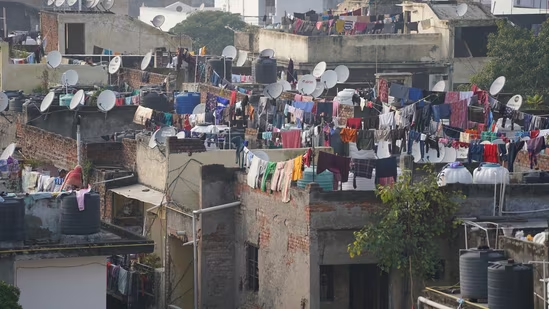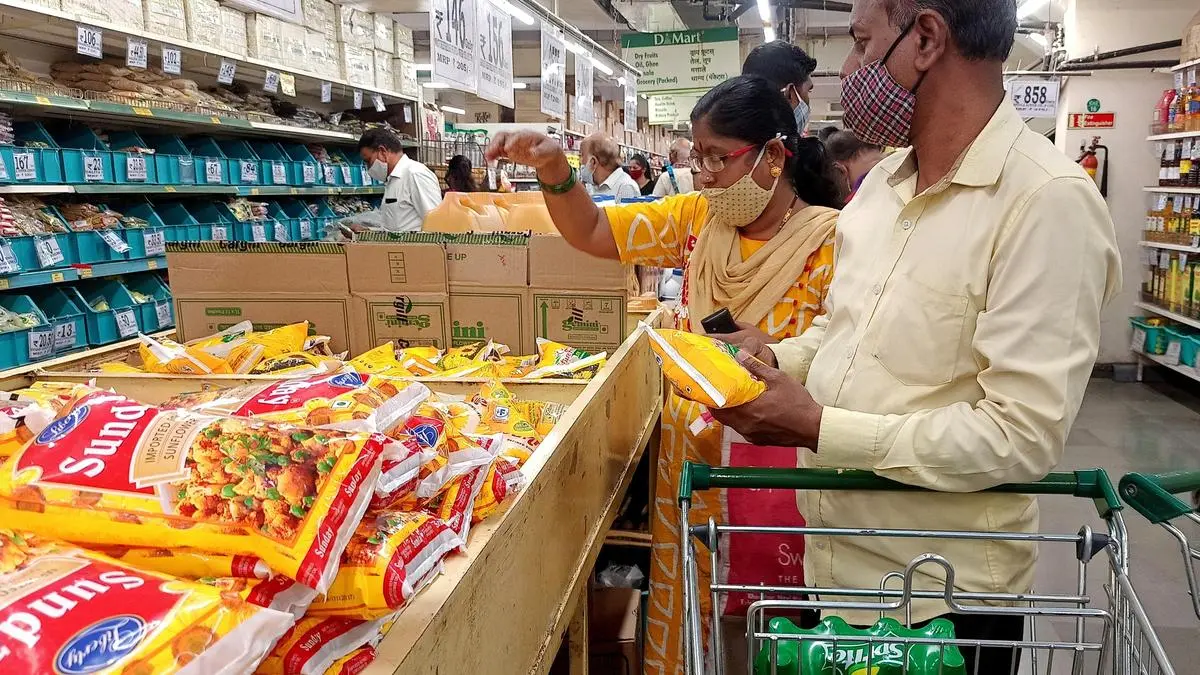
The rise in consumption loans and hosehold debt is causing concern
| Photo Credit:
M.photostock
India’s macroeconomic policy since 2014 has been the institutionalisation of fiscal discipline and flexible inflation targeting. The government had successfully neutralised the volatile macroeconomic vulnerabilities of the early 2010s by anchoring retail price inflation within predictable bands.Yet, this headline success masks a deep structural paradox. While corporate profits and GDP growth metrics lead global charts, the financial position of the average working-class household has become increasingly strained.Over the last 12 years, the traditional transmission mechanism from national economic expansion to household disposable income has broken down. Real wages for the vast majority of the population have flatlined or declined, leading to a structural pivot towards debt-fuelled consumption. This intersection of stagnant wages, persistent food inflation, and spiralling household debt reveals why India’s economic performance feels highly fragmented to the working class.Wage stagnation, inflation asymmetryThe primary driver of the stress facing the working class is the widening gap between nominal wage increases and the actual cost of living. “Core inflation” explicitly excludes volatile components like food and fuel. While the government has successfully utilised flexible inflation targeting to anchor non-food, non-fuel core inflation near historic lows (often between 3.8 per cent and 4.5 per cent), the Consumer Food Price Index (CFPI) has regularly spiked into the 6-11 per cent range over the past several years.While an average household allocates roughly 45 per cent of its budget to food, the bottom three income deciles (the core working class) spend between 56.5 and 60.4 per cent of their entire income purely on food products. Consequently, the standard macroeconomic indicators understate the financial erosion of working-class disposable income, creating a statistical illusion of stability that fails to reflect the reality of working-class household budgets.Real agricultural wages have grown by less than 1 per cent per annum over the past decade. Despite regular increases in Minimum Support Prices (MSPs) to 1.5 times the cost of production, these gains are concentrated among asset-owning landholders rather than landless casual labourers who rely entirely on daily cash wages.Real wages for casual labourers have grown at an annualised rate of under 1.5 per cent over the 12-year horizon. This stagnation has been exacerbated by reverse migration — owing to lack of employment opportunities through formal channels, along with the return of millions of workers to agriculture since 2018-19 and diminishing strength of organised labour in bargaining.Even within organised sectors, non-managerial corporate compensation as a share of company expenditure has steadily declined, with compounded annual wage growth in heavy infrastructure and manufacturing languishing below the real rate of inflation over the last five years.Skyrocketing household debtWith real wages flatlining against high non-discretionary expenses, the working class has faced a difficult choice – either cut consumption or borrow to survive. Over the past 12 years, the Indian economy has shifted decisively toward the latter, leading to an unprecedented surge in household financial vulnerability.India’s net household financial savings has plummeted to a nearly five-decade low of 5.2 per cent of Gross National Disposable Income (GNDI) in FY23, down sharply from historical averages of 7-8 per cent. The Ministry of Finance and banking regulators have noted that this drop in savings is partially driven by changing portfolio preferences toward retail equities, but the liability side tells a more concerning story.Household financial liabilities surged from 3 per cent of GDP in FY14 to 5.7 per cent of GDP by FY23. Concurrently, total household debt reached a historic high of 40 per cent of GDP by late 2023, up significantly from the 36.6 per cent baseline recorded in 2021. The composition of this debt has shifted away from productive assets like mortgages and toward high-cost, short-term unsecured personal loans, credit card debt, and gold loans.According to the RBI’s Financial Stability Reports, unsecured personal loans have registered an aggressive annualised growth rate of over 22-25 per cent in recent years. Working-class families are increasingly utilising credit networks to bridge the gap between stagnant incomes and the rising costs of private healthcare, education, and basic food inflation.The dramatic decline in net financial savings, paired with the rise in unsecured borrowing, confirms that household debt is no longer just a sign of middle-class aspirational spending. It acts as a structural safety net, substituting for the lack of real wage growth and keeping aggregate consumption afloat at the cost of future household financial stability.Implications for sustainable growthIndia’s fiscal consolidation has fortified the sovereign balance sheet, but at the cost of severely leveraging the balance sheets of working-class household.A growth model that drives corporate profitability to multi-year highs while leaving real wages flat and households deeply leveraged faces clear long-term challenges. Relying on debt to sustain domestic consumption has hit a natural limit. Unsecured credit growth cannot permanently replace real income expansion.To transition from a fragmented, K-shaped trajectory to a sustainable growth model, India’s economic policy must pivot from pure supply-side incentives to active labour formalisation. True economic performance cannot be measured solely by corporate profit margins or headline GDP numbers; it requires matching macroeconomic discipline with real, inflation-beating wage growth that improves the living standards of the working class.Mohan is Dean and Professor of Economics at O.P. Jindal Global University, and Visiting Professor at LSE and a Visiting Research Fellow at University of Oxford; Subramoniam studies Law and is a Research Analyst with Centre for New Economics Studies (CNES)Published on June 23, 2026