Purpose-built for physicians
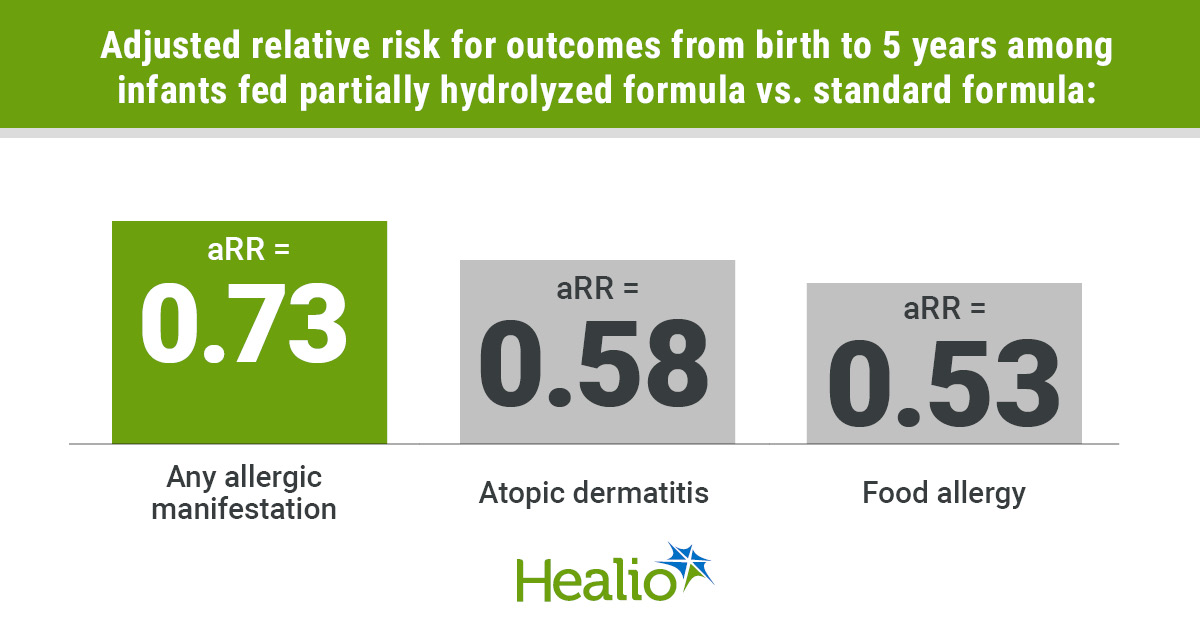
Infants at high risk for allergy fed a partially hydrolyzed vs. standard formula had decreased risks for food allergy and atopic dermatitis from birth to 5 years, according to results published in Pediatric Allergy and Immunology.
“It is crucial to note that most infants included in the formula-fed groups were mixed-fed ([partially hydrolyzed formula]: 89.4%, [standard formula]: 88.9%) supporting that a combination of breastfeeding with regular ingestion of the [partially hydrolyzed formula] in the first months of life, may reduce the risk in the development of allergic diseases,” Mikaela Sekkidou, BSc, MSc, PhDc, researcher at Asthma & Allergy Center in Cyprus, and colleagues wrote.
Using data from the multicenter, double-blinded, randomized controlled clinical Allergy Reduction Trial (A.R.T.), Sekkidou and colleagues evaluated 455 healthy full-term infants at high risk for allergy development with 5-year follow-up data to determine the impact of a specific whey-based partially hydrolyzed formula vs. standard formula given during the first 6 months on the risk for AD and other allergic manifestations (food allergy, asthma and allergic rhinitis) from 1 to 5 years.