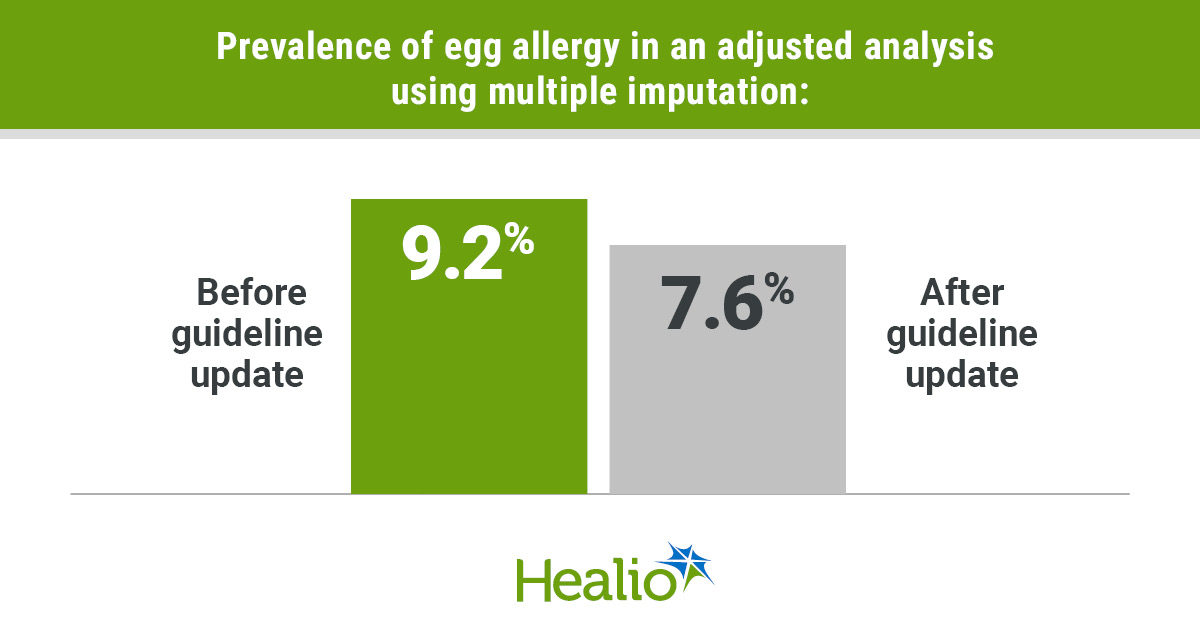
While the American Academy of Pediatrics now recommends introducing certain allergenic foods by ages 4-6 months for all children, guidelines from the 1990s and 2000s had recommended delaying introduction until 1-3 years.As the proportion of infants introduced to egg by 6 months of age increased from 2007-2011 to 2018-2019, egg allergy prevalence adjusted for changes in known allergy risk factors fell from 9.2% to 7.6%.Infants with early-onset eczema saw the biggest impact, with egg allergy prevalence decreasing from 34.6% to 21.9%.
Fewer toddlers developed egg allergies after guidelines changed to recommend introducing egg products in infancy, large population-based studies from Australia showed.
As the proportion of infants introduced to egg by 6 months of age went from 25% in 2007-2011 to 58% in 2018-2019, egg allergy prevalence adjusted for changes in known allergy risk factors fell from 9.2% to 7.6% (P=0.04), reported Jennifer J. Koplin, PhD, of the University of Queensland in Brisbane, and colleagues in JAMA Pediatrics.
Infants with early-onset eczema saw the biggest impact, with egg allergy decreasing from 34.6% to 21.9% (P<0.001).
The findings mirror those seen with peanut allergy, including in the U.S., where the pendulum has been slower to swing back after the change in recommendations.