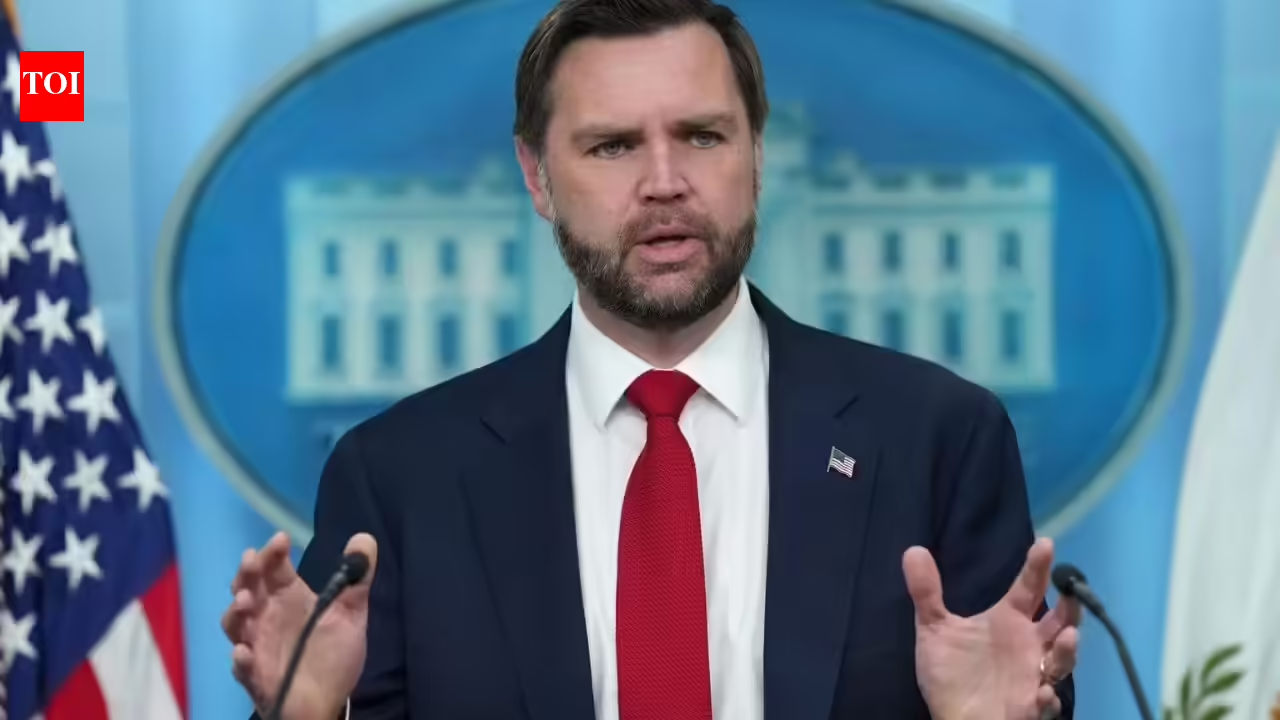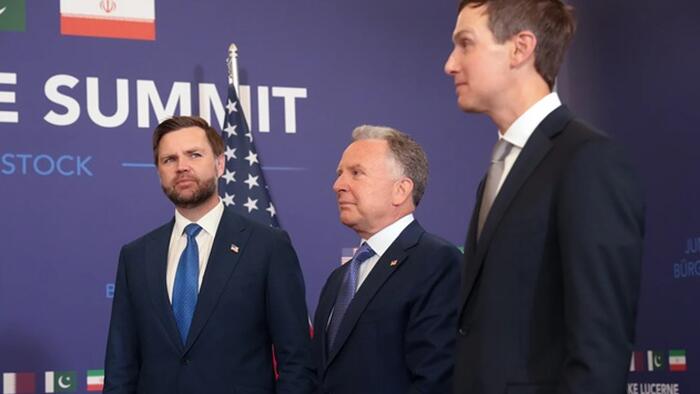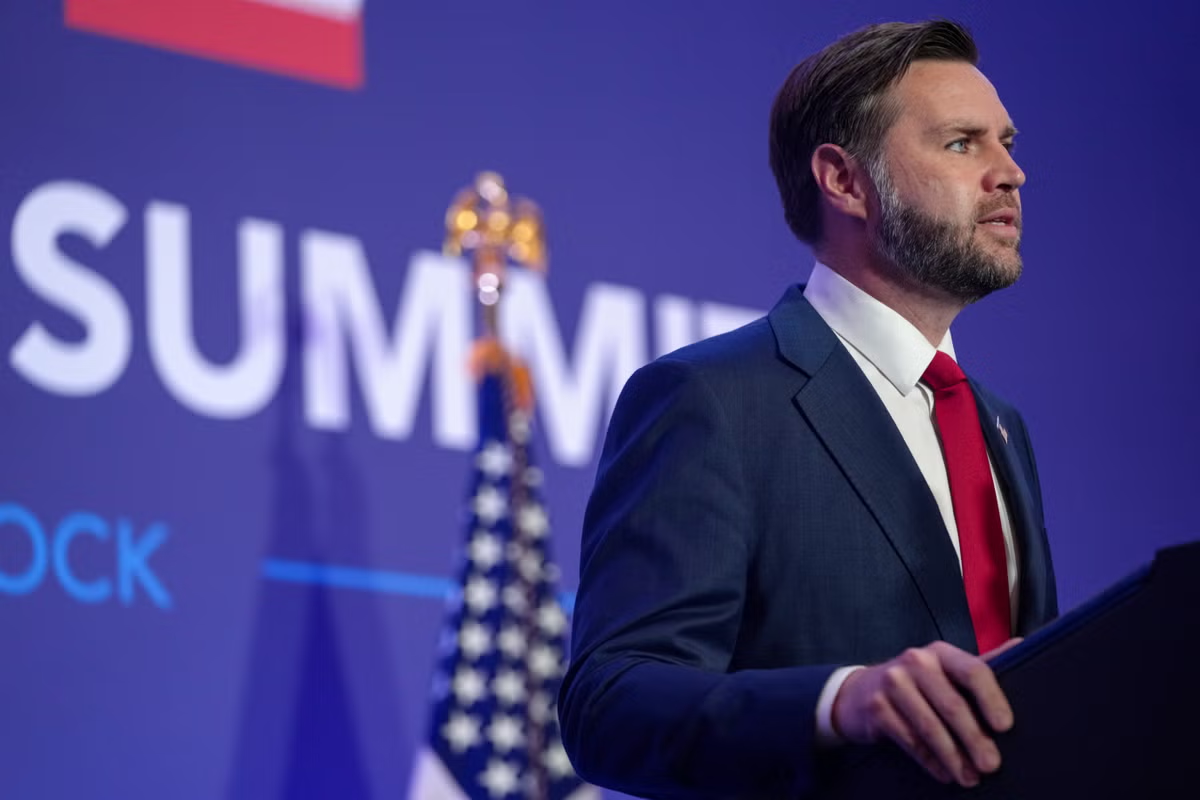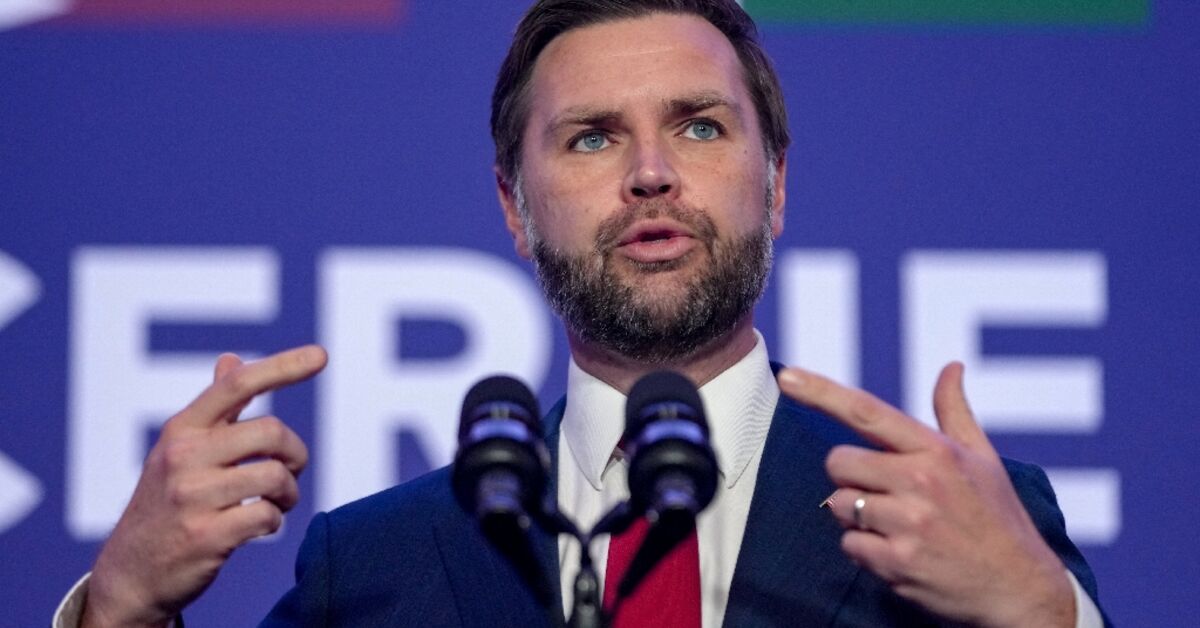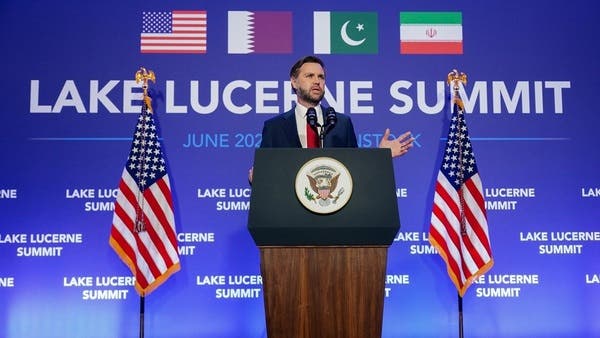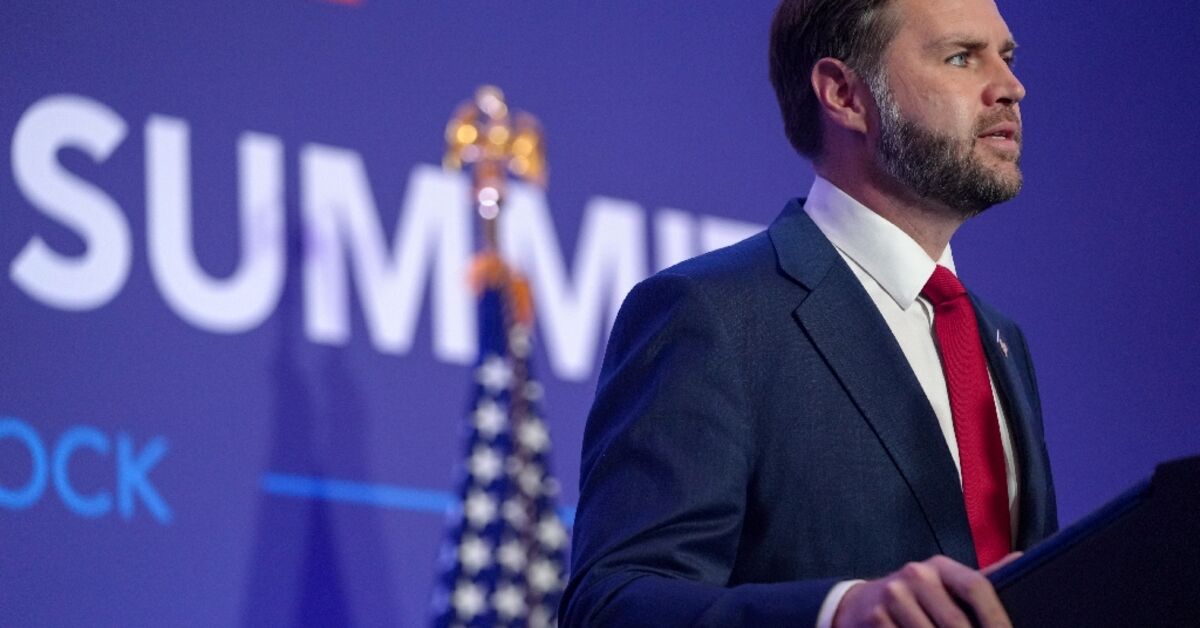
WHO TO BELIEVE? After nine hours of negotiation in Lucerne, Switzerland, Vice President JD Vance emerged triumphant, declaring that Iran has agreed to allow inspectors from the International Atomic Energy Agency back into the country, which he called the “foundation for what could be a truly transformed Middle East.”“That is a major milestone for the American people and the first step in permanently denuclearizing, or permanently ending a nuclear weapons program in Iran, and that’s exactly what we wanted to do,” Vance told reporters. “We laid a very good foundation for a successful final deal. The final deal is the house. We set the foundation. We haven’t built the house, but we’ve laid a successful foundation to get to a good place for the American people.”Vance indicated the IAEA inspectors could be in Iran as soon as today.
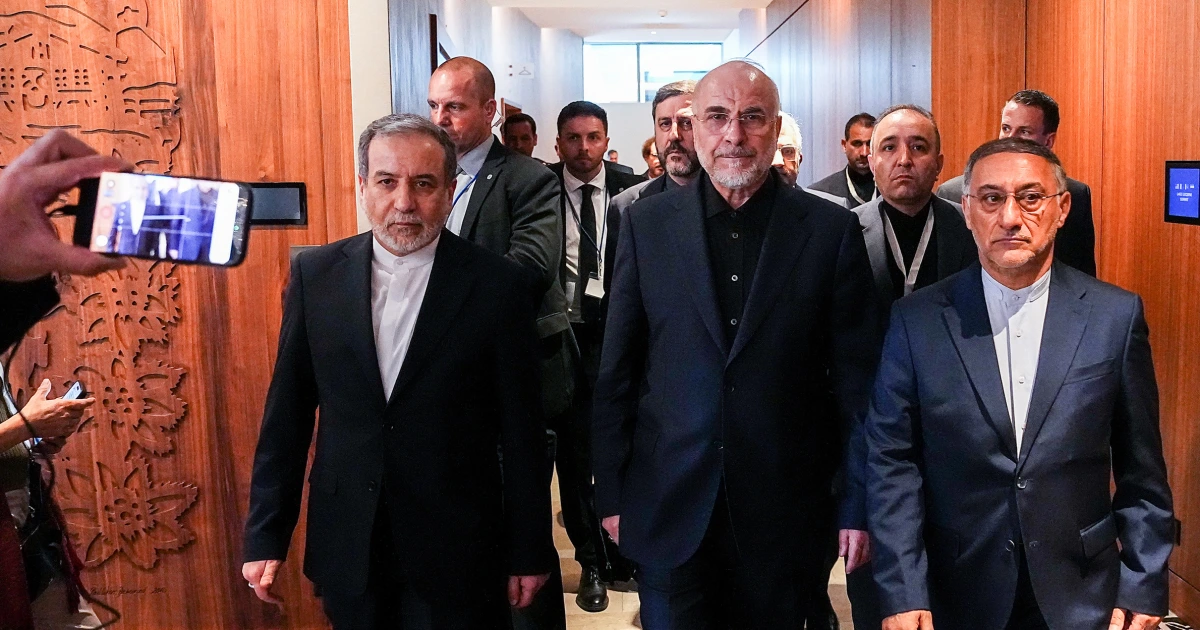
Meanwhile, Iran insists it did not agree to allow U.N. inspectors access to nuclear sites bombed by the U.S. “We did not have a meeting with IAEA Chief Rafael Grossi in Switzerland, nor do we plan to allow its inspectors to visit nuclear facilities damaged in the recent conflicts,” Foreign Ministry spokesman Esmail Baghaei told reporters in Tehran.In a post on X, Baghaei admonished Vance for promoting a “self-congratulatory narrative constructed to compensate for past failures.”“If power is not proven in war, it will not be proven through exaggeration after agreement either,” he said.STRAIT OF HORMUZ TRAFFIC RAMPS UP, BUT HUNDREDS OF SHIPS AT STANDSTILL NOT TIME FOR ‘HIGH FIVES’: Veteran observers noted that the U.N. watchdog has had inspectors in and out of Iran for years, even after last summer’s 12-day war, but have not been given the access they would need to verify Iran’s nuclear intentions.“Certainly, it’s a very good thing. On the other hand, it is hardly a panacea for the big challenges that remain ahead for the nuclear accord,” retired Adm. James Stavridis, former NATO supreme commander, said on CNN. “But before we do high-fives,” Stavridis said, “We ought to recognize that those inspectors have been inside Iran for years and years, and the Iranians are experts at least attempting and in some places probably deceiving them.”“Of course, the Iranians are denying it,” Rep. Josh Gottheimer (D-NJ) said on CNN. “Part of my challenge with this regime who flies under the banner of ‘death to America’ is they’ve been pretty consistent about lying over the years, as you remember in JCPOA, the agreement under President Obama, the Obama administration, they made certain commitments on their nuclear program, on enrichment, which they didn’t live up to, on oversight, which they didn’t live up to.”“You have to have neutral inspectors to make sure that Iran is obeying whatever it is that they agree to. Another strength of the JCPOA is it had exactly that,” said Rep. Adam Smith (D-WA). “I’m glad that JD Vance is, like, vaguely aware of the fact that inspectors are important here, but he should be more specifically aware of it. He should make sure that it is part of any agreement. Now, do we have the leverage at this point to make sure that Iran agrees to that? I have my doubts, but it certainly would be a critical part of containing Iran’s nuclear program.”TOP IRANIAN OFFICIALS LAND IN OMAN TO DISCUSS MANAGING STRAIT OF HORMUZTRUMP: IRANIAN FUNDS ‘GOING TO OUR FARMERS’: While Paragraph 11 of the Memorandum of Understanding signed last week specifically mentioned frozen Iranian assets “shall be made fully usable for payment to any ultimate beneficiary designated by the Central Bank of the Islamic Republic of Iran,” President Donald Trump yesterday insisted any money transferred to Iran or earned by oil sales would be used only to feed Iranians and benefit American farmers.“One of the things that we are doing also, and it came up last night, is money that’s being unfrozen is going to be used to buy food. And the food’s going to be bought exclusively through the United States from our farmers. And corn, soybeans, all of the things they need are going to be bought from our farmers. So, our farmers are very happy,” Trump said at a White House signing ceremony.Trump also insisted that the oil revenue Iran would receive from the lifting of sanctions — estimated at more than $400 million a day — would also be restricted to humanitarian causes.“If the sanctions go out, money is going to be put into this country. All that money is coming back in the form of purchases of food, which they desperately need. They have 91 million people. They can’t feed them,” Trump said. “So, the money that we lift is going to go to our farmers — largely to our farmers.”“I’d be really surprised if that part of it was true, that it’s going to be bought exclusively from our farmers,” Rep. Adam Smith said. “I cannot imagine that they would set up the situation where that would be the case. Iran buys a variety of different products, when they can, from a variety of different places. So, I’m pretty sure Trump is making that part up.”“And then the other thing is this is exactly what he criticized Obama for doing, was freeing up Iranian assets in exchange for them stopping their nuclear program, and those, you know, sorry, yes, freeing up Iranian assets so they could then buy humanitarian assistance. That’s exactly what the JCPOA did,” Smith said. “So, Trump’s Obama derangement syndrome, that made him tear up the JCPOA. Now, we’re just right back where we were before.”TOP IRANIAN OFFICIALS LAND IN OMAN TO DISCUSS MANAGING STRAIT OF HORMUZGood Tuesday morning and welcome to Jamie McIntyre’s Daily on Defense, written and compiled by Washington Examiner National Security Senior Writer Jamie McIntyre (@jamiejmcintyre) and edited by Christopher Tremoglie. Email here with tips, suggestions, calendar items, and anything else. Sign up or read current and back issues at DailyonDefense.com. CLICK HERE TO SIGN UP OR READ BACK ISSUES OF DAILY ON DEFENSEHAPPENING TODAY: Secretary of State Marco Rubio has had no direct role in the nuclear negotiation with the Iranians, but today he embarks on a two-day swing through the region, with a mission to use his considerable diplomatic skills to reassure nervous Gulf allies.Rubio will travel to the United Arab Emirates, Kuwait, and Bahrain to “discuss a range of regional priorities, including the memorandum of understanding with Iran, efforts to secure full and free safe transit through the Strait of Hormuz,” according to the State Department. “In Bahrain, the Secretary will also meet with the Gulf Cooperation Council to discuss shared priorities across the region.”RUBIO GIVES IRAN DEAL THE SILENT TREATMENTTHE BILL COMES DUE; $80 BILLION TO PAY FOR IRAN WAR: War Secretary Pete Hegseth has been making the rounds on Capitol Hill to rally support for a supplemental appropriation, which, according to multiple reports, has ballooned from $25 billion to $80 billion.Deputy Defense Secretary Stephen Feinberg informed Congress in a series of phone calls to key leaders that the Pentagon needs $80 billion “to cover costs from the Iran war as well as other non-war-related bills,” the Wall Street Journal reported.Despite the Pentagon’s nearly $1 trillion budget for the current fiscal year, Feinberg warned lawmakers that without the wartime infusion of funds, the military would have to “cut back on training exercises and troop deployments along the U.S. southern border,” the Journal reported.“We’ll work through it and see where the votes are,” Majority Leader Sen. John Thune (R-SD) told the Associated Press. “We need to make sure we’re doing everything we can to replenish, resupply a lot of our munitions that have been depleted.”‘DEEP STATE’ CUTS AT ODNI: According to CNN, President Trump’s acting Director of National Intelligence, Federal Housing Finance Agency Director Bill Pulte, has begun the radical downsizing of the spy agency that Trump put him there expressly to do.“I have named William Pulte to be Acting Director of National Intelligence … and have asked him to execute the immediate and needed downsizing of the office, reverting staff to their home agencies,” Trump said in a Truth Social post two weeks ago. Alarmed at the prospect of a political hatchet man with no national security or intelligence expertise acting as the nation’s top spymaster, Republicans in Congress fast-tracked the nomination of Jay Clayton to be the permanent DNI, only to have Trump pull back the nomination so Pulte could have time to do the firings.In a letter to Pulte, the top Democrats on the House and Senate Intelligence Committees, Rep. Jim Himes (D-CT) and Sen. Mark Warner (D-VA) warned Pulte not to “declassify properly classified information that would compromise intelligence sources and methods, or weaponize the declassification process for partisan political purposes.”“Additionally, we are concerned by reports that you intend to fire or place on leave hundreds of Office of the Director of National Intelligence (ODNI) officers as soon as this week. While there is room to consider responsible reductions to ODNI’s workforce, any large cuts would follow on a substantial downsizing that has already occurred in 2025 and risk jeopardizing the mission of an organization explicitly created after 9/11 to prevent any future such terrorist attack,” the lawmakers wrote.“Given your lack of experience within the Intelligence Community, it is difficult to imagine that in such a short amount of time you have already developed fully-informed views as to how to shrink ODNI without incurring risks to national security.”IN THE POST-9/11 ERA, HAS THE OFFICE OF THE DIRECTOR OF NATIONAL INTELLIGENCE LOST ITS RELEVANCE?THE RUNDOWN: Washington Examiner: Strait of Hormuz traffic ramps up, but hundreds of ships at standstillWashington Examiner: Top Iranian officials land in Oman to discuss managing Strait of HormuzWashington Examiner: Rubio gives Iran deal the silent treatmentWashington Examiner: Vance explains Trump’s threats during negotiations as a response to Iran’s ‘trash talk’Washington Examiner: Trump remembers Starmer as feckless on Iran war and energy as British PM resignsWashington Examiner: Treasury Department waives Iranian oil sanctions in a step forward for talksWashington Examiner: Rutte urges NATO countries to take advantage of Ukrainian ‘window of opportunity’Washington Examiner: Trump fires warning shot at NATO ahead of meeting with secretary generalWashington Examiner: Russia is learning Crimea doesn’t payWashington Examiner: Historical feud threatens to derail crucial relationship for UkraineWashington Examiner: Bill Pulte takes over as DNI with no FISA off-ramp in sightWashington Examiner: Six people survived US boat strike on Sunday: SOUTHCOMWashington Examiner: FBI arrests two more men in foiled White House UFC drone attackWashington Examiner: Four injured after Coast Guard helicopter crashes in AlaskaWashington Examiner: Opinion: Trump-Vance Iran memorandum: The disgrace of the dealWashington Examiner: Opinion: Trump’s foolish rebuke of Italy’s MeloniWashington Examiner: Opinion: Walk away? No deal is better than a bad dealWashington Examiner: Opinion: Vance is wrong, Iran oil sales will obviously fund terrorismAP: Pentagon seeks $80 billion from Congress for Iran warAP: Iran’s president heads to Pakistan as US-Iran teams work to finalize deal to end warCNN: Firings now underway at Office of Director of National Intelligence, source saysAxios: Transcript of Trump’s interview with “The Axios Show”Wall Street Journal: U.S. Allows Iran to Sell Oil in Dollars for First Time in DecadesAP: Starmer goes from Labour Party hero to calling it quits within 2 yearsWall Street Journal: Trump Summons Munitions Makers as Worries Grow Over Low U.S. StockpilesThe New Yorker: Is Vladimir Putin Finally Feeling Pressure?AP: China Hits Back at US Sanctions on Tech Giants, Restricting Its Exports to American Defense FirmsAP: National Guard and US Park Police patrol Reflecting Pool as coating peelsThe War Zone: Inside the Making of the New Air Force OneAir & Space Forces Magazine: New ‘Bridge’ Air Force One Arrives at Andrews for Commissioning FlightsBreaking Defense: Inside the Secret Struggles of the Air Force’s T-7 Red HawkDefense News: Can China’s Latest Air-to-Air Missile Take on Its US Equivalent? Definitely Maybe, Experts Say.National Defense Magazine: V-22 Program Office Focused on Sustainment as Production Winds DownAir & Space Forces Magazine: Space Force Mission Goes from Orders to Launch in Less than 17 HoursAir & Space Forces Magazine: New Report Looks at US Options for Potential Escalating Conflict in SpaceDefense One: Executive Orders Seek to Hasten Quantum Computing—and Guard Against Its UseDefenseScoop: DIA Considering New AI-Powered Platform to Streamline Procurement SystemABC News: Flu Outbreak Among Air Force Recruits at Joint Base San Antonio After Hegseth Ends Mandatory Flu VaccineAir & Space Forces Magazine: Tech Sergeant Promotion Rate Rises, But Pool of Eligibles ShrinksThe Independent: Guerrilla artists declare war on Trump with crocodile Hegseth, vampire Miller and ‘86 47’ projected on DC landmarksTHE CALENDAR: TUESDAY | JUNE 23 6:30 a.m. 2425 Wilson Blvd. Arlington, Virginia — Association of the U.S. Army “Coffee Series,” with Gen. Ron Clark, commanding general, U.S. Army Pacific https://www.ausa.org/events/coffee-series/gen-clark8:55 a.m. 900 S. Orme St., Arlington, Virginia — Institute for Defense and Government Advancement Next Generation Unmanned Aircraft Systems conference: “Advancing Drone Dominance Efforts Across the U.S. Military,” with Maj. Gen. AnnMarie Anthony, director, U.S. Strategic Command Joint Electromagnetic Spectrum Operations Center https://www.idga.org/events-next-generation-uas/agenda-mc10 a.m. — Arab Center virtual discussion: “The Impacts of the Iran War on the Global Economy and Energy Markets, with Jim Krane, co-director, Rice University Middle East Energy Roundtable; Manal Shehabi, senior research fellow, Oxford University Institute for New Economic Thinking; Gregory Upton, executive director, Louisiana State University Center for Energy Studies; and Khalil Jahshan, Arab Center executive director https://us02web.zoom.us/webinar/register11 a.m. — Mitchell Institute for Aerospace Studies virtual discussion: beginning at 11 a.m., on “What Does Space Superiority Really Mean?” with retired Space Force Col. Charles Galbreath; retired Space Force Col. Kyle Pumroy; and retired Air Force Col. Jennifer Reeves https://afa-org.zoom.us/webinar/register12 p.m. — Foreign Policy virtual discussion: “Deciphering the U.S.-Iran Deal, with Ali Vaezm Iran project director, International Crisis Group; and Ravi Agrawal, editor in chief of Foreign Policy https://foreignpolicy.com/live/vaez-trump-iran-cease-fire-deal4:15 p.m. 222 Russell — Senate Armed Services Airland Subcommittee hearing: “Update on the F-35 Aircraft Program,” with testimony from Marine Corps Lt. Gen. Gregory Masiello, program executive officer, F-35 Lightning II Joint Program Office http://www.armed-services.senate.gov7 p.m. Seattle, Washington — Asia Society Policy Institute discussion: “Seoul Searching: Korea Rising Role in America Future, with Sam Cho, president, Port Commission and founder, Seven Seas Export; Margaret Conley, executive director, Asia Society Northern California & Seattle; Patrick Ennis, venture partner for Madrona Ventures; Yong-Chool Ha, professor, Korean social science at the University of Washington School of International Studies; James Robinson, general and artistic director for the Seattle Opera; Catherine Roche, president, board of trustees at the Seattle Art Museum; Seo Eunji, consul general, Republic of Korea in Seattle, Wash.; and former Acting U.S. Ambassador to South Korea Joseph “Joe” Yun https://asiasociety.org/seattle/events/seoul-searchingWEDNESDAY | JUNE 248:55 a.m. 900 S. Orme St., Arlington, Virginia — Institute for Defense and Government Advancement Next Generation Unmanned Aircraft Systems conference: “Advancing Drone Dominance Efforts Across the U.S. Military,” with Brig. Gen. Tamara Campbell, commander, Marine Corps Systems Command, delivers remarks on “U.S. Marine Corps System Command Drone Acquisition Initiatives” https://www.idga.org/events-next-generation-uas/agenda-mc10 a.m. 1000 Massachusetts Ave. NW — Cato Institute conference “Nuclear Proliferation in U.S. Grand Strategy” https://www.cato.org/events/nuclear-proliferation-us-grand-strategy11 a.m. 2359 Rayburn — House Appropriations Committee markup of the FY2027 Defense bill. http://appropriations.house.gov11 a.m. — Middle East Institute virtual discussion: “Assessing the Latest Iran Deal and What It Means for U.S. Interests, with Kirsten Fontenrose, nonresident senior fellow, Atlantic Council; Damian Murphy, senior vice president for national security and international policy at American Progress; and Brian Katulis, MEI senior fellow https://us02web.zoom.us/webinar/register3 p.m. 1701 Pennsylvania Ave. NW — Center for a New American Security virtual discussion: “China AI Capabilities and the Risks to U.S. National Security, with Saif Khan, fellow for the Institute for Progress; Emily Weinstein, director, technology and innovation for the U.S.-China Economic and Security Review Commission; Ashley Gold, senior technology policy reporter for Axios; and Daniel Remier, CNAS senior fellow https://events.cnas.org/chinaaicapabilitiesvirtualTHURSDAY | JUNE 25 7 a.m. — Association of the U.S. Army daylong “Hot Topic” on Army acquisition and contracting: “Accelerating Solutions for Today Fight,” with Maj. Gen. Douglas Lowrey, commanding general of U.S. Army Contracting Command https://www.ausa.org/events/hot-topic/army-acquisition-and-contracting7:45 a.m. 300 First St. SE — National Institute for Deterrence Studies seminar on Columbia-class and Ohio-class submarine program, with Rear Adm. Todd Weeks, Navy program executive officer for strategic submarines https://thinkdeterrence.com/events/rear-admiral-todd-weeks-live-at-the-capitol-hill-club/9:30 a.m. G-50 Dirksen — Senate Armed Services Committee hearing on Jules Hurst III to be Defense undersecretary (comptroller); Richard O’Malley to be deputy Defense undersecretary for acquisition and sustainment; Roger Mason to be director, National Reconnaissance Office; and Erich Hernandez-Baquero to be assistant secretary of the Air Force for space acquisition and integration http://www.armed-services.senate.gov10 a.m. 2358-C Rayburn — House Appropriations Homeland Security Subcommittee hearing: “Oversight Hearing – Department of Homeland Security,” with testimony from Homeland Security Secretary Markwayne Mullin; and Deputy Homeland Security Secretary Troy Edgar http://appropriations.house.gov11 a.m. 1333 H St. NW — Center for American Progress book discussion: Lethal Autonomy: The Future of Warfare Whether We Like It or Not, with author Frank Kendall, former Air Force secretary https://www.americanprogress.org/events/lethal-autonomy1:30 p.m. 1201 Pennsylvania Ave. NW — Hudson Institute discussion: “Navigating Competition in the Central Arctic Ocean, with Scott Highleyman, Ocean Conservancy senior adviser; Bryan Clark, director, Hudson Center for Defense Concepts and Technology; and Michael Roberts, senior fellow, Hudson Center for Defense Concepts and Technology https://www.hudson.org/events/navigating-competition-central-arctic-ocean2 p.m. G-50 Dirksen — Commission on Security and Cooperation in Europe briefing: “Russia Tech Authoritarianism on the Occupied Territories of Ukraine, with Iryna Adam, research associate, Atlantic Council Digital Forensic Research Lab; Maksym Beznosiuk, analyst at the Jamestown Foundation and GLOBSEC associate fellow; and Steven Feldstein, senior fellow, Carnegie Endowment for International Peace https://www.youtube.com/live/R0h33K7rw7Q