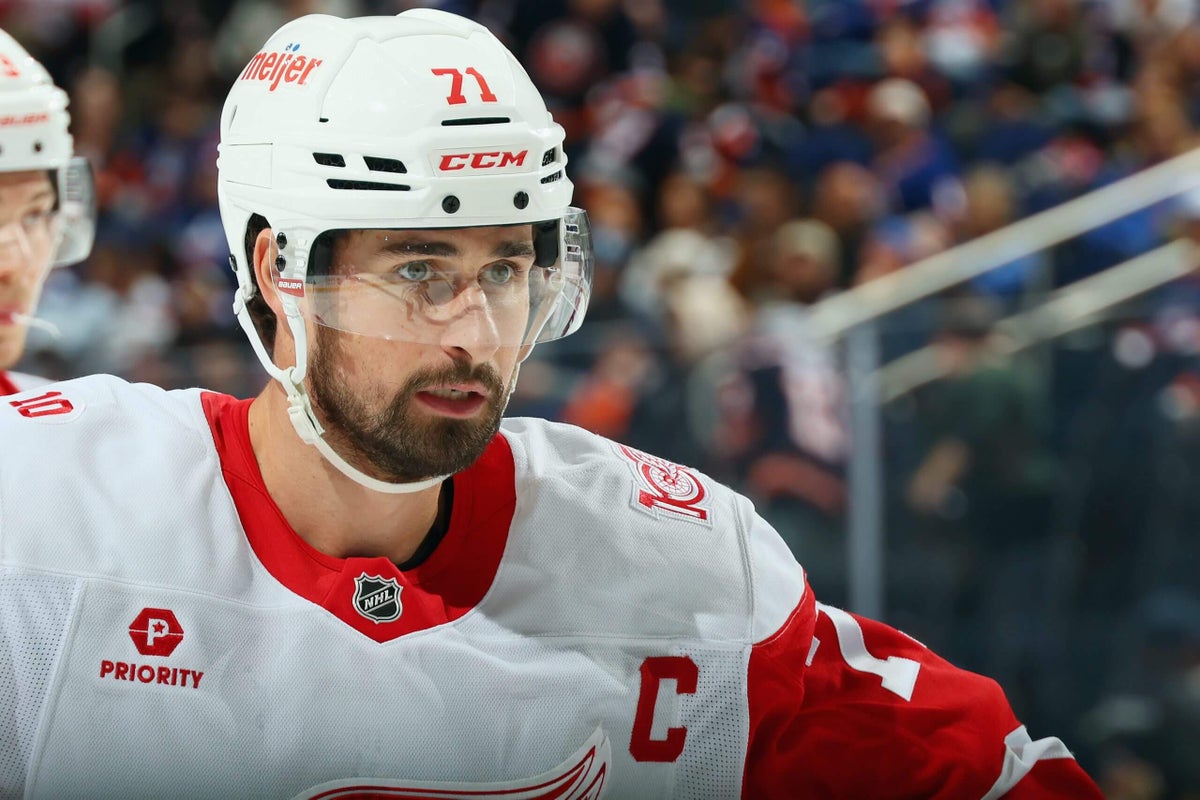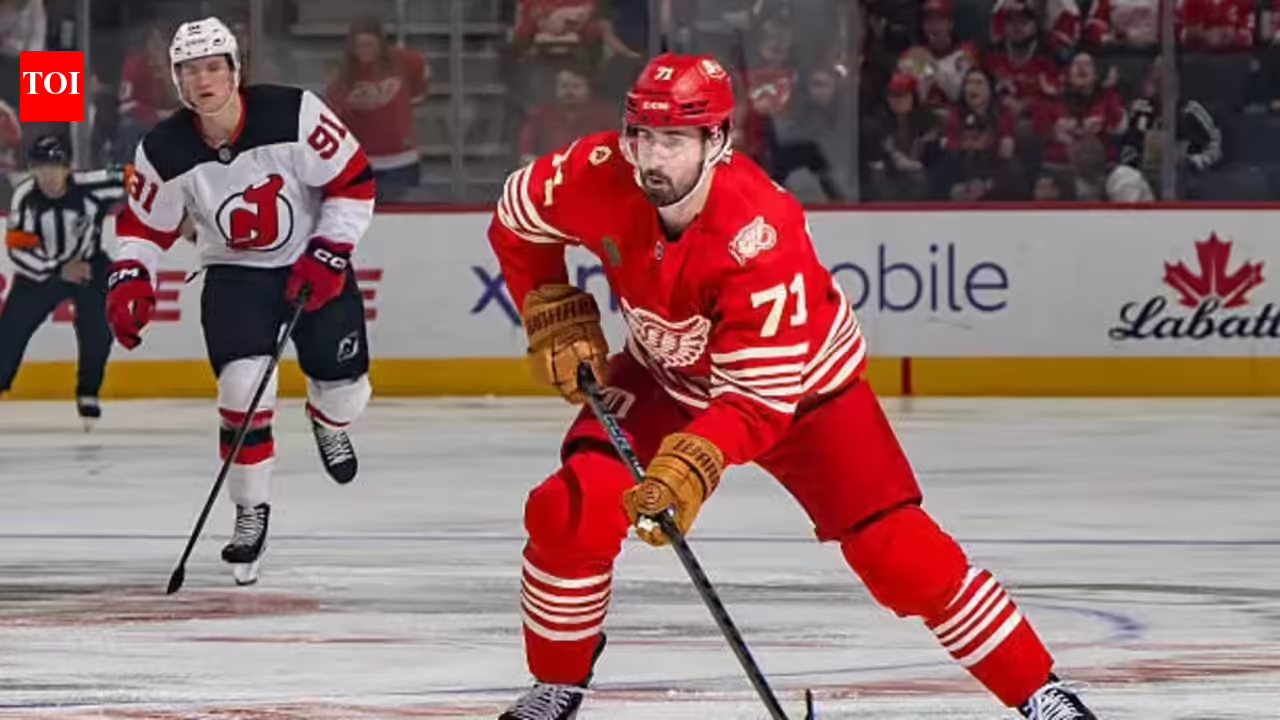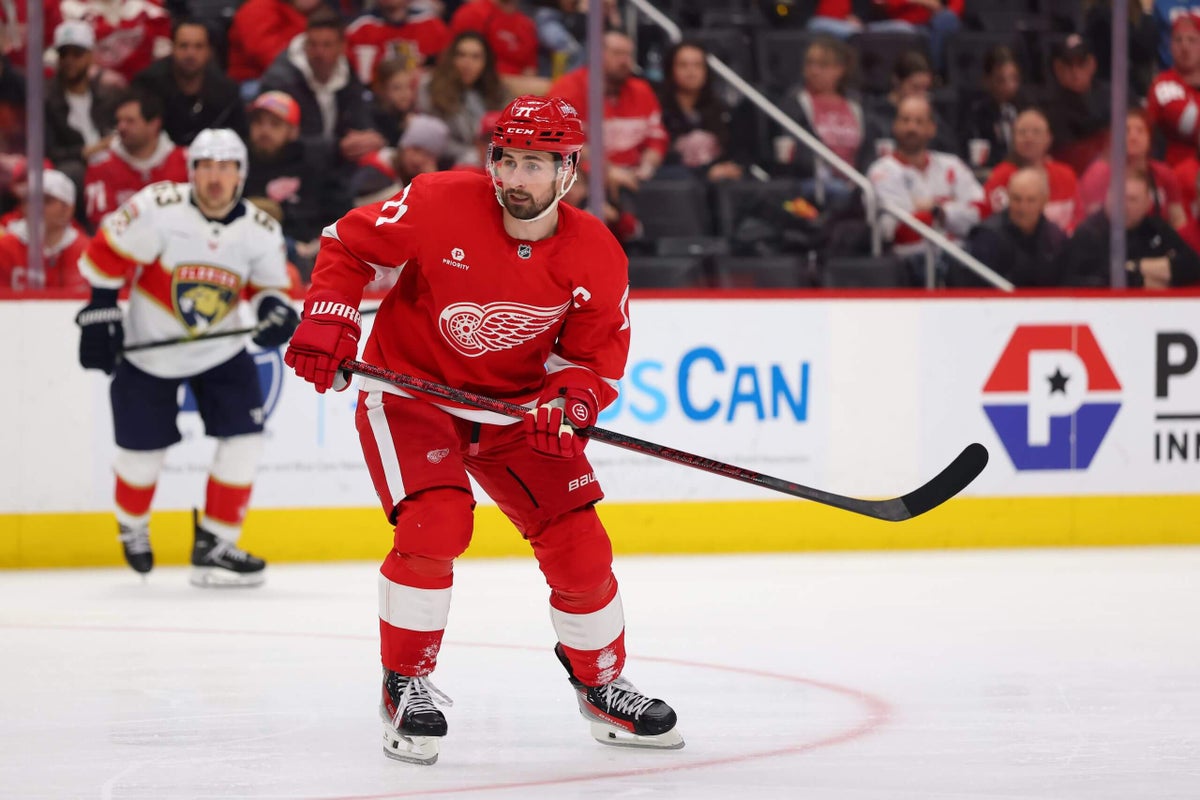
One Team USA star and NHL captain has gotten his wish by being traded to a Stanley Cup-contending powerhouse. So what does that mean for Dylan Larkin, whose similar situation remains unresolved with the Detroit Red Wings?That’s one of the many ripples of the bombshell Brady Tkachuk trade to the Florida Panthers on Sunday night. And in Detroit, it’s the ripple.Larkin’s trade request, and what comes of it, will define this offseason (and realistically the next several years) for the Red Wings. And the Tkachuk trade inevitably affects what happens next.On one hand, you can look at the return Tkachuk fetched for the Senators — the ninth and 25th picks in this week’s draft, plus a 2029 first-round pick and 2027 second-round pick — and see it as setting the bar for a Larkin deal. In fact, you could even argue it sets the floor: Larkin is three years older, has five years left on his contract rather than two, plays center and has generally outproduced Tkachuk to this point.That’s certainly the case I’d expect the Red Wings to make to potential suitors in the coming days and weeks, and it has merit. It also perhaps ups the ante for other contenders — such as the Tampa Bay Lightning, Dallas Stars, Vegas Golden Knights, Minnesota Wild and even the Carolina Hurricanes — to keep pace in the arms race, with the Panthers’ top nine now looking downright fearsome.Why the Senators traded Brady Tkachuk to the Panthers in an NHL blockbusterJulian McKenzieBut even with all that said, I’m not totally sold that the Tkachuk trade is a net positive for the Red Wings for one main reason: It takes one of the most appealing potential suitors out of the Larkin mix.As spendy as the Panthers have been in trades in recent years, they still had two of the best overall assets among potential Larkin suitors: No. 9 and young center Anton Lundell. The Athletic’s Pierre LeBrun has reported that Lundell was a “no-fly zone for the Panthers,” so perhaps that would have extended to a Larkin deal as well — though Larkin being a center is again a notable difference.I’m not ready to rule out No. 9 being dealt again prior to Friday’s draft, with playoff-hopeful Ottawa certainly a threat to flip it for a win-now player to a new team who could, in theory, put it back in play for Larkin. But it’s safe to say that the odds of Detroit getting a top-10 or even top-15 pick in this year’s draft took a hit Sunday.And that has its own ripple effects. If there’s not an appealing pick in play near the top of the draft, it lessens the urgency for the Red Wings to get a deal done this week.There’s still July 1 looming, with both the Red Wings and potential acquiring teams needing to know their cap and roster outlooks for next season. But if you figure Detroit is planning for a post-Larkin future regardless, any reduced incentive to do a deal before the draft would certainly seem to increase the odds this situation drags out.Of course, there is some logic from the Red Wings’ side in holding firm until they get their desired return. Larkin is one of their most important players. Detroit may be unlikely to get an equivalent-level player (particularly a center) back for him, but whether it’s younger players, futures, or some combination of the two, the Larkin trade is of the utmost importance to any path forward the Red Wings take. They can’t afford to settle for a mediocre return just to resolve it.At the same time, consider this line from LeBrun’s column going inside the Tkachuk deal: “From a Senators perspective, delaying the inevitable seemed like a risky proposition. They didn’t want to deal internally with this for another year. And at some point, more of this would have leaked, too, and that would have been a gong show to deal with.”The Red Wings are effectively already at that point. The noise in the market around Larkin has been at a sustained fever pitch for weeks now. And it’s not just fans who are watching it all play out.If Detroit can’t make the Larkin deal soon and formally chart their course forward, what will that mean for the rest of the veterans in the locker room? Pending UFA Patrick Kane has the most urgent decision to make, but he’s not the only one who will want to know the situation going forward. What about Kane’s linemate Alex DeBrincat, who is one year from unrestricted free agency?DeBrincat is another hometown product for the Red Wings, but is he willing to extend on July 1 without knowing what the future will look like in Detroit? He’ll turn 29 this winter and is one of the Red Wings’ most important players going forward, so it’s certainly in their best interest to know his long-term plans as soon as possible.There’s also incentive for Detroit to know where this is all headed with veterans John Gibson, Justin Faulk and Andrew Copp, all set to be free agents in 2027. If Detroit gets an impactful NHL player back for Larkin and continues competing for a wild-card spot, then keeping those three still makes sense for everyone. But if it’s a futures-based return, do those veterans, who are all in their 30s, want to spend their walk year in a mini-rebuild situation? Would the Red Wings want that?And then there are the players watching Yzerman specifically. Larkin’s reputation with fans is going to take a real hit in Detroit, but in general, he’s been a well-liked player both within the team and around the league for years. So while Yzerman may well hold firm at Larkin’s expense in these negotiations, doing so to an unreasonable degree could influence other players’ views of the general manager, either in the dressing room or around the league.It’s still early, and perhaps that’s getting too far ahead of the current status quo. But as much as I do believe a prolonged process is possible here, I don’t think that course of action is necessarily a good outcome for the Red Wings.Detroit may not feel it has a choice if the available offers aren’t credible. And some of this remains on Larkin to give Yzerman a robust enough list of teams to work with to find suitable value. That’s especially true now with Florida (presumably) out of the running.Looking around at remaining teams, the Utah Mammoth likely now stand as the ideal trade partner from the Red Wings’ perspective, owing to their deep stable of top prospects. But it’s unclear if the Mammoth are amenable to Larkin.Could Tampa or Dallas step up with big offers built around good young players, trying to keep pace with Florida? Do Minnesota and Vegas even have the young assets to make competitive pitches? None of them look like slam dunks.But Ottawa just found a way to get reasonable assets back for its star captain, even with limited options. And by potentially knocking a top suitor for Larkin out of the running, the Senators may have made it more difficult for the Red Wings to do the same.
What the Brady Tkachuk trade means for the Red Wings’ Dylan Larkin saga
The Senators traded their captain and star forward over the weekend, and may have made it even trickier for the Red Wings to do the same.
1,199 words~5 min read