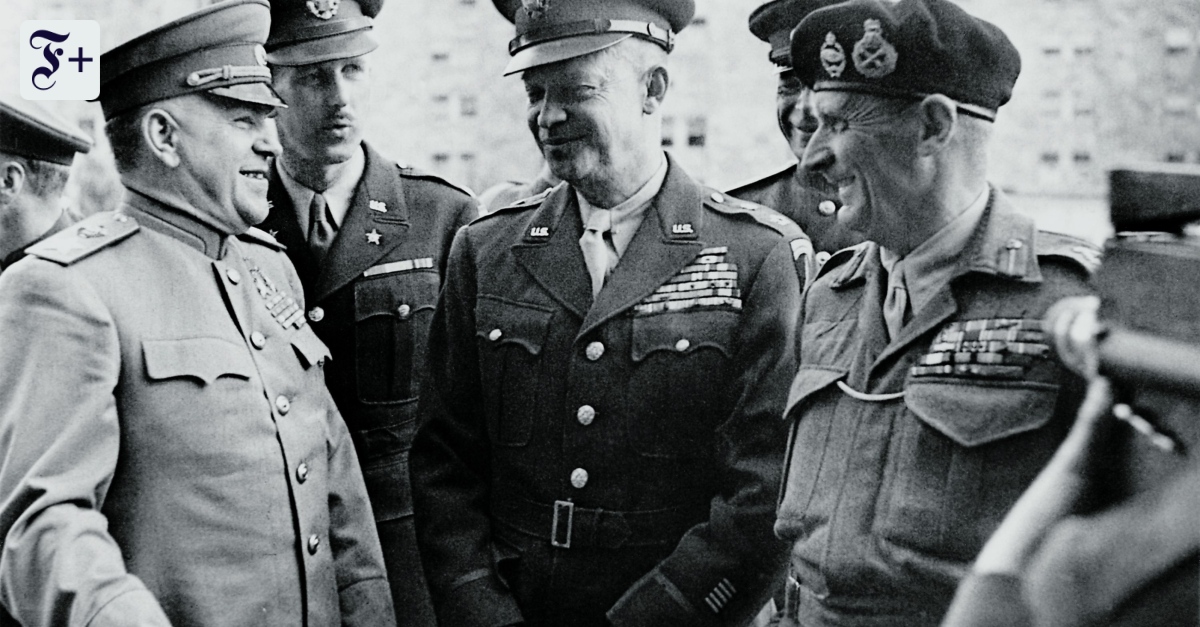
In July 1945, at the end of World War II, President Harry Truman toured the ruins of Berlin with Supreme Allied Commander Dwight Eisenhower and Gen. Omar Bradley, commander of the 12th Army Group, the largest army in U.S. history. The three men stood at the apex of U.S. power at a moment of triumph.
Yet these three men were also connected to one of the darkest chapters in U.S. history: the violent anarchy that engulfed the Kansas-Missouri borderlands in the 19th century.
Truman came from a pro-Confederate family in western Missouri. Eisenhower, in contrast, was the son of German American parents with Union sympathies who settled in Kansas after the Civil War. Young Ike grew up listening to the town’s Union veterans tell combat stories. Bradley grew up in central Missouri only a short distance from the site of the Centralia Massacre, where 22 unarmed Union soldiers were executed in 1864.
As the United States turns 250—and stands at the precipice of another era of political violence—it is worth returning to the history of its most interior of regions, the Kansas-Missouri borderlands.
No place has embodied the extremes of U.S. history more than this place. In the 19th century, this was arguably where the Civil War started, and where its violence fell most heavily on civilians.