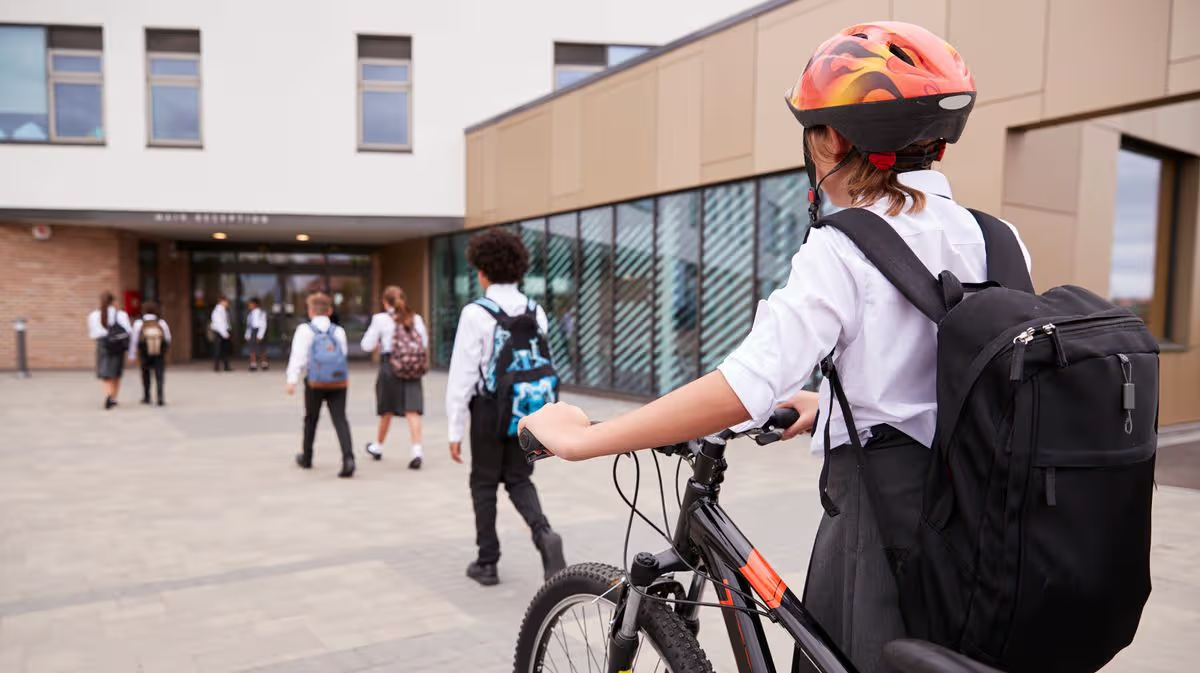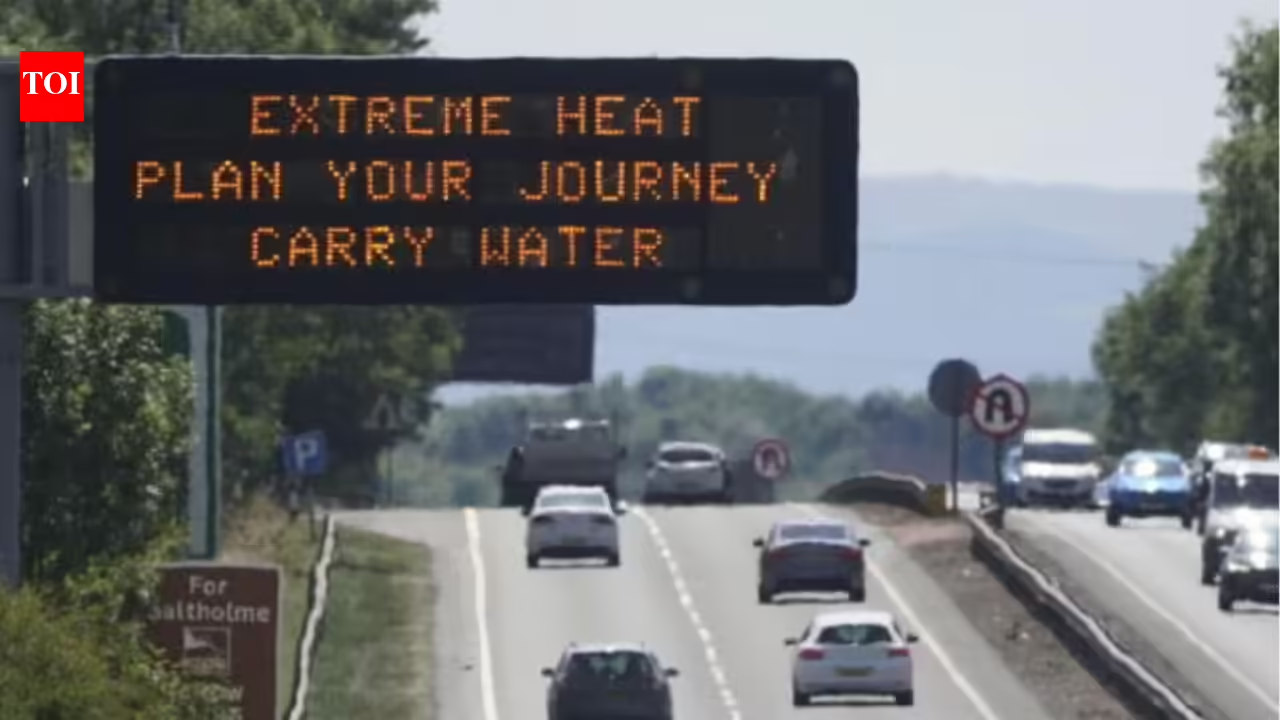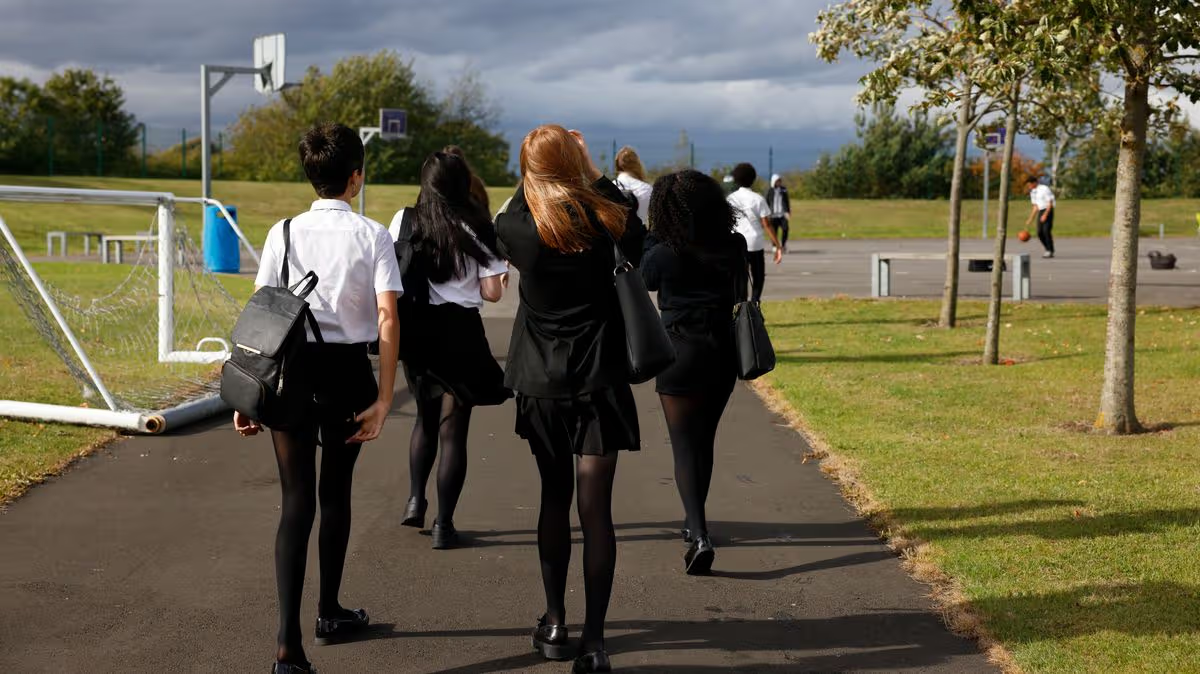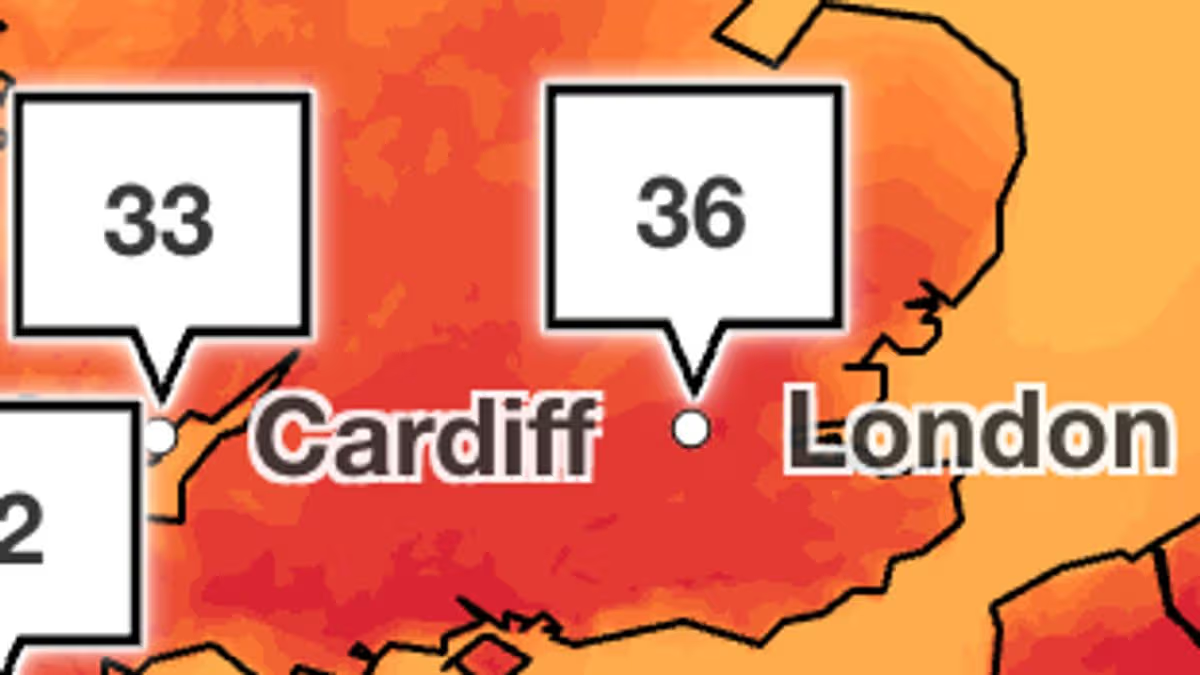
Multiple schools across the UK are sending children home early this week and relaxing uniform rules to protect them from the intense heatwave.A red warning for extreme heat is coming into force on Wednesday, when 40C temperatures are expected in some parts of the country. Britons have been warned that the higher temperatures pose a risk to life “for even the healthy population” as the UK Health Security Agency (UKHSA) urges the public to stay hydrated and avoid the sun during the hottest part of the day.The extreme heat has reignited calls from unions to implement a maximum temperature limit for schools and workplaces. Several schools are closing before the afternoon this week (Getty Images)Do you have to send your child to school if it is too hot? The Department for Education recommends that parents still send their children to school during a heatwave.It is up to each school to implement early closures, and there is no maximum temperature at which they must do so.The DfE says that “during hot weather, we don’t normally advise schools to close.“This is because school attendance is the best way for pupils to learn and reach their potential, and hot weather can usually be managed safely.”If a student cannot attend school because the weather has disrupted travel, parents should inform the school as soon as possible, the government said.The DfE said it was “carefully considering” recommendations from the Climate Change Committee (CCC) and Trades Union Congress to implement a maximum temperature limit for schools.The National Association of Head Teachers (NAHT) has written to its members with guidance on dealing with the heat this week.Paul Whiteman, its general secretary, said: “While there is no legal ‘upper limit’ for temperature in schools, [school leaders] will certainly be doing all they can to mitigate the effects of such high temperatures.”Unions have called on the government to introduce maximum temperature limits in schools (PA Archive)What schools have closed?Multiple students in England and Wales will be sent home early throughout the week, including at schools in London, West Sussex, Wiltshire, and Buckinghamshire.Kingdown School in Wiltshire told parents on Monday that its students would be dismissed at 12.25pm every day until Friday to “prioritise the safety and wellbeing of our students and staff”.It also recommended students attend morning classes in their PE kit, bring a water bottle and apply sun cream. In a message to parents on social media, it said: “This decision has not been taken lightly but reflects our responsibility to take timely action to protect our school community during extreme conditions.”What should schools do to protect students?The DfE advises schools to relax uniform rules during hot weather, and allow students to wear loose, light coloured clothing and sun hats to help them keep cool.“School leaders should make sure they take any steps necessary to make sure children are safe and comfortable, and the heat-health alerts can guide this,” the DfE said.The Department of Health and Social Care (DHSC) says teachers should not make children take part in vigorous physical activity and encourage adapting lessons for hot weather when sedentary activities are more appropriate.TfL has advised commuters to only travel if necessary (Ian Hinchliffe/PA)Do I have to go to work? There is no law for maximum working temperatures, but employers must stick to health and safety at work law by keeping the temperature at a comfortable level and providing clean and fresh air to employees.Guidance from the Health and Safety Executive says workplaces can help protect their staff by providing fans, air-conditioning, shade from direct sunlight, and cold water dispensers.Transport for London (TfL) said it is expecting disruption across the capital due to the weather this week and “encourages customers to think about their comfort and to consider whether their journey is necessary.”
Do I have to send my child to school during a heatwave?
Unions have called for maximum working temperatures to be introduced in workplaces and classrooms
625 words~3 min read