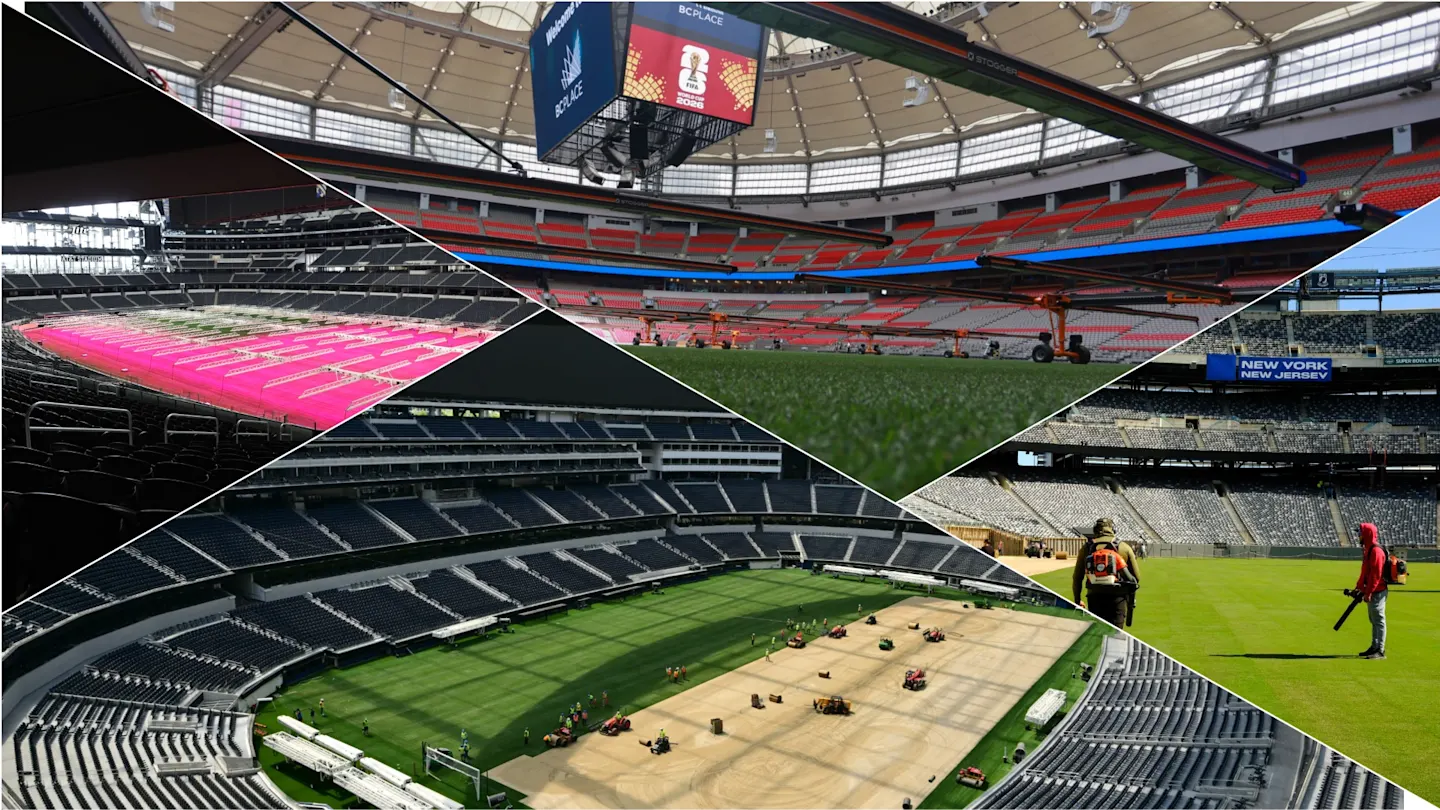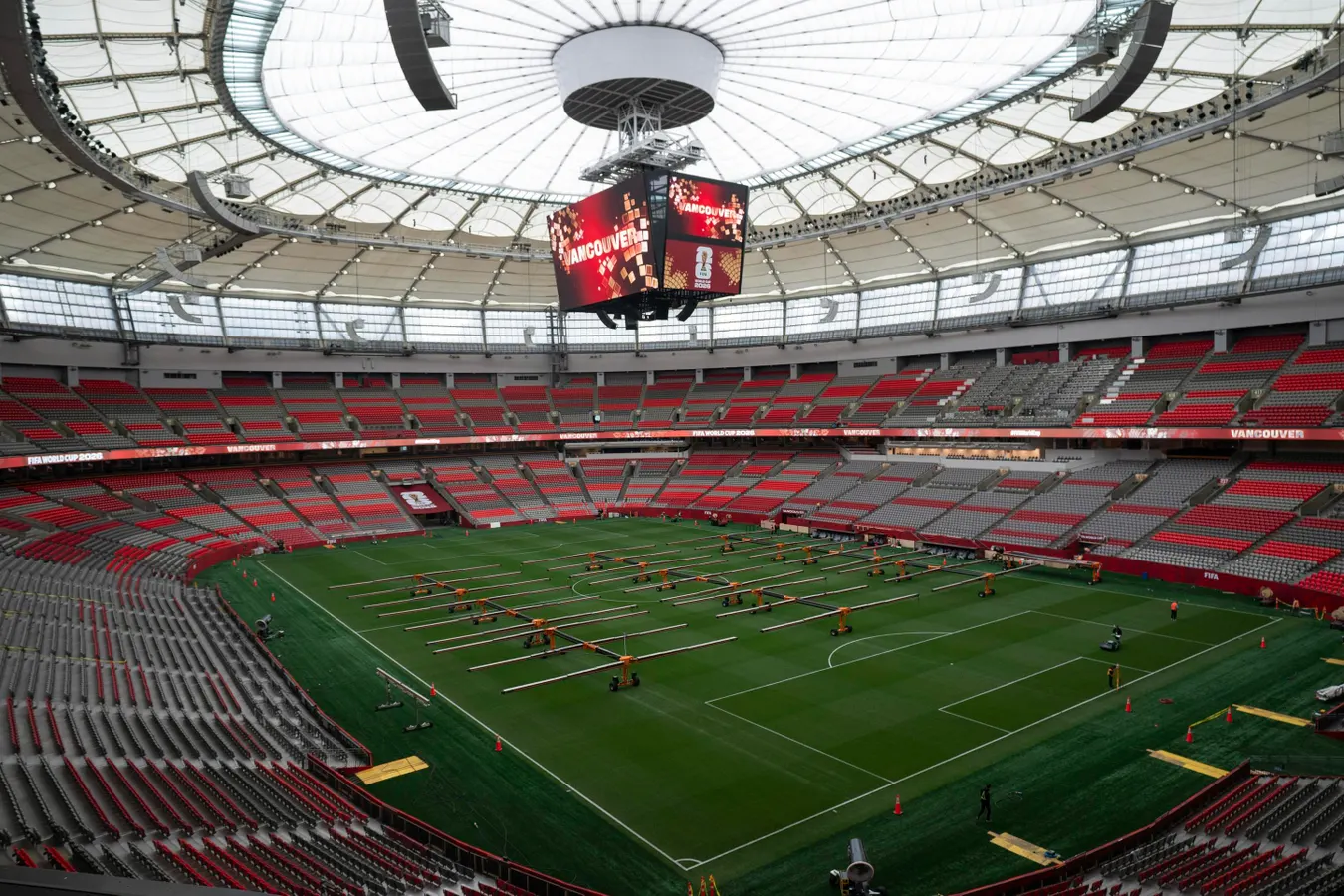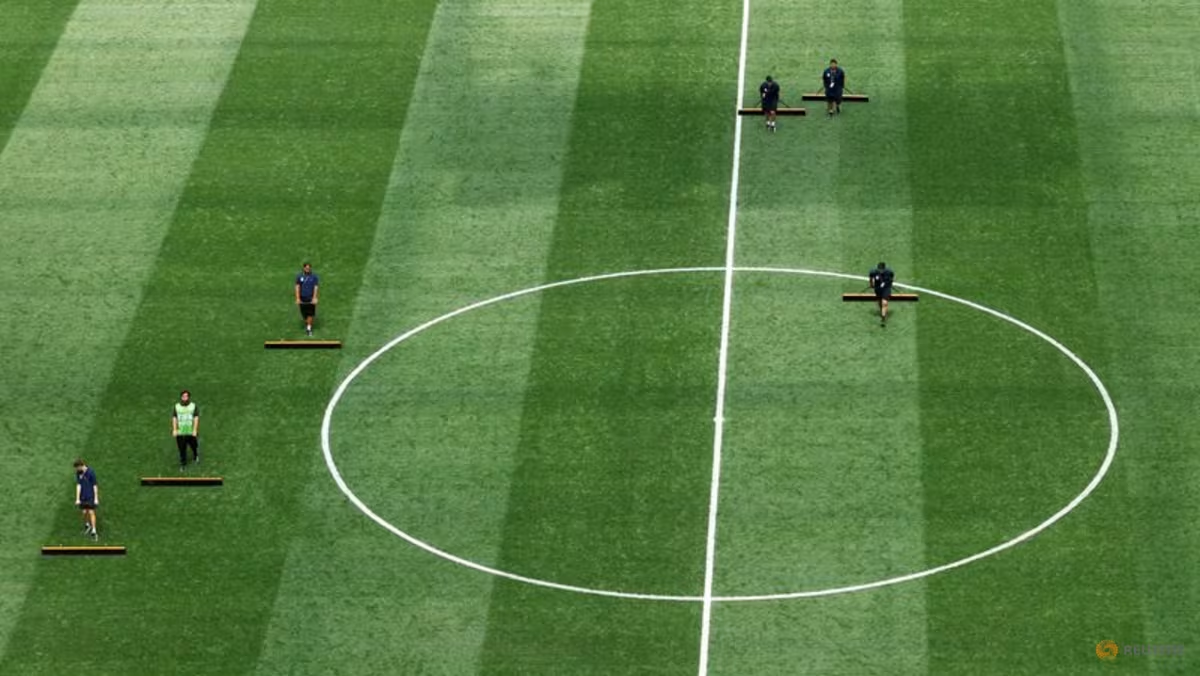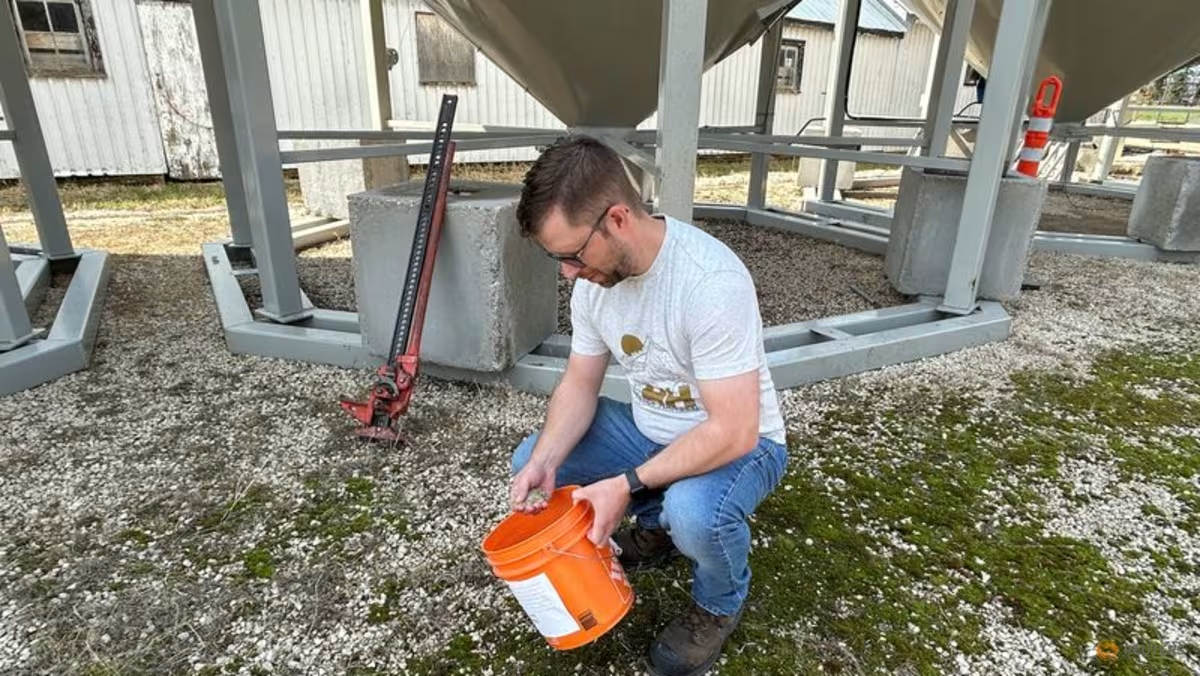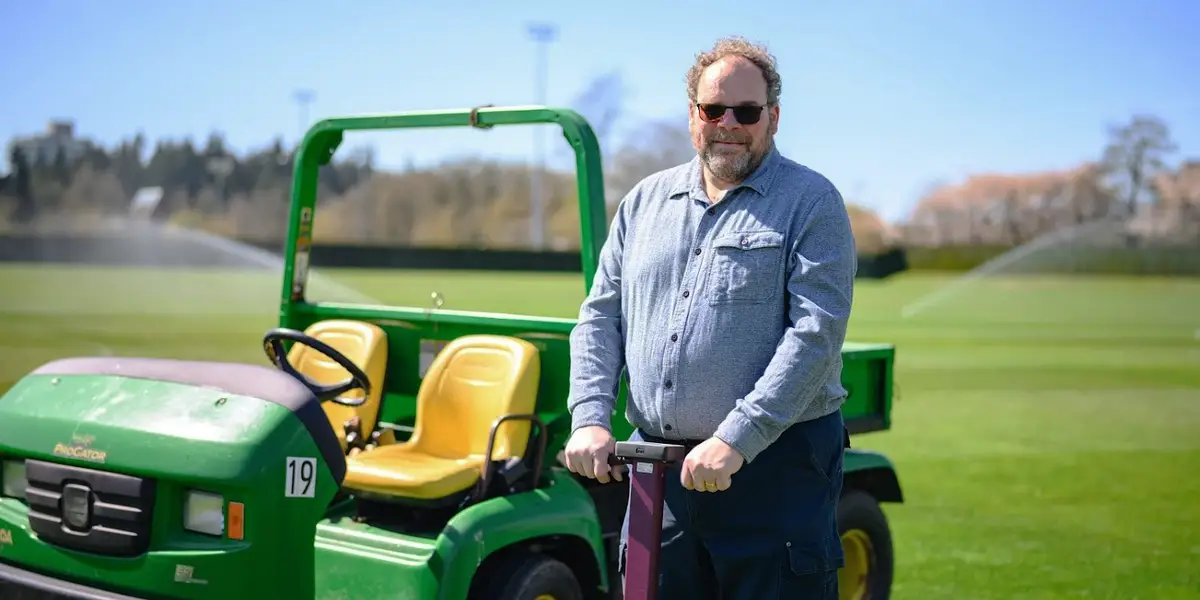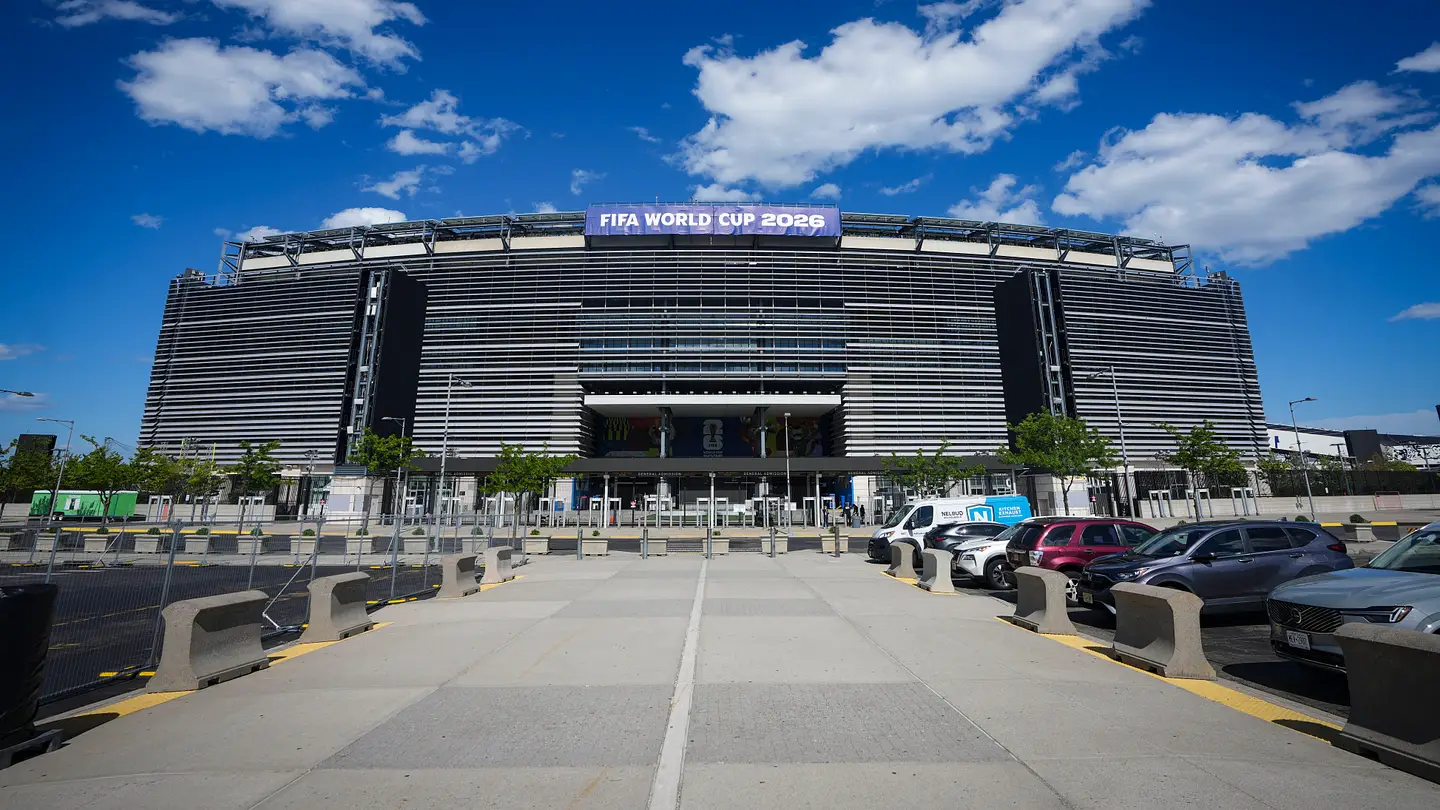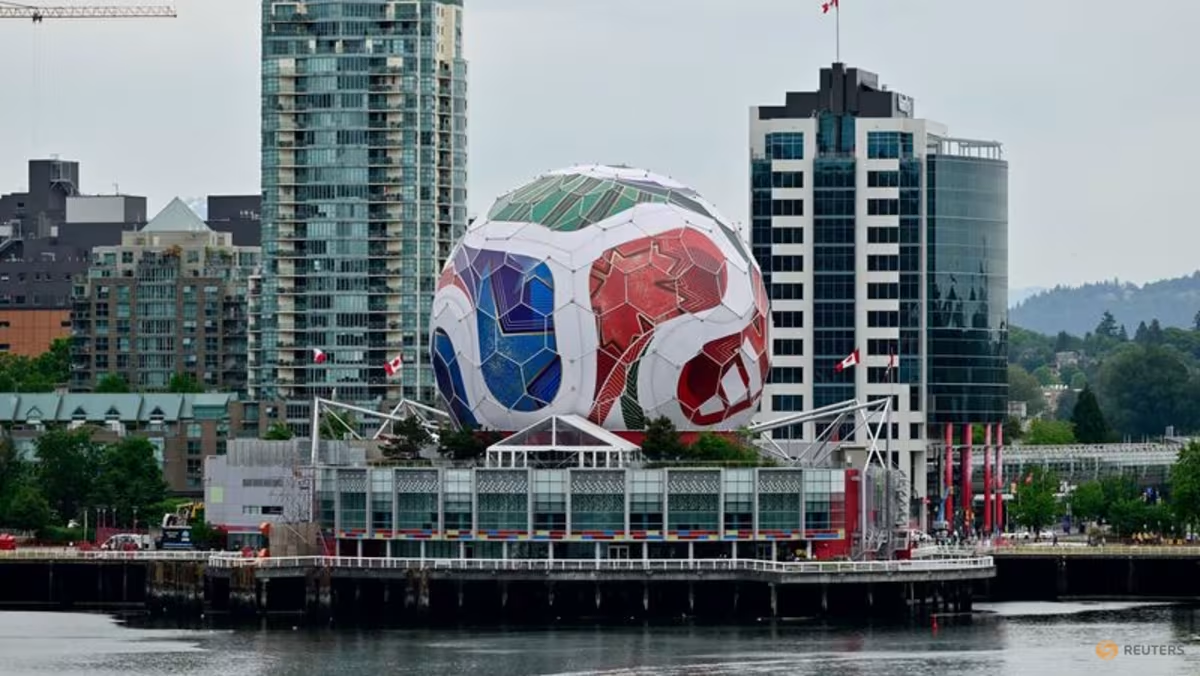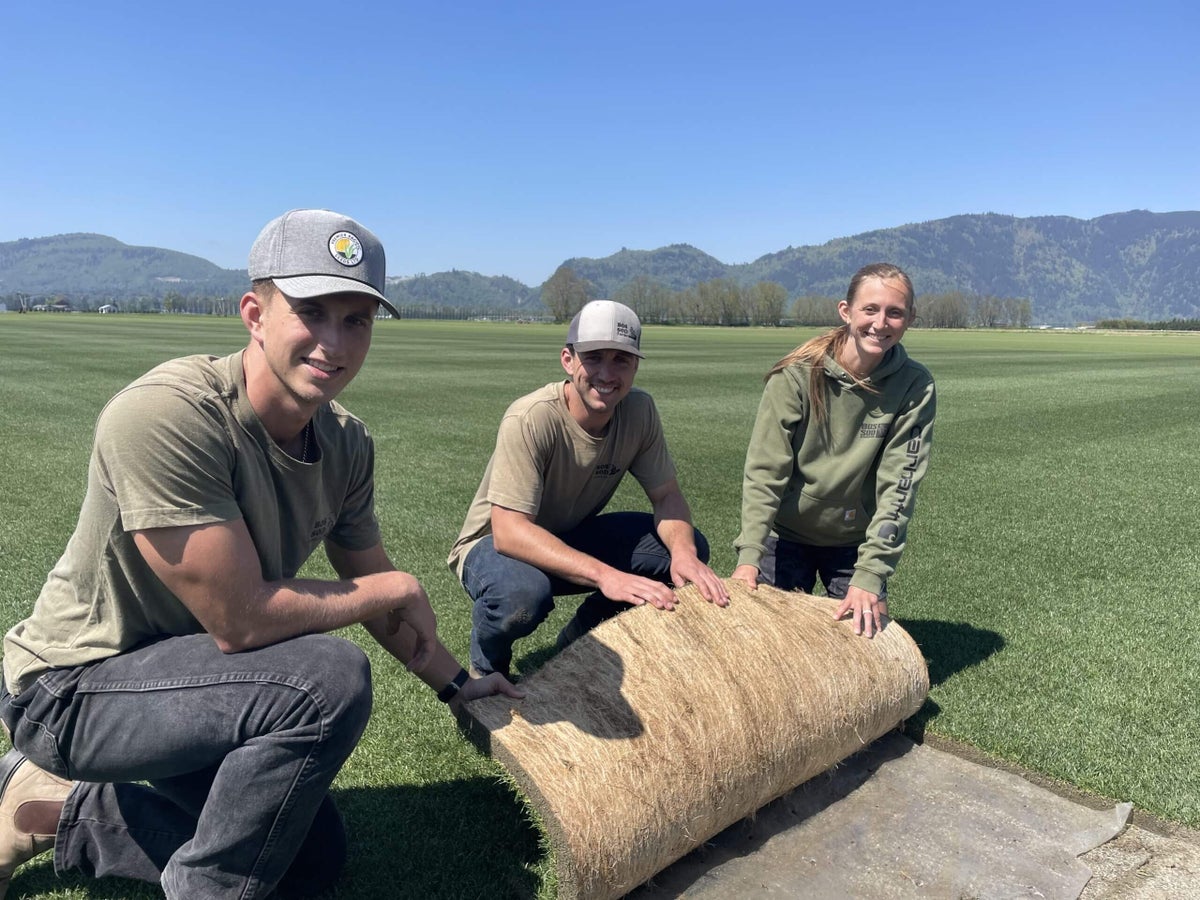
ABBOTSFORD, British Columbia — As the wind rattles off nearby hills in the Fraser Valley, Bert Bos kneels to the grass beneath his feet. Three of his children instinctually do the same. Their fingertips get lost in a bright shade of green.The operator of Bos Sod Farms doesn’t say much at the best of times. As he inspects his life’s work, he only hums and haws.I follow suit and run my hands through grass that is somehow compact and silky at once. Almost every one of the blades appears uniform in its perfection. But Bos interrupts my admiration to pick out a rogue blade he doesn’t like the look of.There is a one in a million chance — that hyperbole is fair — of finding a piece of grass that isn’t up to snuff for the Bos family. And yet finding those blades and growing acres of grass just right has become the ceaseless work of a quiet family farm one hour east of Vancouver. The Bos family’s pride and obsessiveness in growing this grass is justified: days later, it will be laid in BC Place in Vancouver and be played on in the World Cup. FIFA mandates that all men’s World Cup stadiums must have either grass or a hybrid playing surface. BC Place previously had a turf surface and required new grass to be grown for its seven games, including two (and possibly more) with Canada’s men’s national team.Get free access to the most comprehensive World Cup coverage in The Athletic app“I went to bed thinking about it,” Bos told The Athletic as we walk the fields of grass. “And if I woke up in the middle of the night, I was thinking about it.”Through the World Cup, there have been questions raised about different stadium’s grass surfaces. The grass pitch at MetLife Stadium, which will host the World Cup final, was described by France’s Adrien Rabiot as dry and difficult to play on. But BC Place’s grass is drawing rave reviews.“The best that pitch had ever been,” Canada defender Alistair Johnston said after Canada’s 6-0 win over Qatar in Vancouver, adding that the grass was better than other pitches he’s played on.As it turns out, growing grass for a World Cup stadium in that stadium’s backyard has given BC Place a unique advantage. And most importantly, a unique connection to the Canadian team that will play most of its games on that surface.“I don’t know how to explain it,” Bos said, scratching his chin and looking upwards. “But obviously it’s our country, it’s our team. You should know where you grow the grass for them.”At first, Bert Bos didn’t want the biggest job of his life.His family were calm and comfortable growing sod for golf courses and small sports fields. To this day, Bos still has no clear idea how FIFA learned about Bos Sod. When he received a random email from a FIFA representative in 2024 asking if Bos Sod Farms had interest in submitting a proposal for the BC Place grass pitch, Bos first thought to move it to his trash folder.“I had my concerns about the climate,” he said.Bos was proud of his work, but wasn’t sure if he could replicate it on the scale FIFA wanted: two acres for the pitch. He’d have to grow another acre as a back-up just in case, he immediately thought. Then he told his children in passing about the email. Their eyes popped out of their heads.“The nature of it,” Bos’s daughter Nicoline Van Oort said of why they pushed their father’s interest. “It’s something different, exciting. Challenging.”FIFA specifications dictate that World Cup pitch sod had to be grown on plastic. The plastic underneath the grass ensures grass roots only go down so far. Those roots hit the plastic and move horizontally. That creates a dense root layer and, hopefully, robust grass.The plastic also avoids what Bos calls “transportation shock.” But as he points out: “Typically sod on the plastic is grown in areas where it’s much more arid.”The lower mainland experiences a mild rainforest climate. Rainfall through the winter is a given. “Arid” isn’t an accurate descriptor. You can understand why the grass for multiple World Cup stadiums was grown in Colorado.Still, Bos’s children wanted him to press on. He could figure it out. And in doing so, he could make history for his country.How Vancouver got their grassJoshua Kloke and Jeshua KiddIn 1981, the Bos family emigrated from the Netherlands to Alberta. Bert’s older brothers had a dream many do not: they wanted to come to Canada to start a sod farm. Bert eventually moved to British Columbia and began his own family, leaving the other Bos Sod Farms in Alberta. His children were born in Canada.“Most of the other operations we have are good operations, but they’re commercial operations,” FIFA’s Senior Pitch Management Manager Alan Ferguson said. “This one’s wholly family owned. It’s a generational thing now. And that’s unique in today’s modern world.”Bert has shipped his grass to American states, including Missouri, Utah and Idaho. The job of growing BC Place’s grass could have been given to a farm outside of Canada. Bos heard through the grapevine that other contenders for the job were located seven hours away.In a time when tariffs have become an inflexible part of the dialogue about Canada-United States relations and when Canada is perhaps looking at this World Cup to flex its own muscle, Bos realized: his family could create pride in a local and national event at once.“This is our backyard,” he said, waving his arm as wide as British Columbia itself. “To get something that’s of this caliber get outsourced to out of the country would not have felt very good.”After research days at the University of Tennessee, Bos submitted a formal proposal. Bert and his family wanted make history on behalf of Canada. That drove Bert’s desire to overcome the elements and get his grass perfect. Bos kept thinking about the Canadian team playing at home in a World Cup. He had to ensure they would actually play, quite literally, on home soil.“In our proposal, we said this should be grown in-house in Canada,” Bert Bos said, “because we have the capability, we have talent.”FIFA alerted the Bos family in late February 2025: they would be growing the grass for BC Place’s World Cup pitch. It was time to, ahem, get in the weeds.Bert bought multiple varieties of sand and grass seed from around the world to test before laying. No step of the process could be overlooked. He built his own unique raking system by blending heavy machinery with rakes purchased from a local hardware store. When he tells me that he bought the rakes just down the road from his farm, he shrugs his shoulders, as if to say, ‘Where else, but locally, could I find what I want?’His hands begin to move rapidly as he describes how he prepared to grow World Cup grass.Canada’s Alistair Johnston raved about the quality of the BC Place pitch (Fran Santiago/Getty Images)“We were concerned about the sand blowing, right?” Bos said. “We get high winds coming through. We purchased a secondary irrigation system that we could quickly, rapidly employ, right? We’re also just watching the weather forecast. We didn’t have to fully employ it. There would have been more work and it wouldn’t have been as good, but that was our game plan in case we get a big windstorm coming through, right, so we have to prepare for that.”Bos’s sod would be made of five per cent synthetic fiber to stabilize that sand. The fiber was stitched into the ground, 20 millimetres apart. The synthetic fiber stays low enough so the grass grows above it.And over the course of the next 10 months, that’s what happened. The Bos family had to adapt FIFA’s requirements to their local climate. Once they determined how to do it, that local pride once again rippled through the farm.“We have this very good lake bottom land which makes prime soil: sandy loam soil which is the best kind of soil you can have for a wide variety of crops,” Bos said. “It’s really very versatile and highly sought after.”This was going to be British Columbia grass, grown the British Columbia way. On June 7, 2025, the Bos family planted their first seeds.Watering? Every day. Bos would “spoon feed” the grass nutrients like nitrogen every seven to 10 days. Three to five times every day they would check the moisture levels. There was weekly tissue analysis. Four weeks after their first seed, they began cutting the grass. They started at 50 millimetres and kept feeding and shaving the grass until it got to its desired height: between 20 and 22 millimetres, which meets FIFA requirements.“The kids and Bert, they really put their heart into it,” Dr. John Sorochan, an expert in turf grass science at the University of Tennessee, said. Dr. Sorochan has led the FIFA Pitch Research Project since 2018.The Bos family take great pride in their work (Joshua Kloke/The Athletic)The family stopped watering in October 2025 and let Mother Nature take over. Rain continued to fall through the British Columbia winter.“They came up with a unique way (of growing sod),” Dr. Sorochan said. “A lot of the sod on plastic that’s grown is grown over an impermeable plastic or hard surface and comes runs off to the sides and they got retention areas to collect it. In Vancouver it can rain so much there could be a point where you can flood (the sod). So (Bos) actually created a drainage layer below so water can actually go below. And that’s usually a concern in other places because the soil would get too wet, but he’s got this really fine gravel that he uses. It was a unique step that’s been very successful.”The Bos family only began watering again in February 2026. Until then, Bos had to wait.While his six children slept, Bos would not. He would wake up, rub his eyes and then stare out his bedroom window into the Fraser Valley under moonlight.Earlier in the day, Bert would have told his children, with his constantly measured tone, there was little to be done to the grass. And yet if one of his children spotted bags under their father’s eyes as they’d begin the morning’s toil, they’d know he lost sleep thinking about the most important project of his career.Come this spring, visits from FIFA officials confirmed that the unique steps had paid off.“The quality of their sod,” Ferguson said, “would stack up to anything we’ve found anywhere across the globe.”In early May, it was time to harvest the grass. And that’s when the local connection mattered the most. Having BC Place’s grass grown close to the stadium improves its quality.“What’s really unique about what we can do for the World Cup in Vancouver this year is we don’t have to stress the sod by transport,” Dr. Sorochan said.If the temperature is not controlled and the sod must spend long hours travelling to its final destination, Ferguson said it is subject to “fungal diseases.” It doesn’t take a wild imagination to understand what that would do to grass being used in the World Cup.“The closer you can get (the sod to the stadium) and the more you can reduce the time from harvest to install, the less chance you have of that occurring,” Ferguson said. “To have (the farm) just one hour away, I don’t think it gets much better than that.”Bos Sod Farm uses a unique drainage gravel to cope with the wet winters in British Columbia (Joshua Kloke/The Athletic)The first truck rolled out of Bos Sod Farms at 4:00 A.M. on May 7 and headed west on the Trans-Canada Highway. Installation at BC Place began three hours later. It took three days — 24 trips — to transport two acres of grass.The trucks were temperature-controlled to ensure the sod stayed cool and then hit the BC Place ground cool as well. That kept the grass healthy, wet and ensured the ball moves quickly once it is played on.The grass earned rave reviews from the people the grass was grown for.“It kept the water really well. It never really felt dry or anything,” Canada defender Luc de Fougerolles said. “It wasn’t so short that the ball would skid off, but it’s also not so long that the ball just slows down a bit.”But back in Abbotsford, Bos might not hear those compliments. He will remain standing on grass that nearly made the trip to BC Place. There will no distinguishable sounds outside the call of a bird swooping down from nearby hills. No hum of an expectant crowd. No clatter of boots and ankles. No emotion-fueled discussion in foreign languages from players soon to step foot on the grass themselves.There is only a family proud of their work. And proud of their country.“We needed to do this,” Bos said, finally looking up from his grass for once, “for Team Canada.”
MetLife Stadium take note: this Canadian family shows how you grow perfect grass for soccer
Bos Sod Farm has provided the sod for BC Place in Vancouver and the grass has earned rave reviews from players
2,175 words~10 min read