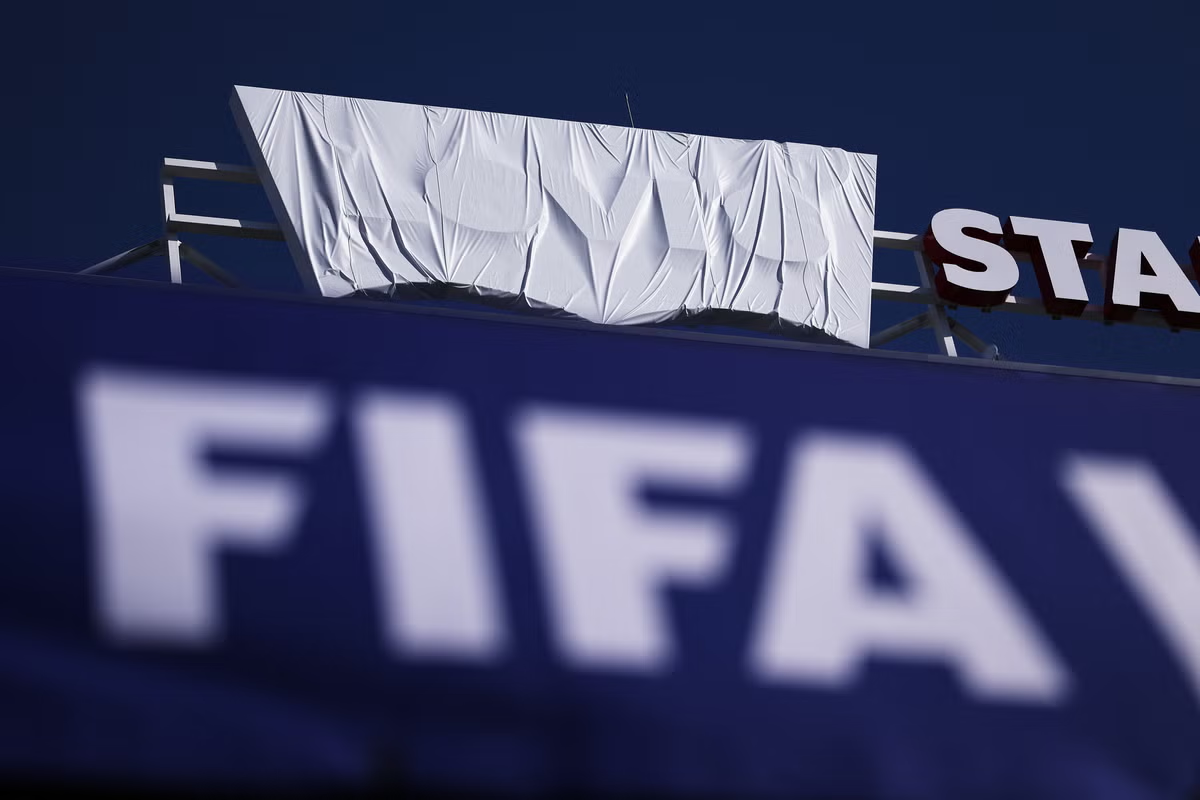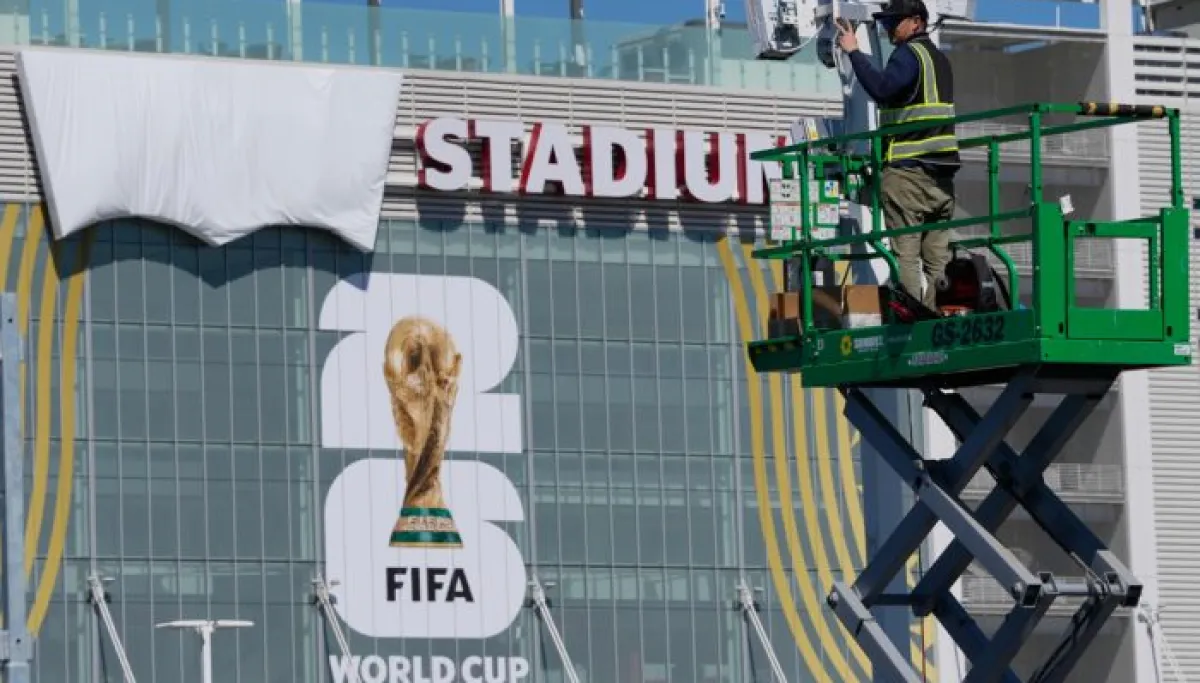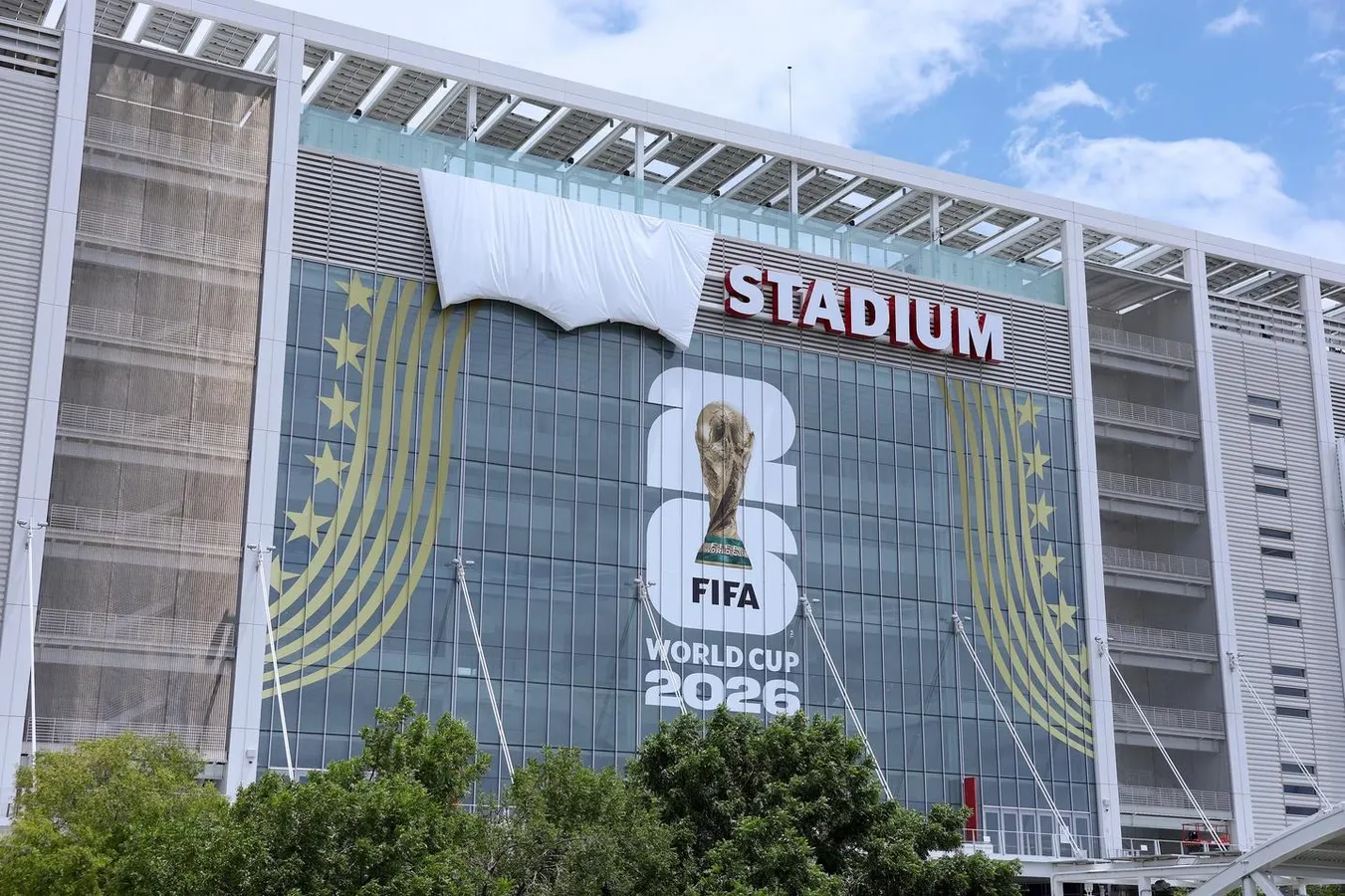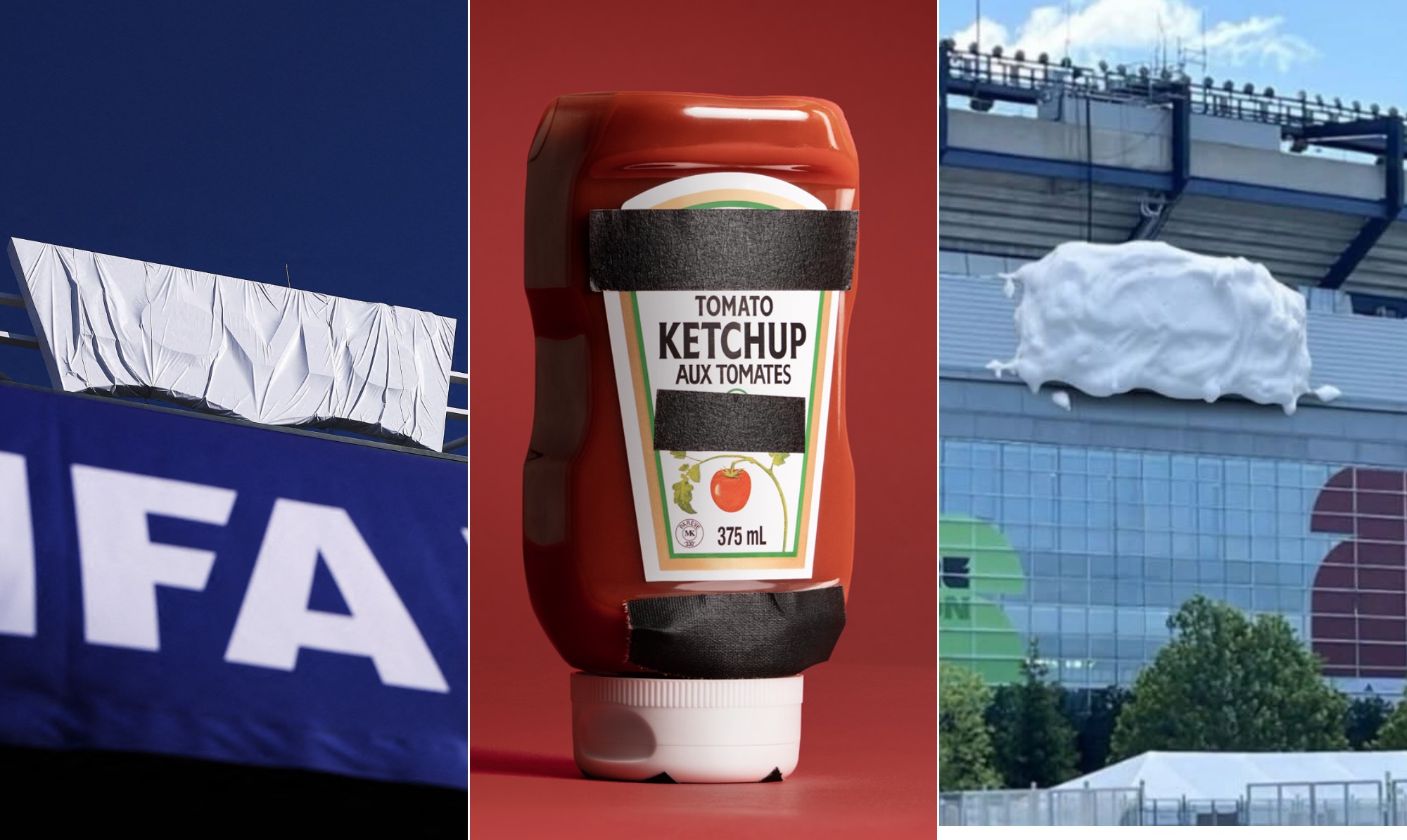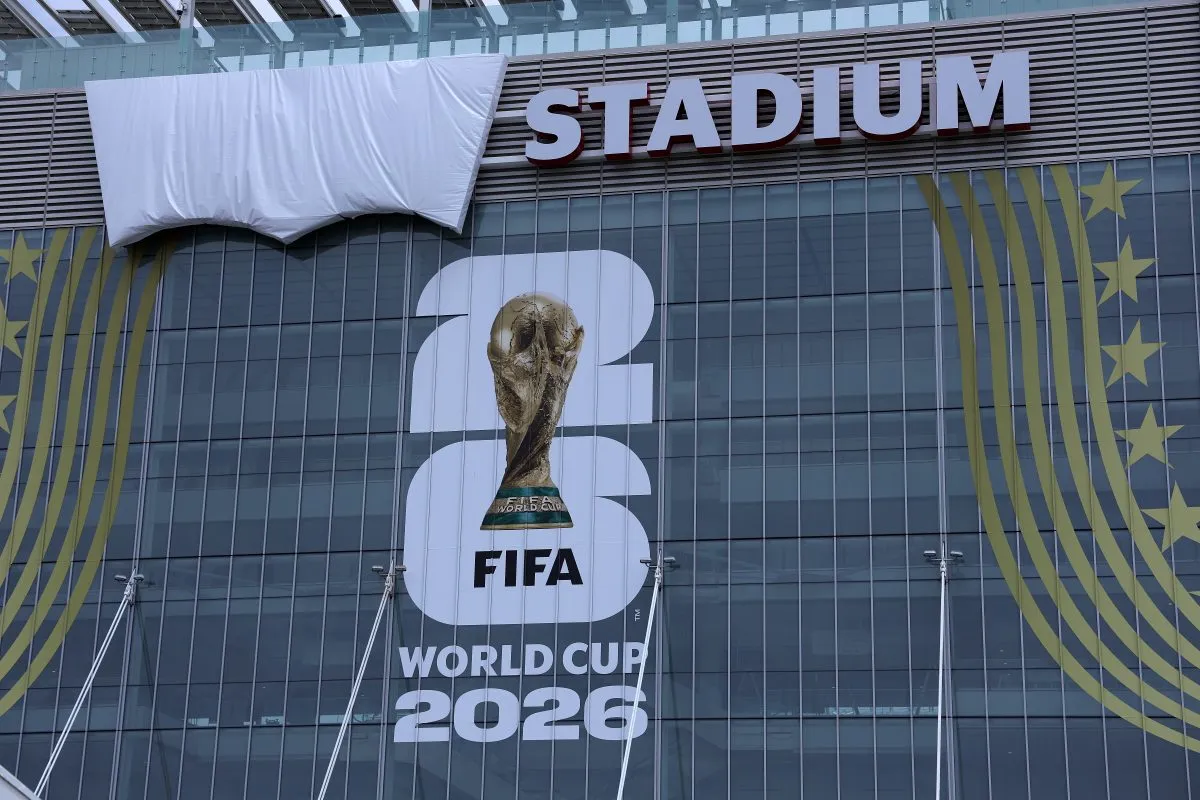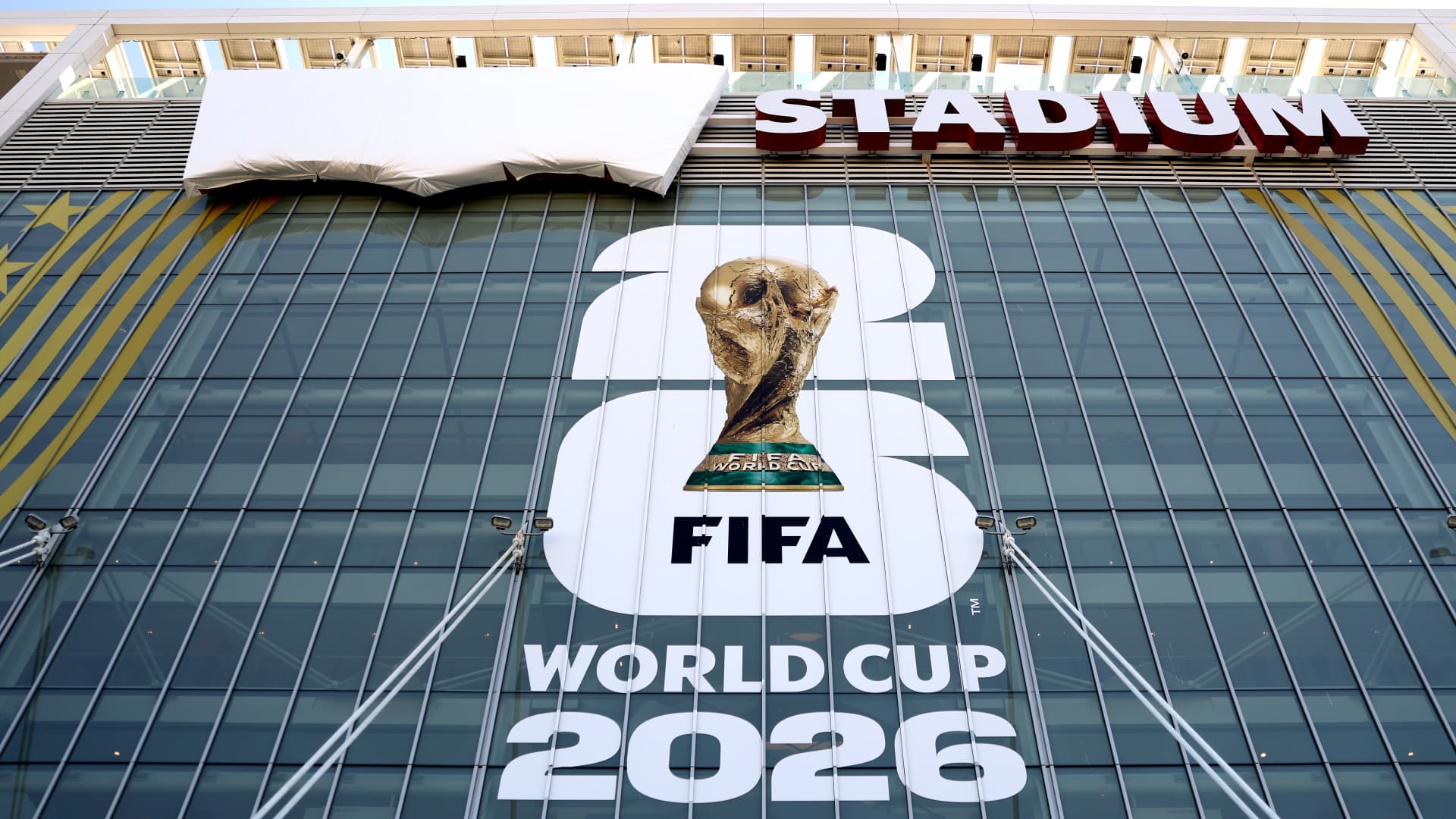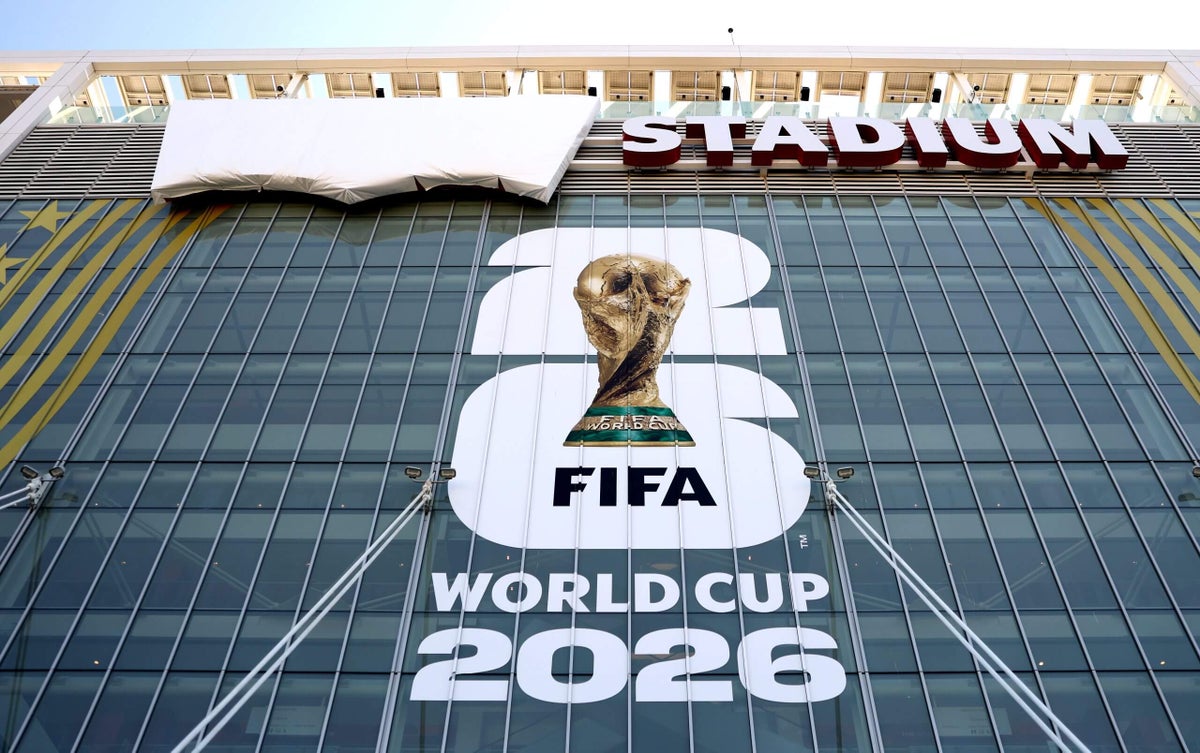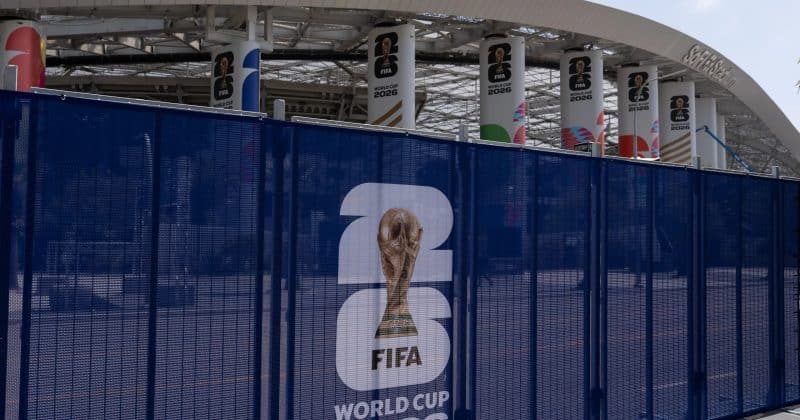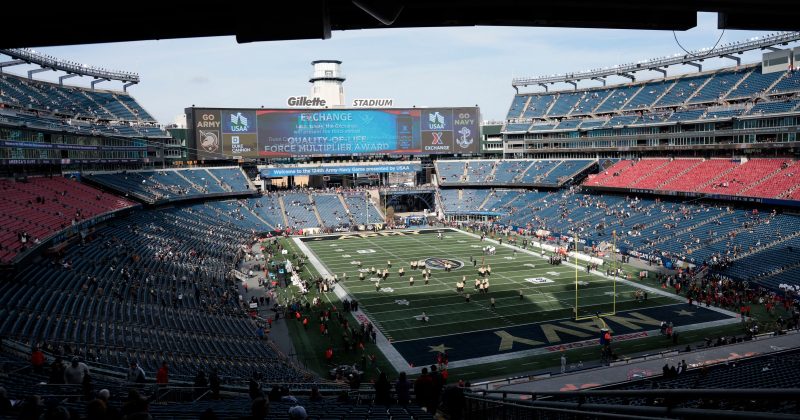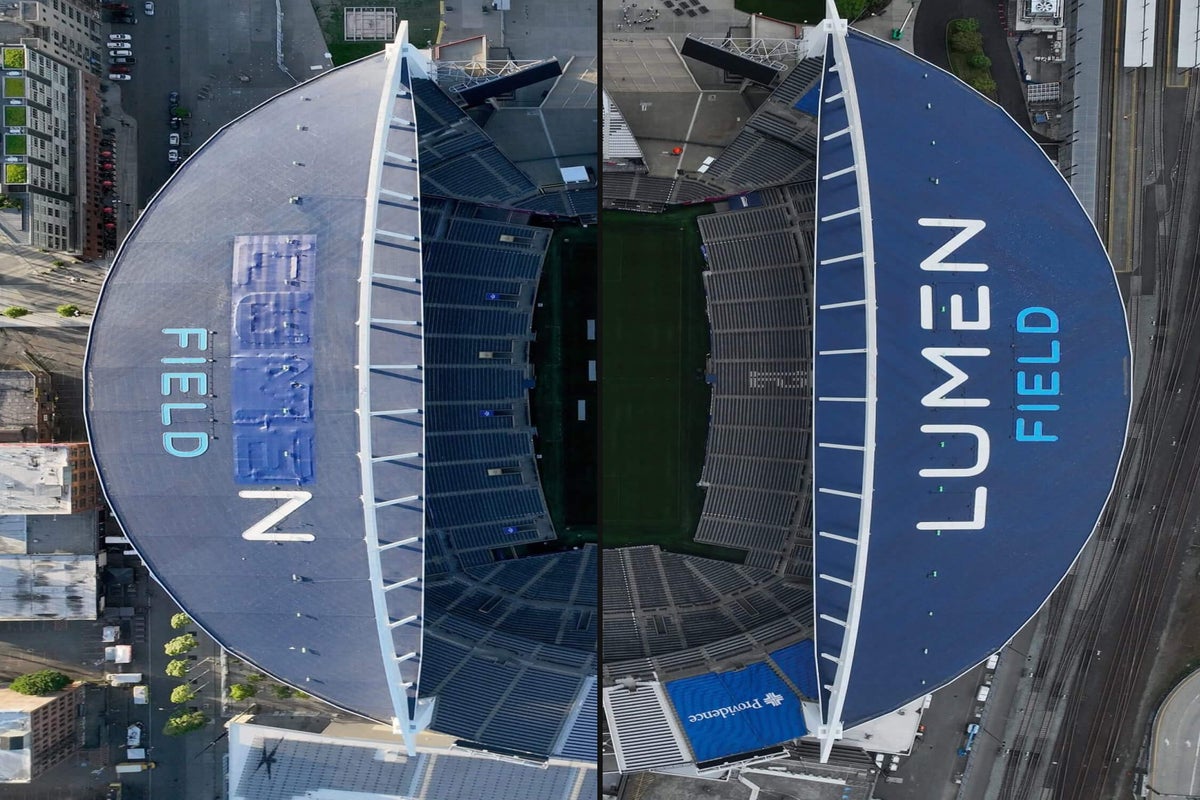
It has become a running joke of the tournament.FIFA required a mass clean-up operation of host stadiums for this World Cup, ensuring that everything from concession stands to airspace be cleared of the sponsors who are usually in place at NFL venues.The ‘clean stadium’ demand includes wiping the title sponsor physically from the venue’s exterior (which has cost some cities almost $500,000) and stadium sponsors from every room and concourse in the venue, as well as any temporary or permanent parking facilities. Only Mercedes-Benz Stadium in Atlanta got an exemption, owing to the sheer physical challenge of covering the sign.FIFA’s control is extensive, according to the city contracts seen by The Athletic. Cities are even asked to ensure the FIFA names for the venues are used for all local directional signage from at least 14 days before the opening match, while the usual stadium name is not to be used in governmental communications.The sponsored stadium names have been replaced with new FIFA-approved host city names, even when those cities are geographically far away from the actual stadium locations. MetLife Stadium in East Rutherford, for example, is temporarily called New York New Jersey Stadium, despite very much not being in New York; Gillette Stadium in Foxboro, Massachusetts, is now called Boston Stadium, despite being around 30 miles away; and the re-named AT&T Stadium in Arlington, Texas, is now called Dallas Stadium.Host cities, many of whom already feel burned by the scale of costs associated with preparing for the World Cup, have taken a very literal interpretation of the contractual obligations. They have been prepared to cover up sponsors across their venues but many have not been prepared to pay for the dressing of their new names. With FIFA also not stumping up to replace the names, it has left the signs resembling a confusing or sometimes entertaining eyesore for fans approaching venues.This has, in many cases, led to some clumsy looking solutions at venues across North America. In the case of Philadelphia’s Lincoln Financial Field, it has even extended to the erasing of the likeness of one of the nation’s most iconic former presidents.Over at Levi’s Stadium in Santa Clara, a giant white tarp now covers up the denim brand, who poked fun at the change by adjusting their logo on social media platforms to resemble the half-baked solution.Here, The Athletic looks at each World Cup venue and the steps they have taken to cover up their sponsors.Estadio Azteca, Mexico CityThe most pristine presentation has arguably come from Mexico City, which replaced Estadio Banorte with the official FIFA name of Estadio Ciudad de Mexico (Mexico City Stadium). This scrubbed away the financial services firm Banorte, while playing ball with FIFA’s request.(Yuri CORTEZ / AFP via Getty Images)The venue’s preparedness to go the extra mile may simply be out of a desire to look good. But it is possible that FIFA agreed additional expectations for the stadium in return for awarding the venue, most famously known as the Azteca Stadium, the opening match of the tournament in which Mexico beat South Korea.Cover-up rating: 9/10. The Azteca wears its World Cup branding on May 28. (Photo by Carl DE SOUZA / AFP via Getty Images)MetLife Stadium, New York, New JerseyThis one has had plenty of attention, most notably because of a dispute over whether New York’s name should even be on the stadium altogether. However, New York City and New Jersey jointly agreed to bid to host the tournament back in 2017 and the name has been tied together for the World Cup since.In recent months, as New York and New Jersey’s politicians vied for headlines and political wins from the World Cup, New Jersey governor Mikie Sherrill’s office requested that one of the two most prominent signs outside the stadium to be changed from New York New Jersey to New Jersey New York. Inside the venue, the sponsored signs have been exclusively covered up with ‘New York New Jersey’.(Catherine Ivill / AMA / Getty Images)One exemption is the cupholders — there is a MetLife sign on every single one across the 80,000-seater stadium. In the end, local organizers pushed back on FIFA, explaining the cost of covering up every individual seat in a unionized building would be beyond reasonable, particularly when FIFA do not have an insurance partner on their slate of sponsors.(CHARLY TRIBALLEAU / AFP via Getty Images)From the inside of MetLife Stadium, we could spy the back of the MetLife letters. Technically, it is not only the exterior but also interior which is expected to be covered up.(The Athletic/Melanie Anzidei)Cover-up rating: 7/10Arrowhead Stadium, Kansas CityThe letters in GEHA Field were snapped being physically removed in the week leading up to the World Cup, and FIFA signs have now taken precedence.Workers are removing or covering hundreds of signs throughout the stadium, including major sponsorships, as FIFA’s sponsors take priority over not only GEHA, but the advertisements for T Mobile, Bud Light, Ford and the Chiefs.Cover-up rating: 8/10(Photo by Jamie Squire/Getty Images)(Aaron M. Sprecher/Getty Images)(Jay Biggerstaff/Getty Images)(William Purnell/Icon Sportswire via Getty Images)Lumen Field, SeattleSeattle’s cover-up of Lumen appears to have involved some variation of tape, paint or rubber. In an image taken on May 31, they appeared to have forgotten to address the final letter N but they have now completed the clean-up. The sign at the front of the stadium remained a little underwhelming, with the word Lumen blacked out but no replacement filled in.May 6. (Steph Chambers/Getty Images)May 31. (Photo by Steph Chambers/Getty Images)Ryan Asdourian, a marketing and strategy officer for Lumen Technologies, decided to have some fun with the clean-up operation, taking a film crew along to the venue and a hard hat, setting out to cover up as many signs as possible. “That’s a pretty big sign,” he says, pointing to one particularly prominent logo, while pointing out 46 more to cover up. “Someone’s gonna have to get up there and get that one.”
FIFA’s great World Cup stadium cover-up: How sponsors were hidden and who did it best
World Cup stadiums were ordered to cover up their sponsors. Some tried harder than others...
2,127 words~10 min read