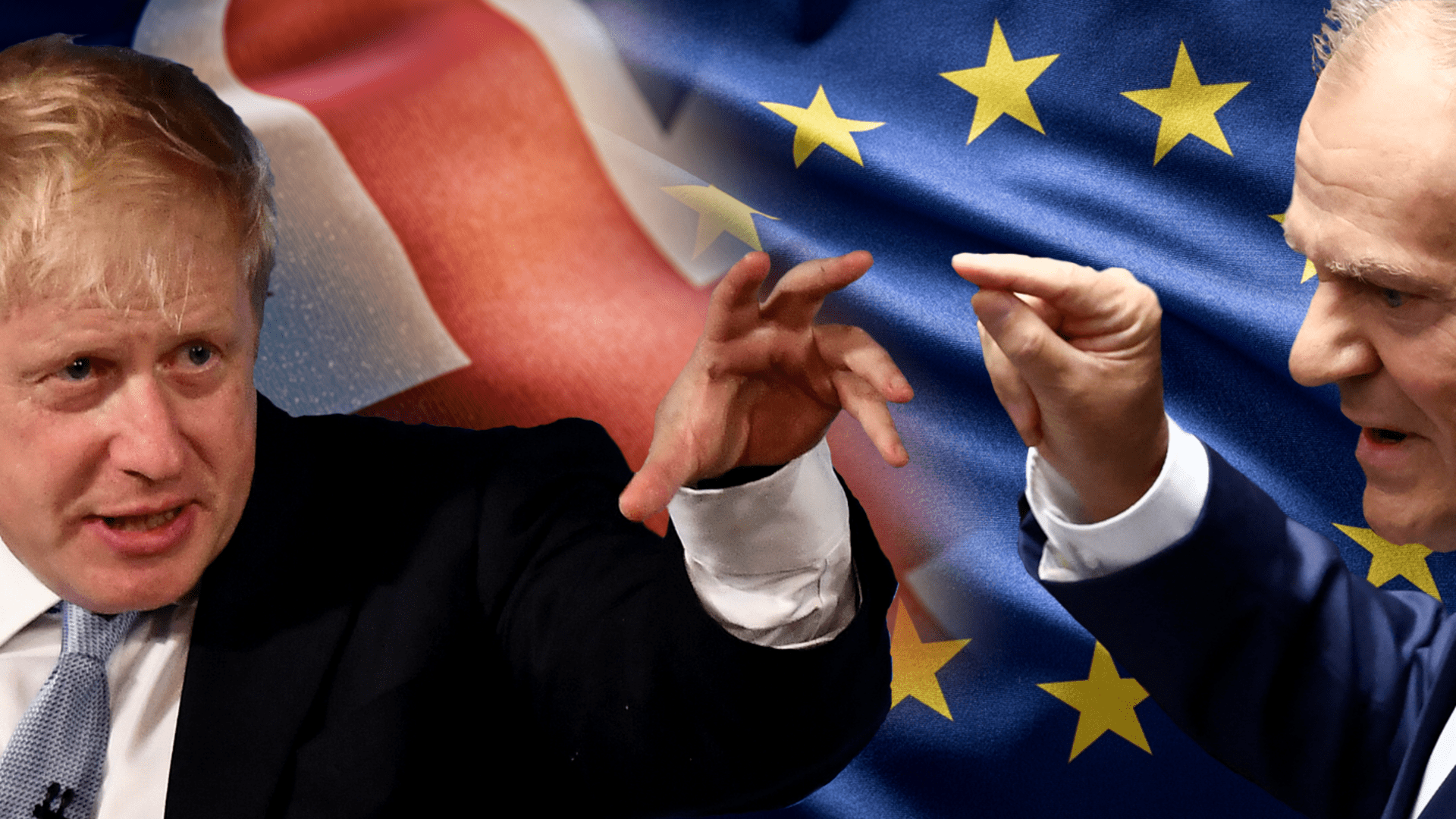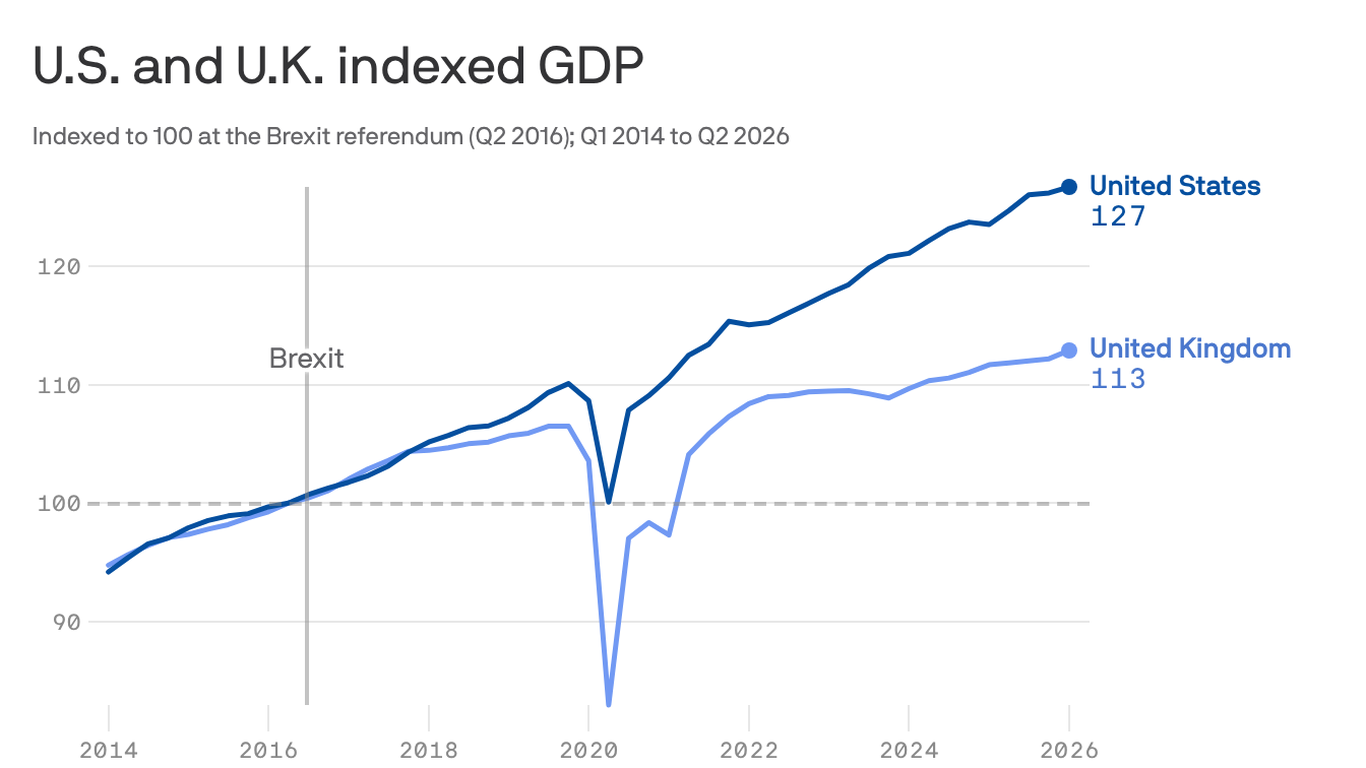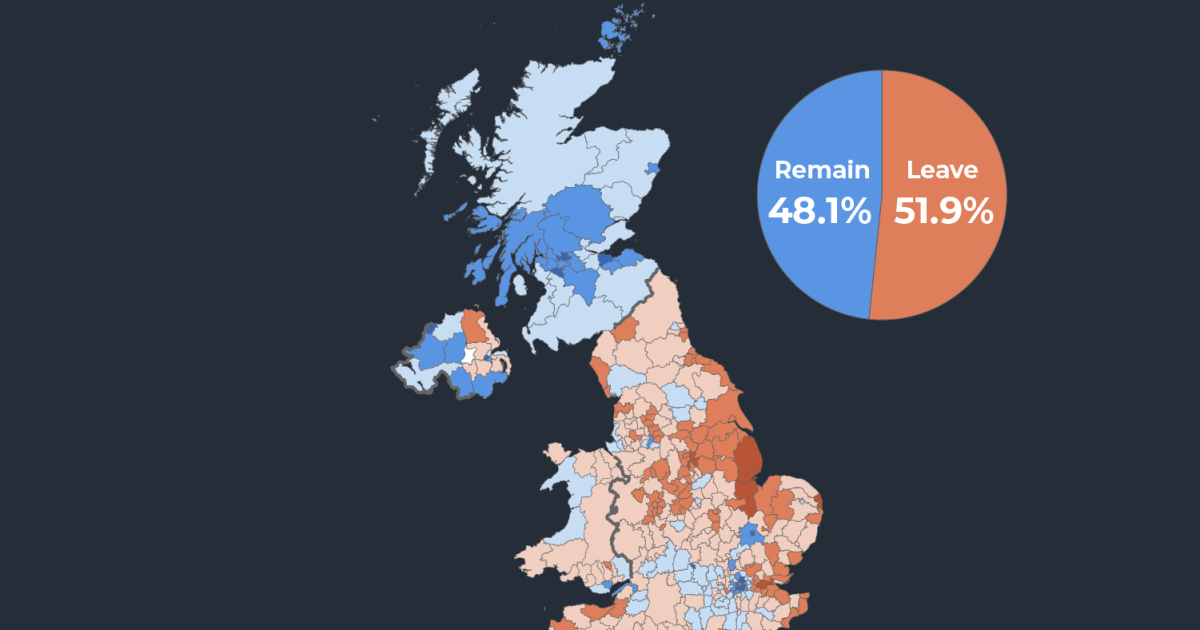
On June 23, 2016, exactly 10 years ago, a close referendum saw just over half of Britons vote to leave the European Union (EU) after years of campaigning that Britain would be better off outside the bloc.A decade on, the promises made during the referendum campaign have largely failed to materialise. Research suggests the UK economy is smaller than it would have been, migration is higher, and compared to its peers, the UK is falling behind.Recommended Stories list of 3 itemslist 1 of 3Net migration to the UK falls by nearly 50 percent amid tighter policieslist 2 of 3In Britain, Brexit is debated again as Starmer’s grip on power slipslist 3 of 3Political turmoil: UK will see its seventh prime minister in 10 yearsend of listHere are seven charts to explain Brexit and how it has played out.What was Brexit?To understand Brexit, you have to go back long before the vote and trace how the UK’s relationship with Europe evolved.In 1973, driven by sluggish economic growth, Britain joined the European Economic Community (EEC), a six-member economic trading bloc. According to data from the Centre for Economic Policy Research (CEPR), Britain’s GDP per capita was almost 30 percent higher than that of the EEC nations in 1950, yet by 1973 it was roughly 10 percent lower.In this January 22, 1972, file photo, British Prime Minister Edward Heath, centre, signs the treaty for Britain to join the European Economic Community at the Palais d’Egmont in Brussels, Belgium. Britain’s membership was a drawn-out affair after French President Charles de Gaulle twice vetoed the country’s application [AP]Scepticism about deeper integration with Europe never went away in the decades that followed – and it was never confined to the right. Labour’s 1983 general election manifesto had called for withdrawal from the EEC, reflecting a left-wing view of the bloc as a barrier to socialism, before the party reversed course after its landslide defeat that year.By the early 2010s, pressure from Eurosceptic MPs within Prime Minister David Cameron’s own Conservative Party, amplified by the rising electoral threat of Nigel Farage’s UK Independence Party (UKIP), pushed Cameron into a political gamble: a promise to hold a referendum on EU membership if he were re-elected.On June 23, 2016, the vote was held, but the result did not go as planned.The results were as follows:
Brexit 10 years on: What has changed in the UK explained in maps and charts
Brexit promised a better Britain. A decade on, the numbers tell a different story. Al Jazeera breaks it down.
1,390 words~6 min read