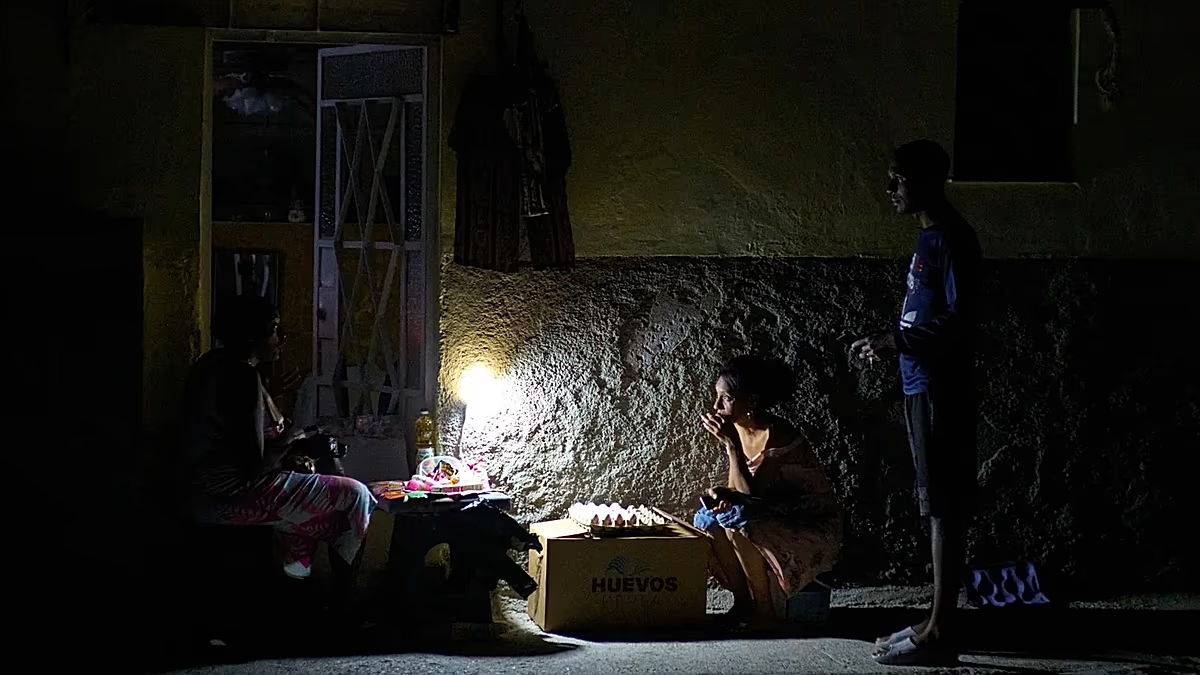
Puerto Rico is once again convulsed by scandal. The head of its economic development agency recently resigned after accusing the governor’s chief of staff of reversing penalties for alleged bid rigging on U.S. federal contracts and installing political loyalists. The governor’s in-laws saw a prior investigation into illegal construction and mangrove destruction in the protected area of La Parguera shelved after she took office.After Hurricane Maria in 2017, billions in U.S. taxpayer money entered the same broken system. Federal Emergency Management Agency officials faced charges on a $1.8 billion power contract tainted by bribery. Outsourcing “reforms” enriched local businessmen who invested federal-sponsored funds, through pop-up companies, in Airbnb real estate and other endeavors. Nine years later, blackouts, water cuts, and ruined roads persist because a political class treats government as a family enterprise.Puerto Rico’s political dynasties have rotated through power since the 1950s with little to show for it. Poverty stands at 40.5%, triple the mainland rate, while labor participation lingers near 40%. Nearly half of all households draw welfare, and over 42% rely on nutrition assistance. Since 2008, almost 1 million people have fled to the mainland even as the archipelago’s economy struggles. Federal funds now make up about 46% of the territorial budget, yet state legislative advisers without college degrees routinely out-earn elected lawmakers, exposing a system of raw patronage.
The next Cuba crisis? Puerto Rico’s corruption is a grave risk to America
Puerto Rico, a failing U.S. jurisdiction in the shadow of Venezuela, Cuba, and China, threatens to export migration surges, narcotics, and radicalization.
603 words~3 min read