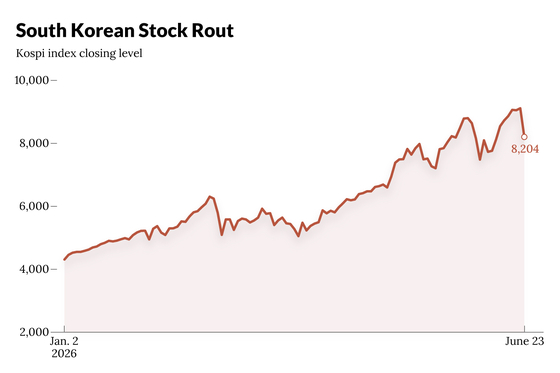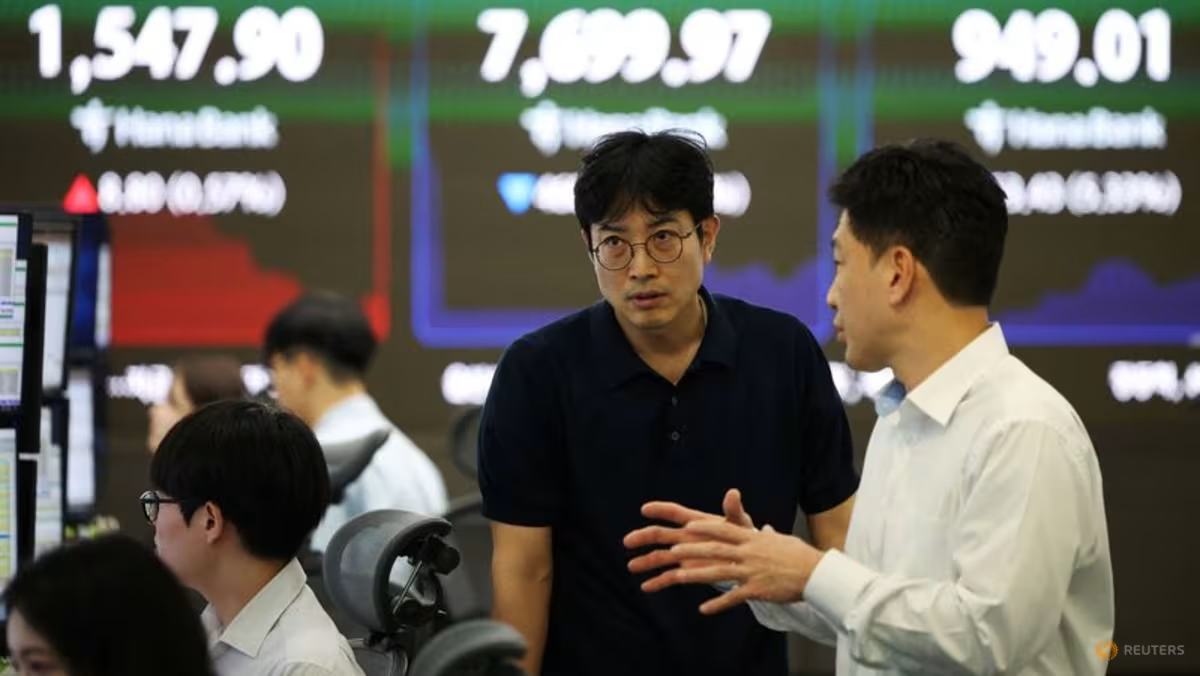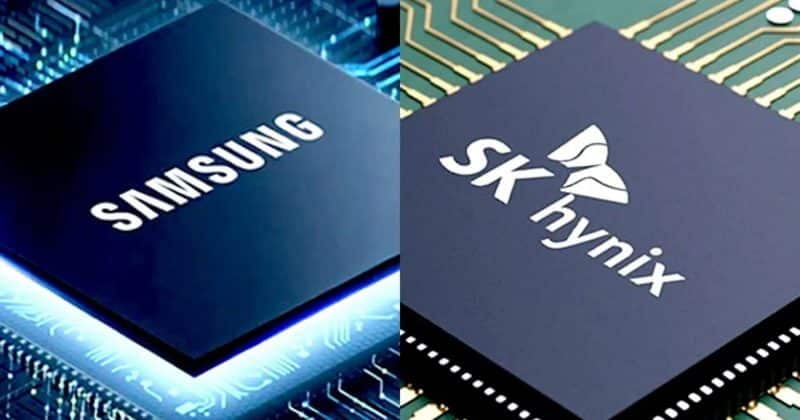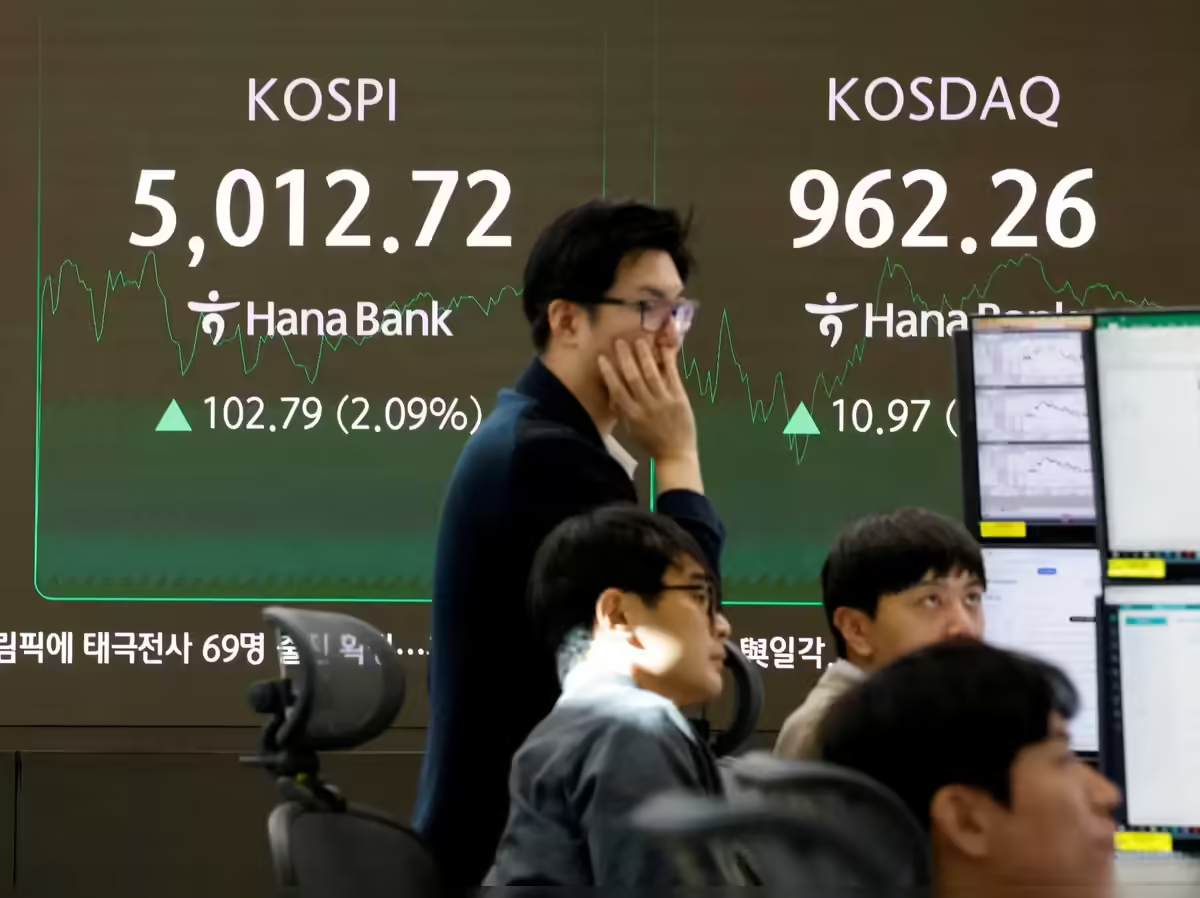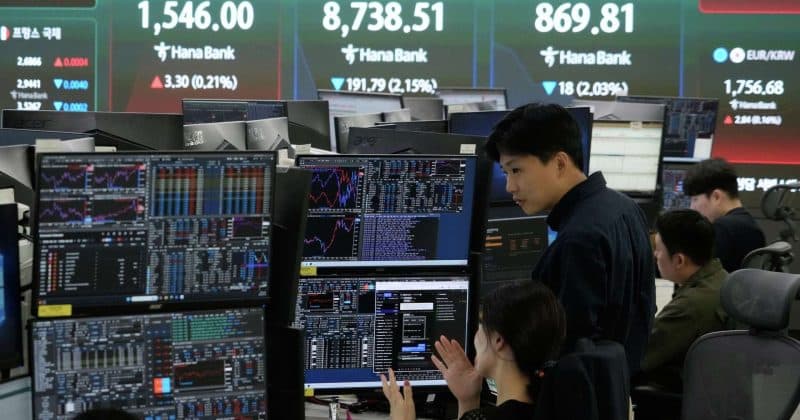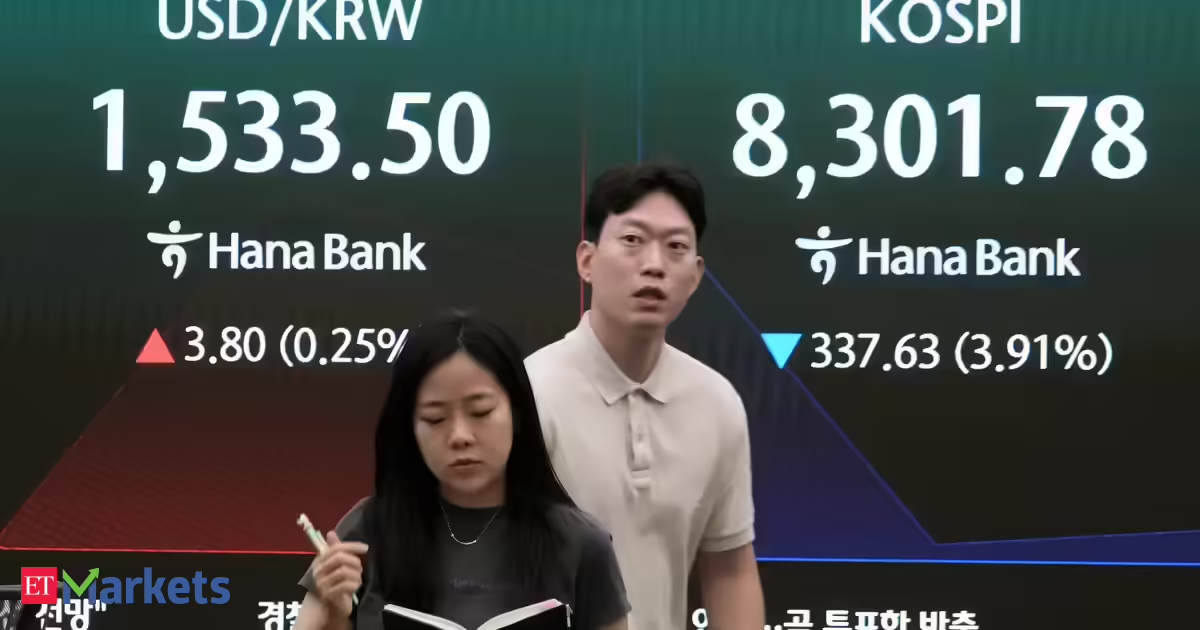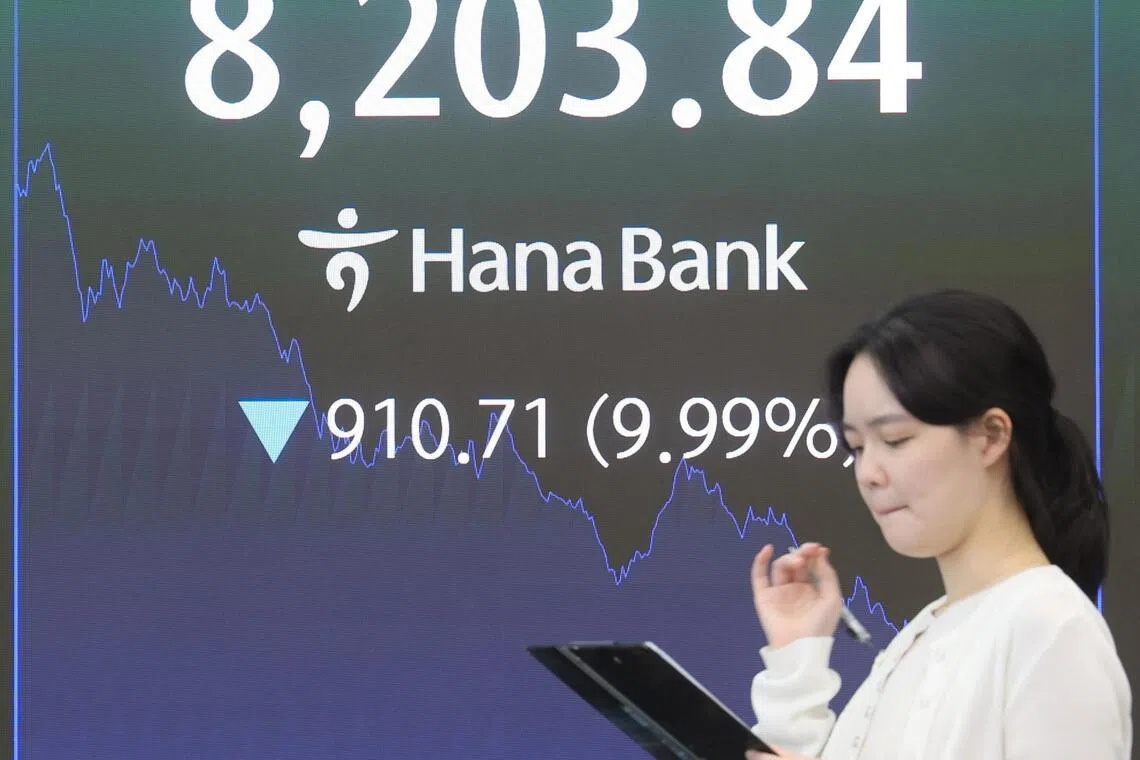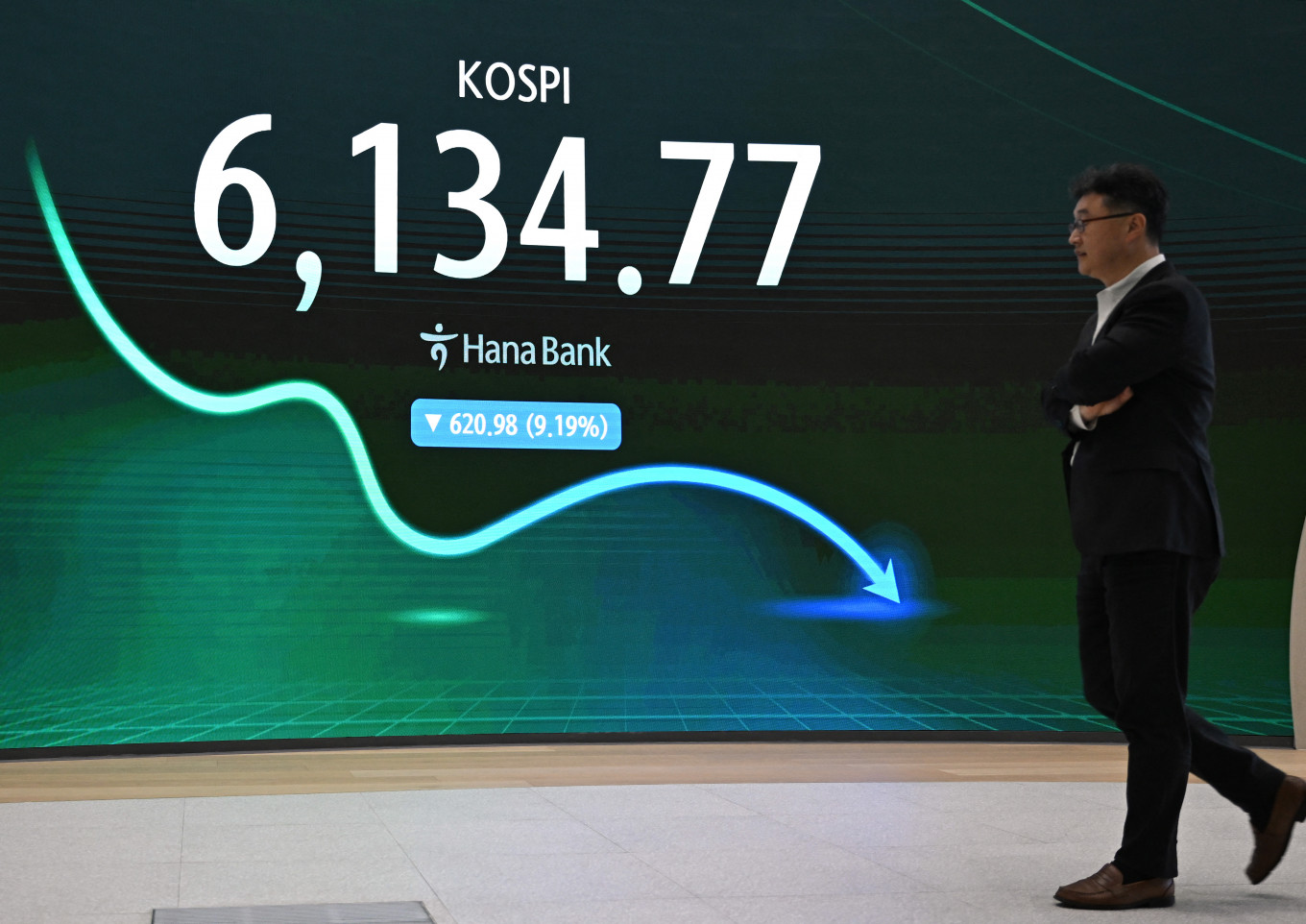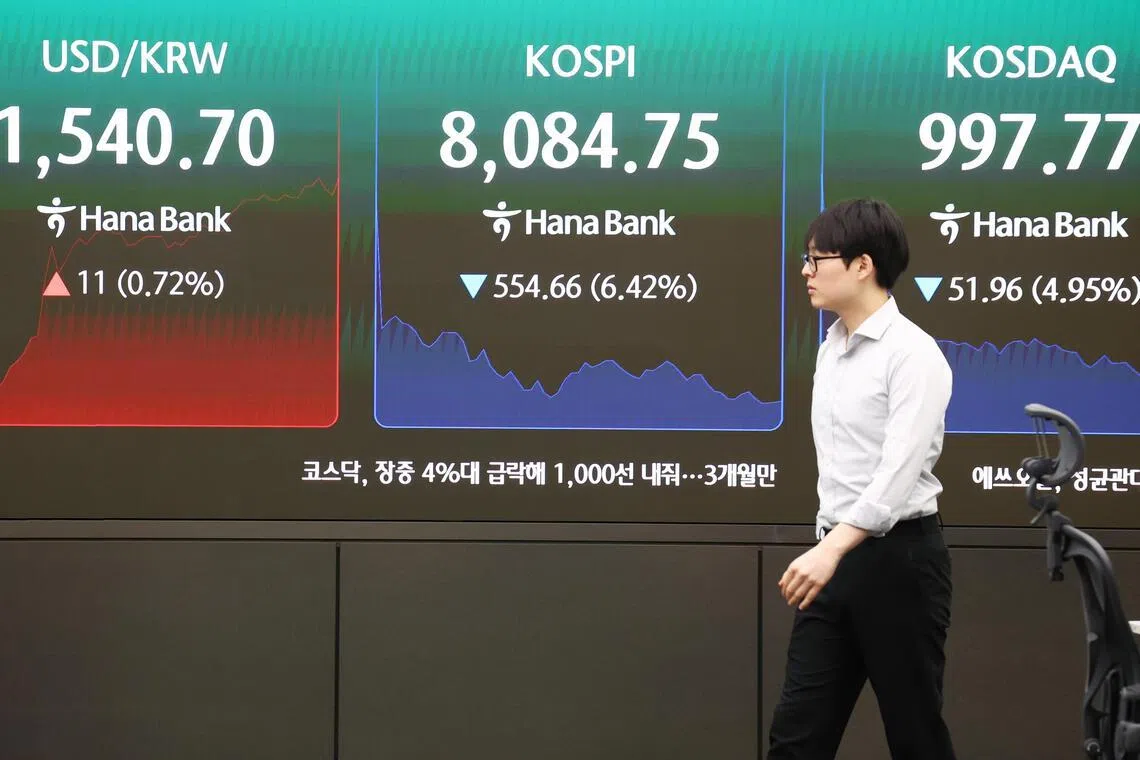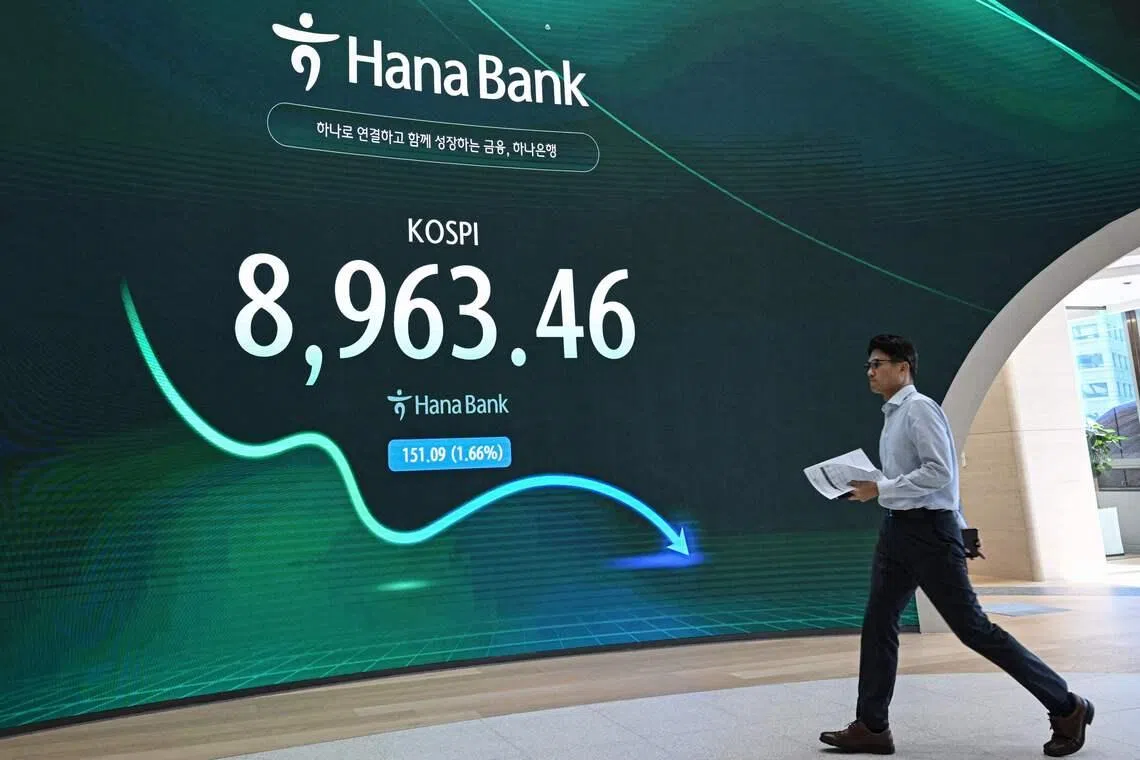
Singapore – A sell-off in megacap technology shares spilled over into Asia’s AI-related stocks on June 23, led by steep losses in South Korea, as investors pulled back from some of this year’s top-performing companies on concern they’ve rallied too far.South Korea’s Kospi index tumbled 10 per cent, triggering a 20-minute trading halt, as chip giants SK Hynix and Samsung Electronics sank. A local media report said SK Hynix is slowing expansion of AI memory chip production and shifting emphasis to the cheaper commodity DRAM.S&P 500 and European stock futures dropped more than 1 per cent, while Nasdaq 100 contracts slumped 2 per cent.In the rest of Asia, Japan’s Nikkei index fell 3.55 per cent, while Hong Kong’s Hang Seng Index was down 2.05 per cent. Singapore shares bucked the trend, with the Straits Times Index up 0.2 per cent at 3.20pm local time.Shares of SK Hynix and Samsung each plunged more than 10 per cent. The sharp drop in the chip bellwethers suggests investors are moving quickly to lock in recent gains.Sentiment towards high-flying technology stocks weakened in US trading on June 22, with SpaceX shares sliding and attention turning to memory-chip maker Micron Technology’s quarterly results on June 24. “Many investors are sitting on large gains with their AI stocks, and any jitters could lead them to cut their position to lock in the gains,” said Jian Shi Cortesi, a fund manager at Gam Investment Management. “Right now tech stocks are also particularly sensitive to interest rate outlook and potential Fed rate hikes.”Elsewhere in markets, the Japanese yen lingered near its lowest level since 1986, with traders on high alert for intervention after a call between Finance Minister Satsuki Katayama and US Treasury Secretary Scott Bessent.Attention is now shifting to memory chipmaker Micron Technology’s quarterly results on June 24, which will be a critical test of whether AI spending can sustain its own rally – the shares are up more than 300 per cent in 2026 – as well as the run-up across tech.Brent crude retreated more than 1 per cent to under US$77 a barrel after falling more than 3 per cent on June 22, when both Washington and Tehran cited progress in the first round of discussions towards a lasting peace agreement.The United States issued a 60-day licence allowing Iran to sell oil on the international market, giving it an economic lifeline, but some discrepancies have emerged – Vice-President J.D. Vance said Iran agreed to allow nuclear inspectors into the country, a claim disputed by Tehran.“There is definitely risk aversion in the air,” said Rodrigo Catril, a strategist at National Australia Bank in Sydney. “The market is seemingly more worried about big US tech underperformance overnight while not seeing the bright side from lower oil prices.”Treasuries were firmer after falling on June 22 even as oil prices turned lower. Strategists cited Federal Reserve chairman Kevin Warsh’s hawkish messaging last week as one of the reasons for the selling pressure. Bond traders are now looking to this week’s personal spending data in the US for an early read on whether the market’s newly hawkish stance is warranted.Gold declined more than 1.5 per cent as inflationary concerns overshadowed early optimism around negotiations to resolve the Iran war. Silver lost more than 3 per cent. Bitcoin too was down over 2 per cent. BLOOMBERG
Tech rout spreads to Asia, with South Korean shares plunging 10%
South Korea’s Kospi index tumbled 10 per cent, triggering a 20-minute trading halt. Read more at straitstimes.com. Read more at straitstimes.com.
555 words~3 min read