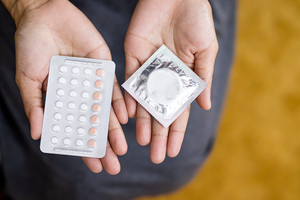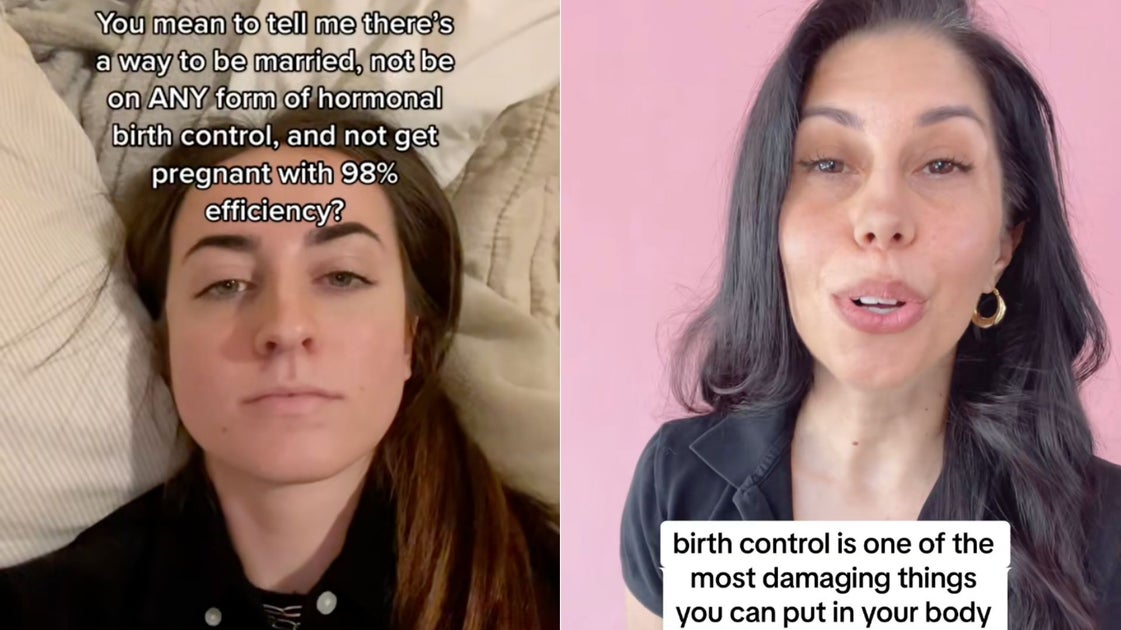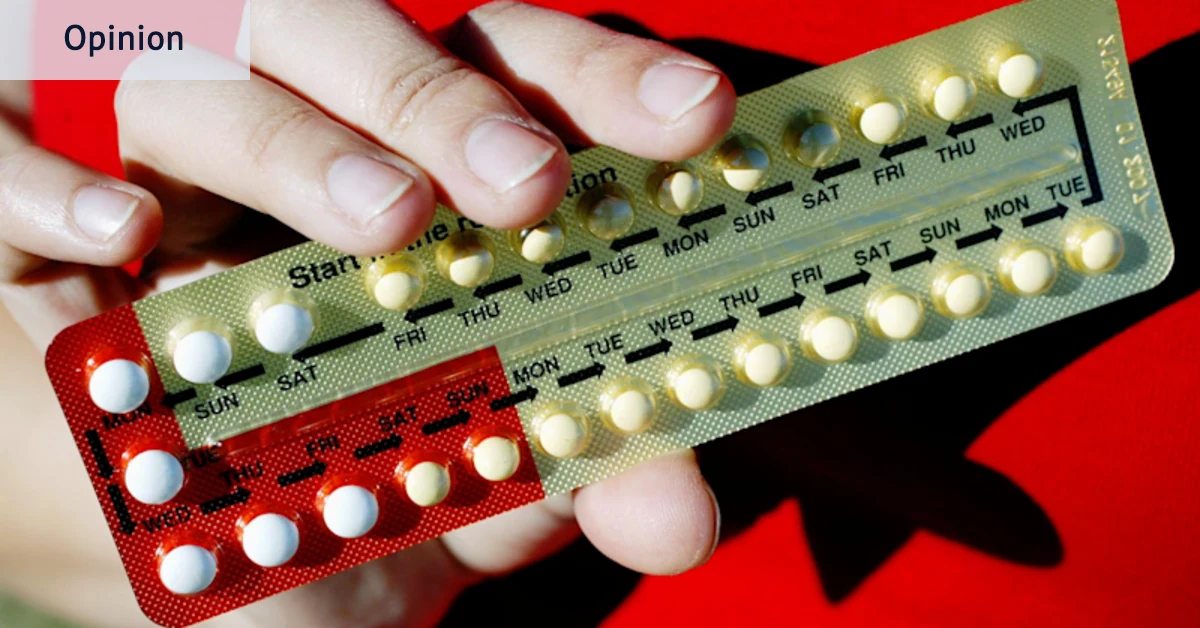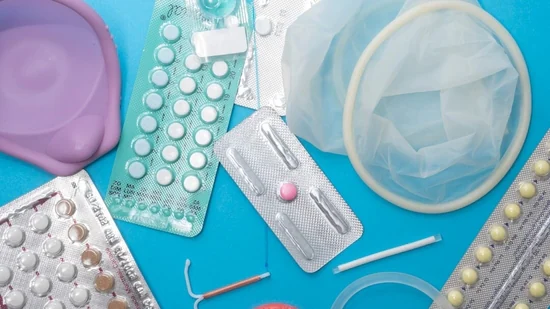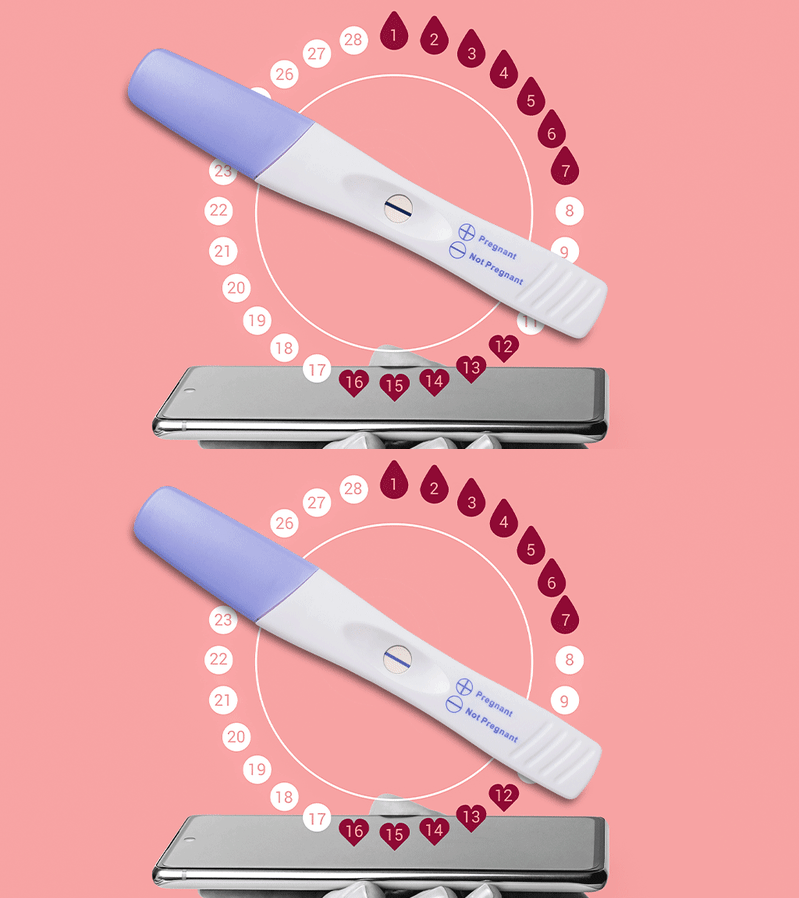
June 23, 2026 — 7:00pmAround two-thirds of Australian women of childbearing age use some form of contraception.A 2021 study and a 2020 report both found that the oral contraceptive pill (a hormonal form of birth control) is most common, followed closely by condoms. Long-acting reversible contraceptives, like the non-hormonal copper IUD, have been comparatively slow on uptake. But despite the plethora of options, there’s a growing sentiment choosing to reject these forms of birth control in favour of something more controversial and surprisingly less convenient.Young women are starting to explore fertility awareness methods of contraception with app and wearable use. Marija ErcegovacContraception in AustraliaIn 2025, the Australian government tried to make as many methods of contraception as accessible as possible with the delivery of their women’s health package, adding some of the most commonly used pills and NuvaRing onto the PBS, as well as funding free training for health practitioners in the insertion and removal of IUDs. By and large, side effects from these contraceptives are rare, particularly for non-hormonal options like the copper IUD. But some women still struggle, especially when on the pill, reporting symptoms like sore breasts, weight gain, headaches and mood swings. In one large Danish study with data from more than a million women, use of hormonal contraception was associated with depression.For decades, these negative side effects were simply the cost these women paid for sexual freedom and autonomy.A new, tech-forward approachIn 2025, La Trobe University released findings from a study analysing 100 TikTok videos on contraceptive health that had amassed nearly five billion views and 14.6 million likes. Of the content creators reviewed in the study, 53 of per cent had rejected hormonal birth control, while roughly 34 per cent expressed distrust in health professionals.“Women are saying they want something different, they want something that isn’t going to cause irregular bleeding, cause hormonal side effects,” says Deborah Bateson AM, professor of practice at University of Sydney Faculty of Medicine and Health.On social media, many women feel they’ve uncovered an alternative to the pharmaceuticals making them unwell: fertility awareness methods.Through a combination of cycle tracking, wearables technology and algorithm-driven apps, women are employing a contemporary, tech-forward take on decades-old natural birth control techniques, including the calendar method (relies on tracking your cycle via a diary), Billings methods (you observe your cervical mucus as it becomes wetter when you’re fertile) and sympo-thermal method (you track your cervical mucus and your basal body temperature, as it rises when ovulation occurs).“These methods have been around for a very, very long time, but of course, we’ve now added the tech component into them,” says Bateson. “This increased interest relates to women wanting to have control over their bodies. Many young women are very keen on understanding their bodies and of course these approaches allow you to collect a lot of data. But you’ve got to know what to do with that data.”In one study from Monash University, 15 per cent of sexually active Australians reported relying on natural birth control options, such as fertility awareness methods.Doctors say they’ve seen an increase in woman visiting them asking to come off their hormonal birth control. Getty ImagesWhile the sentiment has been percolating for years, the steady stream of women visiting clinicians asking to stop hormonal birth control is gaining momentum.“In recent years, there appears to be more interest in hormone-free methods, including fertility awareness methods,” says Dr Clare Boerma, Family Planning Australia medical director.Gynaecologist and fertility specialist Kath Whitton has also experienced this first-hand.“I’m seeing more patients coming off hormonal contraception and turning to apps like Natural Cycles, often because they’re tired of side effects or want to better understand their own cycles,” she says.How it worksApps like the popular Natural Cycles offer what they call “natural birth control”. You log your period along with other symptoms such as spotting, cramps and headaches, as well as information like when you have sex, and notes about your cervical mucus.These apps interact with other wearable technology, like an Oura ring or Apple Watch, that monitor your basal body temperature.They take all this and leverage algorithms to then predict when you’ll be most fertile, essentially informing you when not to have sex (or to use a condom if you do) to avoid getting pregnant. They claim to be 98 per cent effective when used as intended, and 93 per cent with typical use. An annual subscription costs $149.99.Natural Cycles claims to have “the same effectiveness category as the pill with zero side effects”.An imperfect solution to a genuine problemExperts say, however, there’s considerable fine print to these assertions, starting with the fact that to reap the high efficacy, you need to be adhering to them exactingly.“These apps are TGA listed and there is some emerging data behind them, but there’s a meaningful gap between perfect use and typical use,” says Whitton. “In practice, that gap is where we might see unintended pregnancies happen.”These apps also don’t make it clear how many women aren’t actually a good fit to be using them in the first place.“People don’t realise how many common situations can make them a poor fit, including shift work, perimenopause, the postpartum period, breastfeeding, recent cessation of hormonal contraception and anyone with PMOS or irregular menstrual cycles. These are all situations where predicting ovulation becomes genuinely harder.”Whitton adds that travel, illness, alcohol, and disrupted sleep can affect the temperature readings these apps rely on.“People enjoy getting information and tracking themselves – you know, you can get Spotify Wrapped for your period,” says Dr Emmalee Ford, who has been researching the prevalence and use of fertility awareness apps for the last decade. “People like it and enjoy it, but they don’t know what they don’t know and if you have a variable or irregular cycle, the app won’t work for you. They don’t really make a point of telling you this.”Wearables and fertility managementTech companies have noticed women using phone apps and wearables to support their reproductive health and are developing new features to assist. In June, Oura released their latest update to its popular line of wearable rings, the Oura Ring 5, which includes a new “Hormonal Birth Control feature”.It was informed by users wanting to reflect more on their “unique experiences using hormonal birth control”, says Inessa Lurye, vice president of product, women’s health at Oura.Lurye explains that the update gives more specific information about how a user’s contraceptive choices interact with their body. Well over half of all Oura members are women, who have strong engagement with the women’s health features.Tech companies have been making considerable investments in women’s health as more women rely on wearables to support their reproductive health. Getty ImagesThe investment confirms how wearables like Oura, Apple and Whoop are becoming synonymous with fertility awareness and management of reproductive health.Apple first launched a cycle tracking feature in 2019 and have continued to develop their offering, working with Harvard University to launch a women’s health study in 2023 – although it has been clear that the cycle tracking feature is not a form of contraception. Whoop also has its own Menstrual Cycle Insights feature that works similarly to Oura’s in supporting women to track hormonal phases and their associated symptoms.Women looking to take their reproductive health into their own hands shouldn’t be surprising. “The [Victorian] parliamentary pain inquiry really showed medical misogyny, women’s pain being ignored, and I understand why people might be looking for answers elsewhere than the medical establishment,” says Ford.“These non-hormonal contraceptives – these apps and wearables – really profit from that cynicism and that questioning, and they present this alternative that is kind of a flawed solution to a really valid problem.”As Ford and Whitton both note, the fertility awareness methods enabled by apps like Natural Cycles, Flo and Kindara are far from perfect.In some instances, the data being fed into the app isn’t even used in the algorithm. Two different studies – one in 2020 and one in 2024 – found that those who tracked their cycle via an app were no more likely to have basic knowledge about their cycle than those who don’t.“There was a study that came out that showed that some of them will let you track all of these verified signs of ovulation, but they won’t actually use them in the algorithm to give you the prediction,” explains Ford.“So you could be logging the cervical mucus, but that doesn’t make the algorithm better, it just lets you add that as a data point and completely ignores it.”It doesn’t help that developments around contraception – for women and men – have been slow.Bateson says what works ‘best’ is highly subjective. Despite knowing how effective a LARC method, like the copper IUD, is compared to other methods, some women may simply not want a device inside their body.The answer isn’t to avoid these tools, advises Whitton, but rather use them as a supportive mechanism to better understand menstrual cycles and bodies.Bateson echoes these sentiments. “It’s important for people to have accurate information to be able to make the right informed choice for themselves.”Make the most of your health, relationships, fitness and nutrition with our Live Well newsletter. Get it in your inbox every Monday.More:Sexual healthFor subscribersSex & relationshipsFrom our partners
Women are giving up contraception – but not to get pregnant
A growing number of women are opting for a tech-forward approach to old-school – and controversial – methods of contraception.
1,539 words~7 min read