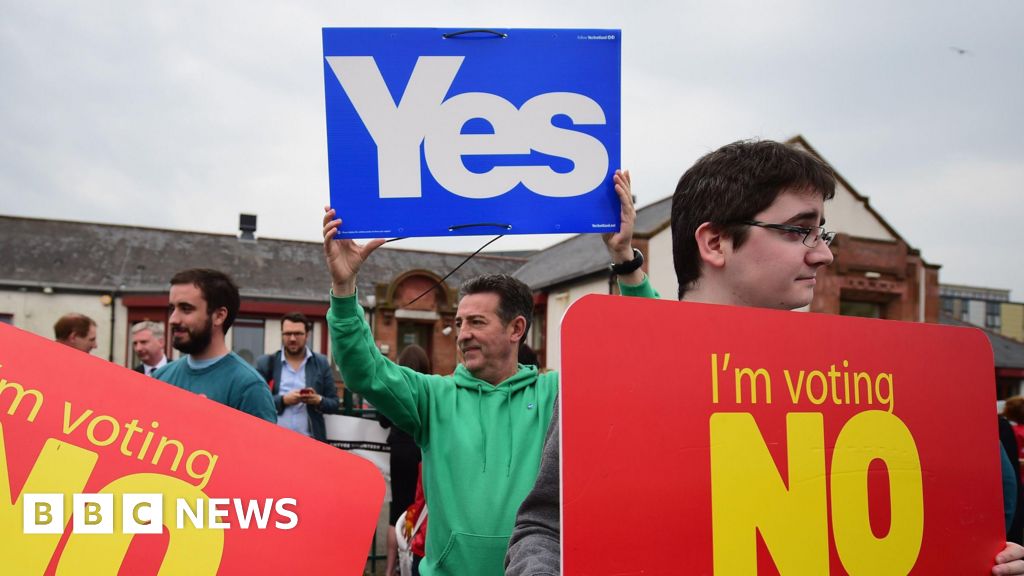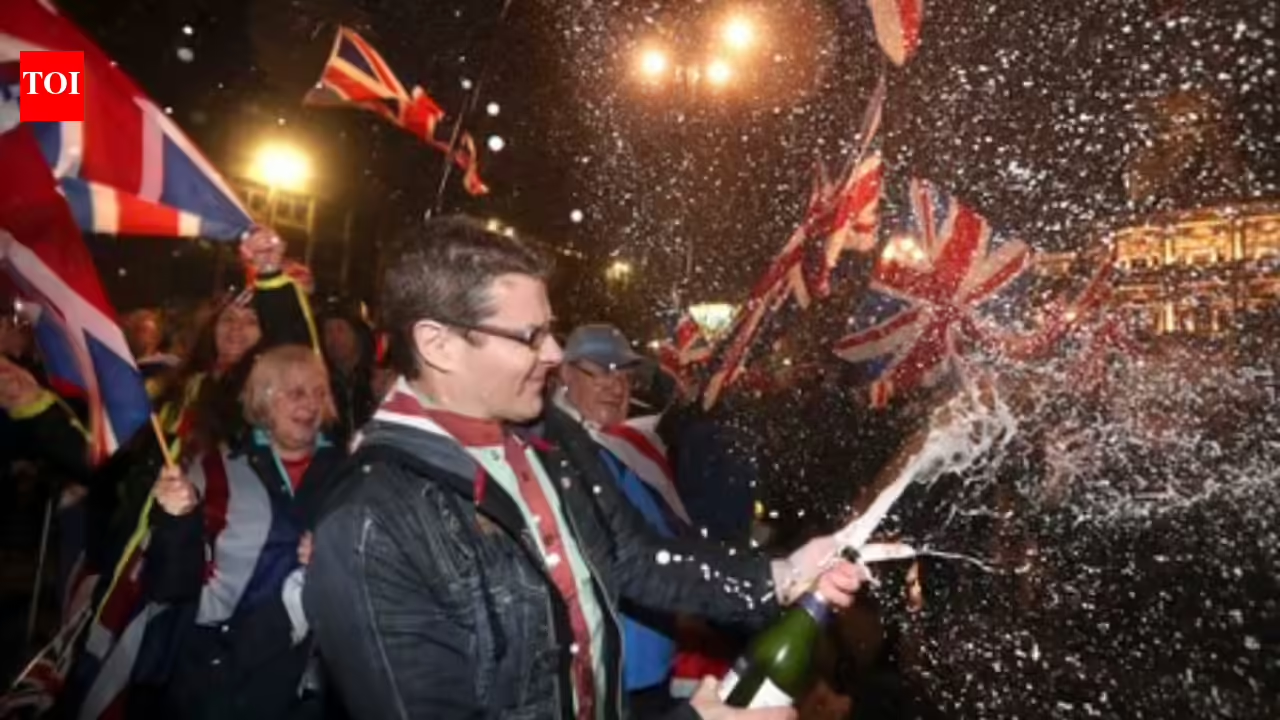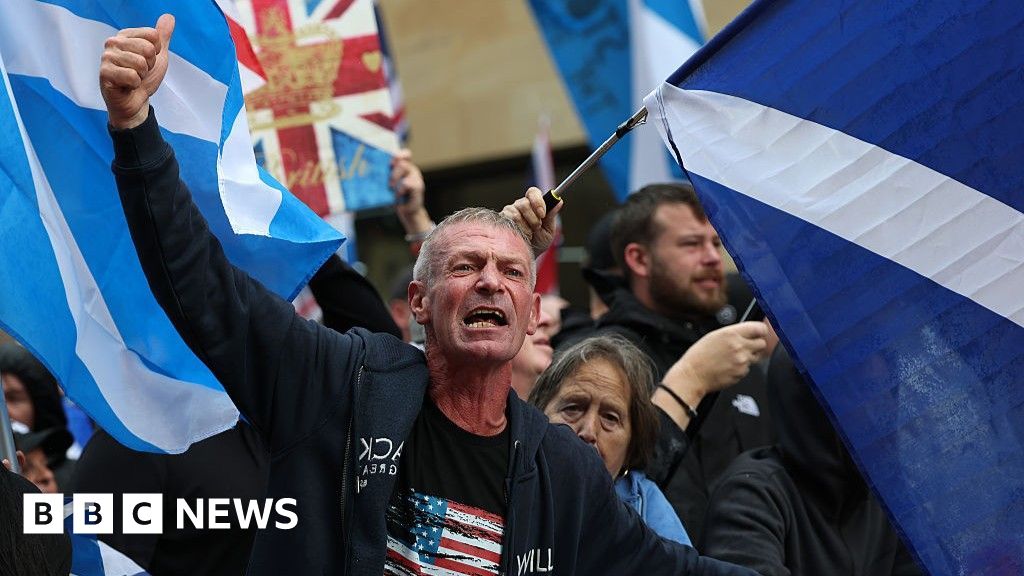
“It's so much more than a traditional political debate,” says 25-year-old Annie. “It's your identity, your values, your culture. It's your way of being.” Annie is a student at the University of Glasgow. She grew up in North Ayrshire, in the west of Scotland, in a family that was firmly against Scottish independence. “They identified as British, not Scottish,” she explains. Her parents are what would be traditionally described as Unionists: anti-independence, Protestant and loyal to the British monarchy. In 2014, at the time of the only ever Scottish independence referendum, they both voted No. Like her parents, Annie too is against Scottish independence, but her reasons, unlike theirs, are much more practical than nationalist. “We're in such a geopolitically unstable time,” she says, “how could we legitimise leaving the stability that the Union provides us for no guarantees that we would be involved within the EU?” If being accepted back into the EU was a guaranteed outcome for an independent Scotland, however, Annie would be happy to switch camps. “No questions asked,” she says. “I would 100 percent be keen to leave the Union if it meant rejoining the European Union.” Many people in Scotland share Annie’s feelings. In fact, the UK leaving the European Union, something Scottish people voted decisively against in 2016, has given the independence movement renewed momentum. “We got taken out of the EU against our will” While, for decades, No to independence polled consistently 30 to 40 percentage points higher than Yes, pro-independence sentiments increased substantially at the time of the 2016 Brexit referendum, and eventually surpassed the 50 percent benchmark in 2020, when Brexit was definitively implemented.
Caught between the UK and EU: What’s next for young Scots?
So much of Scotland’s history has been forged by its relationship to England and by one central question: union or independence? Brexit has given the independence movement new momentum, and with Scottish…
TL;DRAI
Scottish independence support surged to 51% (59% among 18-24s) after Scotland was forced out of the EU in 2016, when every county voted Remain. For tech leaders with European teams, this signals geopolitical volatility affecting talent retention and UK-EU investment strategies.
810 words~4 min read