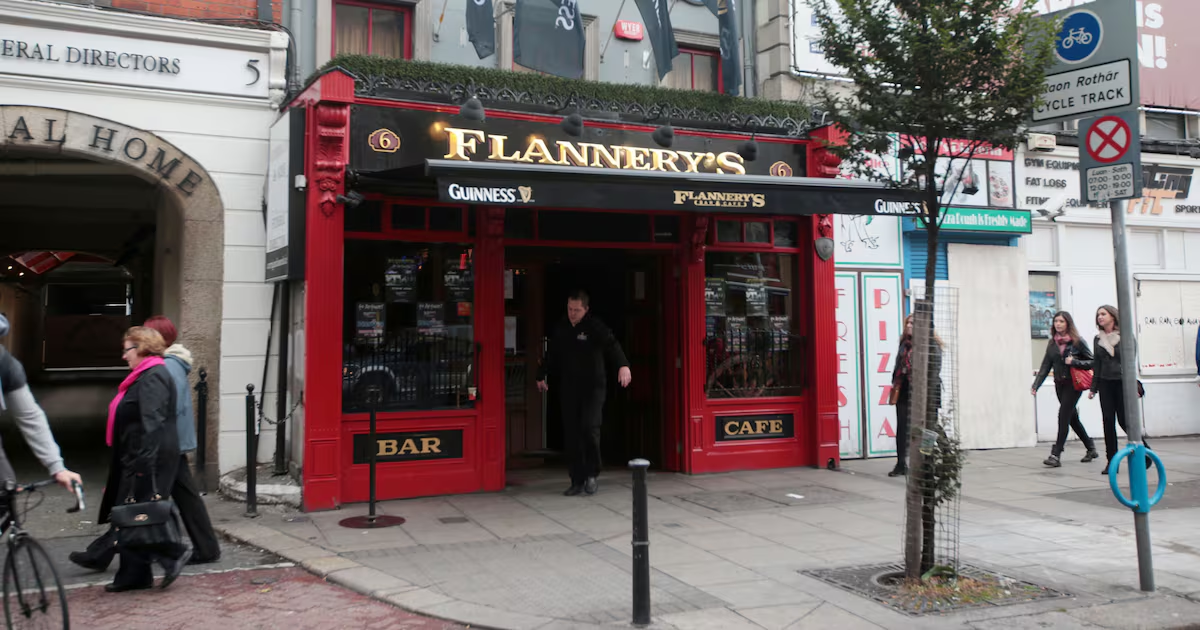
Two bars on Camden Street in Dublin 2 have had their appeals to operate on-street tables and seating areas until closing time rejected by An Coimisiún Pleanála.Flannery’s and Camden Bites & Brews, which have the same owner, had sought permission,to each leave two tables and six chairs on the footpath along the front of the bars until 2.30am. Under Dublin City Council (DCC) rules, street licences require licensed establishments to remove their furniture from the street by 10pm. In June 2025, the bars renewed their annual street licences with DCC, which allowed them to operate the street furniture from 10am to 10pm. However, the seating would usually be left out until closing time. Following complaints from local residents about a lack of compliance with the rules, the bars applied to An Coimisiún Pleanála to extend the operating hours of the furniture until 2.30am. The appeal was lodged on the February 20th, with the commission issuing its decision earlier this month. An Coimisiún Pleanála held that the two establishments did not have permission to leave street furniture outside past 10pm, disagreeing with its inspector’s report that suggested it could be left outside until midnight. The commission said it was “not satisfied that extending the hours to a later time, would not negatively impact on the amenities of the locality”. Publican Paul Clinton, the owner of both bars, said there has been an informal practice of leaving the tables and chairs out until closing time for years. “This has operated this way for years and nobody had any great issues with tables and chairs just being brought in at closing time once you had a licence in the first place,” he told The Irish Times.In his letter of appeal, he noted that “the outdoor seating contributes positively to customer comfort and experience and reduces pressure on indoor space during busy evening and night-time periods”.“Given the occurrence of the peak period late at night, the dismantling of the outdoor furniture during operating hours would be disruptive to customers and potentially unsafe for staff and the public,” Clinton added.Objections were submitted by the West of Camden Residents Association (Wocra), a local group for a small catchment area spanning from Camden Row to Harrington Street. Wocra’s submission said,street furniture breaches could be separated from wider problems, including planning breaches, noise nuisance, and queuing. Objecting to the construction of a new hostel on lower Camden Street last month, Wocra expressed concerns that the street was becoming a “swill pit”. “The word we use sometimes is ‘calming though compliance’,” said Dick Duggan, a representative of Wocra.This refers to an ongoing campaign against what Wocra described as the “cumulative impact” nightlife was having on the street. In recent years, Wocra had taken eight establishments along Camden Street to the District Court over issues relating to compliance with licensing rules. Asked about whether there should be a certain level of acceptance that there might be noise or congestion in areas in a busy city centre area such as Camden Street, Wocra said “we have a legitimate expectation that we can live in the city centre and we can be supported living in the city”. Commenting on the rejection of permission, Clinton said “we are saddened that the appeals board did not rule in our favour as it introduces conflict with a minority of residents”.
Camden Street bars denied permission to operate on-street tables until closing time
Local residents’ group objected to extended hours for street furniture on grounds of ‘noise nuisance and queuing’
TL;DRAI
Two Dublin bars denied permission to extend street furniture operating hours past 10pm to 2:30am, after local residents objected to non-compliance with city licensing rules. The decision underscores how regulatory enforcement and cumulative-impact policies constrain hospitality venue operations in mixed-use city neighborhoods.
555 words~3 min read