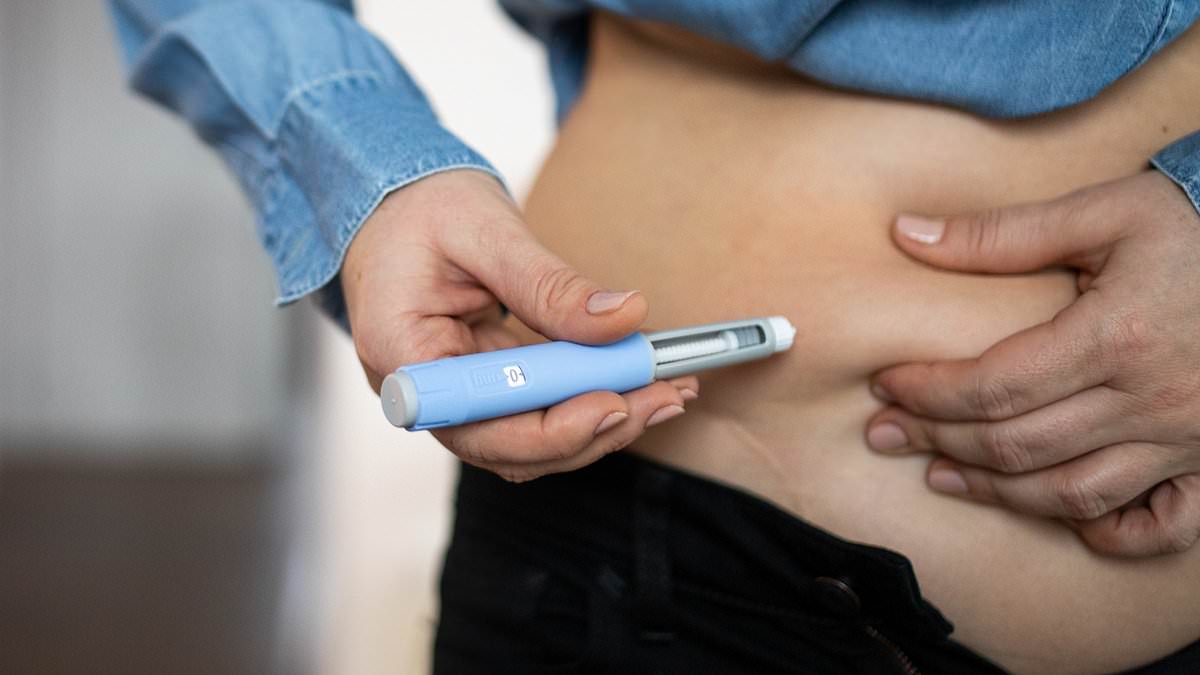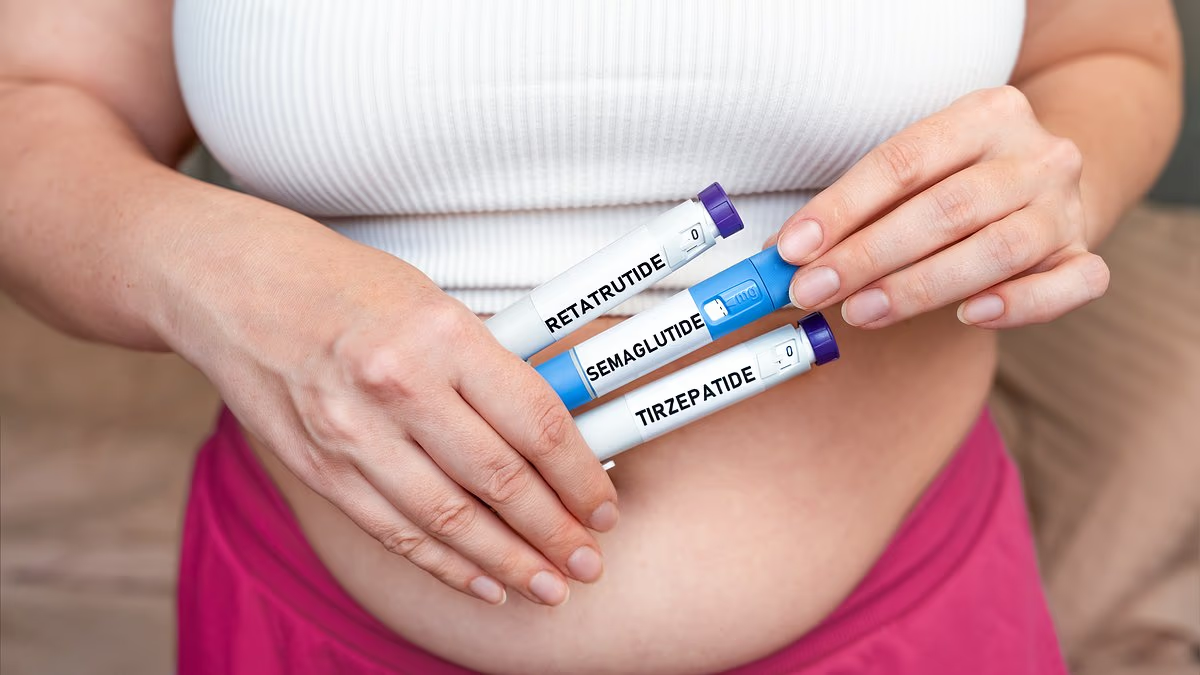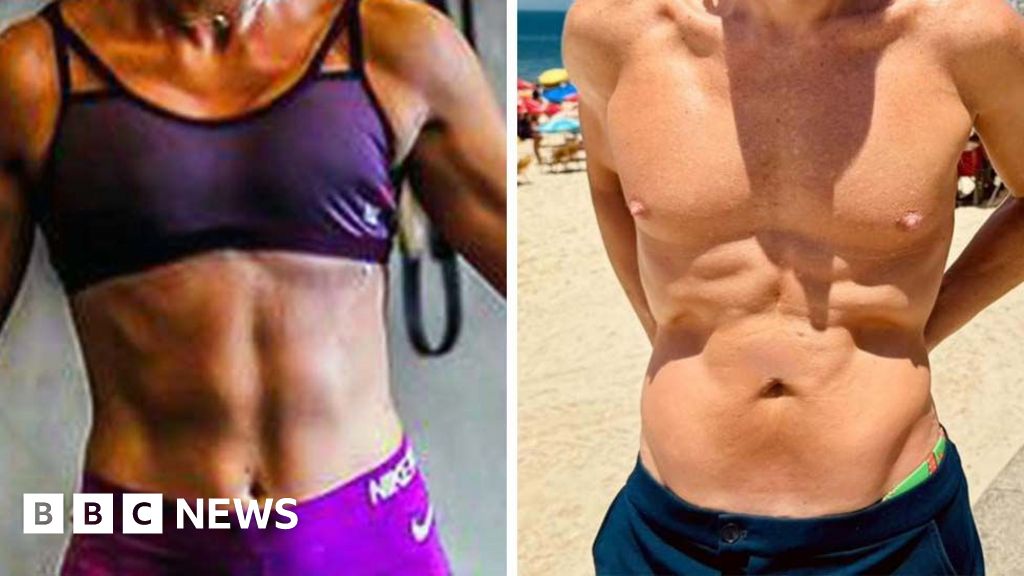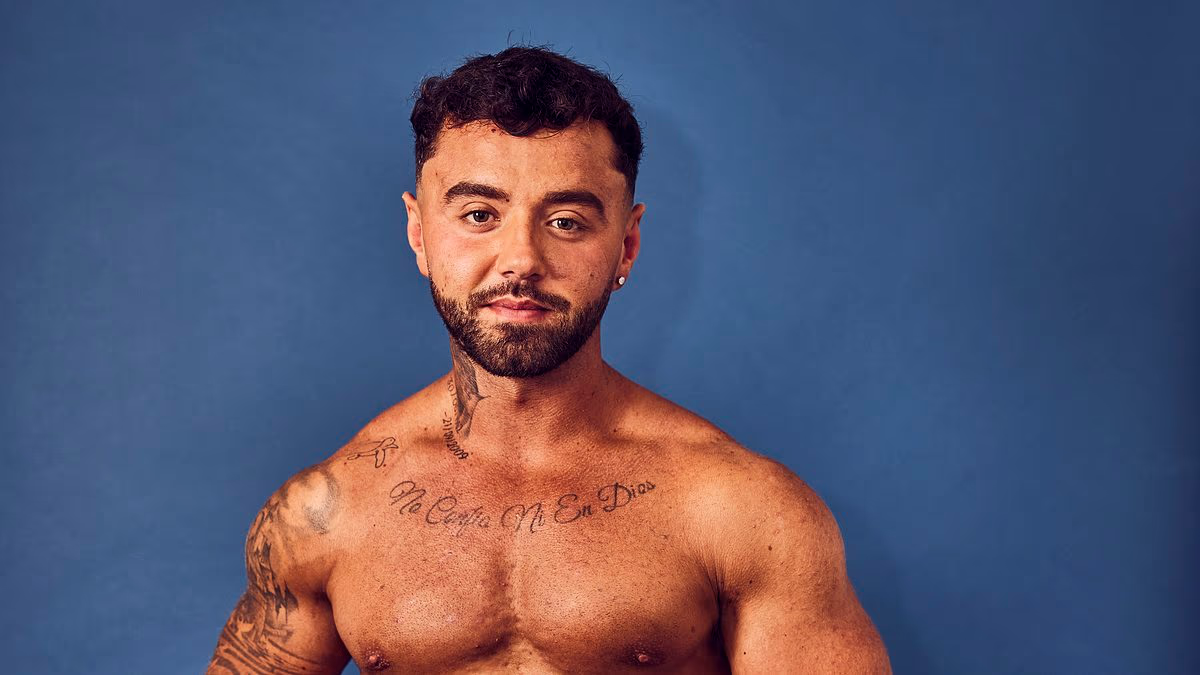
James was 17 years old when he decided to radically transform his physical appearance. He lifted weights in the gym five times a week, and cut his intake from 3,000 to 1,900 calories a day. His aim was to build a physique that was lean and muscly; to remake himself into a teenage Adonis.But he hit a plateau at 12st. 'I was just struggling to lose weight. I wanted to find an easier way to do it,' he tells me now.He only had to scroll down his social media feed to find the answer. There, among posts urging him to get fit and discover his 'masculine power', were before-and-after transformations from young men who had used a weight-loss drug called retatrutide.'Reta' or 'ret' is from the same family as Ozempic and Mounjaro, but stronger. Known as the 'Godzilla' of skinny jabs, it targets three hunger hormones - GLP, GIP and glucagon - whereas other drugs on the market only target one or two.Retatrutide, however, is not yet approved for use by the UK's Medicines and Healthcare products Regulatory Agency (MHRA), which means doctors can't prescribe it and pharmacies can't sell it.But that's not stopping teenagers, mostly boys, from buying it on the grey market, allowing them to shred fat without muscle-wasting - or so they claim.Just before his 18th birthday, James (not his real name) paid £70 for a two-month batch from a UK supplier. The messaging platform Telegram is a popular source, though James now says he buys direct from a 'trusted vendor' in China. It came as a vial of powder, which he mixed with water and injected into his belly.He bought the syringe on the internet and decided on the dose by following the advice of other users online. 'I started low, at 1mg a week, and peaked at 2.5mg a week. Some people take up to 10-15mg a week, but that can be damaging to the pancreas.' James was 17 when he came across posts urging him to get fit and discover his 'masculine power' with a weight-loss drug called retatrutideIn fact, no one yet knows the 'safe' dosage of retatrutide in teenagers who do not need to lose weight.'Yes, I was nervous,' he tells me. But the results were dramatic. 'Literally, you're not hungry at all.'In just two months, James lost a stone. 'I got down to 11st. Pretty lean with nice muscle.'Now in his first year at university, he's since taken another two months' worth of reta - and added another unapproved drug which he bought online and injects: human growth hormone (HGH).'It helps with recovery, helps you sleep, keeps water in your muscles,' he says.While HGH does help the body convert food to energy, it can also raise blood pressure and blood sugar to dangerous levels, among other side-effects, when taken for an unapproved purpose like muscle growth in a normal teen.As the 'looksmaxxing' trend goes increasingly mainstream - where boys compete to make themselves more attractive to girls by creating a hyper-masculinised version of themselves - social media platforms like TikTok, Instagram and Reddit are awash with posters urging teens to try retatrutide and other unapproved peptides to bulk up and increase their 'sexual market value' (SMV).'It's a massive trend,' says Tom Holbrook, 26, an online personal trainer based in Leicester. 'Everyone is trying to have bigger muscles, to be better-looking than everyone else.' 'Reta' is from the same family as Ozempic and Mounjaro, but stronger. Known as the 'Godzilla' of skinny jabs, it targets three hunger hormones whereas other drugs on the market only target one or two The pressure on teenage boys and young men to be 'ripped' is not new, of course.But young men today are not just seeing unusually muscled bodies on film stars bulking up for a role. They are also exposed to the 'manosphere', where attitudes are rooted in a fiercely macho culture and a strong opposition to feminism.'Everyone wants to have a body that's shredded and lean,' says Sam (not his real name), 16, who has just taken his GCSEs and works out in the gym four times a week. He estimates that around 140 out of 200 boys in his year have a similar routine. Abs and visible veins, a sign your body weight is shockingly low, are a 'common desire', he says.He gets 'loads of ads' for reta and other peptides on his TikTok and Instagram, and though he's never taken any, some of his friends have.Another boy I speak to, aged 19, goes to the gym six times a week and lost 4st in three months after hearing about reta on social media. Clearly he did not need the medication as he was not overweight.After one particularly high dose, 4mg once weekly (double the amount recommended online), he says: 'I couldn't eat a thing for two days. I was not hungry at all.'His calorie intake fell from 3,000 to 1,200 a day - not enough to sustain an elderly sedentary woman let alone a physically active, still-growing teenager.Now, he's off reta, his appetite has returned, 'but I can manage it better'. His calorie intake is now around 1,900 a day.As looksmaxxing becomes more popular, the strategies have expanded. If your teenage son is suddenly consuming vast quantities of bananas and coconut water, he is doing it because he has heard on an online forum or video that it will 'help the kidneys flush out the excess salt' that causes 'face-bloat', for example.Followers may also inject a 'stack', or combination of unregulated peptides, short chains of amino acids with particular functions in the body. Some are well known: insulin, which regulates blood sugar, is a peptide, and so are GLP-1 drugs (which stands for 'glucogen-like peptide 1').But now 'peptides' has become a catch-all term for a range of unlicensed drugs that claim to offer everything from bigger muscles and a sharper brain to deeper tans and enhanced libidos.The boom in peptides is linked to the success of GLP-1s, says Peter Magic, founder of Janoshik Analytical, a laboratory which analyses the contents of unregulated peptides and performance-enhancing drugs, based near Prague.'People bought their GLP-1 drug off the internet. It was cheap and worked perfectly,' he says. 'Reassured, they think: 'If that one worked, I might as well try another one.' 'The assumption is wrong, of course. Retatrutide, however, is not yet approved for use by the UK's Medicines and Healthcare products Regulatory Agency (MHRA), which means doctors can't prescribe it and pharmacies can't sell itThe 'grey market' is dangerous and unregulated. Most of the peptides you find on it are made in China and sold via middle men on websites and social media apps.They're not illegal so long as they are marked as 'not for human use' - yet the large profit margins are drawing dangerous players into the supply chain. Not that it seems to bother Tom Holbrook. As a personal trainer, he is in the business of looking good. Injecting himself with peptides is a way of boosting his assets.He spends around £123 a month on his 'stack', which comprises: GHK-CU (which, according to an influencer on TikTok with 42.3k followers, makes you look younger, repairs tissue and reduces inflammation); HGH, which builds muscle; melanotan II (MT-2), also known as the 'Barbie' or 'tanning' peptide, which boosts melanin production; and retatrutide.Reta, incidentally, is some- times known in these circles as 'ratatouille'.'If you say 'reta' on TikTok, your account will be banned,' explains Tom. 'So people are coming up with nicknames.'Reta is insane!' he adds. 'It really does work, crazily.'It keeps him lean with trophy veins on his abs and legs. 'Previously you'd have to suffer to get that low body fat. It would be very hard to maintain. But now, with reta, you can be like that all year round.'He also used to inject MOTS-c or 'cardio in a bottle', a peptide known to radically increase stamina in mice. 'The increase in energy was ridiculous,' he says.But the safety profile of MOTS-c in humans is entirely unknown and the US Food and Drug Administration has issued explicit warnings against its use.Tom has stopped using it, but only because 'it just became a pain in the a*** injecting so much'.He rubs RU58841 into his scalp (a peptide that supposedly blocks the hormone that causes male pattern baldness) and injects steroids to build muscle mass.All of these peptides are ordered online as vials of powder, then mixed with bacteriostatic sterile water that he also gets from internet sellers.The vials have to be stored in the fridge. 'I have lots of little glass bottles and some milk in mine - that's about it,' says Tom. 'I own my own house. But I hear stories of people in their 20s still living at home trying to hide it in the fridge from their mum and dad.''Most young lads' he encounters through the gym 'are on the big three: reta, MT-2 and GHK-CU,' he says.His girlfriend, Amy Moody, 22, a content creator, is also on MT-2 and GHK-CU and has taken reta. 'She wants to look good and be skinny - the same as me, really.She does work out, but she's not into body-building. Girls want to look toned and skinny. They don't want a six-pack.'Does he not worry about injecting himself with poorly researched drugs bought online?Some more than others, he says. MT-2 gives him nausea and a flushed face, for example - a side-effect confirmed by consultant dermatologist Amy Perkins.'It does weird things,' she agrees. 'If you go on a sun bed or lie in the sun, your palms don't change colour, for example, nor your genitals. But they do with MT-2.'It can also darken moles and may, theoretically, increase the risk of skin cancer. 'The side-effects are bad,' says Tom. 'I'm not planning on taking it again.'He waves away concerns about reta, however. Manufacturers Eli Lilly have now moved it to phase three trials and it's on the cusp of being approved, he believes.But still, the company itself says: 'Retatrutide is an investigational medicine still in clinical trials and has not been approved by any regulator anywhere in the world. No one can legally sell it for human use. Counterfeit and black-market medicines are untested, unregulated and potentially dangerous - in some cases, deadly.'Mr Magic, at the Prague testing laboratory, says the potential profits of selling unlicensed reta are attracting 'nefarious actors'.'You can buy a vial of reta for about $15 (£11.33) from China and sell it on for ten times that. It is easy money, and it is not treated as seriously as selling narcotics or anabolic steroids.'Roughly 5 per cent of samples are not as advertised, and 'contain the wrong drug at the very, very wrong dose', he adds.'We're also seeing more samples that contain no active ingredient at all. Just a white powder with a sugar-type substance.'His most alarming discovery was insulin pens being sold as Ozempic. 'Someone figured that if they changed the label they could sell them for 50 times their actual value.' But insulin kills, he says.'I personally think peptides are great,' says Tom. 'But no kid should be injecting themselves under the age of 21.' By normalising the act of injection, he says, peptides may act as a gateway injection to steroids, which are legal to possess for personal use, but strictly illegal to supply - and can cause serious side-effects and addiction.'That's what I preach to kids,' say Tom. 'But then, I do both.'There are nasty side-effects with reta too. Richard Gabriel, 37, a plasterer and body-builder who lives in Coventry, suffered from extreme constipation after only taking a small dose.'The stomach cramps - oh my God, it was horrific. I thought I'd have to go to hospital it was so bad. It took about a week and a half to get over.'He hasn't touched it since.Obesity expert at Cambridge University, Giles Yeo, says his 'biggest fear, oddly enough, is not the side-effects' but reta's terrifying effectiveness.'Weight-loss from Ozempic is around 15 per cent over two years; from Mounjaro it's around 20 per cent,' he says. 'Reta is close to 30 per cent. It's a huge jump.'And yet none of these drugs discriminate between people who need to lose such a large amount of weight and those who don't, he adds.'They don't have a starting weight at which they begin to work. They will work for a 16-year-old boy who is only 100lb and is trying to look ripped. They'll work even if you're skinny, which means that some people will actually get to the stage where they could very well do great harm to themselves.'He talks of nutrient deficiency and malnutrition. 'At worst, they could die.'Besides, young men are already dealing with a 'tsunami of hormones. Suddenly you throw in more hormones - because these are hormones - plus they're growing, and suddenly they're rapidly losing weight, rapidly suppressing their appetite. We really do need to be concerned.'Indeed the overall consensus is clear. Parents of teenage boys with a gym habit - which is most of them - must keep a watchful eye on what they're being given by friends or ordering online.'These are powerful drugs for treating a disease,' says Professor Yeo. 'Using them as an opportunity to get ripped just doesn't make sense.'
How men risk their health with dangerous Chinese fat jabs...
'Reta' is from the same family as Ozempic and Mounjaro, but stronger. Known as the 'Godzilla' of skinny jabs, it targets three hunger hormones whereas other drugs on the market only target one or two.
2,210 words~10 min read