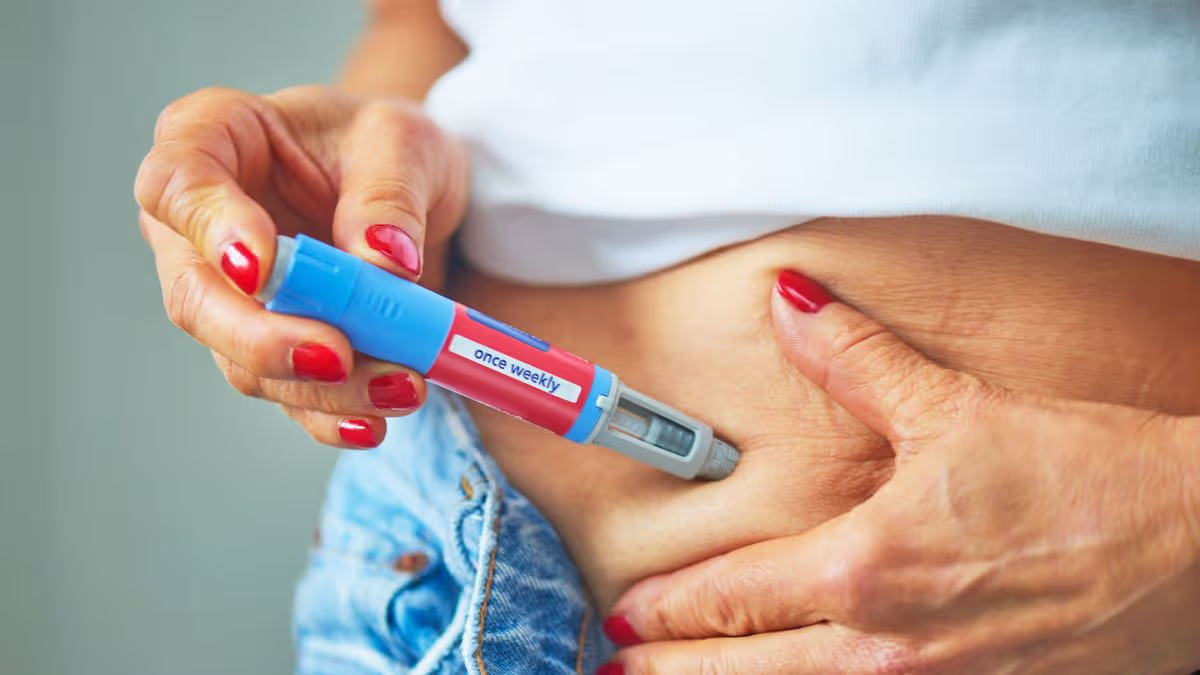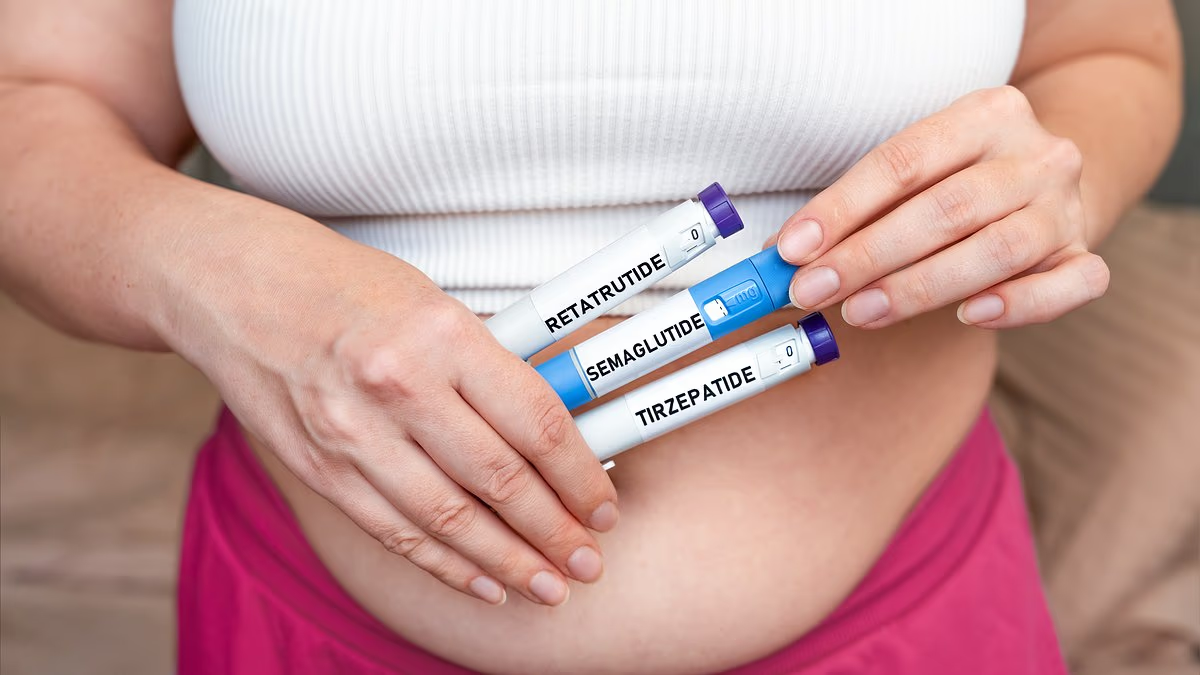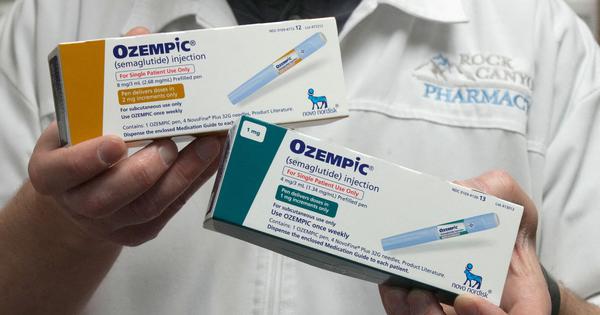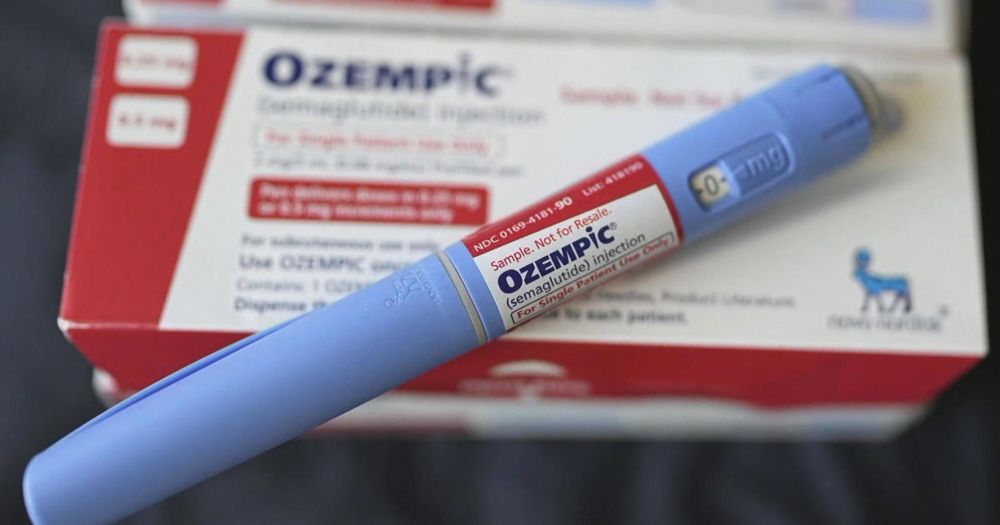
With great scientific discoveries come great dilemmas. And one such dilemma that dominates the medical zeitgeist relates to weight-loss injections such as Wegovy, Ozempic, Mounjaro and Zepbound. Namely, who really needs drugs like these – and who should have to pay for them?It’s a debate I’m more familiar with than most because I am a drugs research specialist and until 2015 was a director at Novo Nordisk, the pharmaceutical company that makes Wegovy and Ozempic.In the 15 years I worked there, I led and executed research on blood sugar, type 2 diabetes, gut hormones and inflammation – and, along with many other scientists, had direct involvement in the GLP-1 research leading to the development of Wegovy.As is now well known, both injections contain the medication semaglutide, which brilliantly mimics the effects of GLP-1, the body’s naturally occurring gut hormone.Like GLP-1 (or glucagon-like peptide-1), semaglutide regulates blood sugar and reduces appetite, thus leading to significant weight loss – and in turn reducing the risk of cardiovascular disease, kidney disease, dementia and more. It can also alleviate the symptoms of type 2 diabetes.It is no exaggeration to say that, in a world where obesity has reached epidemic proportions, these drugs have transformed the future of healthcare. So much so that they are now being requested by people who would not be generally seen as obese.Doctors have repeatedly told me that suddenly they are dealing with patients they do not normally hear from, hoping to be prescribed a weight-loss injection.Sometimes these patients can be aggressive, believing they should be entitled to injections because their friend or neighbour has already been prescribed them. It is no exaggeration to say that, in a world where obesity has reached epidemic proportions, these drugs have transformed the future of healthcare, writes Dr Anette Sams 'Doctors have repeatedly told me that suddenly they are dealing with patients they do not normally hear from, hoping to be prescribed a weight-loss injection'As a scientist, it’s not my place to answer the ethical questions about who should get these drugs. That’s a discussion to be had between doctor and patient.But, after decades of research in this area, I want to tell everyone there is another way to effectively boost your body’s natural supply of GLP-1. Because – as has been proven in numerous published scientific papers – everyone has the possibility to trigger production of GLP-1 and other important hormones to stimulate the transformative changes offered by these drugs, without injecting a single needle (and for a fraction of the price).Put simply, if we tweak our diet – consciously upping our vegetable consumption in particular, and significantly reducing the amount of ultra-processed foods (UPFs) we consume – our body will stimulate our own internal supply of GLP-1 and naturally create an alternative to Ozempic and Wegovy.I’m sure you’ve heard of many so-called ‘Nozempic Diets’ before, which claim to replicate the weight-loss effects of this groundbreaking medication through a restrictive food plan.What I’m about to tell you, however, is different. First, mine is not a traditional diet, where the focus is entirely on weight loss. My concern is how healthy you feel in body and mind, not the number shown on the scale – although if you follow my guidance, there is little doubt you will shed excess pounds.Second, this is based on research – which has revealed the crucial importance of a sensor cell in your gut, called the L-cell.Understand the workings of the L-cell, and you can naturally harness the power of those revolutionary weight-loss injections. 'Mine is not a traditional diet, where the focus is entirely on weight loss. My concern is how healthy you feel in body and mind, not the number shown on the scale (pictured, Dr Sams's book)'The L-cell is one of millions of types of barrier cell that line your gut. With great precision, these control what gets transferred into your blood and what continues down your gut for further digestion. As well as forming a barrier between the contents of your gut and the rest of your body, the L-cell is also equipped with sensors that detect and respond to what you have eaten.One of its responses is to dispatch a dose of hormones that boosts your ability to remove sugar from the bloodstream and reduces your appetite.The most well-known hormone it produces is GLP-1 – but the L-cell is also well-stocked in other hormones, such as PYY (polypeptide Y), which among other things regulates your sugar cravings, and GLP-2 (glucagon-like peptide-2), which boosts the barrier function of your gut. While they can be found from your duodenum (the first and shortest part of the small intestine, at the bottom end of your stomach) all the way to your rectum, L-cells do not coat the surface of your 26 ft-long gut evenly. Rather, the further you travel down the small intestine, the more densely these GLP-1-producing cells are clustered.This essential knowledge may make you change your mindset when it comes to food. Because it is one thing just to consume the nutrients – fat, proteins, carbohydrates, vitamins and minerals – your body needs to survive.But it is another thing altogether whether you consume food that helps you survive but also which takes longer to be digested – and thus reaches the large field of L-cells further down your gut, or whether you eat UPF-style foods that are quickly processed in the upper part of the digestive system and only reach the few and scattered L-cells that are situated there. In short, the more food that makes it down into the furthest reaches of your digestive system, the more L-cells are hit and the more GLP-1 is activated.So what is the best way to ensure that your L-cells will receive food that will prompt the release of GLP-1? The answer is surprisingly uncomplicated: You should eat foods that are harder to digest and will reach the lower parts of your intestine.And this means unprocessed foods (good-quality meat, healthy fats such as nuts and seeds, for example); lots of vegetables; and a combination of cooked and raw plant produce. If you eat both raw and cooked vegetables, which require different degrees of digestion, nutrients from the food will be absorbed along the entire length of the gut – all 26 ft of it. You should eat foods that are harder to digest and will reach the lower parts of your intestine, such as unprocessed foods (good-quality meat, nuts and seeds) and lots of vegetables If you eat both raw and cooked vegetables, which require different degrees of digestion, nutrients from the food will be absorbed along the entire length of the gutThis is because every vegetable contains thousands of plant cells, all wrapped in a fibre ‘envelope’, which requires slow and careful breaking down by the bacteria within the gut.It is this envelope which ensures that the myriad components – nutrients, minerals and antioxidants – in the plant cell are transported to the L-cells far down in the digestive system. UPFs – from hot dogs to cakes – don’t have this fibre envelope. This is because in UPFs, the food industry has created products that are totally isolated from natural plant structures.So when you consume these foods, their nutrients are absorbed as soon as they reach the upper part of the gut – simply because they are too easy to digest as they’re not wrapped in the fibre envelope the plant cell is packaged in.It’s clear, then, our body has been designed to eat food that needs to be thoroughly digested by our gut microbes to ensure all its innate health mechanisms are activated.UPFs – even those that have a decent nutritional content and are low in calories – simply do not trigger the same health mechanisms in the body as whole, unprocessed plant cells.There is also the fact that your gut microbes do not work for free.While they are slaving away, breaking down the fibre envelope, unpacking flavour compounds and nutrients from the plant cell, they also snatch up some of your consumed calories for themselves.This means that a low-calorie diet can be good for you and your body when your food consists of vegetables – but a low-calorie diet can go completely wrong when it only consists of fully-processed ‘light’ products. I’m thinking of those diet shakes and yoghurts, for example, that never even see the shadow of a gut microbe. A low-calorie diet can be good for you and your body when your food consists of vegetables – but a low-calorie diet can go completely wrong when it only consists of fully-processed ‘light’ products (picture posed by model)Research from different universities demonstrates what I mean by the diet being ‘wrong’.When mice were given a low-fibre diet – meaning UPFs, with few plant cell structures – their digestive tract became smaller, they had fewer L-cells, there was far less GLP-1 in the gut and their intestine became permeable.This permeability meant components from food and gut microbes seeped into the body, where they can cause damage, including inflammation.It’s likely the gut became leaky in these animals because GLP-1 is typically released alongside its hormonal cousin, GLP-2, which preserves the gut’s barrier function by producing strong, new barrier cells.The effect is so drastic that the gut actually grows bigger when you inject GLP-2 into laboratory animals and patients with reduced bowel function.The problem with ultra-processed, easily digested food, then, is not simply that we do not trigger enough satiety hormones, but we also lose important natural maintenance processes which keep our intestines healthy.There is a difference between semaglutide medication and the body’s own GLP-1: The former has a much longer shelf life in the body than the natural hormone.This means that weight loss can be achieved with one injection a week, whereas the body’s own GLP-1 breaks down quickly as it travels from the L-cells around the body – and so requires us to eat vegetables and unprocessed foods far more regularly than just once a week.It will be exciting to see if replicas of other weight-loss hormones suppressed by modern dietary habits – among them GIP (gastric inhibitory polypeptide), PYY, glucagon and GLP-2 – will be developed in the future, and potentially spark similar dietary revolutions as the GLP-1s.One can only hope that we will see far fewer diseases that go hand-in-hand with over-eating, spiked blood-sugar levels and too much fat around the waist.But I hope that I have proved that it need not be difficult to lose weight. Your body can do the work of Ozempic, Wegovy and the other weight-loss injections if you let it.I’ve seen this myself since the publication of my first book The Truth About Sugar in 2019, during which time I have been giving talks and teaching. Everywhere I go, among the thousands of readers I’ve met, I hear one story time after time. A lot of good people tell me how they used to be addicted to the rush they got from UPFs and have since dropped their addiction in favour of another vice. Now they cannot get enough of cabbage, broccoli and other vegetables.Stimulated L-cells ensure these people are satisfied to a degree that cola and pepperoni simply cannot compete with.I would like to see doctors ask patients who seek medical help for weight loss whether they have considered making dietary changes such as those I have described here, rather than just recommending weight-loss jabs.In a knowledge-based society, we can’t just accept that so many people believe medication is the only answer to the issue of high blood sugar and weight, when small lifestyle changes and a diet rich in vegetables can be a key part of the solution.Adapted from Let Your Body Do The Work by Anette Sams (Torva, £16.99), to be published on June 25. © Anette Sams 2026.
Here's how you can TRICK your body into thinking it's on fat jabs
With great scientific discoveries come great dilemmas. And one such dilemma that dominates the medical zeitgeist relates to weight-loss injections such as Wegovy, Ozempic and Mounjaro.
1,964 words~9 min read