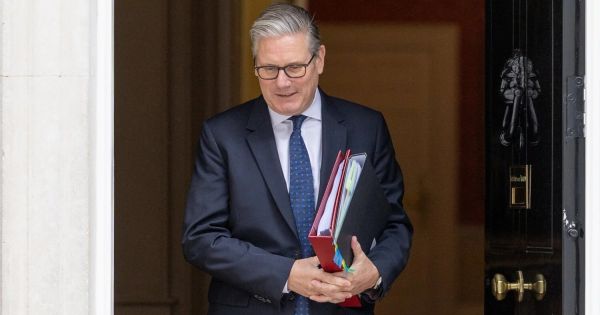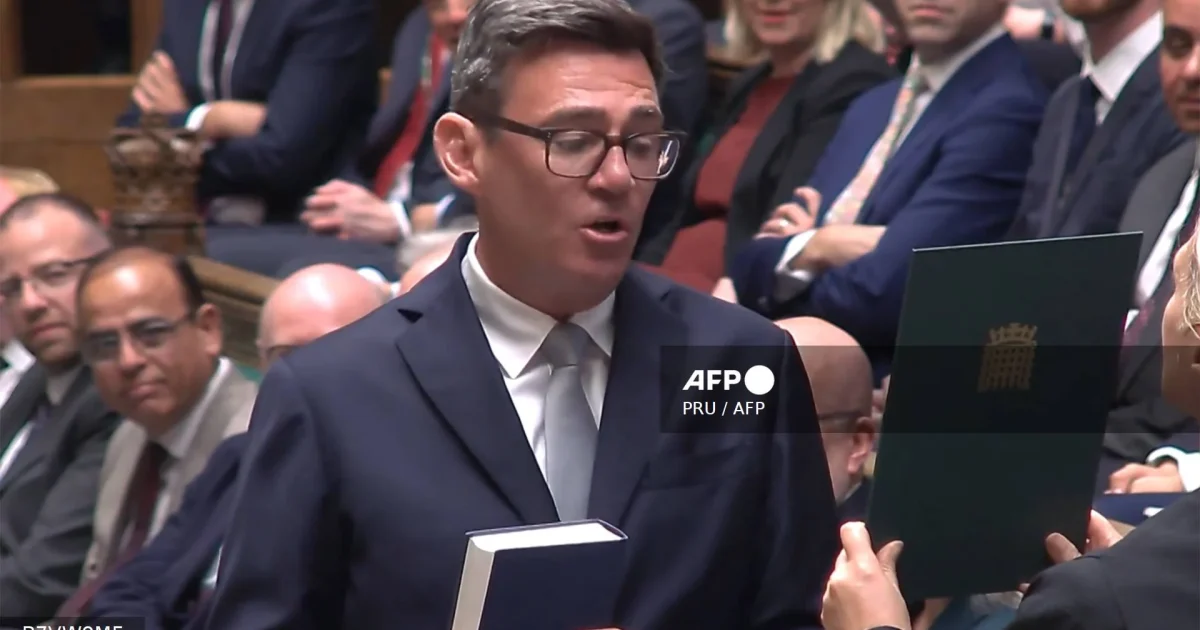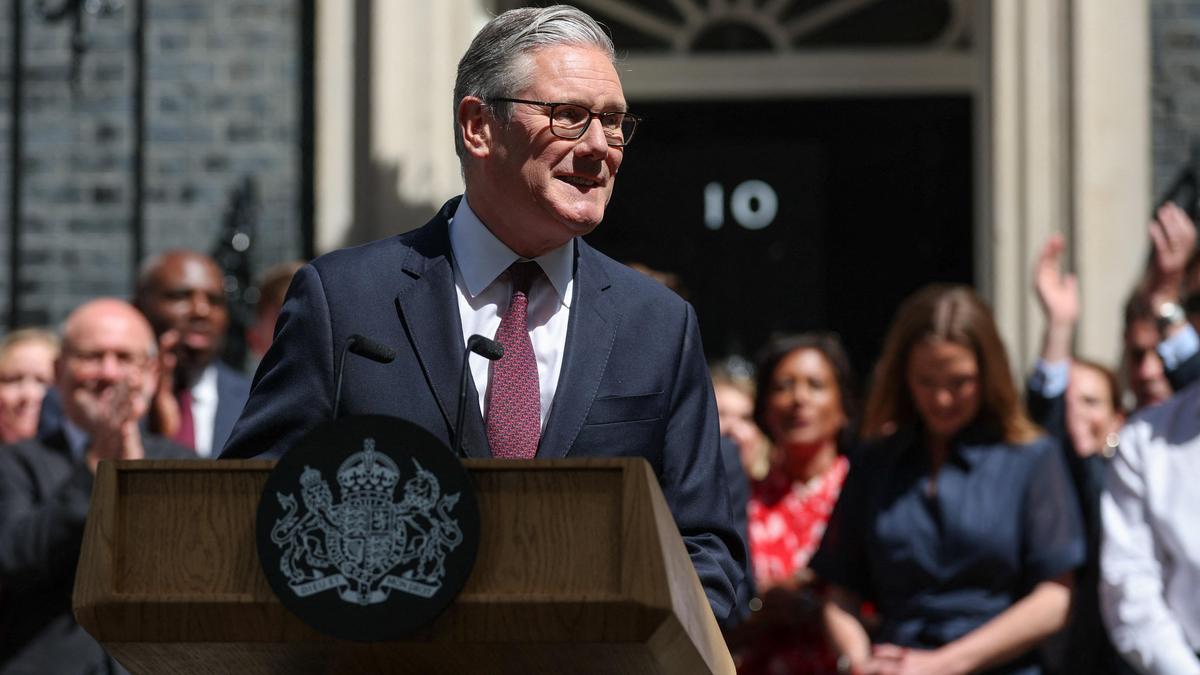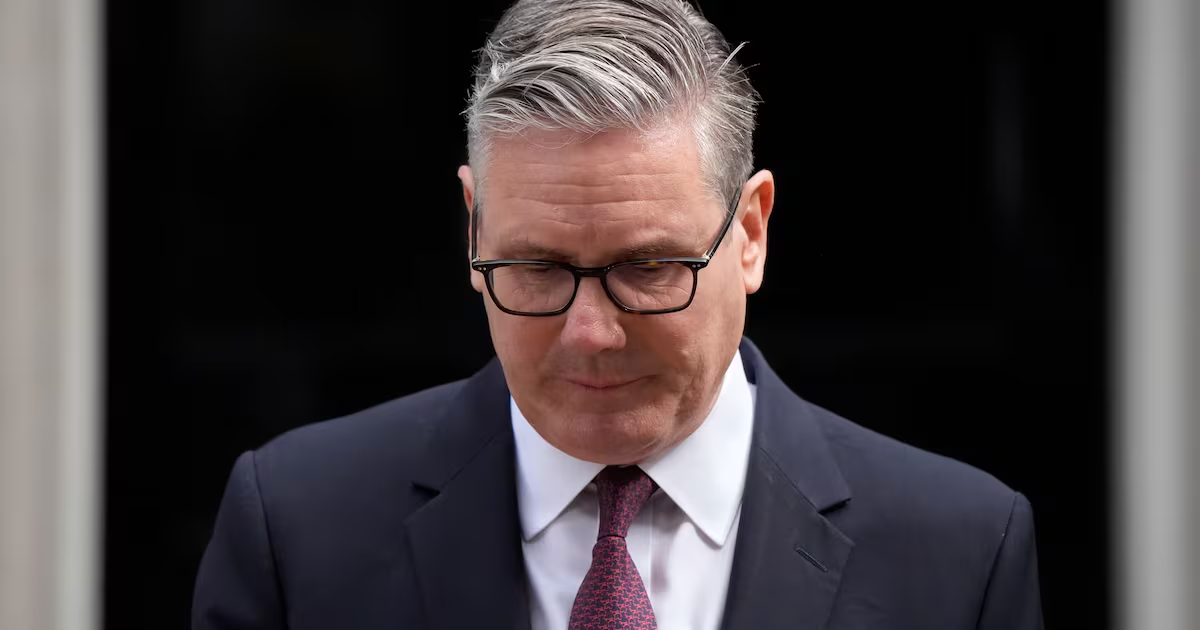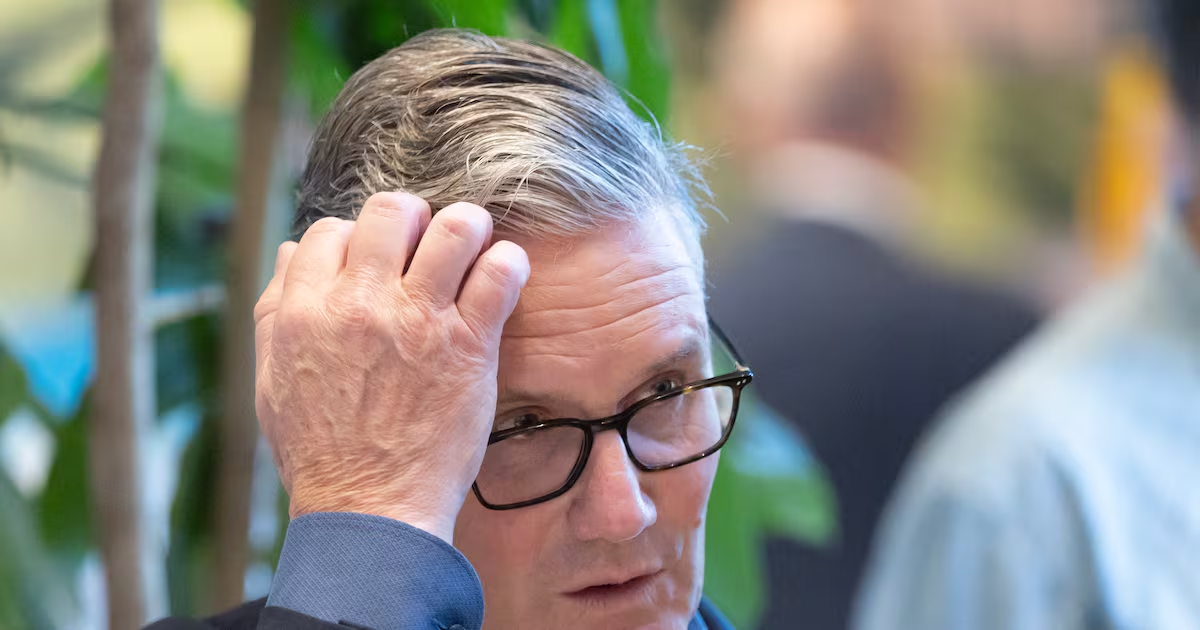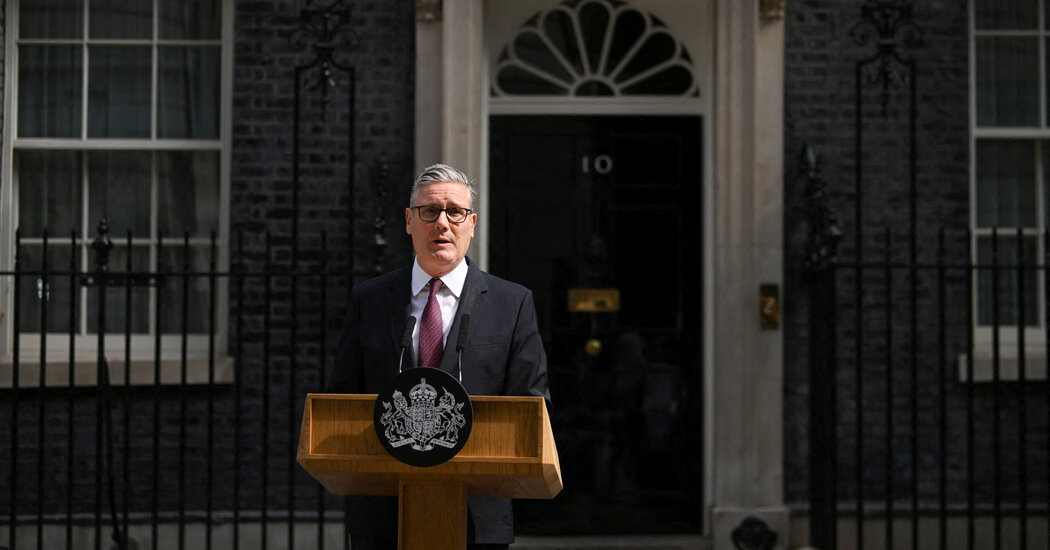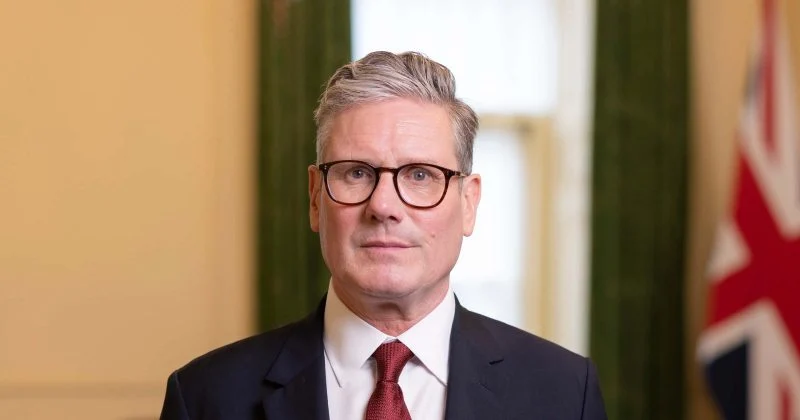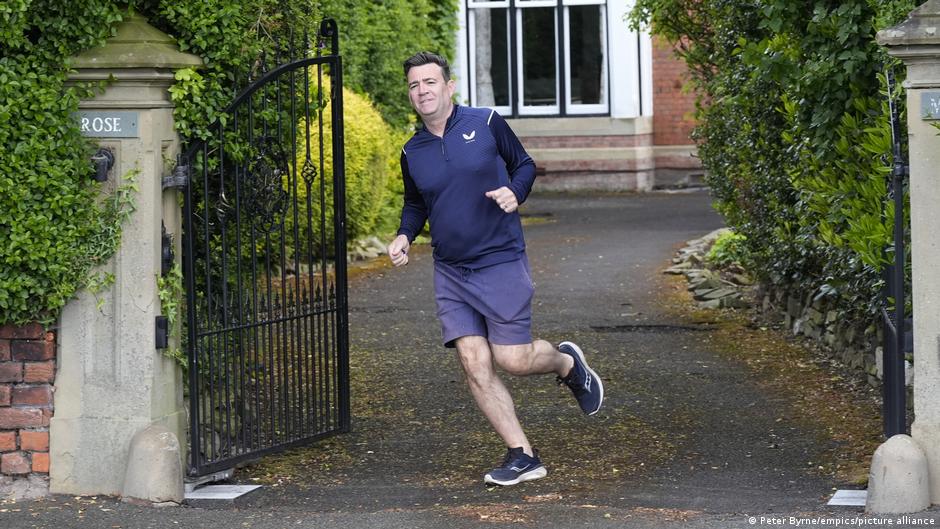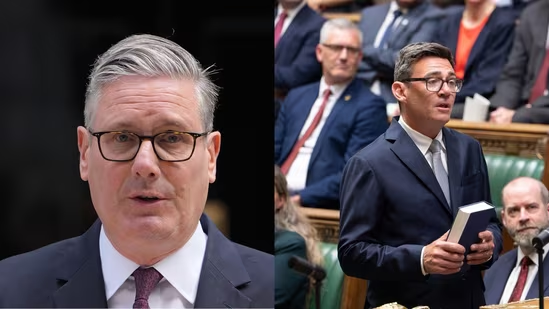
Less than two years ago, Labour party leader Keir Starmer spearheaded a historic victory in a British general election. He dragged his party from the morass of its worst ever electoral defeat in 2019 to a majority just marginally short of Tony Blair’s record in 1997. On Monday morning, Starmer announced his decision to resign as prime minister, paving the way for in all likelihood Andy Burnham, until last week the mayor of Greater Manchester, to succeed him as Prime Minister.While speculation of a change had been rife for months, the current dramatic turn of events began to unfold in the early hours of 19 June. (AP Photos)In the Labour party, a leadership aspirant other than an incumbent requires an endorsement of at least 20% of his MPs – equal to 81 such lawmakers at present –– as well as of 5% of constituency parties or 3% of affiliates, of which at least two must be trade unions to enter the ballot. If there is more than one qualifier, then there is a contest, which could run for around six weeks. If there is only one candidate, then it’s practically a coronation.Nominations for a competition will close on 9 July. Wes Streeting, who resigned from Starmer’s cabinet and was seen as a possible contender, has indicated he will now back Burnham.Also Read | Why did Keir Starmer resign as UK Prime Minister? 5 points on his exitWhile speculation of a change had been rife for months, the current dramatic turn of events began to unfold in the early hours of 19 June when Burnham was declared the winner in a parliamentary by-election in Makerfield, which falls in his backyard of Greater Manchester. Merely last month, Labour had been trounced in local elections by the far right Reform UK party within the same constituency. This time, though, voters rallied around the local man, a popular, thrice elected mayor, to lend him a launch pad to be Prime Minister.Opinion polls signal Burnham is today the most popular politician in Britain, sharply contrasting with Starmer’s woeful unpopularity. The latter’s prime ministership unravelled because of a series of disliked welfare policies and a delay in economic recovery. Inflation was controlled, but GDP growth faltered and unemployment rose. In May, Labour was not only decimated in local elections in England, but fared miserably in elections to the Scottish parliament and lost power in Wales for the first times since devolved governments came into being in the United Kingdom in 1999.Starmer’s was a creditable showing in the school education and health fronts. His leadership in terms of resisting the Russian invasion of Ukraine and not joining the United States in its war against Iran received praise. Even on the highly vexed issue of immigration – the main reason for the rise of Reform -- net migration to the United Kingdom fell to 171,000 for the year ending December 2025 from the peak of 944,000 in March 2023 under the Conservative party government. But his government failed to communicate its success.He was slow in tackling the cost of living crisis. Last but not the least, his appointment of Peter Mandelson, a man with connections to the convicted American child sex offender Jeffrey Epstein, as the British ambassador to the United States demonstrated incredibly poor judgement.Burnham is widely expected to apply what is being labelled as ‘Manchester-ism’ to meet the cost of living challenge. This means nationalisation or re-nationalisation of electricity, gas and water industries and the railways to control prices.He was secretary of state for culture, media and sport and then held what is in British politics a key portfolio, that of health. Yet, needless to mention, demands at the national and international level are rather different from requirements in local government. So, what are Burnham’s thoughts on borrowing, taxation, raising defence expenditure, immigration and welfare? A conspicuous unknown are his views on foreign policy.As an MP, he was a member of Labour Friends of Israel, a lobby group in the British parliament. His position on the perpetually burning Israel-Palestine confrontation is important because left-wing and Muslim voters defected from Labour to the populist Green party in last month’s local and regional elections. Sitting on the fence on this thorny matter will not regain these supporters. On the other hand, Labour’s ‘red wall’, white working class voters in northern England –– who had veered towards Reform –– could be inspired to return to the fold, since Burnham may be seen as one of them, a northerner with a Lancashire accent.In Britain, dumping prime ministers mid-term has, in the past century, been more a habit of the rightist Conservatives than left-of-centre Labour. Indeed, this is only the second time in the last 100 years that Labour is replacing a prime minister mid-course; the only other instance being when Harold Wilson vacated the chair for James Callaghan in 1976.The Conservatives pulled the rug on Stanley Baldwin in 1937, on Neville Chamberlain in 1940, Anthony Eden in 1957 and Margaret Thatcher in 1990. Then came four prime ministers through a revolving door –– Theresa May, Boris Johnson, Liz Truss and Rishi Sunak –– between 2016 and 2024 after David Cameron stepped down, following defeat in the Brexit referendum. In other words, the UK will now have its seventh prime minister in a decade, which underlines an unprecedented instability.Also Read | Keir Starmer 6th UK PM to resign in last 10 years: List of ‘unpopular’ PMs in Britain's ‘House of Cards’Britain has encountered an unrelenting slowdown since the 2008 international economic meltdown. Cameron’s 2010-2015 austerity did not lay a foundation for recovery. Brexit only made matters worse. The change from borderless trade to trade with barriers, however minimal, has triggered an estimated £74 billion loss in goods exports and an overall fall in turnover of 12%; 16,000 British firms have stopped exporting to the European Union (EU) altogether.Research carried out by Stanford University and the London School of Economics has established that the UK’s GDP per capita is 6-8 % lower than it would have been if the UK had not left the EU. It remains to be seen if a summit which was slated for next month to discuss a realignment in goods trade takes place as scheduled.The assignment before Labour is to stave off the serious threat from Reform and to a certain extent from the Greens. Starmer was not visualised as being capable of overcoming this. Burnham is. He has considerable goodwill and momentum behind him. But these can be shortlived, for the impatience of Britons is such that they are unlikely grant him too much time to attain a turnaround. Uneasy lies the head that wears a crown.
Fresh power shift in UK as Labour turns to Andy Burnham, Keir Starmer bows out
On Monday morning, Keir Starmer announced his decision to resign as prime minister, paving the way for in all likelihood Andy Burnham. | World News
1,111 words~5 min read