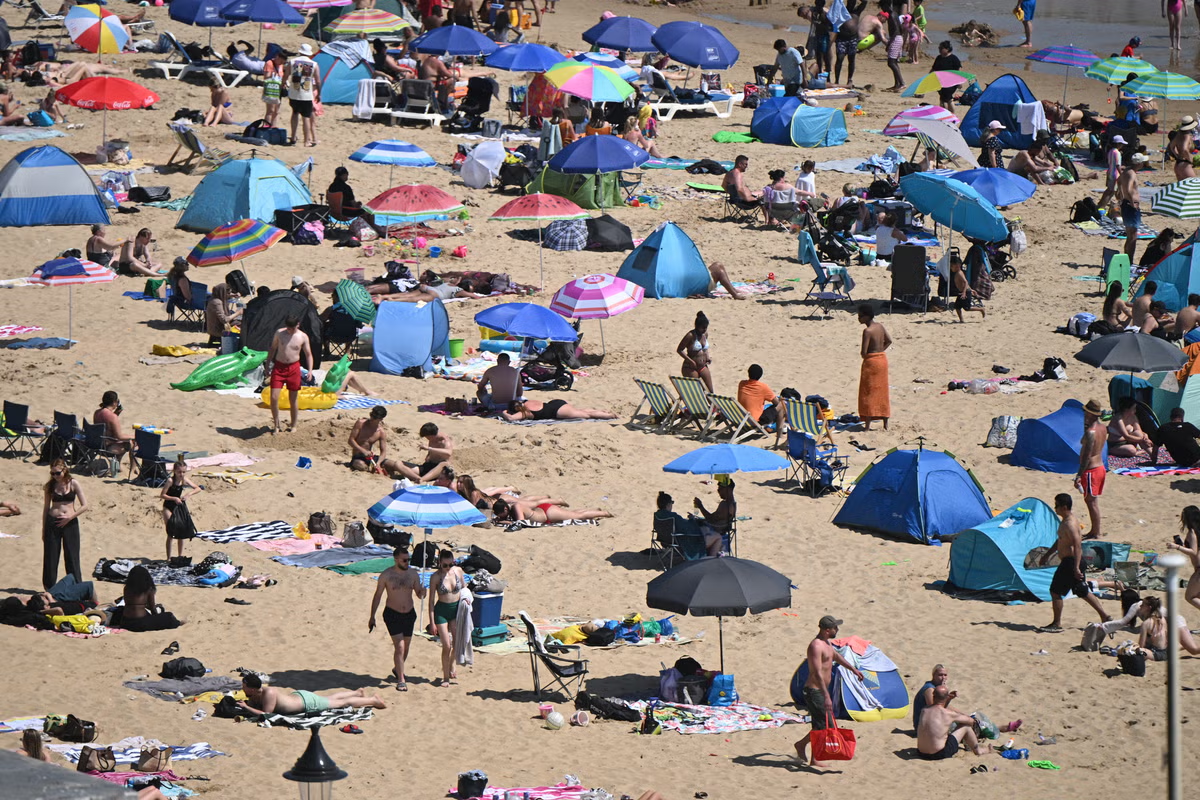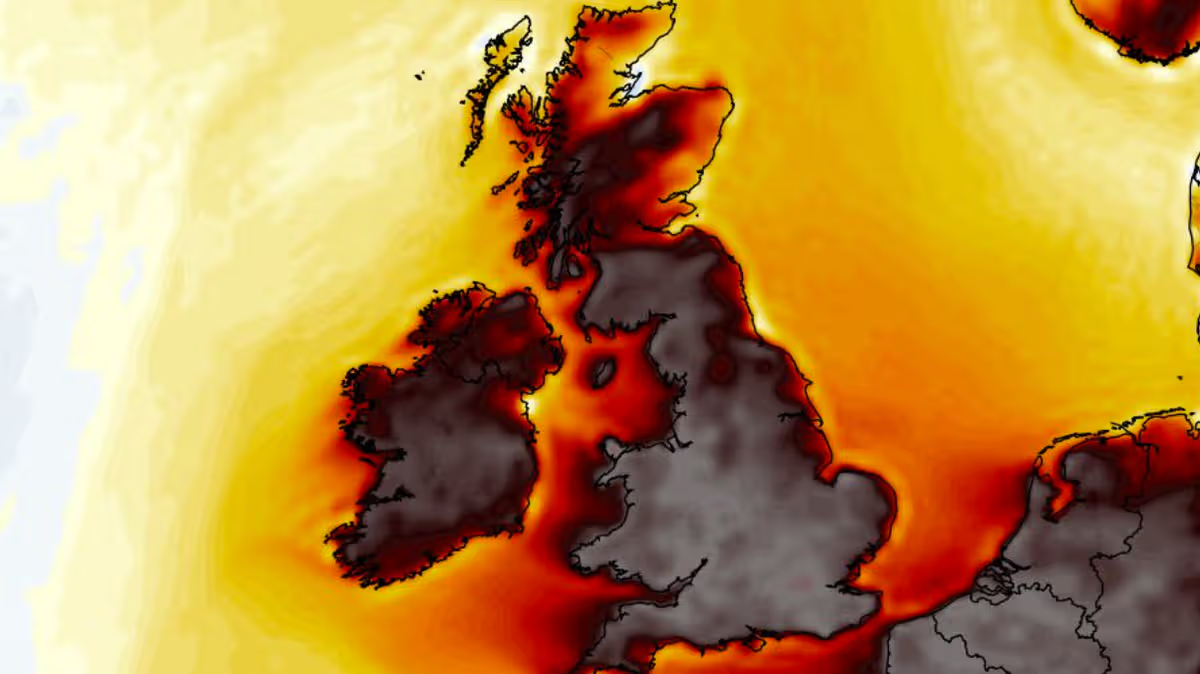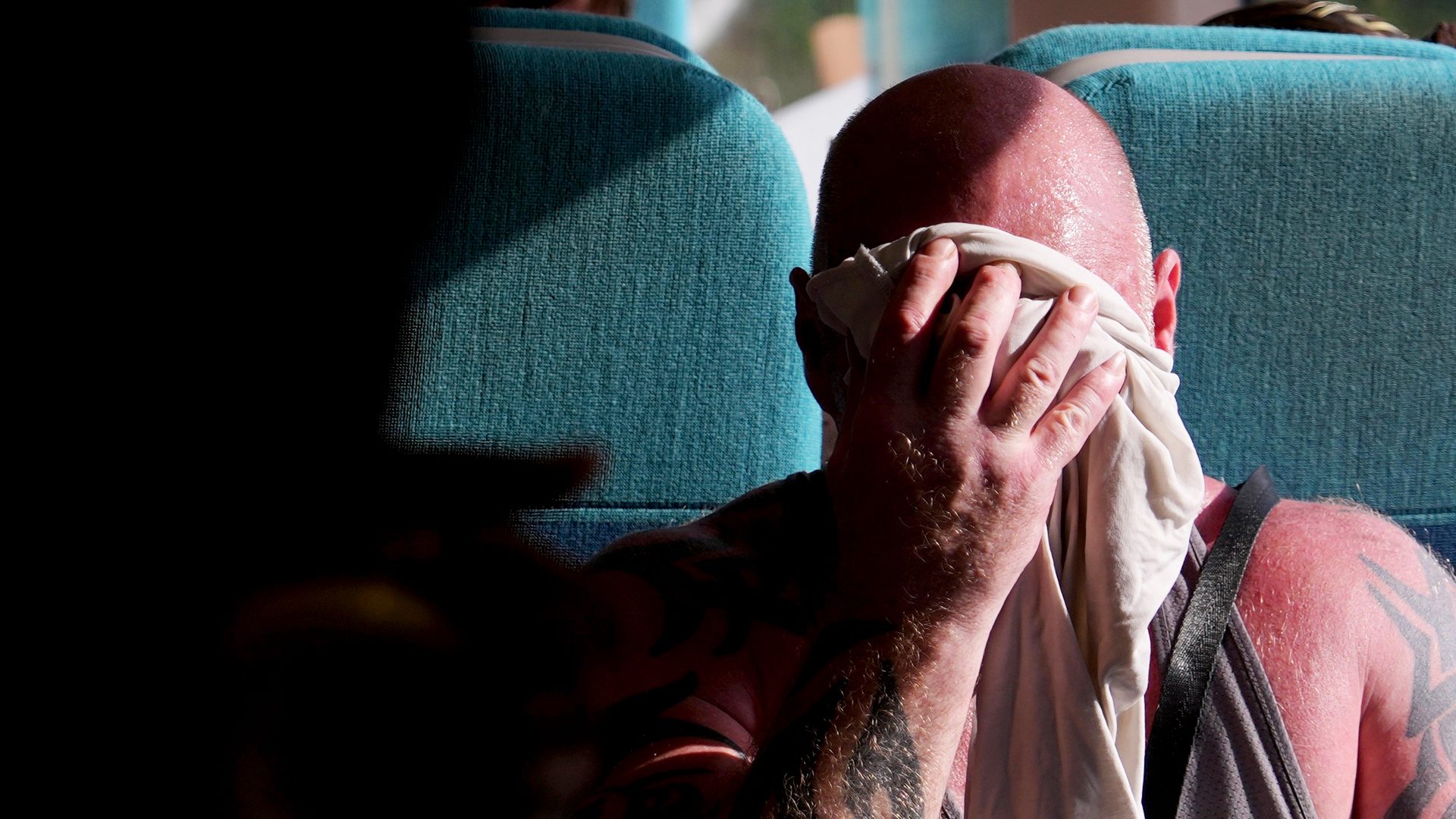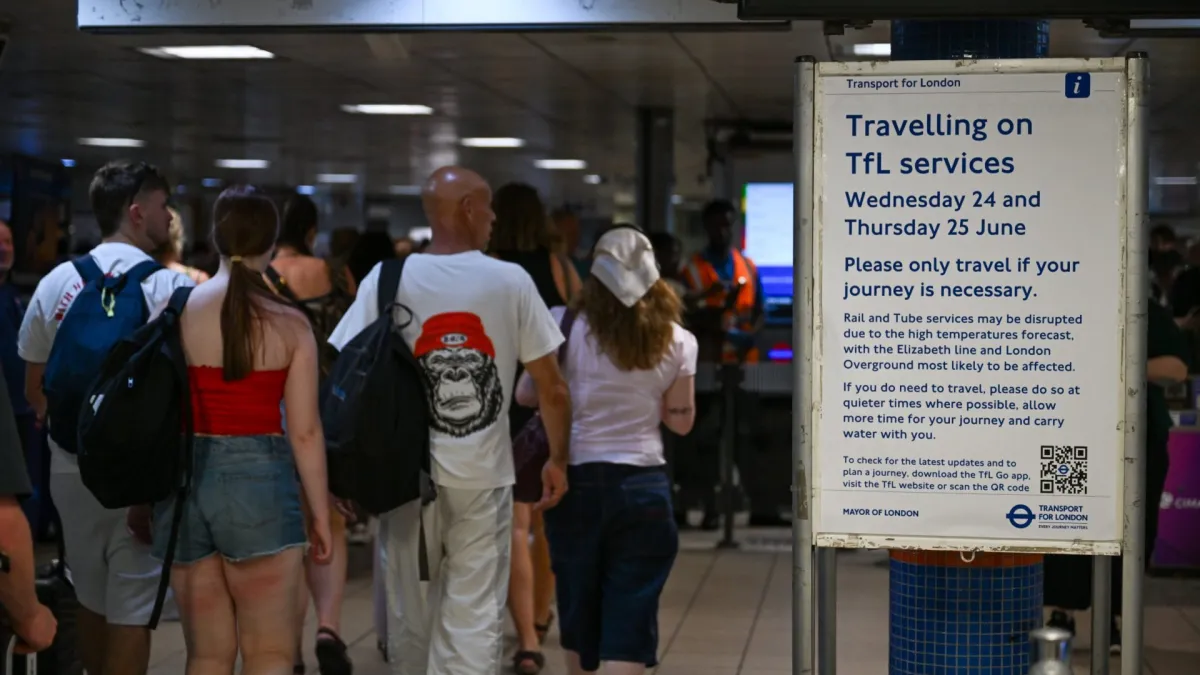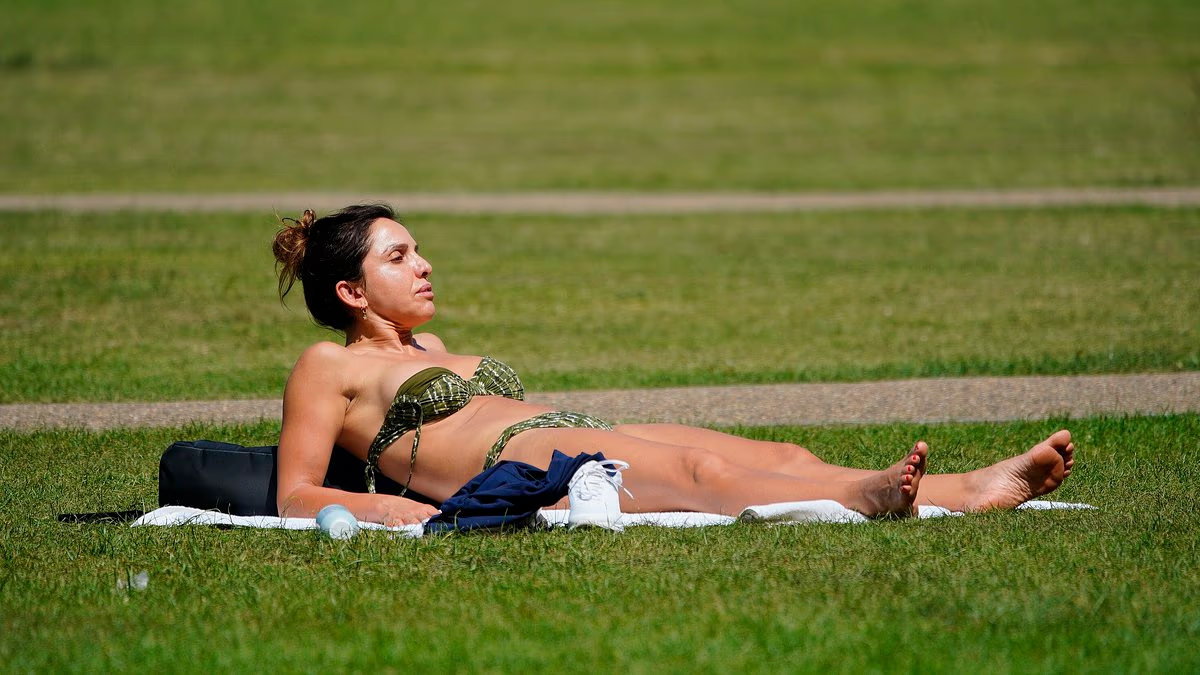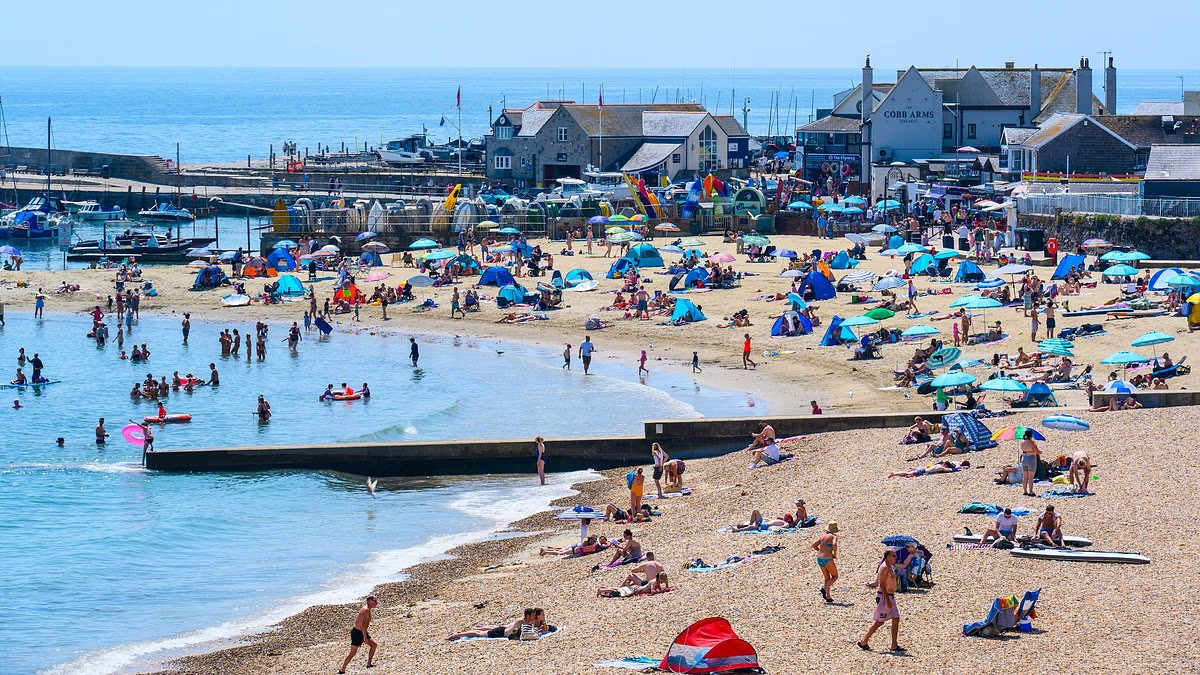
Thunderstorms are battering heatwave Britain after South East Water announced a hosepipe ban ahead of 40C temperatures promising to bring the country to a standstill.The Met Office today issued a rare red 'danger to life' extreme heat warning for 'significant disruption to daily life' as the UK faces road, rail and air travel chaos.As temperatures climb over the next few days to 40C - close to the all-time UK record of 40.3C set in 2022 - schools could shut amid fears over the impact of overheating classrooms on children's health.The mercury is expected to hit 36C by Tuesday afternoon with both Wednesday and Thursday set to be even hotter as thousands flee to beaches and lidos across the country to cool off. But heatwave Britain is already causing roads to melt and trains to be cancelled as the country braces for record-breaking temperatures.Thunderstorms are, meanwhile, spreading across southwest England with the Met Office saying they will surge across the UK in the coming days.The forecaster urged Brits to get ready for 'frequent lightning, large hail and occasional heavy downpours' as stormy weather arrives.Turbulent conditions could sweep through London and the southeast as early as Monday evening. Despite the promise of downpours, hosepipe bans are set to be enforced in the UK following a spell of dry weather. Sunbathers bask in the hot sunshine on the beach at Lyme Regis in Dorset this afternoon A woman sunbathes at Richmond Green in south-west London during the heatwave today Surfers at The Wave in Bristol, pictured today, have ditched their wetsuits and are being advised to wear rash vests and board shorts because the water is so warm in the heatwave Thunderstorms are, meanwhile, spreading across southwest England with the Met Office saying they will surge across the UK in the coming days The mercury is expected to hit 36C by Tuesday afternoon with both Wednesday and Thursday set to be even hotterSouth East Water is already encouraging customers not to use their hosepipes as lawns get scorched and flowerbeds wilt in the baking sun. Demand for water has surged in the face of the sweltering weather, according to the company which supplies homes and businesses in Kent, Sussex, Surrey, Hampshire and Berkshire. HOTTEST DAYS IN UK HISTORY 1 40.3C July 19, 2022 Coningsby, Lincolnshire 2 38.7C July 25, 2019 Cambridge 3 38.5C August 10, 2003 Faversham, Kent 4 38.2C July 18, 2022 Pitsford, Northamptonshire 5 37.8C July 31, 2020 London Heathrow 6 37.1C August 3, 1990 Cheltenham, Gloucestershire 7 36.7C July 1, 2015 London Heathrow 8 36.7C August 9, 1911 Raunds, Northamptonshire 9 36.6C August 2, 1990 Worcester 10 36.5C July 19, 2006 Wisley, Surrey As a result, water should only be used for 'essential purposes' including washing, drinking and cooking, the supplier urged.At this time of year households often increase their water consumption to refill paddling pools and hot tubs and jet wash their homes and gardens.A South East Water spokesperson said: 'The total amount of water treated and put into South East Water's network was 644 million litres, that's 56 million litres more than the daily average for June (588 million litres).'It's anticipated that this figure will rise further with hotter weather forecast for later this week.'A static area of high pressure over mainland Europe is trapping warm air underneath - known as a 'heat dome' - and resulting in the very hot conditions for England. Some headteachers confirmed the Monday school day would finish at lunchtime, while others let pupils wear PE kits and cancelled sports days. The UK Health Security Agency (UKHSA) said there was 'increased risk to life across the whole population'.Meanwhile, the RAC urged drivers without air-conditioned vehicles to postpone non-essential car journeys while the AA said motorists could see gritters out in case surfaces soften or become sticky under the heat and even rut under heavy traffic.Councils in areas including Southampton, Cardiff and Bristol asked locals to put their bins out earlier than normal as crews begin collections before normal start times. On the trains, operators are planning to alter some services and introduce speed restrictions as the heat causes overhead lines to expand and sag and rails to buckle. Rail passengers were furious at the changes, with one tweeting: 'More notice would have been appreciated, given it's been known for over a week that temperatures would be over 30C.' Another wrote: 'It is inevitable that the rail network will be subject to delays and cancellations, the railway simply isn't built for this sort of heat.'And a third tweeted: 'Britain and the weather. Heat expands and contorts rail tracks. Total disruption. Two inches of snow falls. Total disruption.'Great Western Railway will be running a revised service between London Paddington and Didcot Parkway after Network Rail said it would not move some points to avoid them failing - meaning Slough, Maidenhead and Twyford will not be served.LNER and Avanti West Coast both said they were 'introducing temporary travel easements to support customers in completing their journeys more comfortably'.Pedestrians hold fans as they walk through London today as the heatwave continues to strike People enjoy the weather on Brighton beach this afternoon as temperatures rise againSouth Western Railway warned that 'services may be subject to short-notice cancellations and amendments'. There was also disruption across the Transport for Wales network, including between Pontypridd and Cardiff Bay, and Coryton and Penarth.Southern said trains could not run between Shepherds Bush and Watford Junction until at least 7pm today due to the hot weather. The Met Office said 'population-wide adverse health effects are likely' while 'failure of heat-sensitive systems and equipment is likely with the probable loss of power and other essential services, such as water, electricity, gas or mobile phone services'.The extreme heat will be accompanied by high humidity, and very warm and humid nights will make it hard for people to recover overnight. The Met Office also urged people to adapt their routines where possible to cope with the weather.The red warning is only the second ever, and will cover parts of central and southern England as well as Wales from 9am on Wednesday to 9pm on Thursday. A separate wider amber heat warning began today and will run until at least the end of Thursday.One climate scientist said the 'heat dome driven furnace' will bring 'truly exceptional' temperatures, while a Met Office meteorologist called it a 'very serious situation'.The UKHSA meanwhile has upgraded its heat health alerts from amber to red for Wednesday and Thursday for much of England. Other amber heat health alerts will continue to be active from now until the end of Friday.Red alerts warn of 'increased risk to life across the whole population, with significant impacts on older people'; 'significantly increased demand on all health and social care services' and the 'heat affecting the ability of the workforce to deliver services'.There are also concerns about the impact on animals, and the British Horseracing Authority has already abandoned four meetings. A walker suffering from 'severe' heat exhaustion was rescued off a Scottish mountain on Sunday prompting a warning from rescuers over the heatwave conditions.The alarm was raised when the hiker was in a bad way on 2,883 feet Ben Ledi four miles north west of Callander in the Trosssachs.'With the warm weather continuing, please stay safe, stay hydrated, use sun protection, rest more and choose walks suited to the weather and fitness,' a spokesperson for the team said.'Don't be afraid to turn back if you find it too hot. If you need assistance in the the hills, dial 999, ask for the Police, then Mountain Rescue.'It was the third callout over the weekend for Killin Mountain Rescue Team.On Saturday, the team were deployed to Ben A'an for a walker with a back injury following a slip. While that was ongoing, the team were alerted to a lost walker on Ben Ledi.'Massive thanks to Lomond Mountain Rescue Team for stepping in to help on Saturday while we were stretched across two incidents,' a spokesperson for Killin MRT said.Temperatures in southern England could hit 34C today then 37C tomorrow before peaking at 40C on both Wednesday and Thursday, followed by 33C on Friday.The UK's all-time high of 40.3C was set in July 2022, followed by 38.7C in 2019 in second; 38.5C in 2003 in third; 38.2C in 2022 in fourth; and 37.8C in 2020 in fifth.The highest ever June temperature is 35.6C both in London in 1957 and Southampton in 1976 – but this could be broken three times this week, and as early as tomorrow.Humid conditions are also forecast for the country alongside tropical nights, when the overnight temperature does not fall below 20C, making it feel muggier than last month's heatwave – which itself brought the hottest ever day in May at 35.1C.A record-breaking June day would be the first time since 1911 that two consecutive months have observed record temperatures. Brits are also struggling to get hold of portable air conditioning units amid a rush in demand. One X user tweeted: 'If you're in the UK all of the portable AC units are sold out from all of the stores. I've checked about buying an additional unit since last Thursday.' The UK Health and Security Agency issued red heat health alerts for Wednesday and ThursdayDespite the increasing number of heatwaves in recent years, the Department for Education has no official upper limit on the indoor temperature for schools.But the UK Government has been considering recommendations from the Climate Change Committee that indoor classrooms should be no higher than 25C.The National Education Union says 26C should be a maximum and its heatwave plan for teachers states schools could close under a red warning for extreme heat.Some schools are allowing students to come in wearing PE kits while others have confirmed they will operate with shorter days to protect the health of staff and pupils.New Close School in Warminster, Wiltshire, said its site would close early at 12.30pm each day between today and Thursday 'due to the forecast of extreme heat'.A statement said: 'This decision has not been made lightly and is in advance of the expected peak temperatures, with the safety and wellbeing of both children and staff as our highest priority.'Current guidance advises that indoor rooms should be maintained at temperatures below 26C. Unfortunately, due to the age and design of the building at New Close, we are unable to maintain temperatures below this level during the forecast heatwave.'Even with blinds closed and fans in use, rooms are heavily exposed to direct sunlight and retain heat throughout the day, making it difficult to keep temperatures within safe limits. The rooms are already hot and have retained the heat from Friday and over the weekend.'Other schools in Wiltshire including Kingdown School, Clarendon Academy, Pewsey Vale School and Dilton Marsh Primary have also said lessons will finish at 12.30pm. Schools are encouraged to have a heatwave plan and 'curtail, so far as possible, heat-generating activities, for example, use of computer monitors, printers, Bunsen burners, ovens, and design and technology equipment, unless effective heat extraction measures can be put in place'.Teachers can also 'relocate classes to cooler rooms whenever possible' and relax dress codes, such as allowing pupils to wear PE kits.Catering staff 'should not be expected to prepare hot meals' while classrooms should have oscillating mechanical fans if temperatures are below 35C.They should also 'remove vigorous physical activity from the timetable', while 'children may be better off indoors at break times if there is insufficient shade' and should 'avoid outside activities, such as PE and school trips'.Paul Whiteman, general secretary for school leaders' union NAHT, said: 'As temperatures rise, school leaders will be thinking carefully about how to keep pupils and staff safe and as comfortable as possible.'While there is no legal 'upper limit' for temperature in schools, they will certainly be doing all they can to mitigate the effects of such high temperatures.'For most, this will mean making straightforward adjustments such as limiting the time spent in the sun during breaks, ensuring additional water is available, making adjustments to uniform expectations where appropriate, and ventilating classrooms as best they can.'The AA said drivers could see gritters out on some roads this week with the potential for surfaces to soften or become sticky under the heat, with heavy traffic even causing them to rut in some places.Edmund King, AA president, said: 'The main risk for drivers is not that the road suddenly 'melts' everywhere, but that patches can become tacky or uneven. That can affect braking, steering and grip, especially for motorcyclists and cyclists, and can also throw up loose material.'If drivers come across a softened or damaged surface, they should slow down, avoid harsh braking or steering, and leave extra space from the vehicle in front.'Human resources experts at BrightHR said 1.8 per cent of all sickness absences today mentioned sunburn or heatstroke, while there had also been a 14 per cent week-on-week increase in holiday bookings as people look to take advantage of the hot weather.The firm said heat related absence was costing UK employers at least £334,000 per day.Met Office deputy chief forecaster Mark Sidaway said: 'Red warnings are reserved for the most severe events and we're expecting severe and significant impacts from this heatwave, with health impacts likely for many, even beyond those who are normally more vulnerable to the heat. 'The last time the UK recorded temperatures this high was in July 2022, but on this occasion the heat is expected to be accompanied by high humidity.'
Thunderstorms batter heatwave Britain ahead of 40C 'hottest day ever'
The Met Office today issued a rare red 'danger to life' extreme heat warning for 'significant disruption to daily life' as the UK faces road, rail and air travel chaos.
2,246 words~10 min read