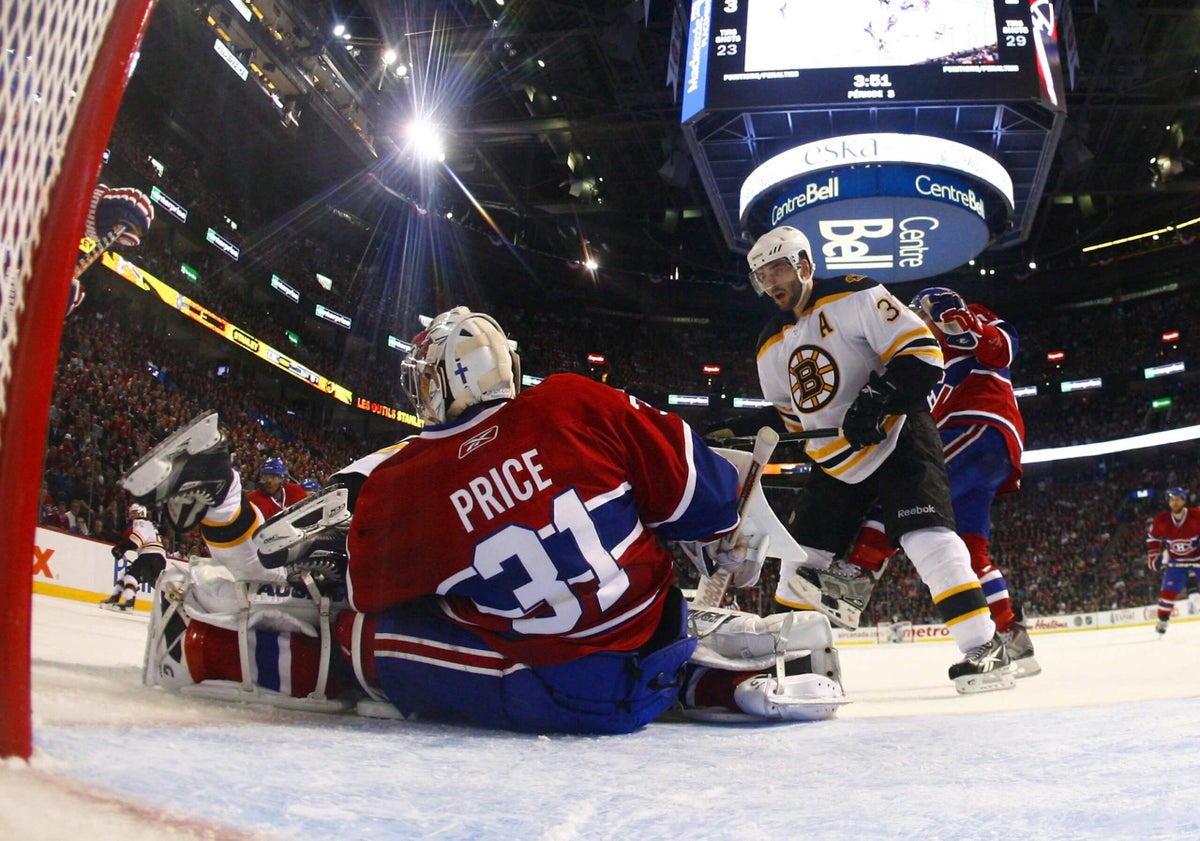
In 2017, Patrice Bergeron won his fourth Selke Trophy. The Boston Bruins center, 31 at the time, was well defined as the NHL’s top defensive forward.Other things were developing concurrently. That season, Brad Marchand led the Bruins in scoring for the first time in his career. David Pastrnak broke the 30-goal threshold for the first of eight occasions. Leaguewide, power plays were shifting toward a 1-3-1 setup, with the bumper position serving as its heartbeat.Bruce Cassidy, who had replaced Claude Julien behind the bench, recognized that he had three forwards whose complementary skill sets could form a rampaging offensive dynamo at five-on-five and on the power play.In 2017-18, Cassidy’s first full season as coach, Bergeron scored 30 goals and 33 assists in 64 games. His point-per-game rate exploded from 0.67 to 0.98. The following season, Bergeron scored a career-high 79 points, mostly while centering Marchand and Pastrnak.How to win a Stanley Cup without superstarsHarman DayalAt the same time, his defensive deployment took a turn. In 2016-17, Bergeron started 35.7 percent of his five-on-five shifts in the offensive zone. It would never be that low again. By 2022-23, his final season, Bergeron posted a career-high 47.6 percent offensive zone start percentage. Nevertheless, he won his sixth and final Selke that season.The earliest part of Bergeron’s career was defined by his offense, the middle by defensive dominance. He aced his late-career metamorphosis back into an offensive star, just like he did practically everything else in his career. It made his Hockey Hall of Fame case a slam dunk.On Monday, he was named part of the class for 2026, his first year of eligibility.
Inside Patrice Bergeron’s evolution into a slam-dunk, first-ballot Hall of Famer
Bergeron won a record six Selkes as the NHL's best defensive forward — and became an increasing offensive force late in his career.
1,190 words~5 min read